Conclusions First
- Wind expressions reliably work. Compared to the control (no wind), almost all wind keywords showed hair movement.
- Most dramatic in 1 token:
fluttering. Skirt spreads wide, hair flows. Best token efficiency. - For moving both hair and clothes,
wind blowing hair and clothes(5 tokens) is most reliable. However,fluttering(1 token) also affects both. - Wind direction control works. With
wind from left/wind from right/wind from behind, hair blow direction matched the specification in 3/3 seeds.
Token Efficiency Ranking
| Rank | Keyword | Tokens | Hair | Clothes |
|---|---|---|---|---|
| 1 | fluttering | 1 | ◯ | ◎ |
| 2 | billowing | 1 | ◯ | ◎ |
| 3 | wind | 1 | ◎ | ◯ |
| 4 | windy | 1 | ◎ | △ |
| 5 | windswept | 1 | ◎ | △ |
Experiment Design
| Item | Value |
|---|---|
| Model | z-image-turbo (6B, photorealism-focused distillation) |
| Steps | 8 |
| CFG | 1.0 |
| Size | 1024x1024 |
| Seed | 3 fixed (shared across all conditions) |
| Framing | full body |
| Per condition | 3 images (3 seeds) |
| Total | 26 conditions = 78 images |
Base Prompt
White clothing is used because fabric movement (billowing) is more visible than with dark colors. An outdoor park in daytime was selected as a natural environment for wind.
Prior Knowledge
The following was confirmed in Searching for a “silhouette of a dress blowing in moonlit seaside” prompt:
flowing dresshas an effect on fabric movementlong hair blowinghas an effect on hair movementholding skirt hem in windinduces a pose of holding down a skirt hem
This article systematically tests these and 20+ other wind expressions, isolating one variable at a time.
Evaluation Criteria
The following image attributes were observed and recorded:
- Hair displacement: Stationary / tip movement only / full lateral flow
- Clothing displacement: Stationary / hem movement only / full billowing
- Directional consistency: Do hair and clothing move in the same direction?
A. Wind Keyword Comparison (12 conditions)
Adding wind-related words/phrases one at a time to compare effects on hair and clothing.
A00: Control (no wind)
| seed 1 | seed 2 | seed 3 |
|---|---|---|
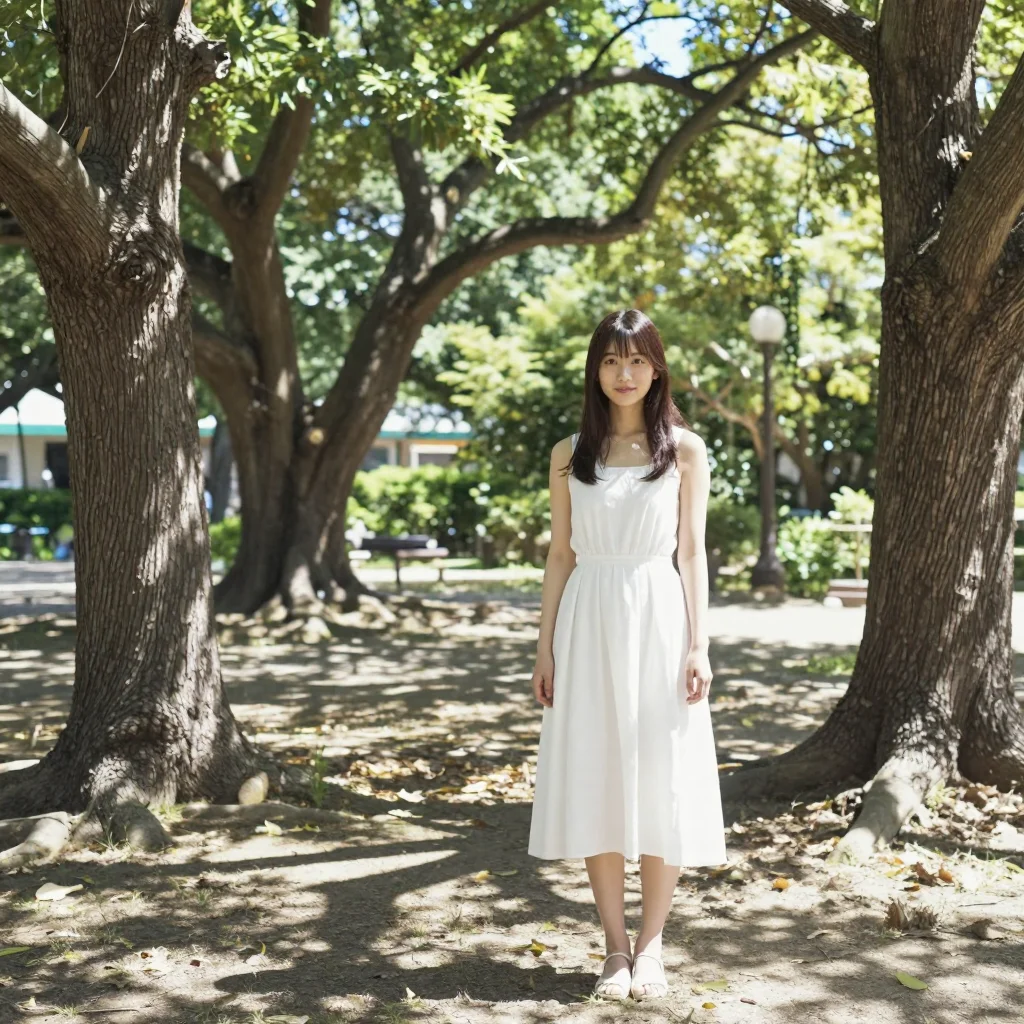 | 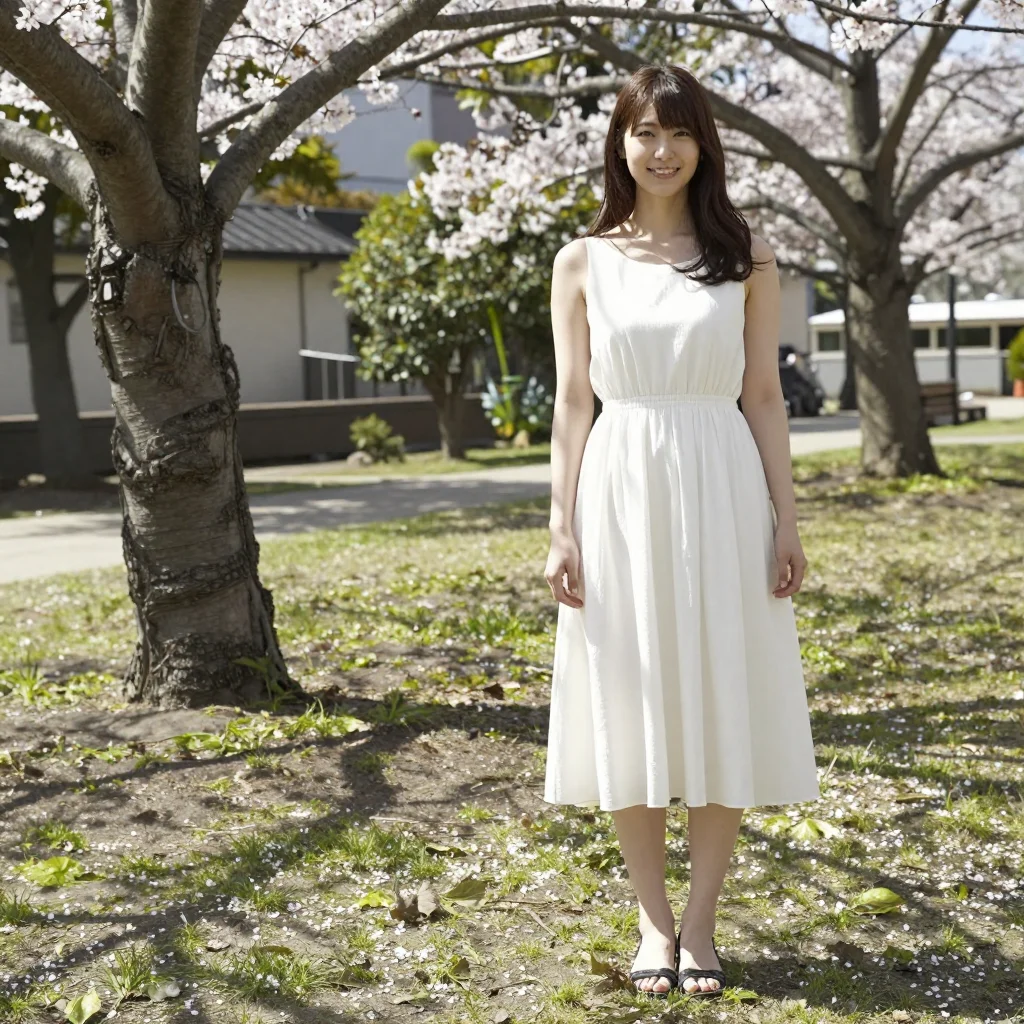 | 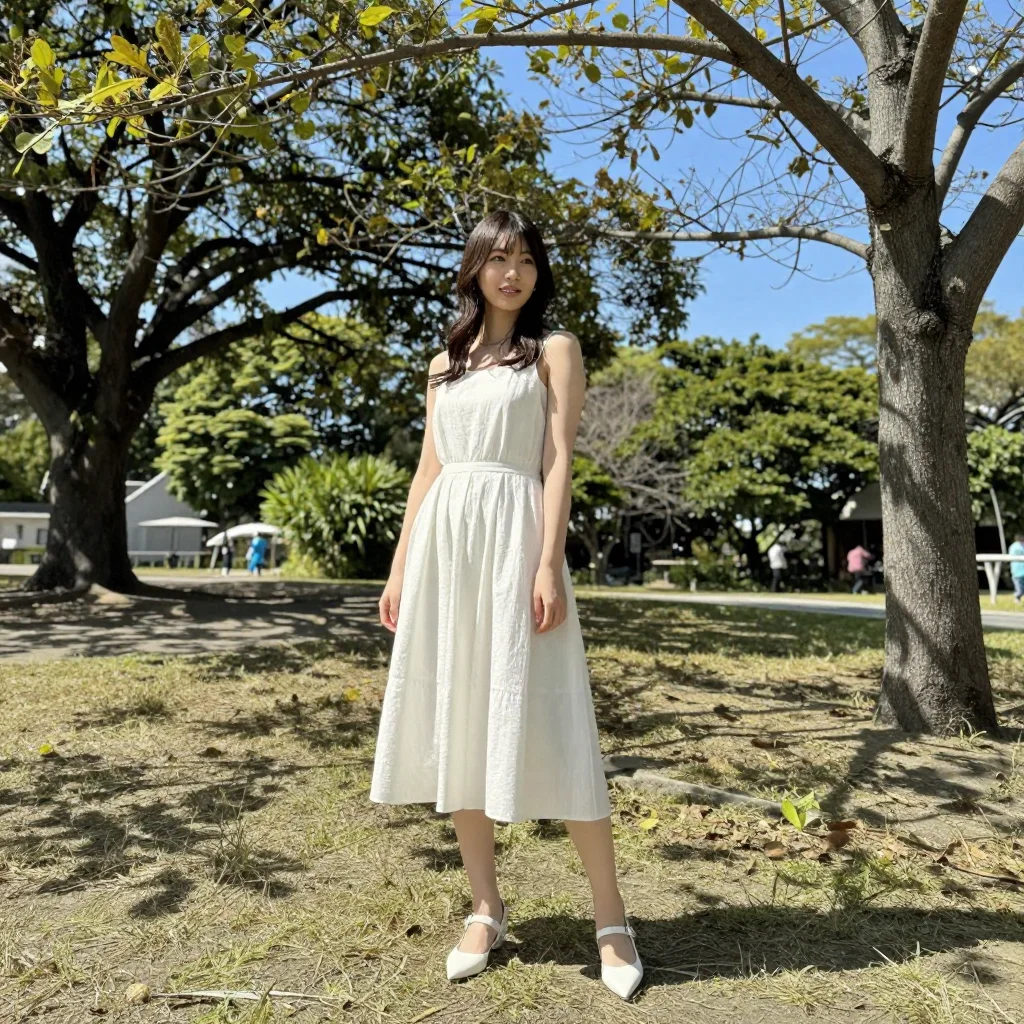 |
Observation: Hair is nearly stationary, hanging straight down to the tips. Skirt falls straight down. No wind movement in 3/3 images. This serves as the baseline.
A01: wind (1 token)
| seed 1 | seed 2 | seed 3 |
|---|---|---|
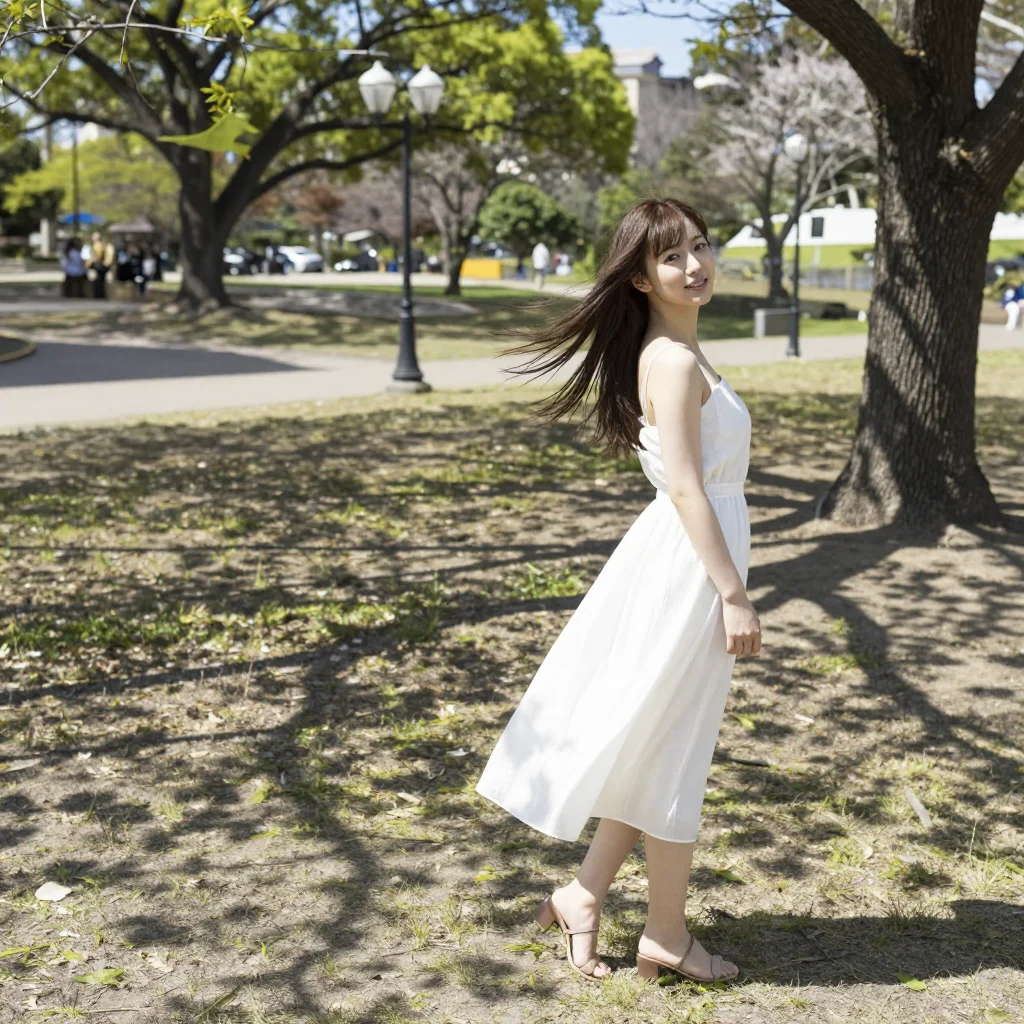 | 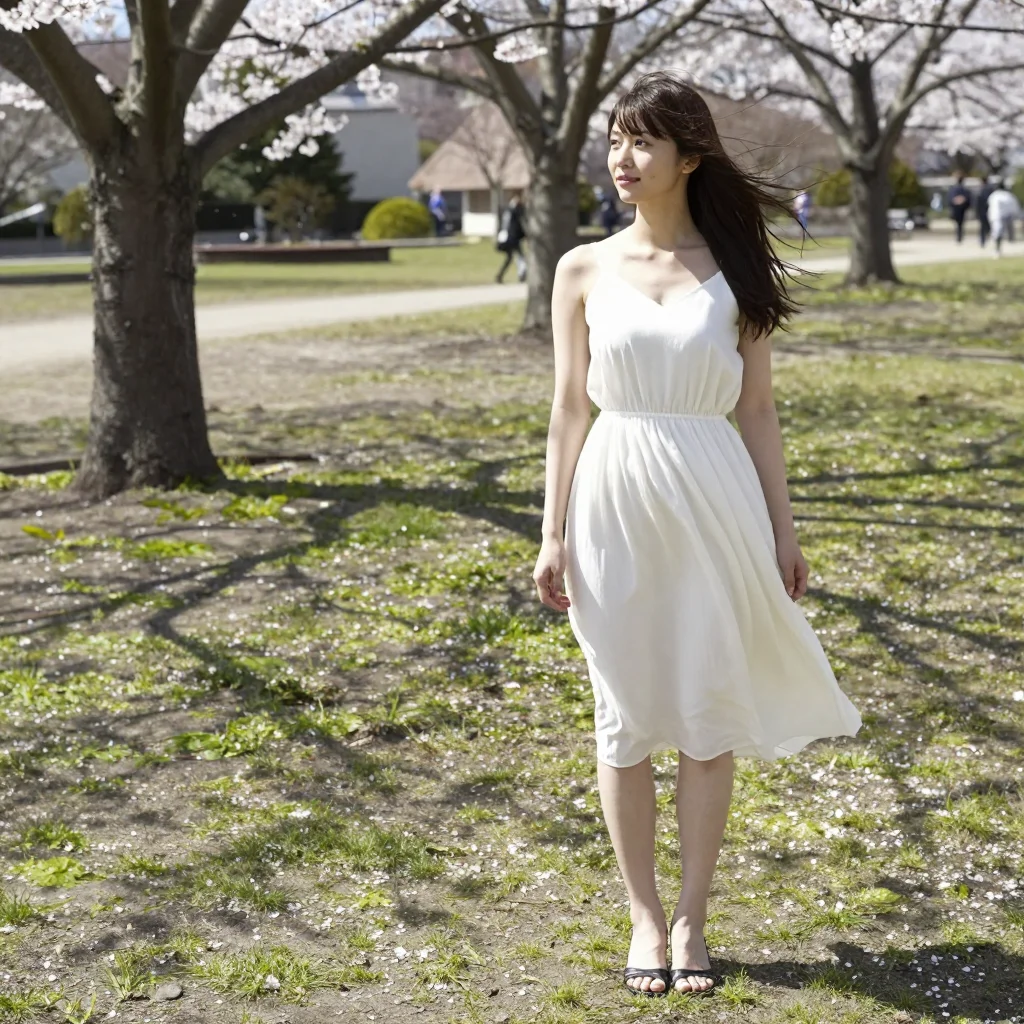 | 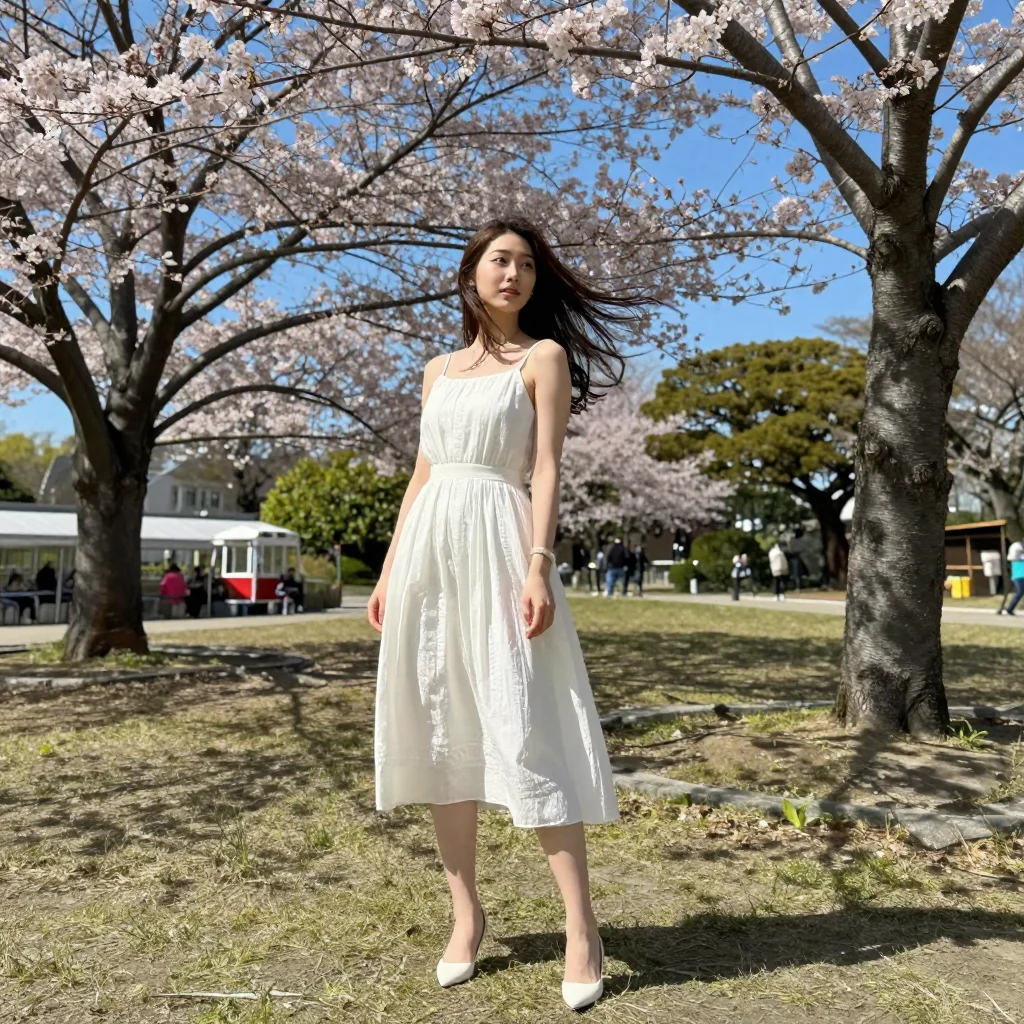 |
Observation: Hair flowing strongly sideways in 3/3 images. Difference from control is clear. Slight skirt movement visible, with hem flowing to one side. A fundamental 1-token word that reliably moves hair.
A02: breeze (1 token)
| seed 1 | seed 2 | seed 3 |
|---|---|---|
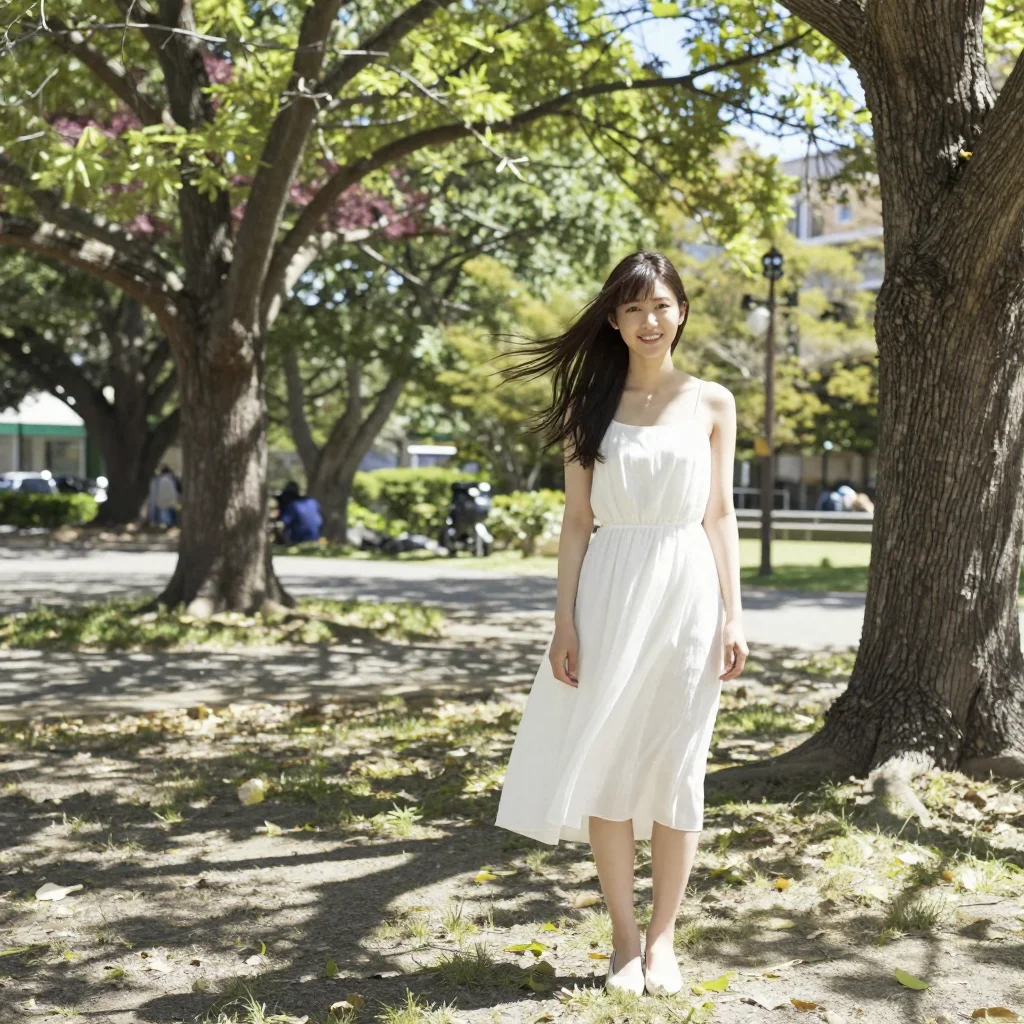 | 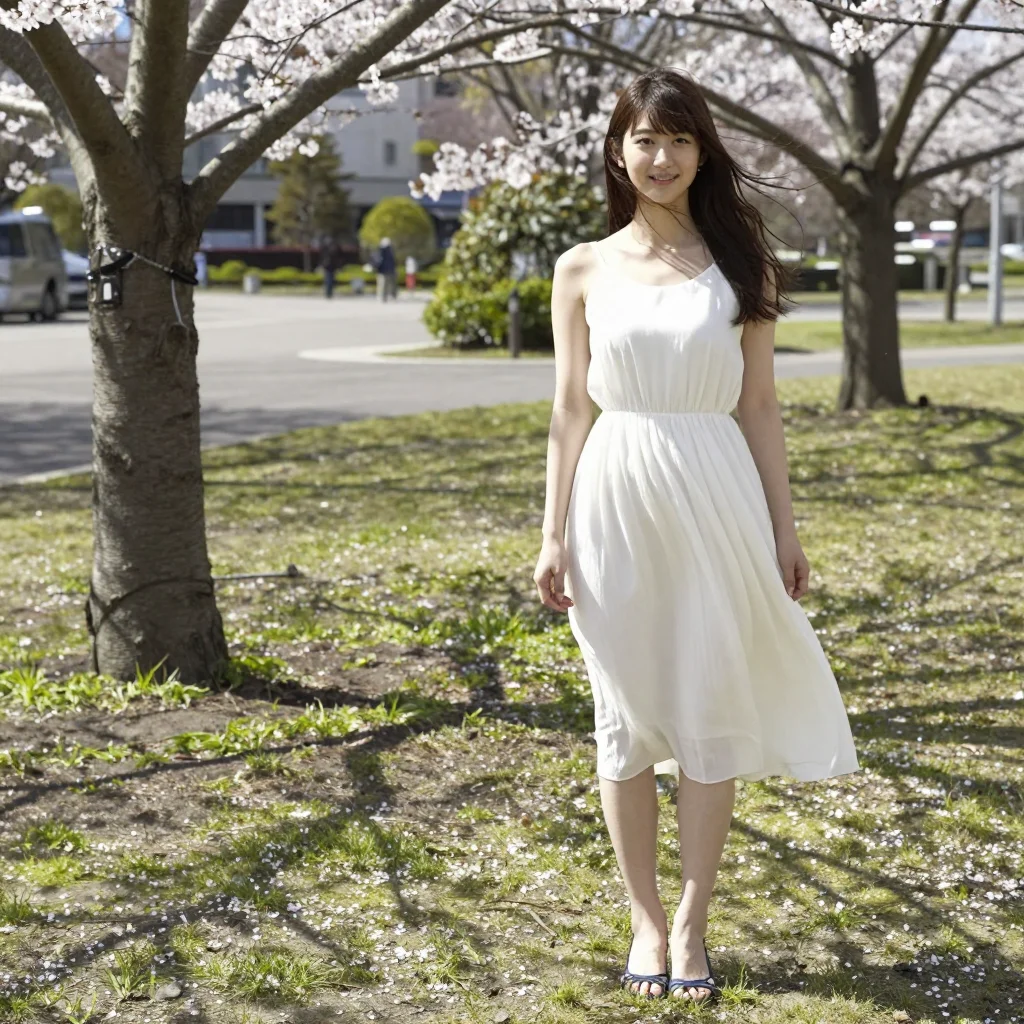 | 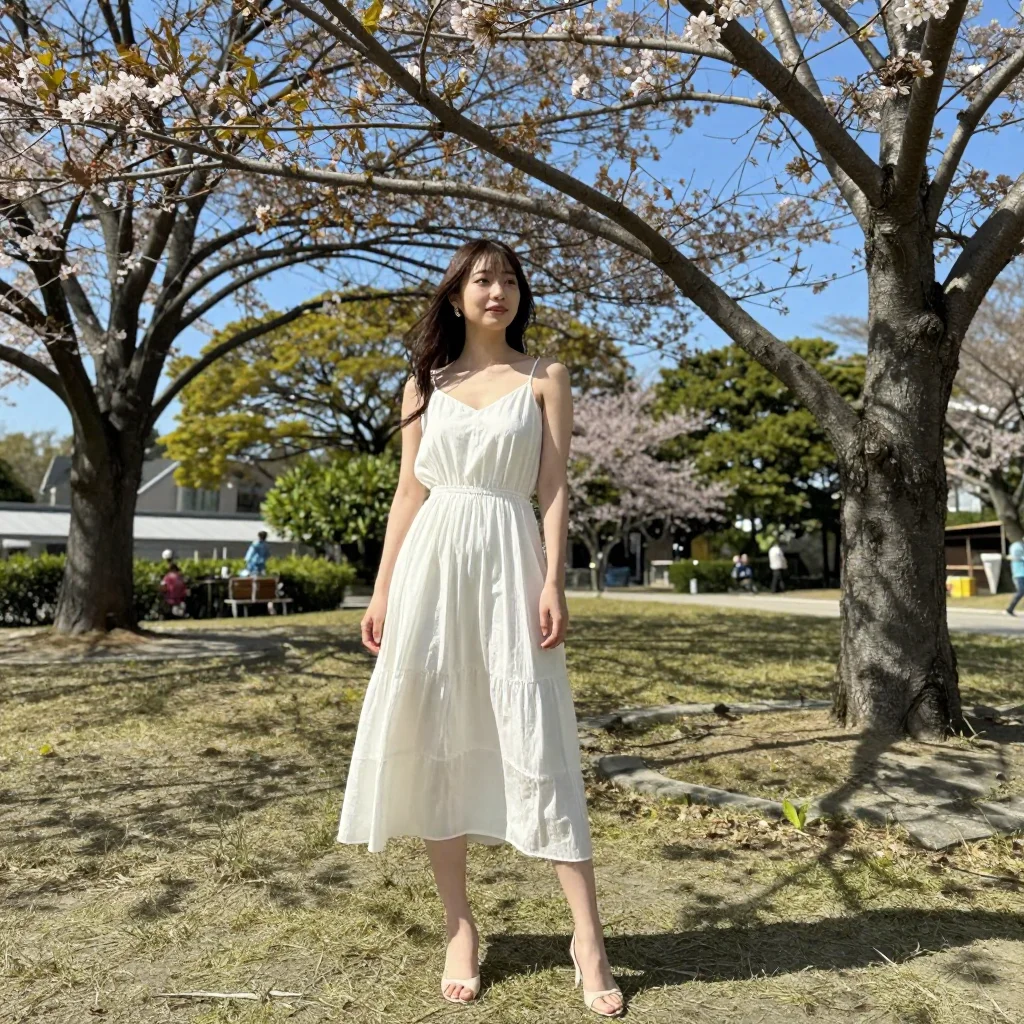 |
Observation: Slight hair movement, with tips flowing sideways. However, hair displacement is smaller compared to wind. Skirt barely moves. breeze implies a gentle wind and the effect on the image is also gentle.
A03: gentle breeze (2 tokens)
| seed 1 | seed 2 | seed 3 |
|---|---|---|
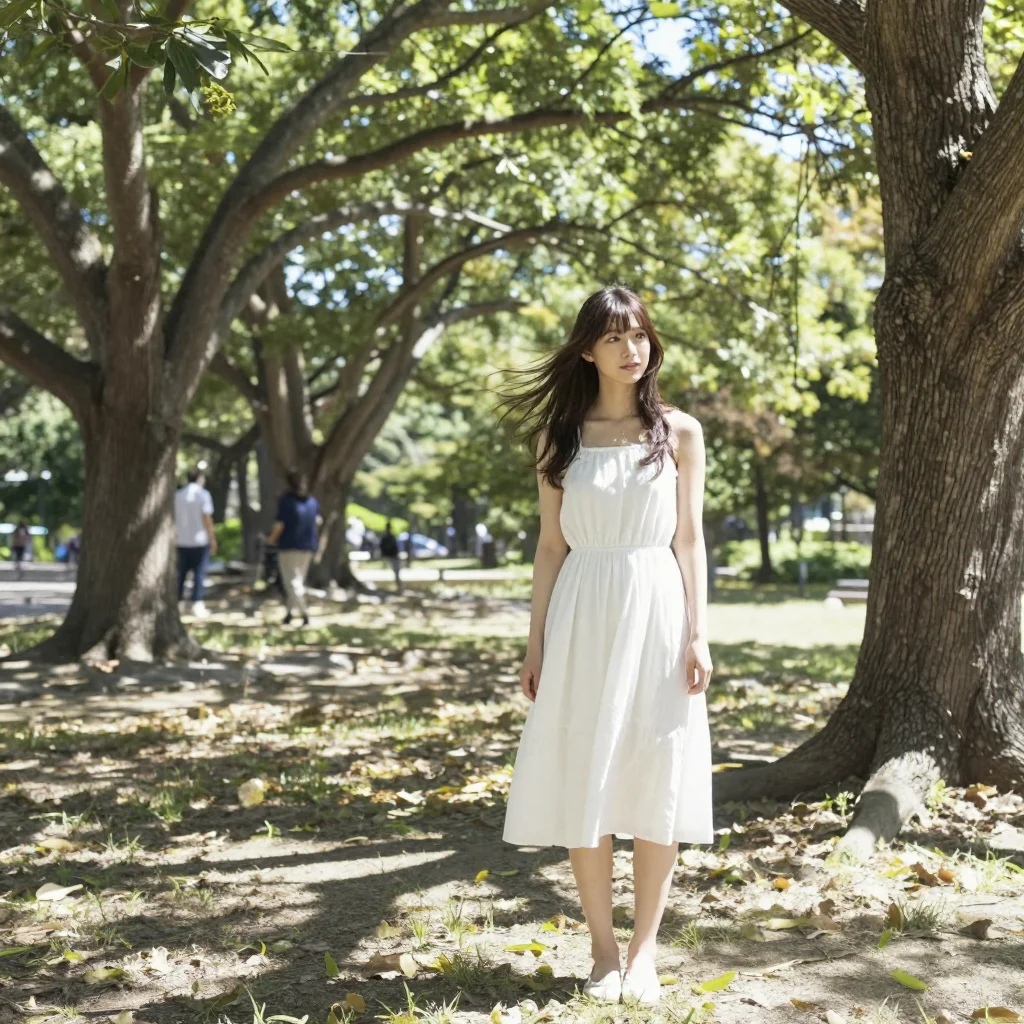 | 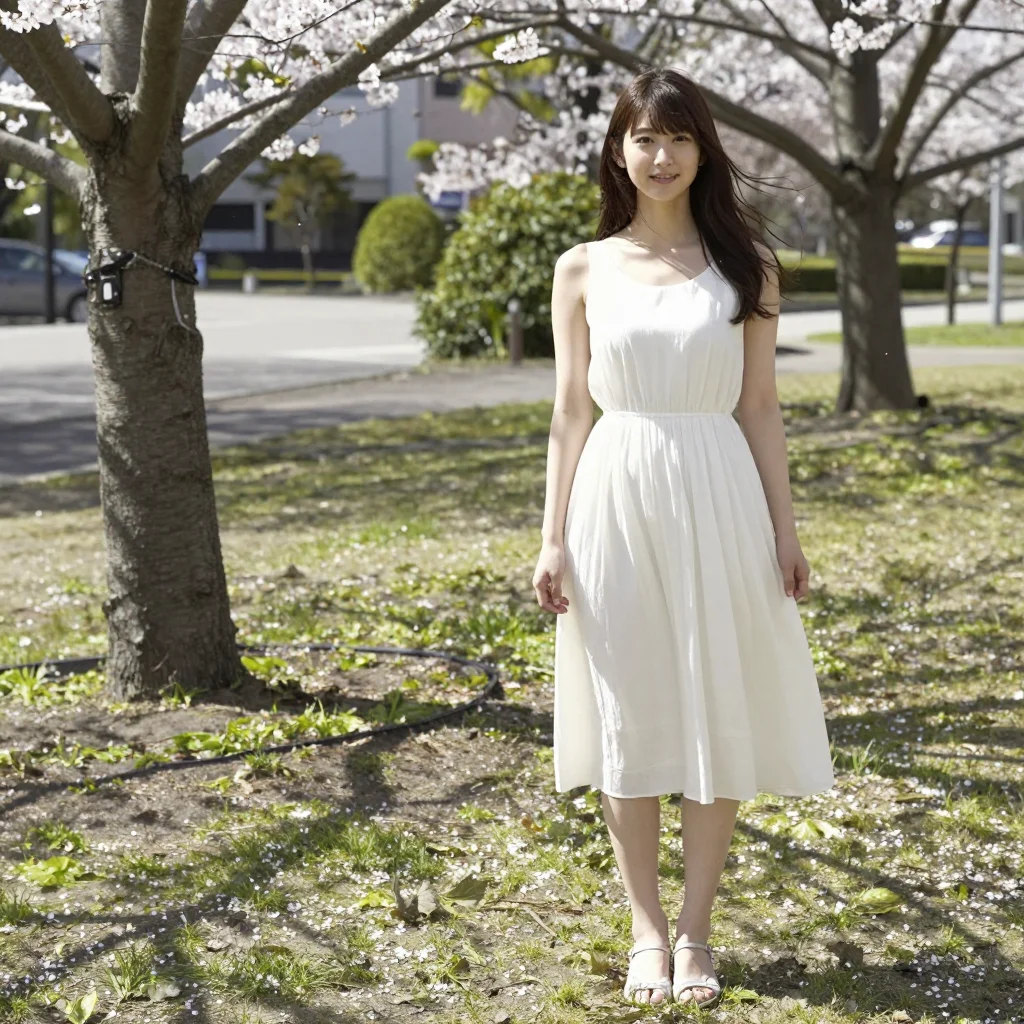 | 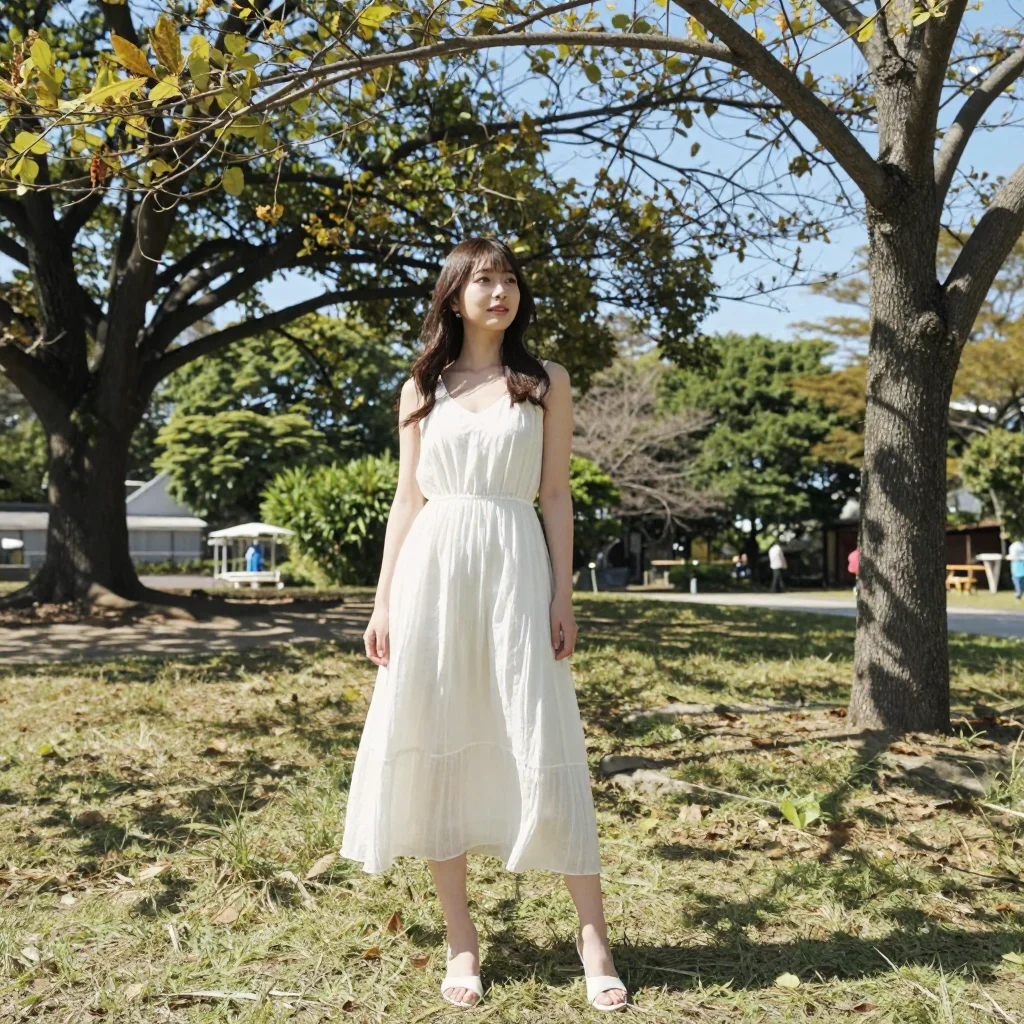 |
Observation: Slightly more hair movement than breeze, with slight hem movement. Given 2 token usage, the difference from wind (1 token) is small. Token efficiency favors wind.
A04: strong wind (2 tokens)
| seed 1 | seed 2 | seed 3 |
|---|---|---|
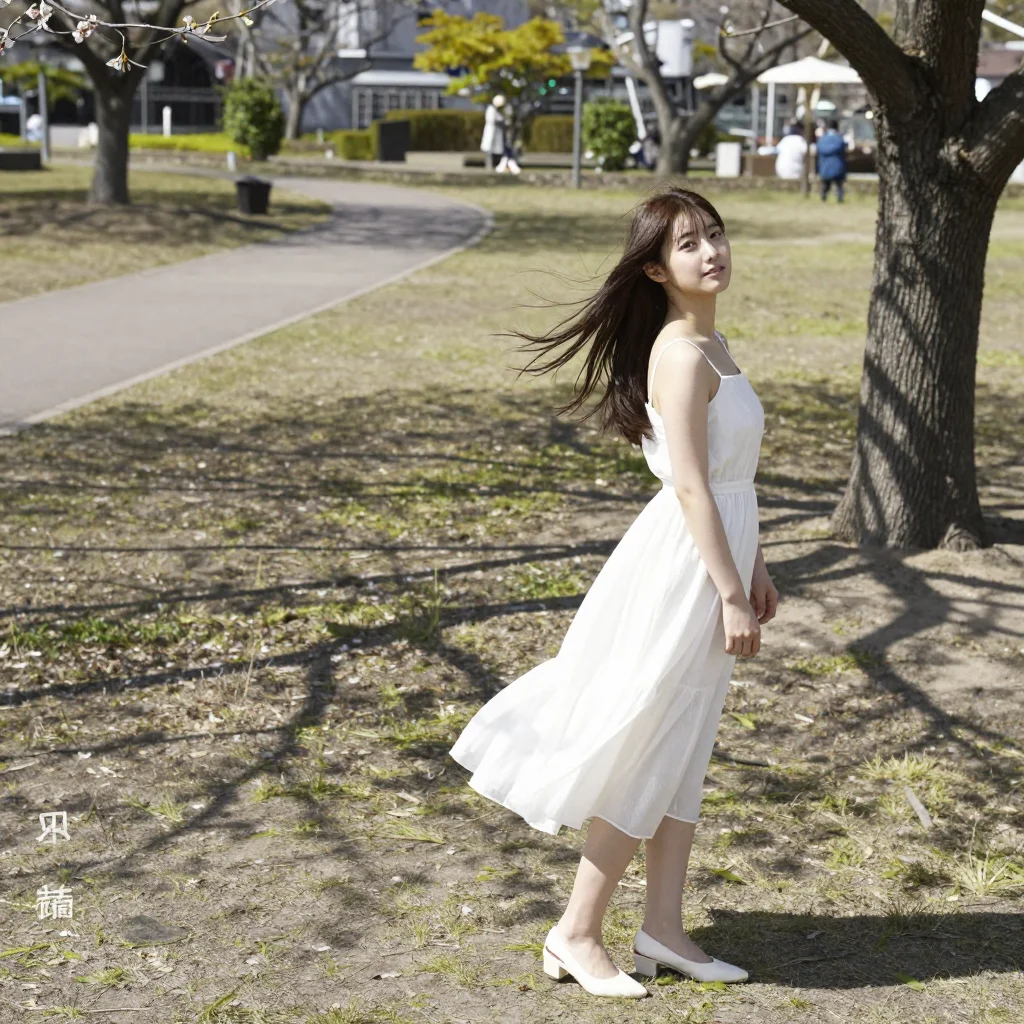 | 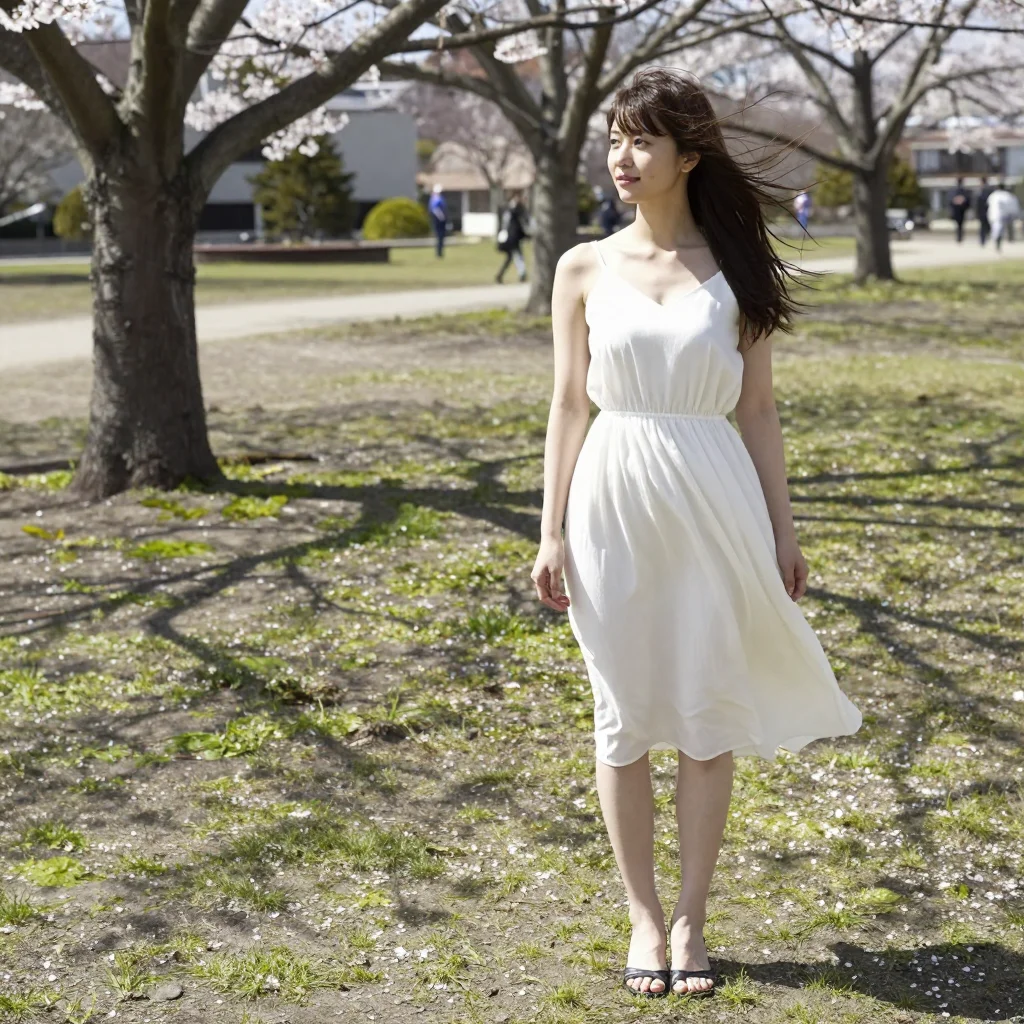 | 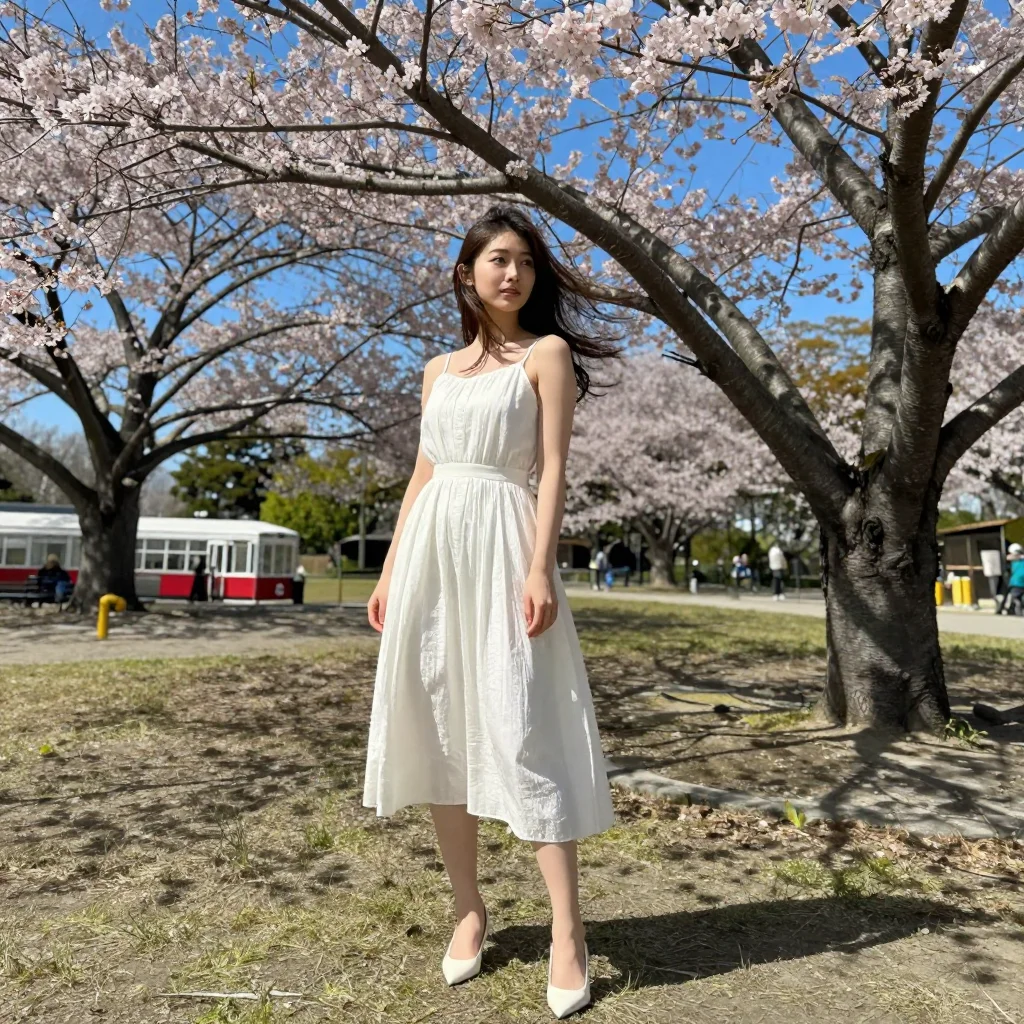 |
Observation: Hair flowing strongly backward, with the body slightly leaning into the wind in 2/3 images. Skirt hem also moving. Greater hair displacement than wind, with wind effects visible on the body pose. A worthwhile upgrade for 2 tokens.
A05: gust of wind (3 tokens)
| seed 1 | seed 2 | seed 3 |
|---|---|---|
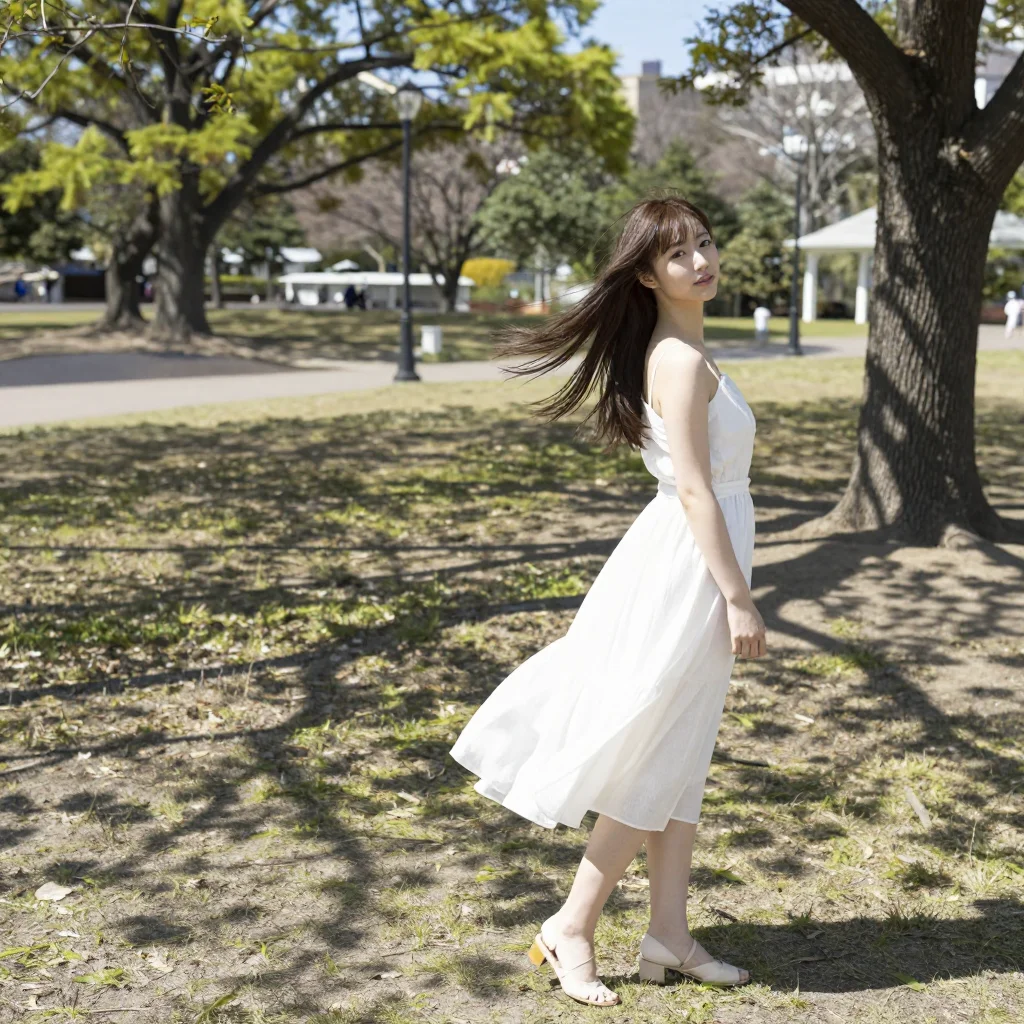 | 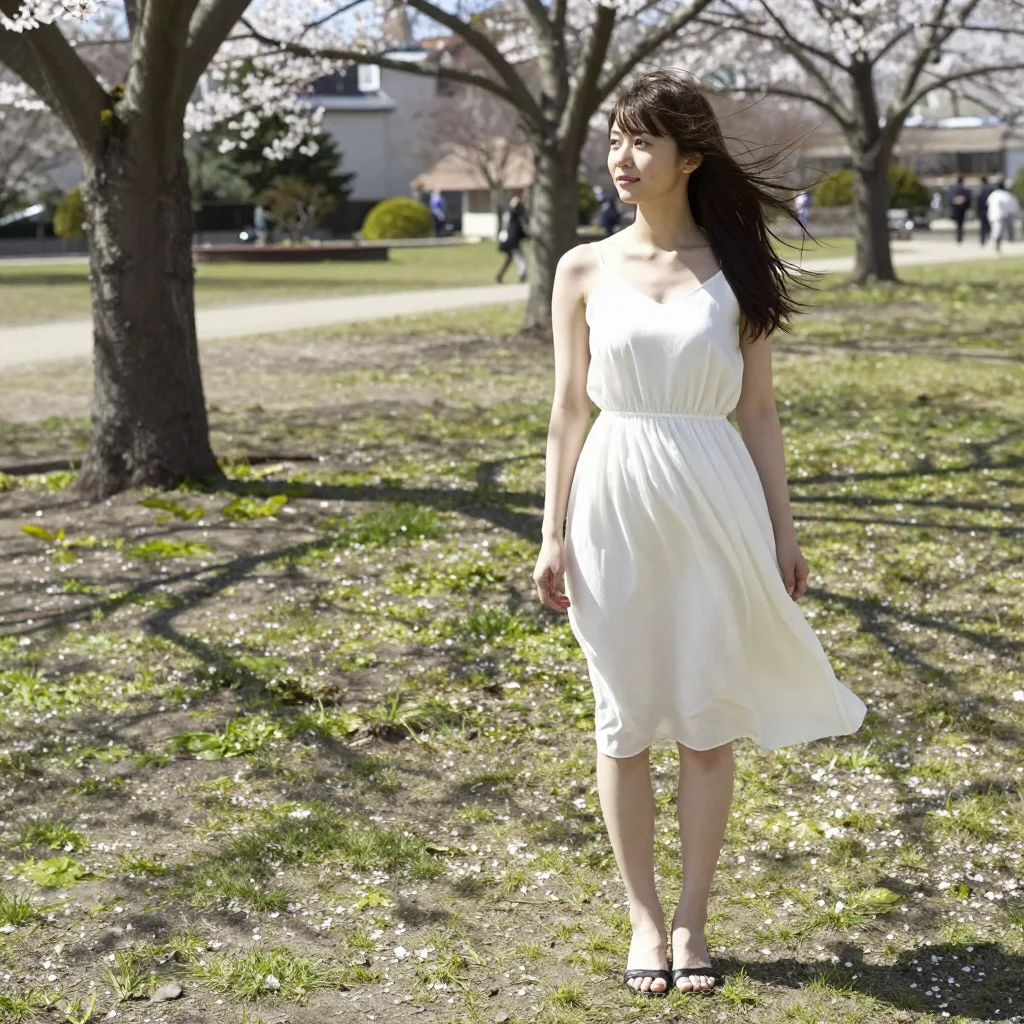 | 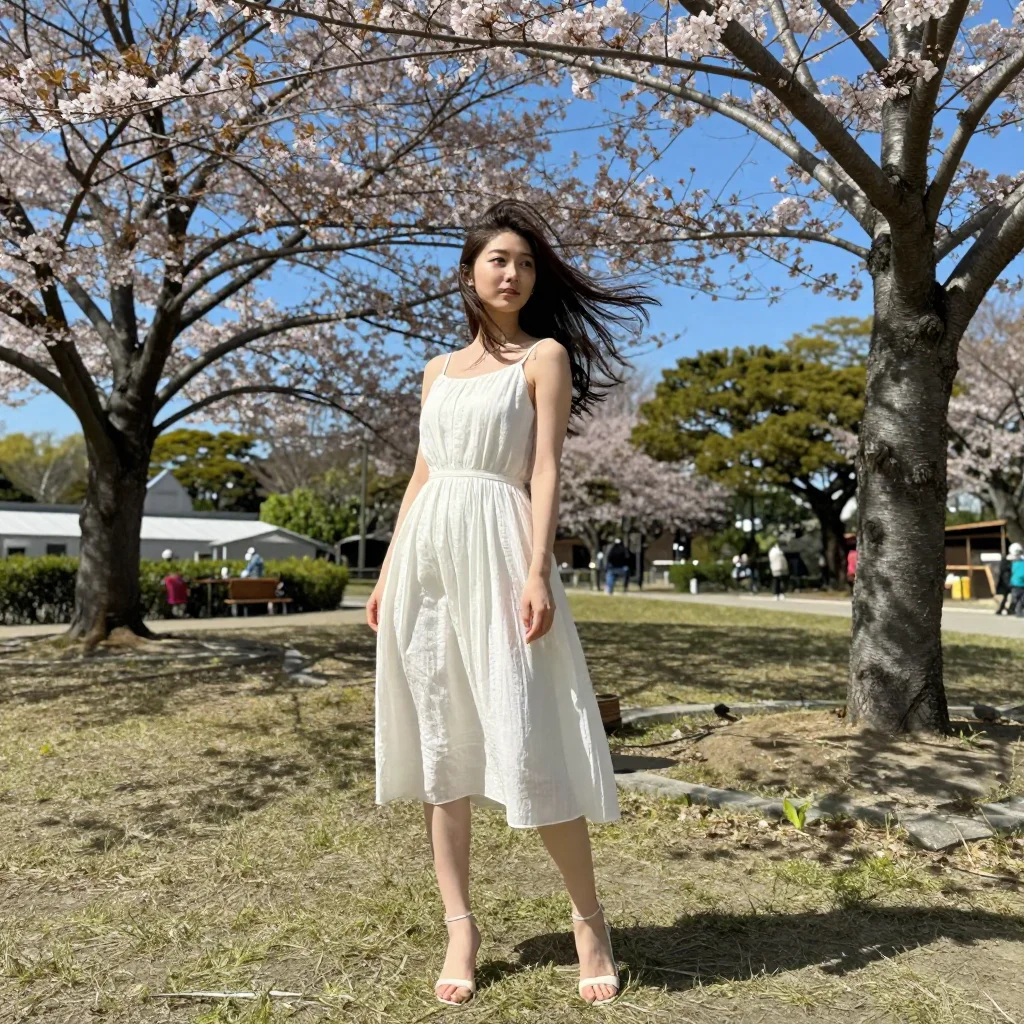 |
Observation: Equivalent effect to strong wind. Hair flows largely sideways with body leaning. However, 3 token cost means strong wind (2 tokens) is more efficient for the same effect.
A06: windy (1 token)
| seed 1 | seed 2 | seed 3 |
|---|---|---|
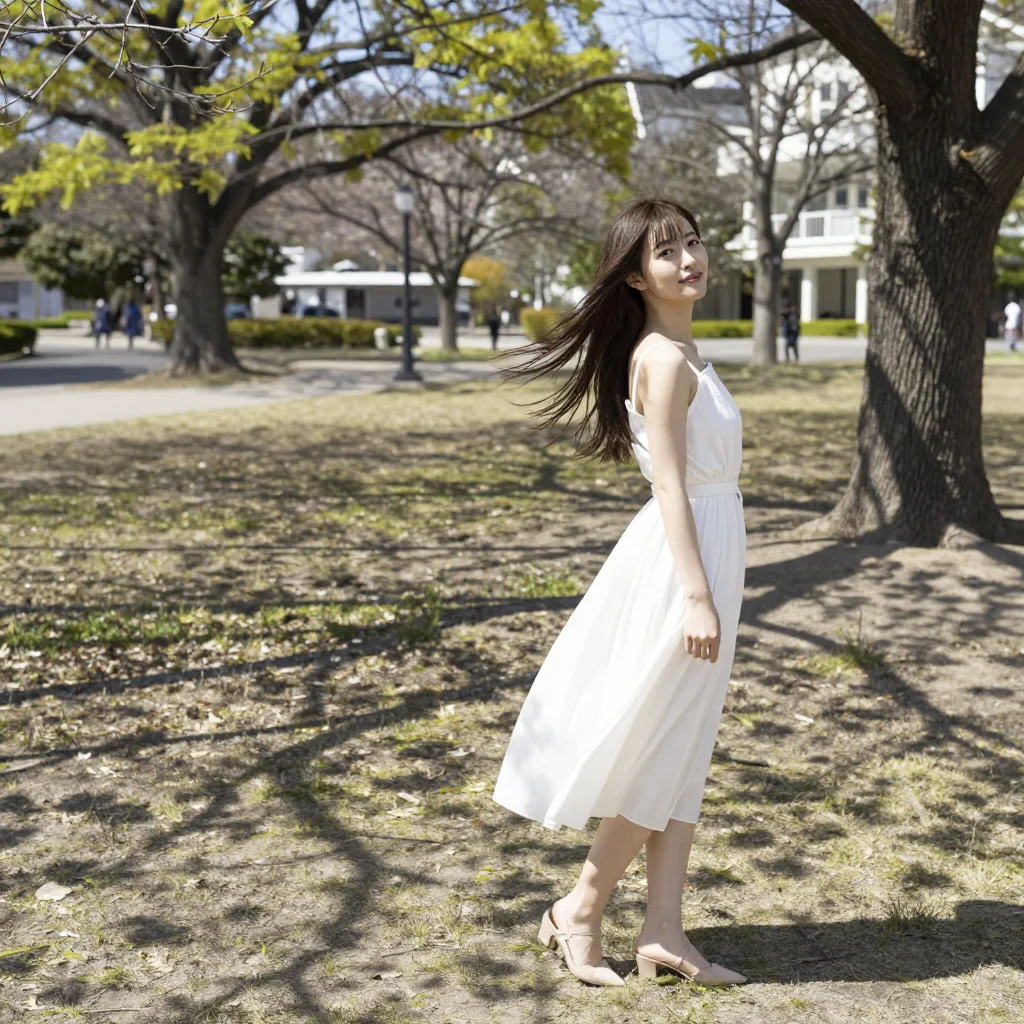 | 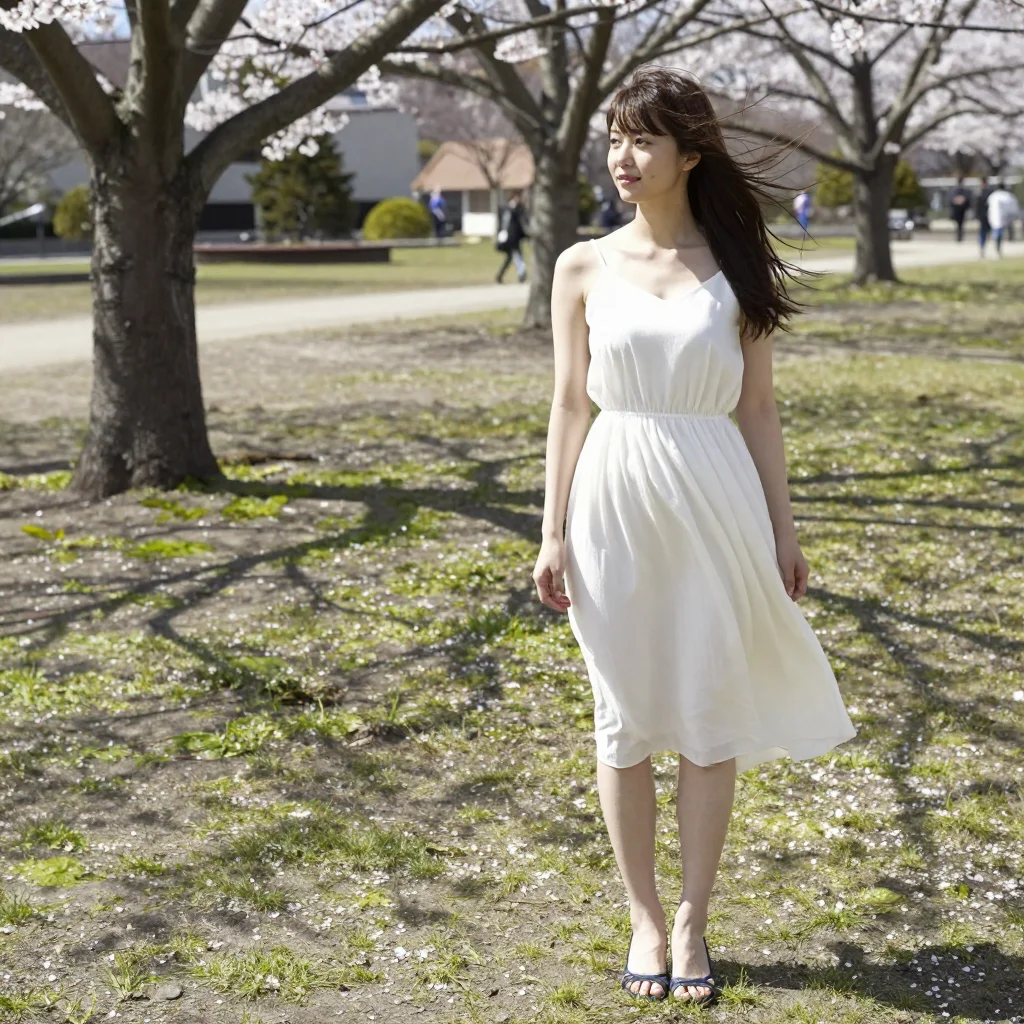 | 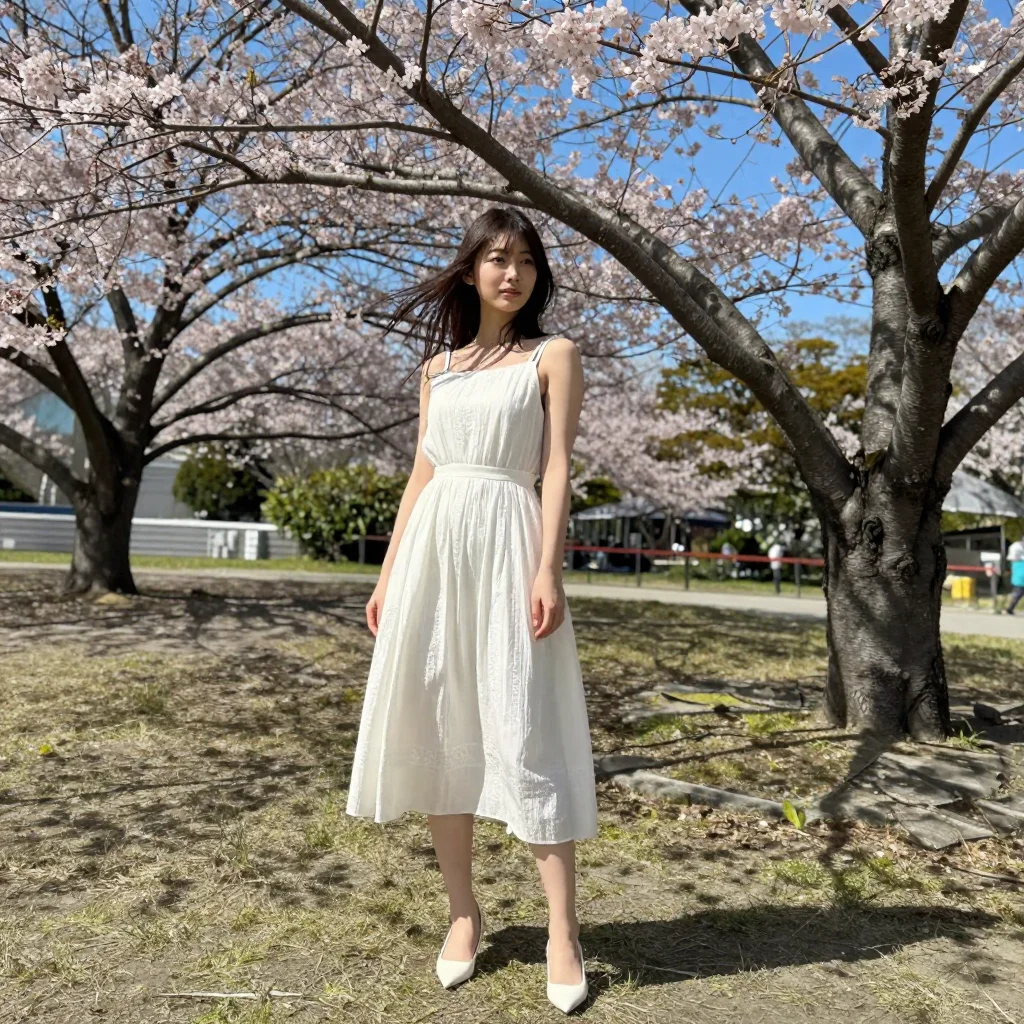 |
Observation: Equivalent effect to wind. Hair flows sideways with slight skirt hem movement. The adjective form shows no visually confirmed difference from the noun form wind.
A07: hair blowing in wind (4 tokens)
| seed 1 | seed 2 | seed 3 |
|---|---|---|
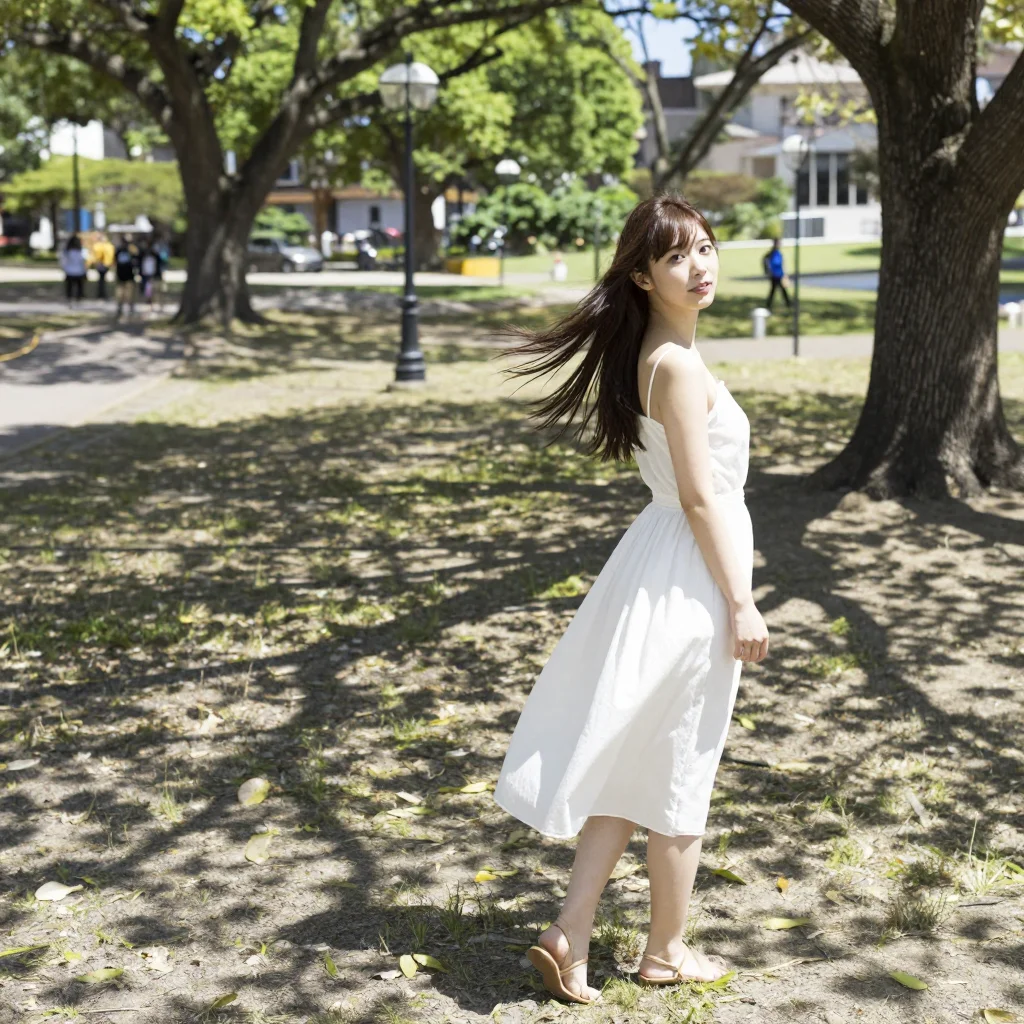 | 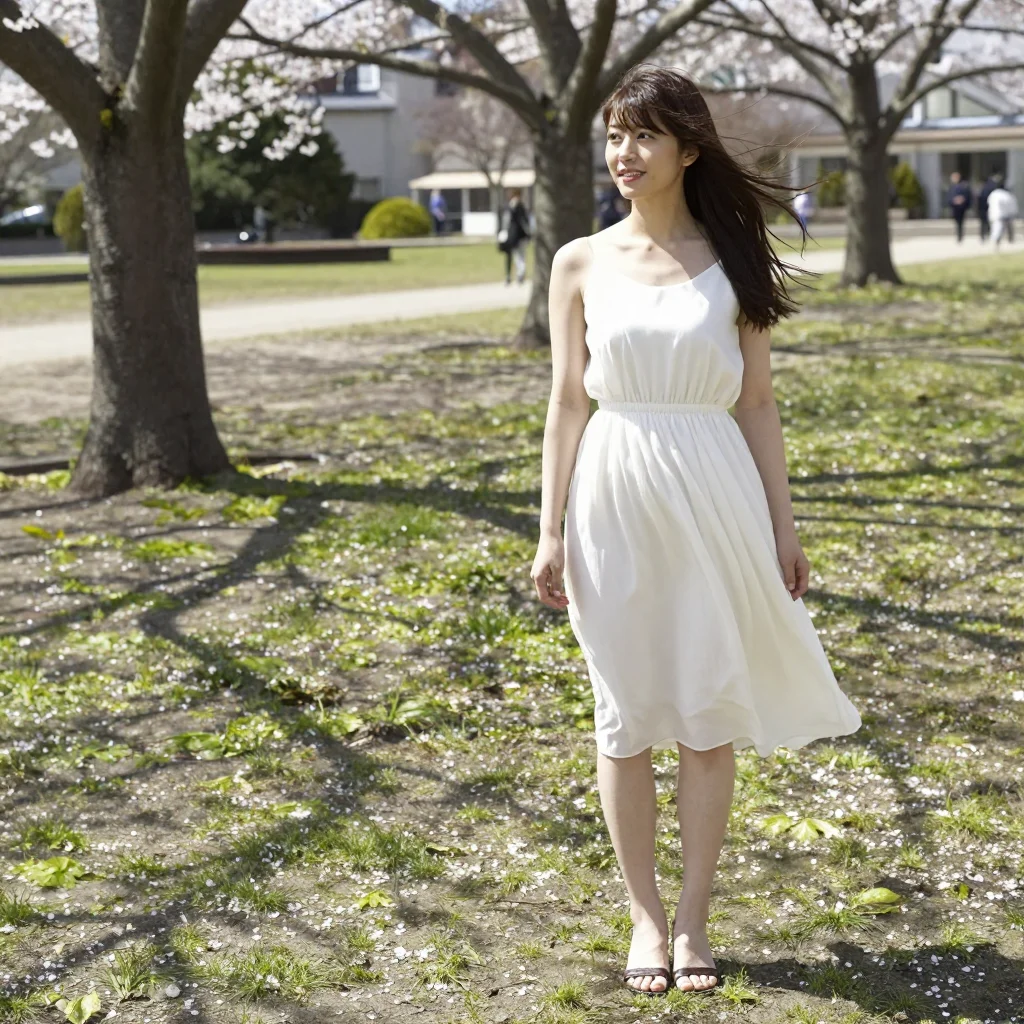 | 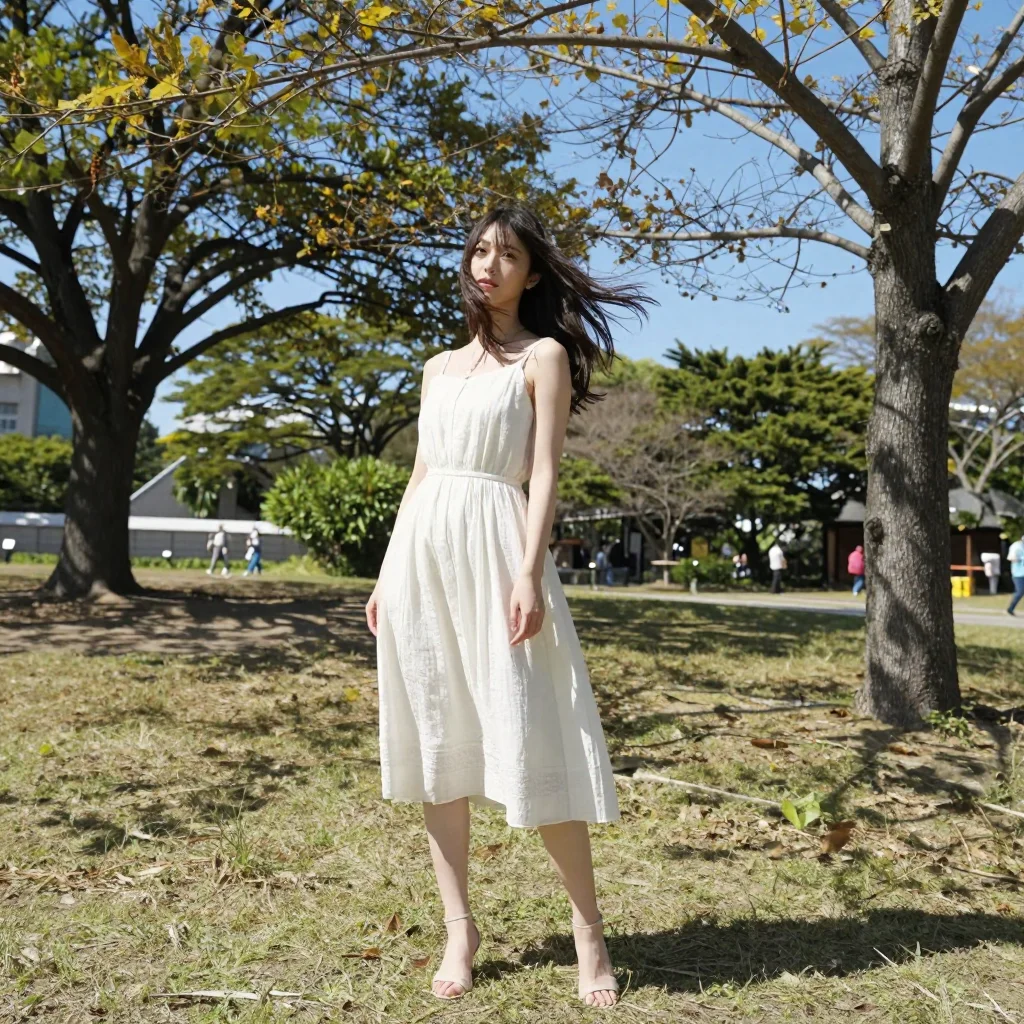 |
Observation: Hair flowing strongly sideways. Meanwhile skirt barely moves. Because “hair” is explicitly stated, the wind effect concentrates on the hair, not spreading to the clothing. Useful when you only want to move the hair. However, 4 tokens is expensive.
A08: wind blowing hair and clothes (5 tokens)
| seed 1 | seed 2 | seed 3 |
|---|---|---|
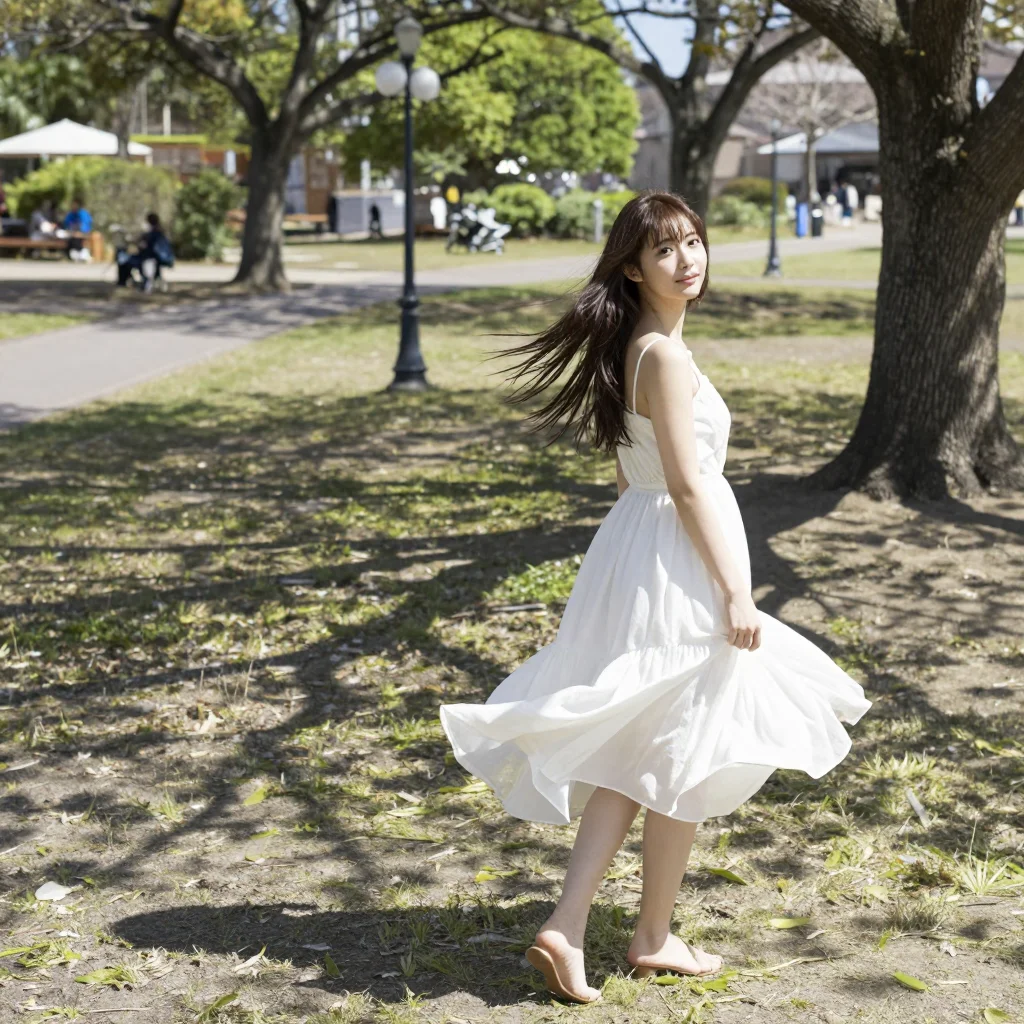 | 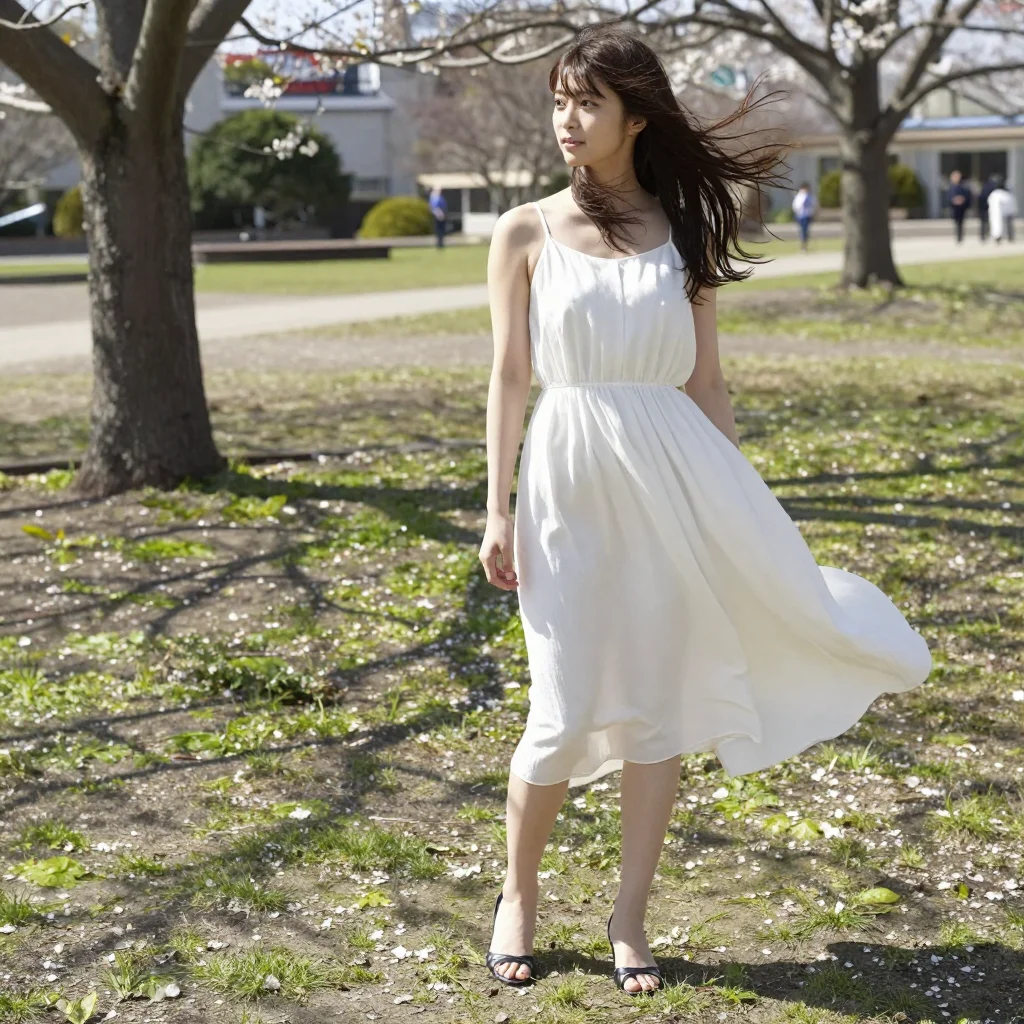 | 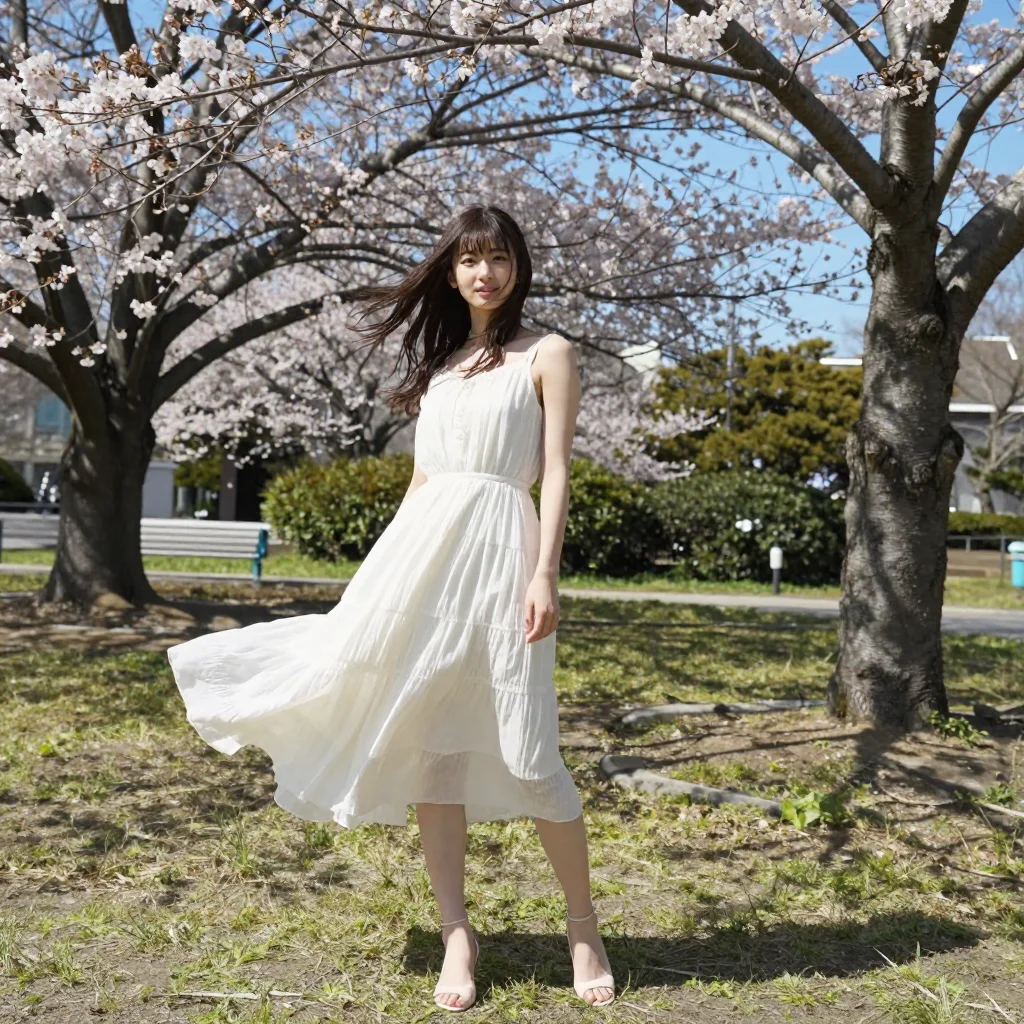 |
Observation: Both hair and skirt are moving significantly. Skirt spreading sideways and hair flowing strongly in 3/3 images. Compared to A07, “and clothes” extends the effect to the clothing. The most reliable expression for moving both hair and clothing. However, 5 tokens is expensive.
A09: windswept (1 token)
| seed 1 | seed 2 | seed 3 |
|---|---|---|
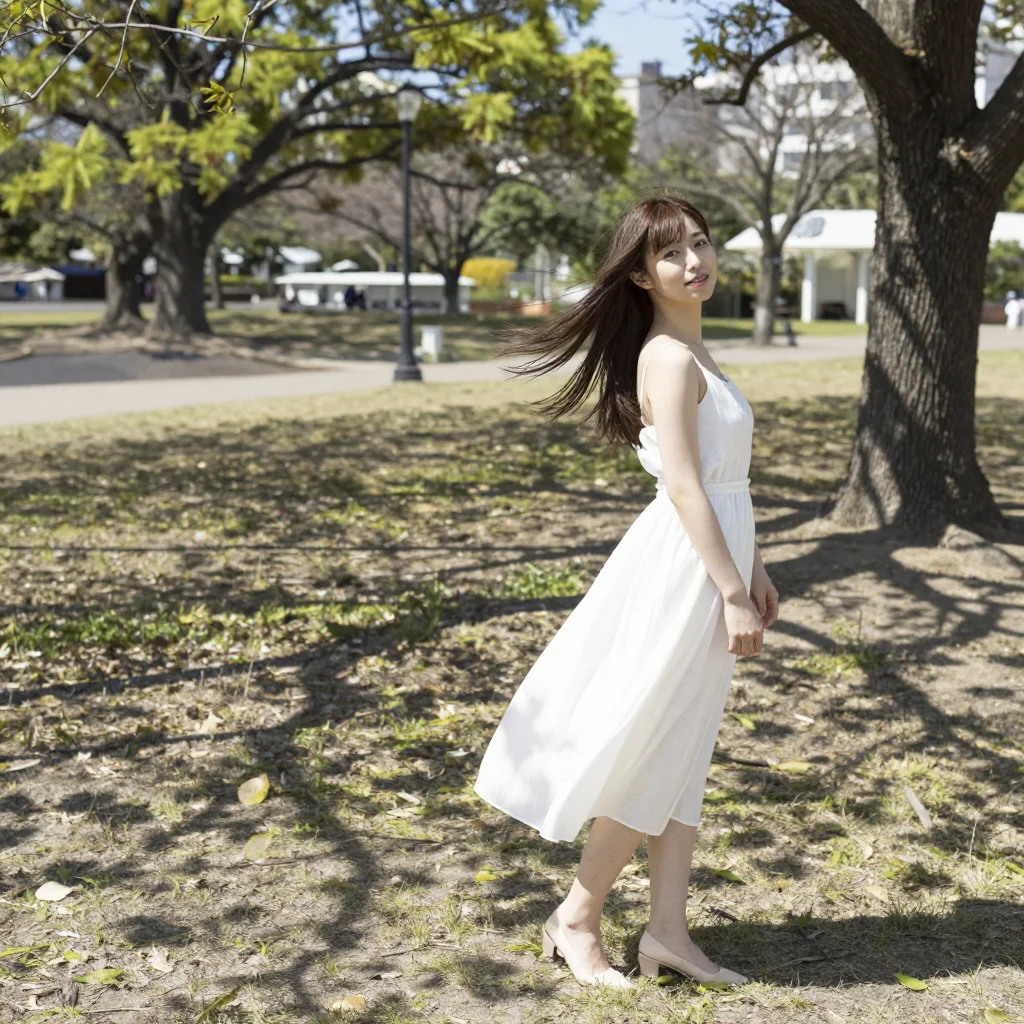 | 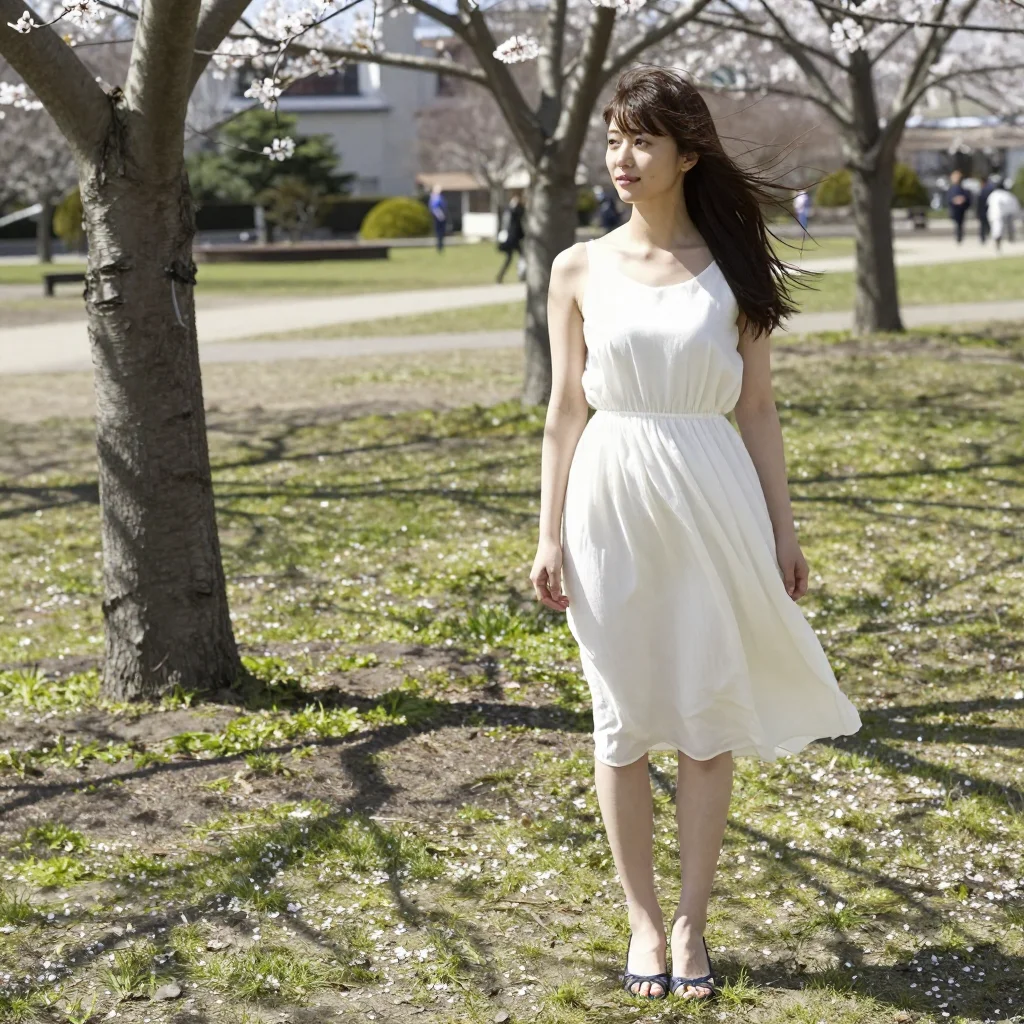 | 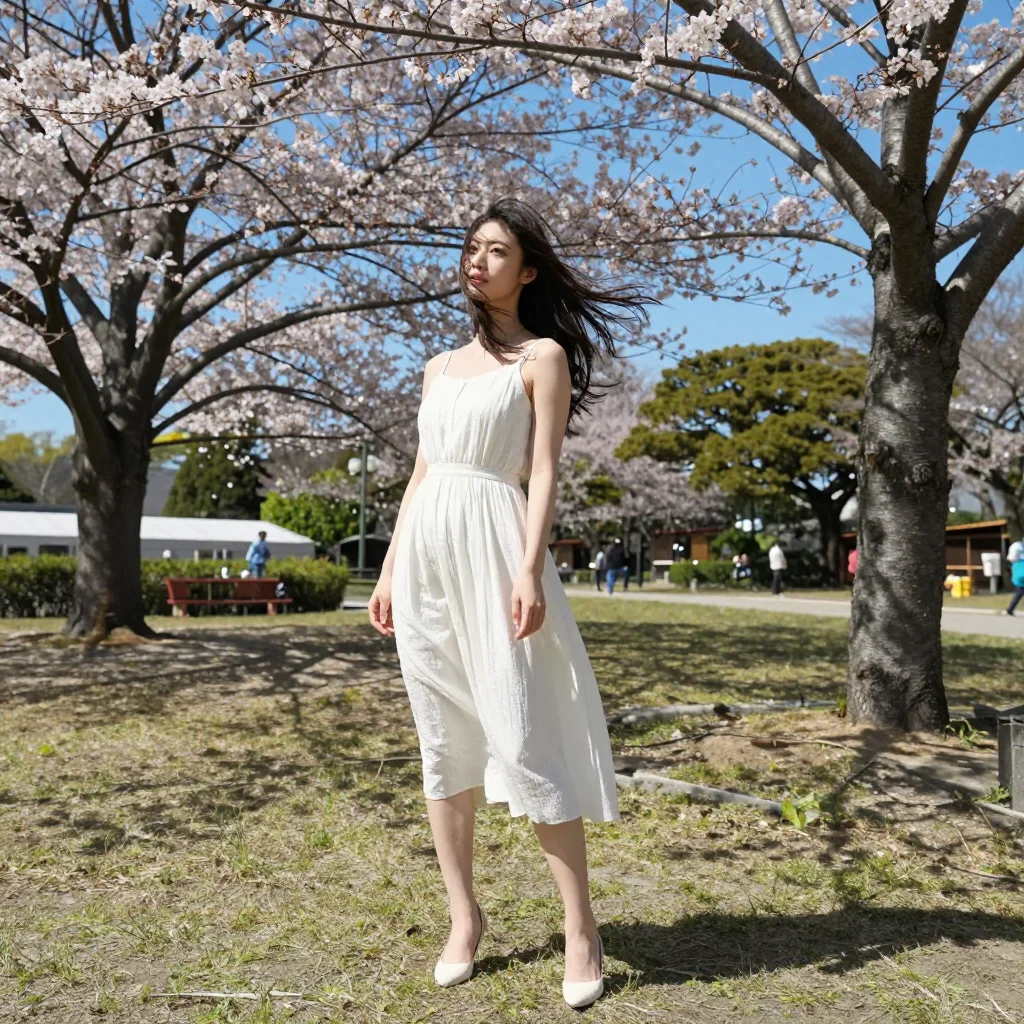 |
Observation: Hair flowing sideways with wind-equivalent effect. Slight skirt hem movement. 1 token for wind-equivalent effect — either works fine.
A10: billowing (1 token)
| seed 1 | seed 2 | seed 3 |
|---|---|---|
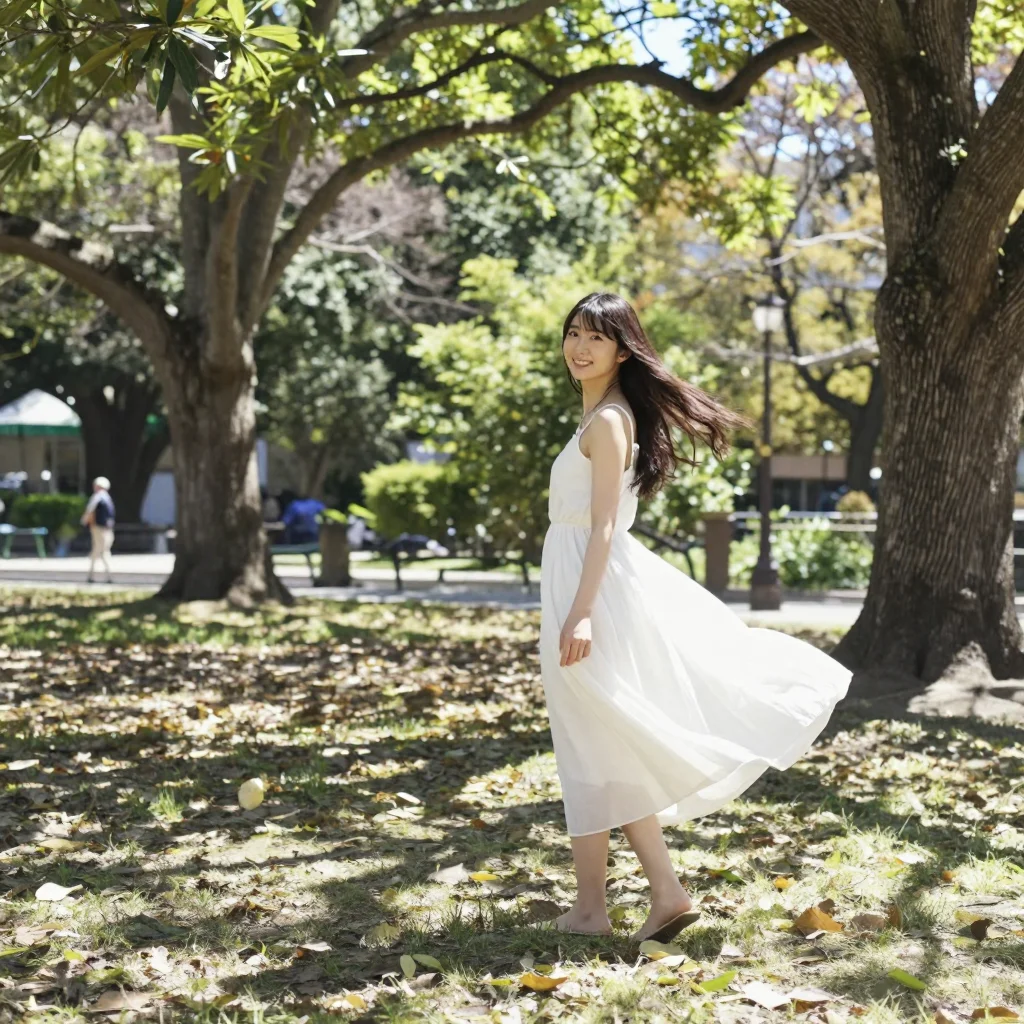 | 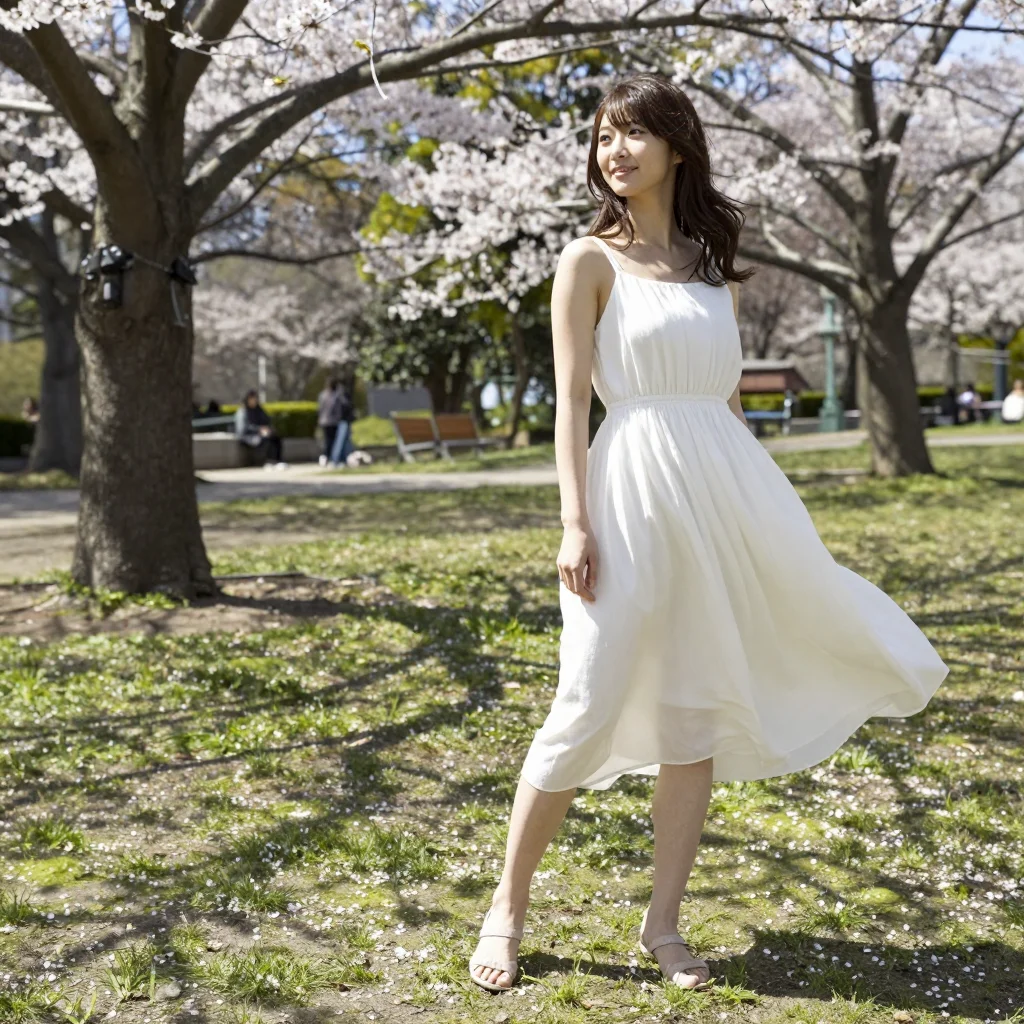 | 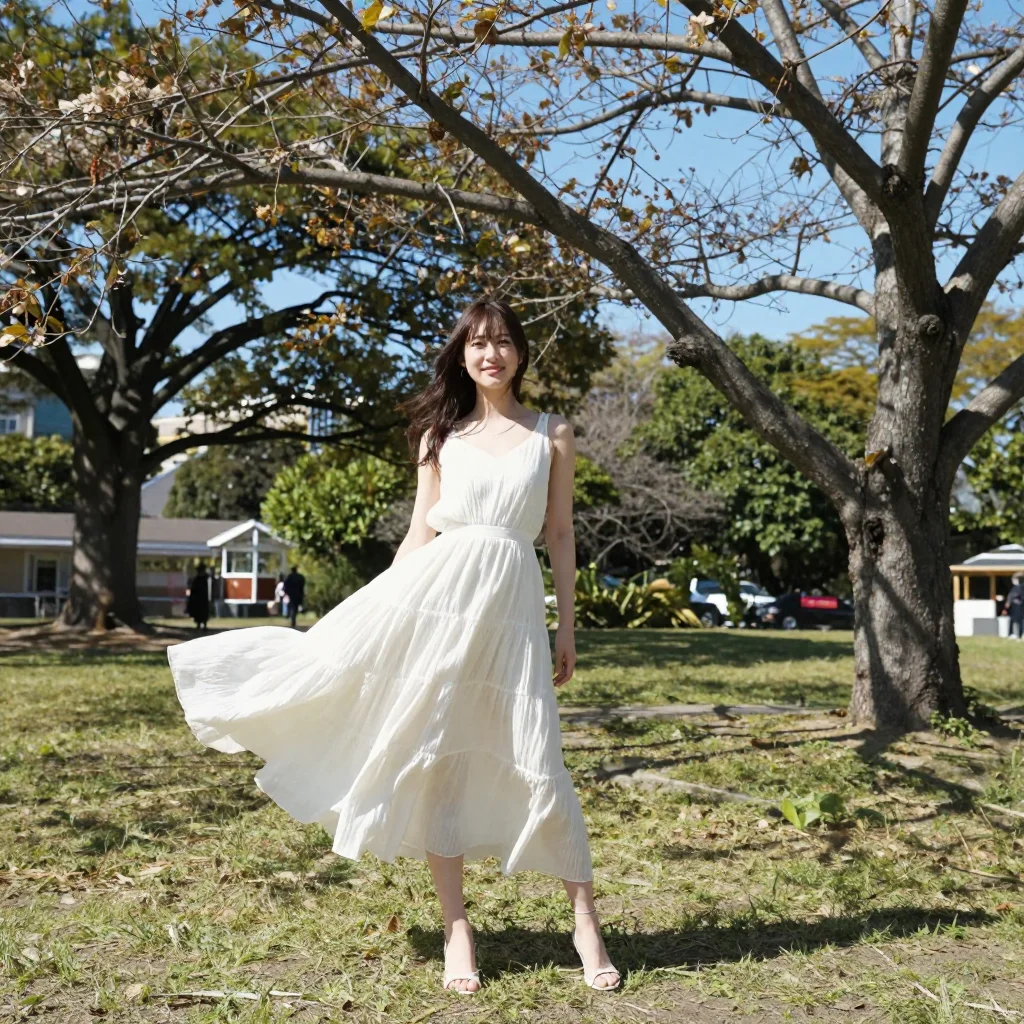 |
Observation: Not just hair flowing — the skirt spreads widely with prominent fabric movement. Stronger effect on clothing than wind. Prominent skirt spread in 2/3 images. Excellent clothing effect for 1 token.
A11: fluttering (1 token)
| seed 1 | seed 2 | seed 3 |
|---|---|---|
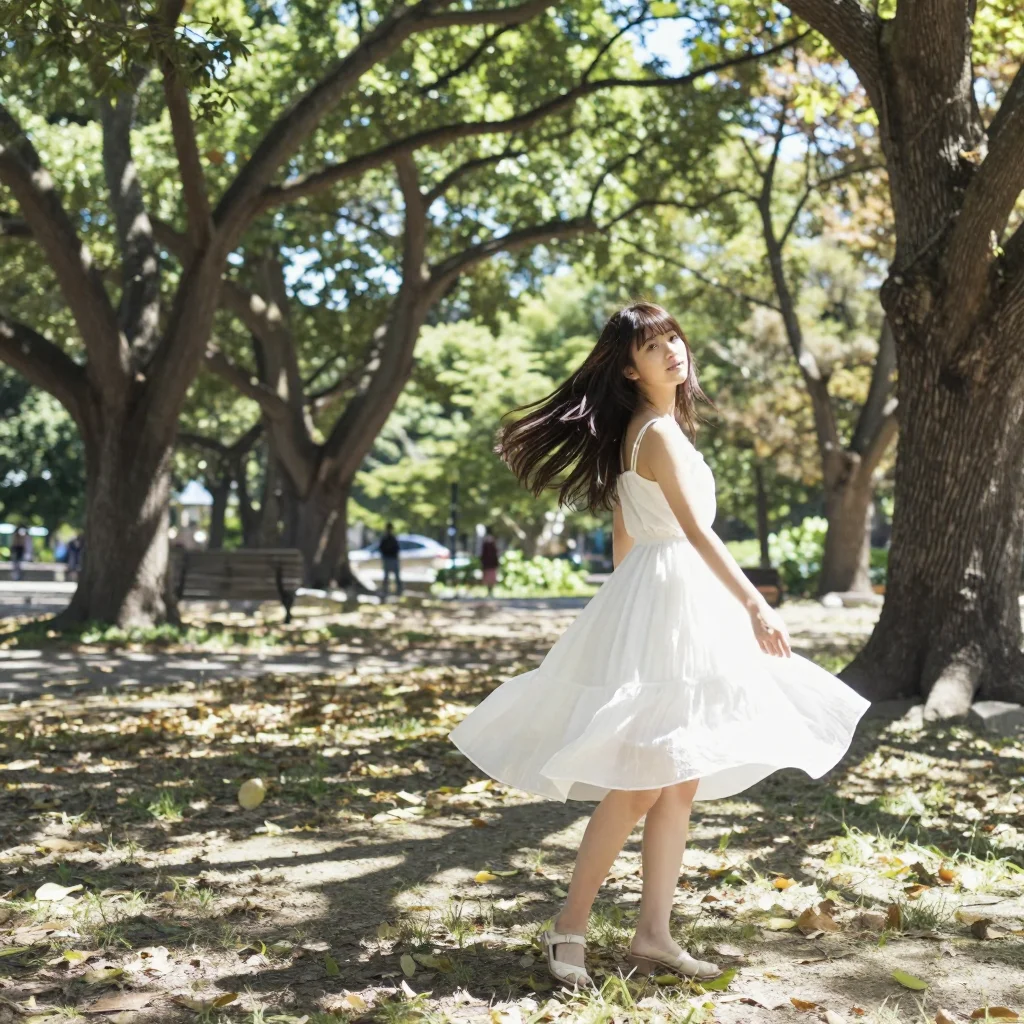 |  | 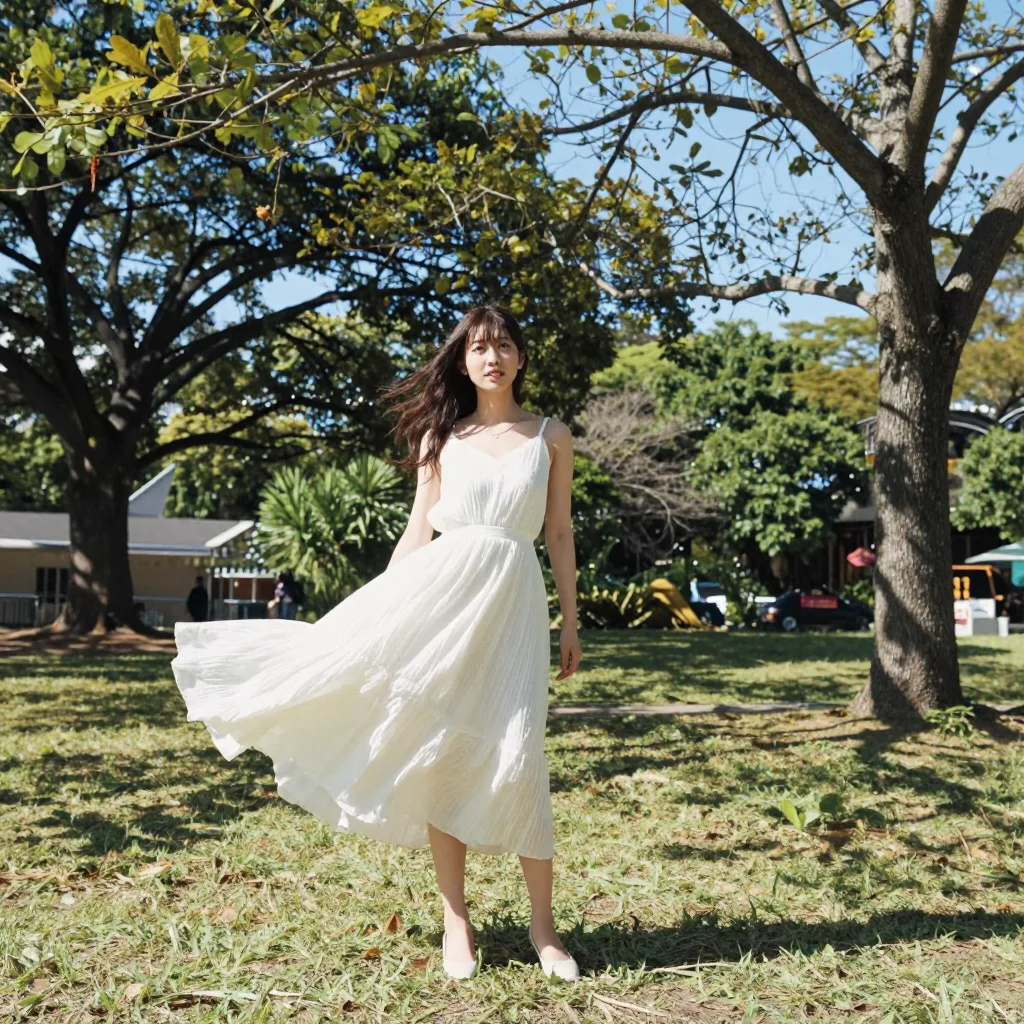 |
Observation: Skirt spreading widely in 3/3 images. Hair also flowing. Effect on skirt equals or exceeds billowing, with the most dramatic fabric movement stably generated among all 26 conditions. Maximum effect for 1 token. The token efficiency champion.
Experiment A Summary
| Condition | Tokens | Hair Displacement | Clothing Displacement | Overall |
|---|---|---|---|---|
| A00 control | 0 | Stationary | Stationary | — |
| A01 wind | 1 | Full lateral flow | Slight hem movement | ◎ |
| A02 breeze | 1 | Tips only | Stationary | △ |
| A03 gentle breeze | 2 | Tips to moderate | Slight hem | △ |
| A04 strong wind | 2 | Full large flow | Hem movement | ◎ |
| A05 gust of wind | 3 | Full large flow | Hem movement | ◯ (efficiency △) |
| A06 windy | 1 | Full lateral flow | Slight hem movement | ◎ |
| A07 hair blowing in wind | 4 | Full strong flow | Barely moves | ◯ (hair-focused) |
| A08 wind blowing hair and clothes | 5 | Full strong flow | Full billowing | ◎ (both reliable) |
| A09 windswept | 1 | Full lateral flow | Slight hem | ◎ |
| A10 billowing | 1 | Full lateral flow | Full spread | ◎ |
| A11 fluttering | 1 | Full lateral flow | Full wide spread | ◎ (best efficiency) |
Findings:
- Among 1-token words,
flutteringandbillowinghave particularly strong effects on clothing wind/windy/windsweptwork well on hair but have weaker effects on clothingbreezeis too gentle and may not produce the intended wind effect- Specifying a target like
hair blowing in windconcentrates the effect on the stated target only
B. Motion Modifiers (8 conditions)
Testing expressions that directly modify “movement” of hair or clothes without explicitly stating “wind.” Implemented by replacing long hair or white sundress in the base prompt.
Hair Modifiers
B00: flowing hair (long hair → flowing hair replacement)
| seed 1 | seed 2 | seed 3 |
|---|---|---|
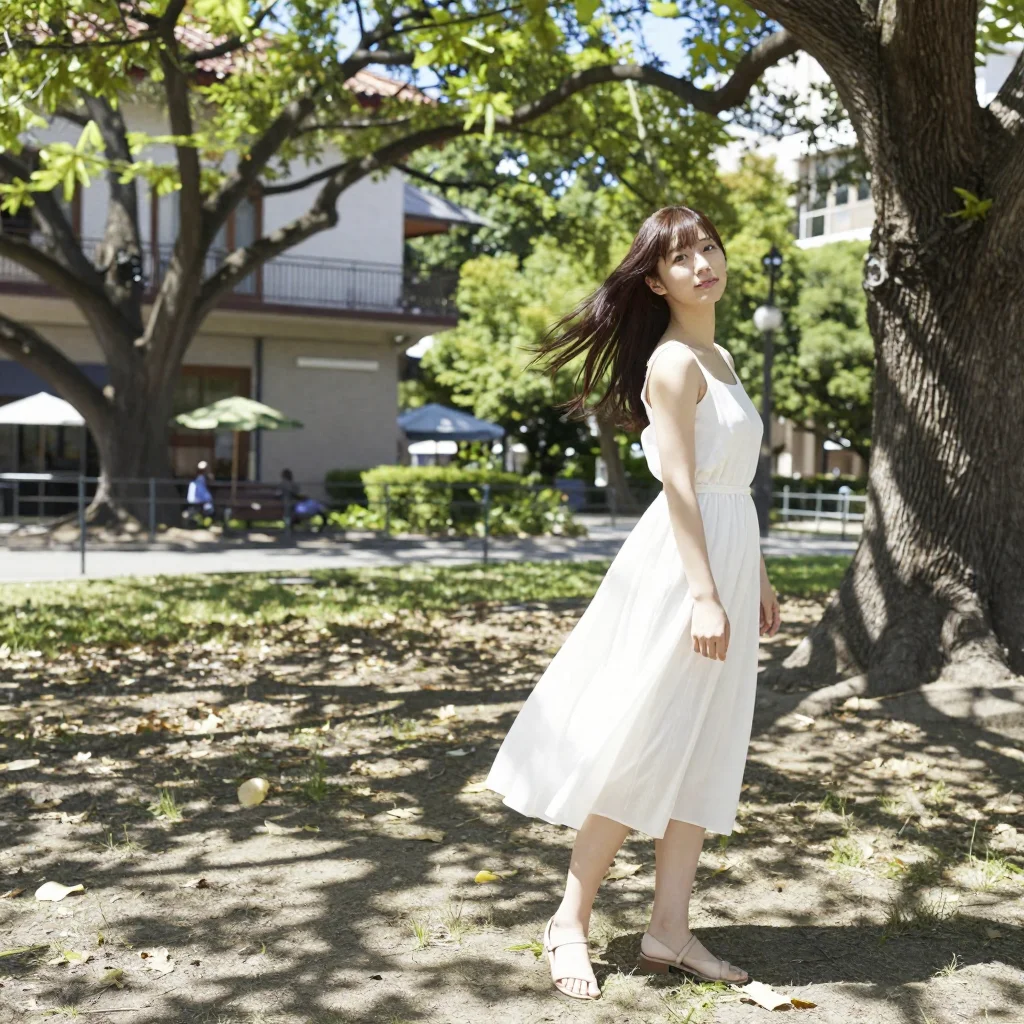 | 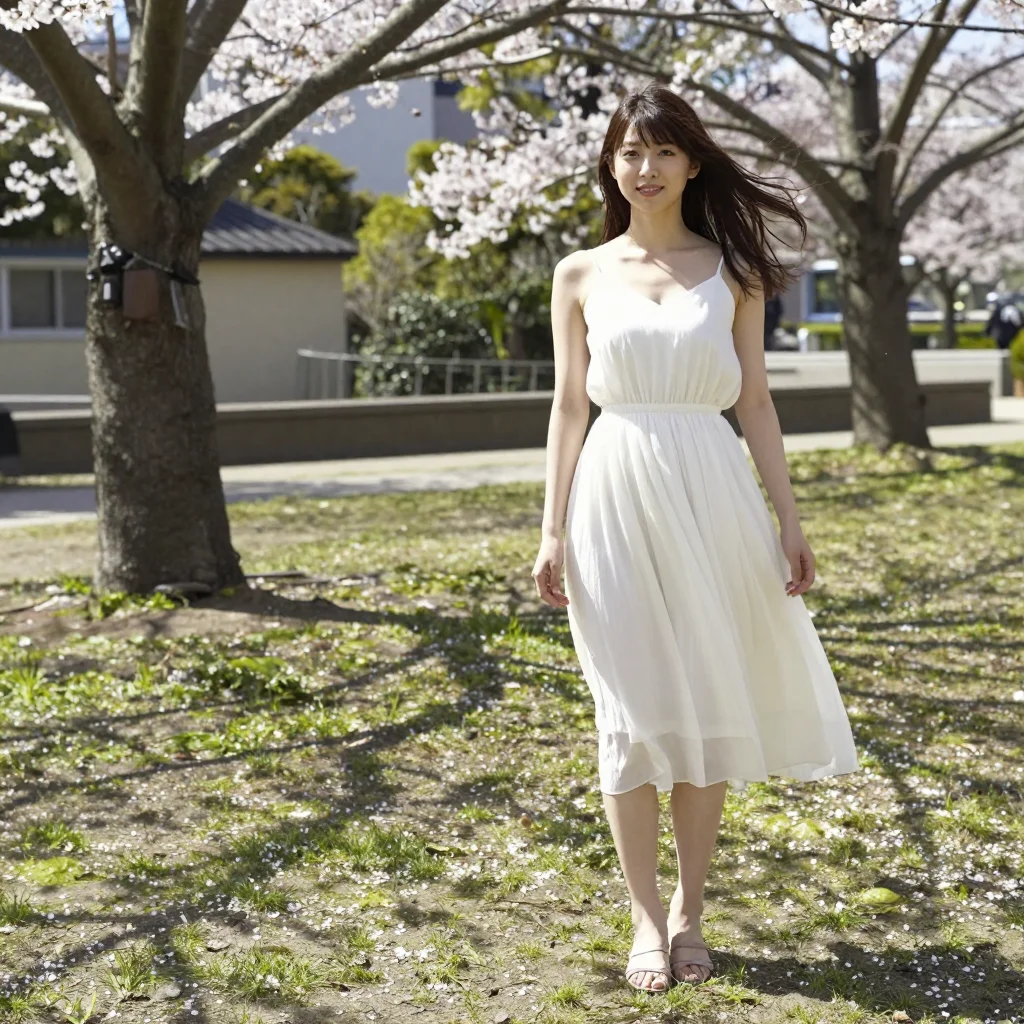 | 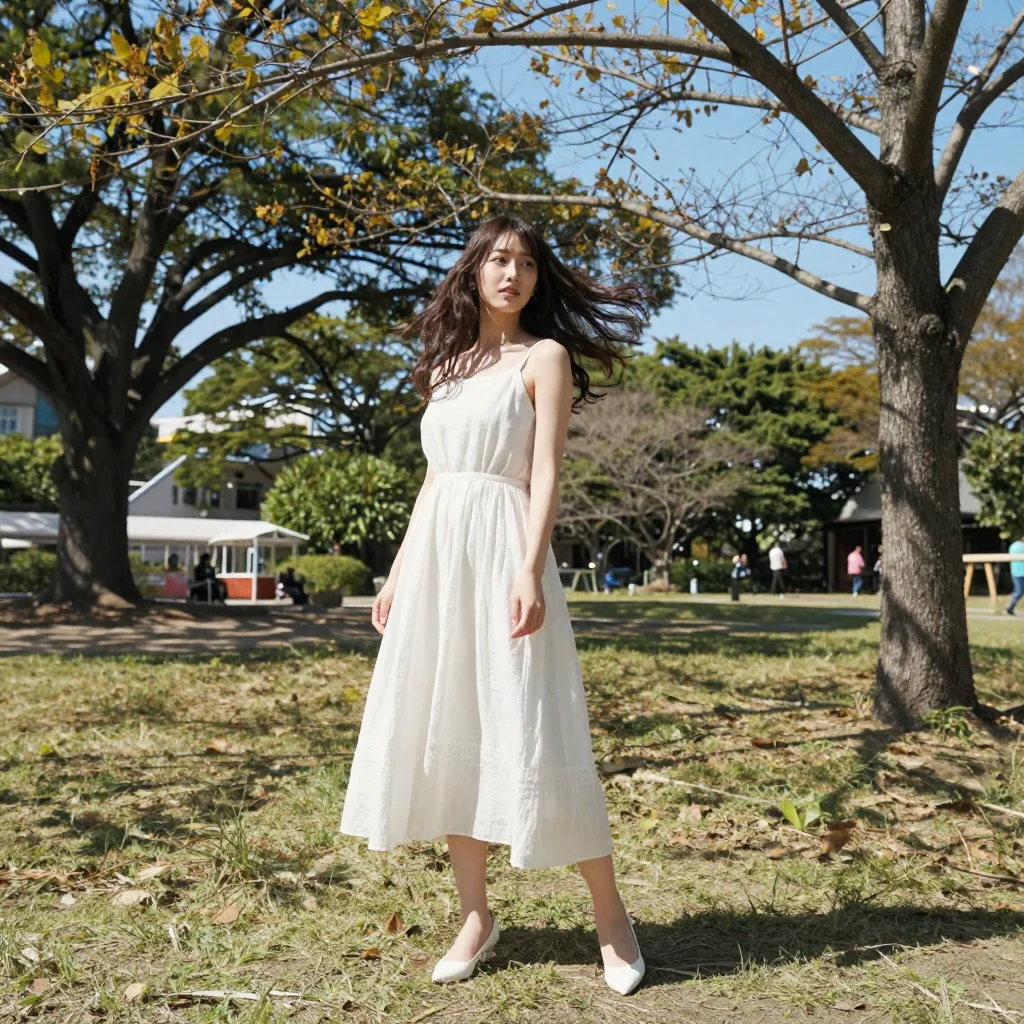 |
Observation: Gentle hair movement with tips to mid-length flowing sideways. However, displacement is smaller than adding wind to the end. Skirt barely moves. flowing may also imply hair “texture and flow quality” in addition to movement, potentially affecting the styling.
B01: hair streaming in wind (long hair → hair streaming in wind replacement)
| seed 1 | seed 2 | seed 3 |
|---|---|---|
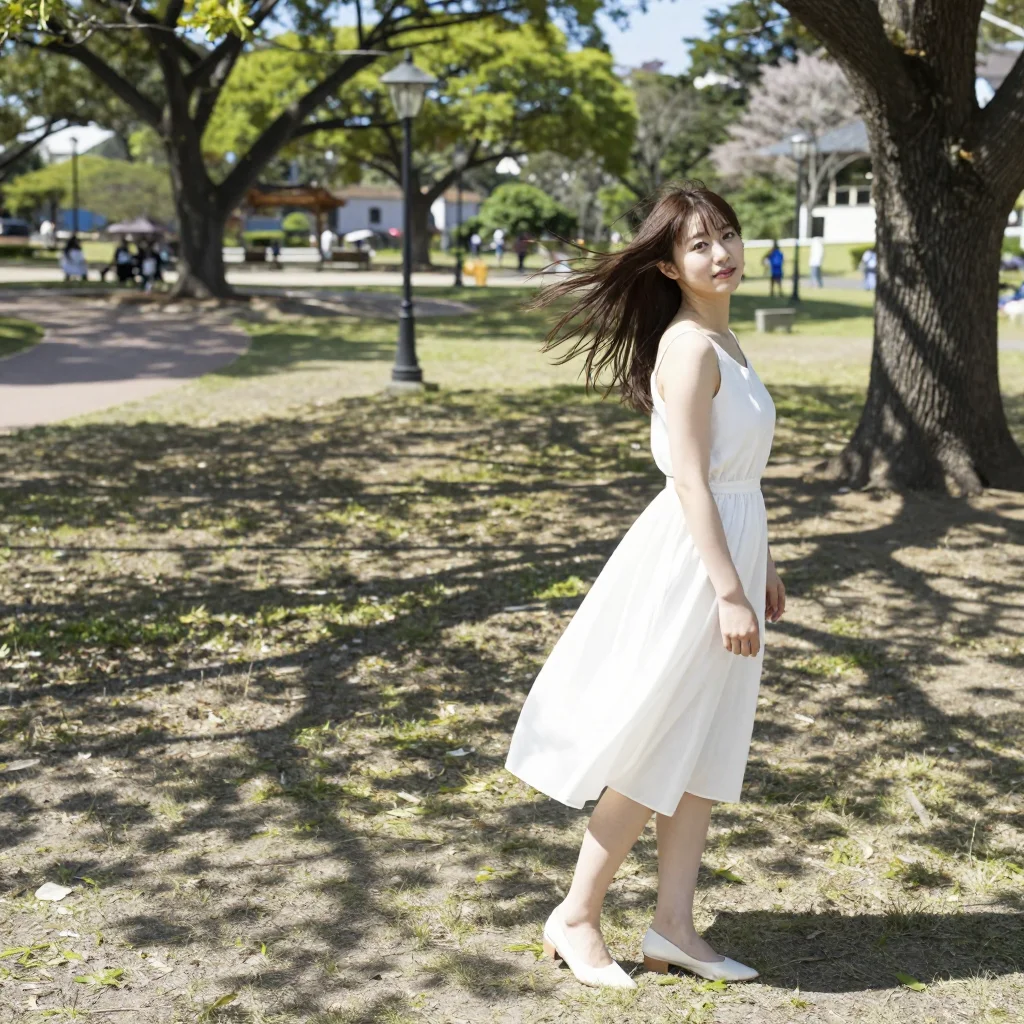 | 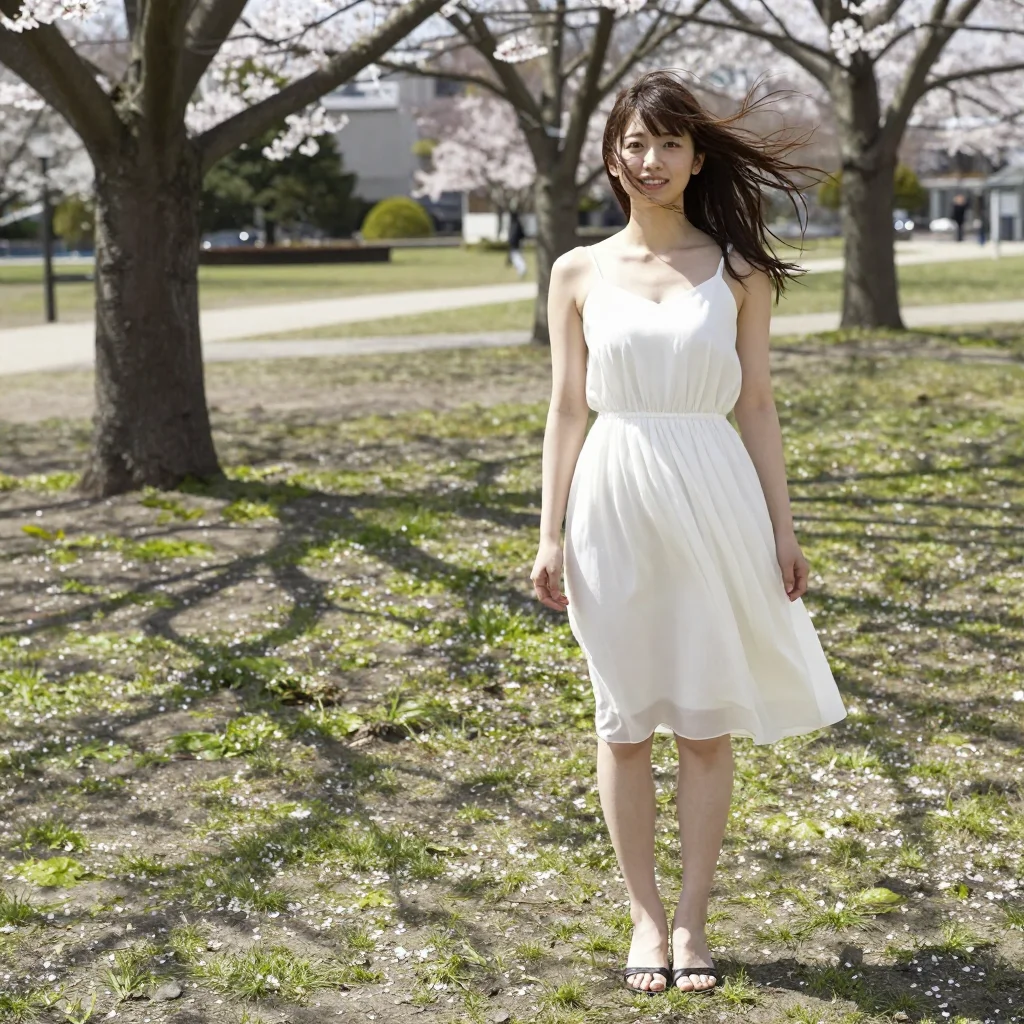 | 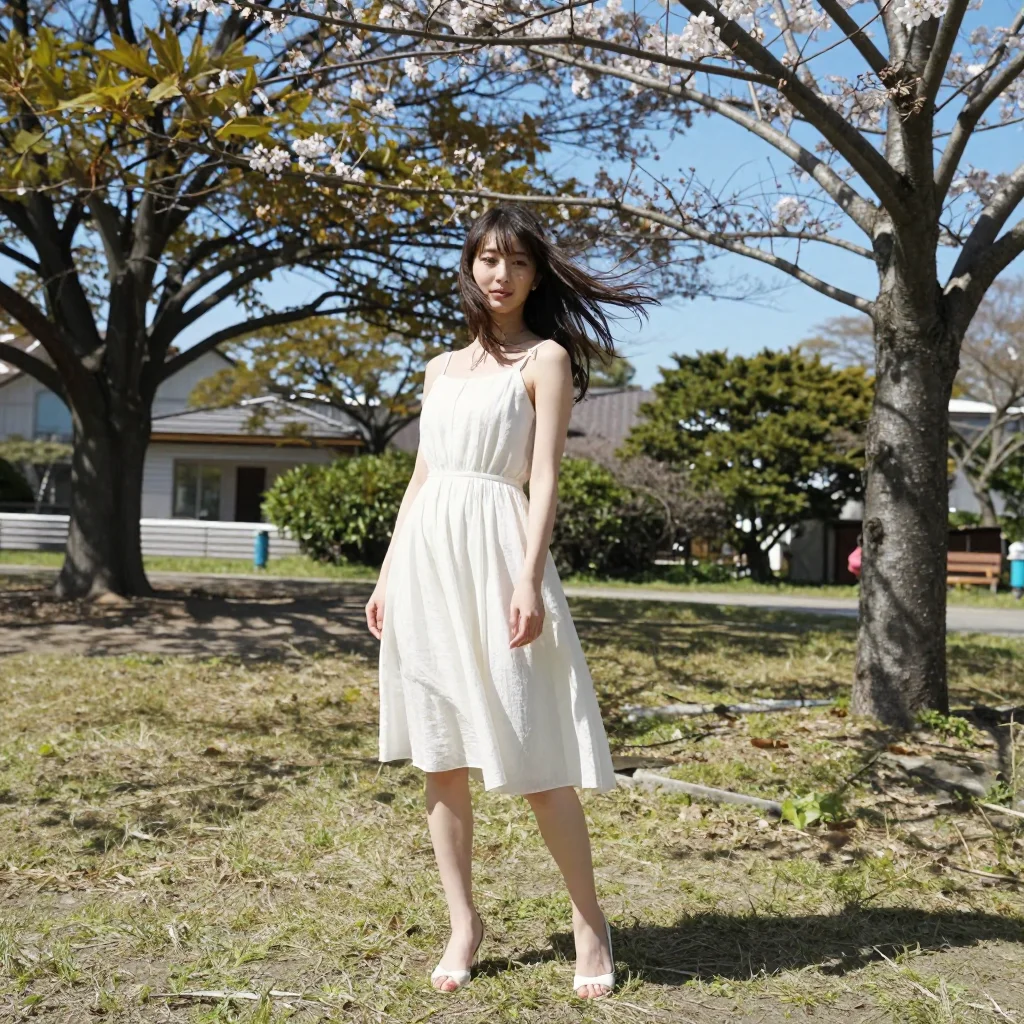 |
Observation: Moderate hair movement. The phrase includes “in wind” so there is slight effect on the skirt. 4 token cost, but effect is similar to wind (1 token).
B02: windswept hair (long hair → windswept hair replacement)
| seed 1 | seed 2 | seed 3 |
|---|---|---|
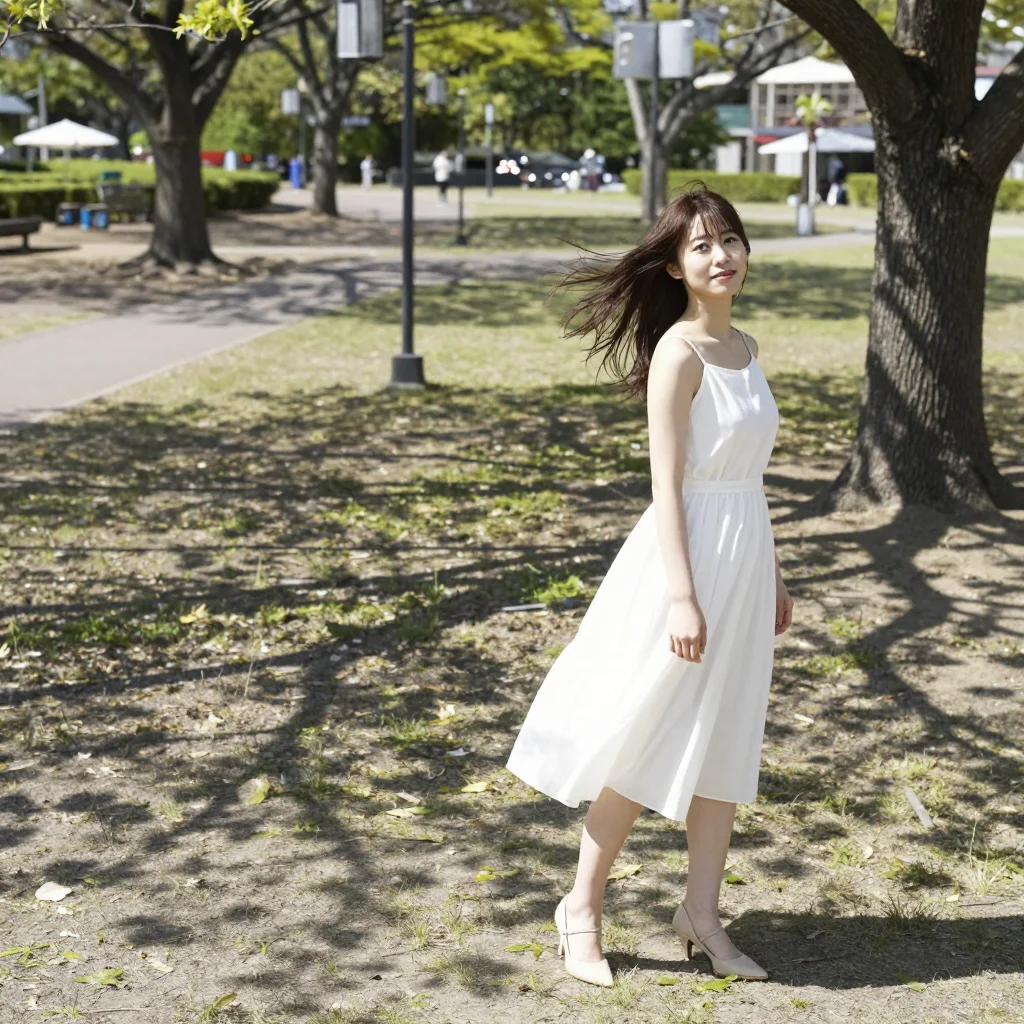 | 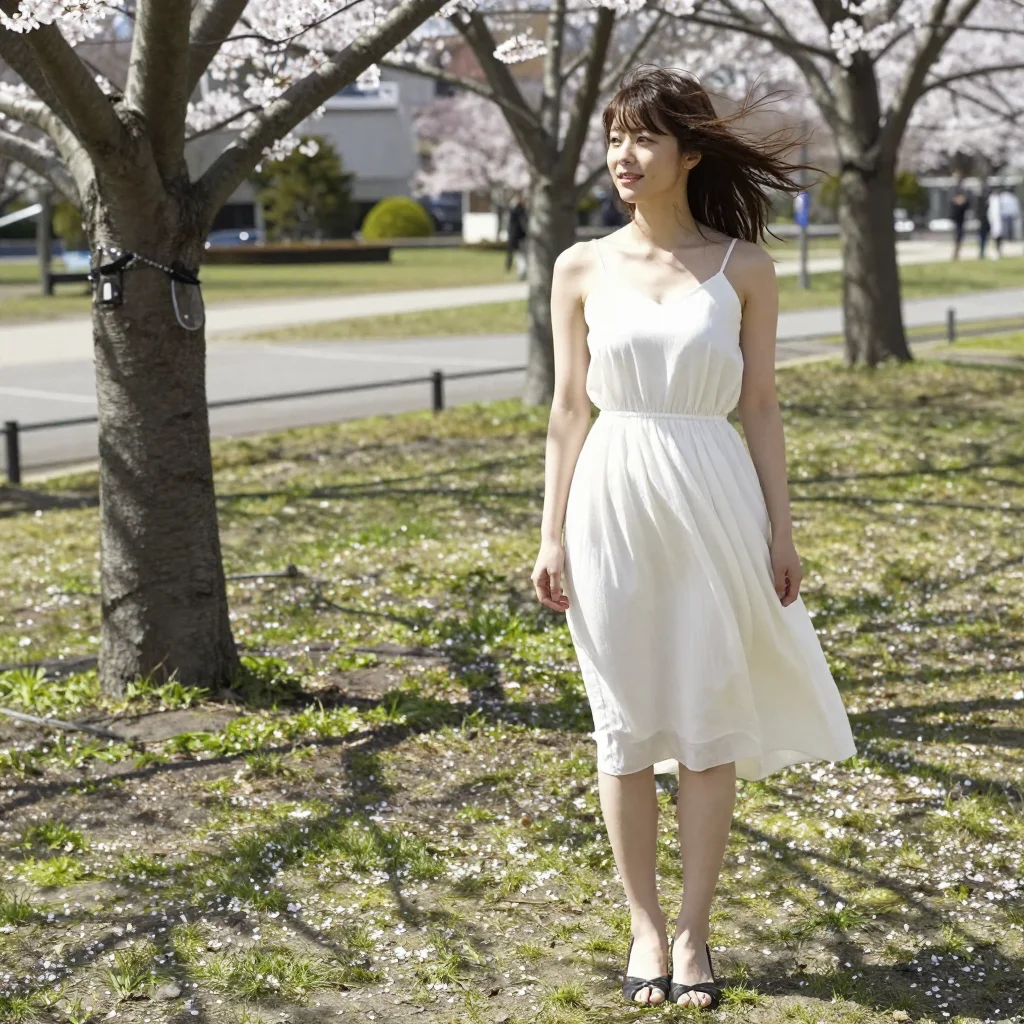 | 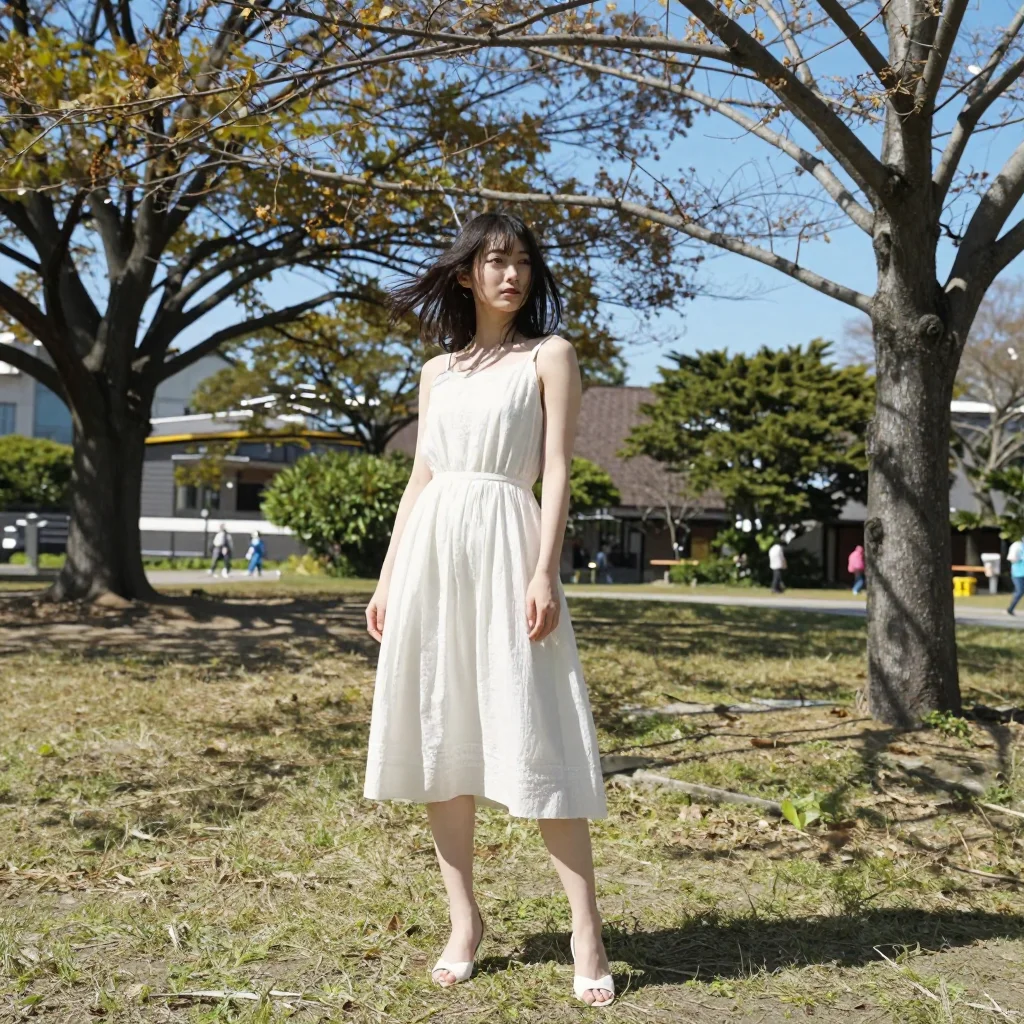 |
Observation: Moderate hair movement with slight skirt hem. No big difference from A09 (adding windswept at end). Using it as a hair modifier or as a trailing addition produces equivalent effects.
B03: tousled hair in wind (long hair → tousled hair in wind replacement)
| seed 1 | seed 2 | seed 3 |
|---|---|---|
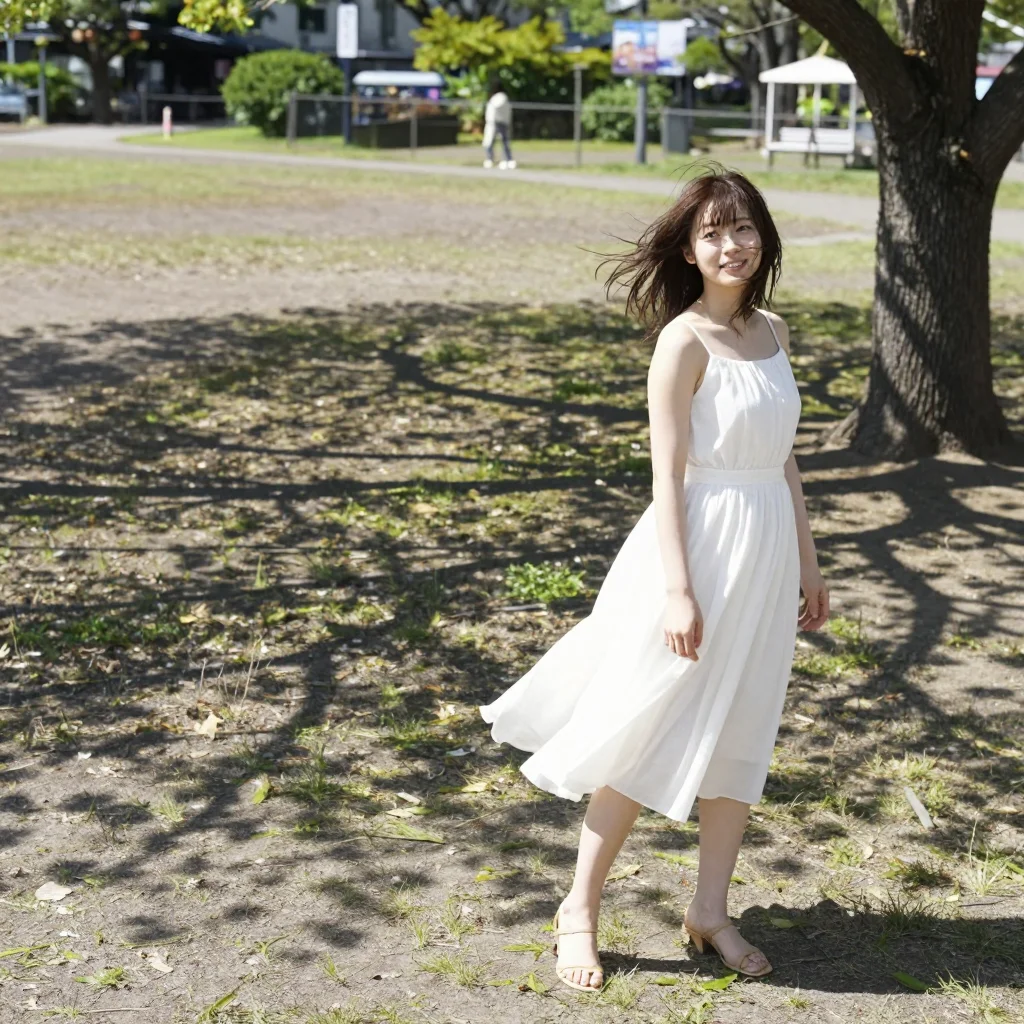 | 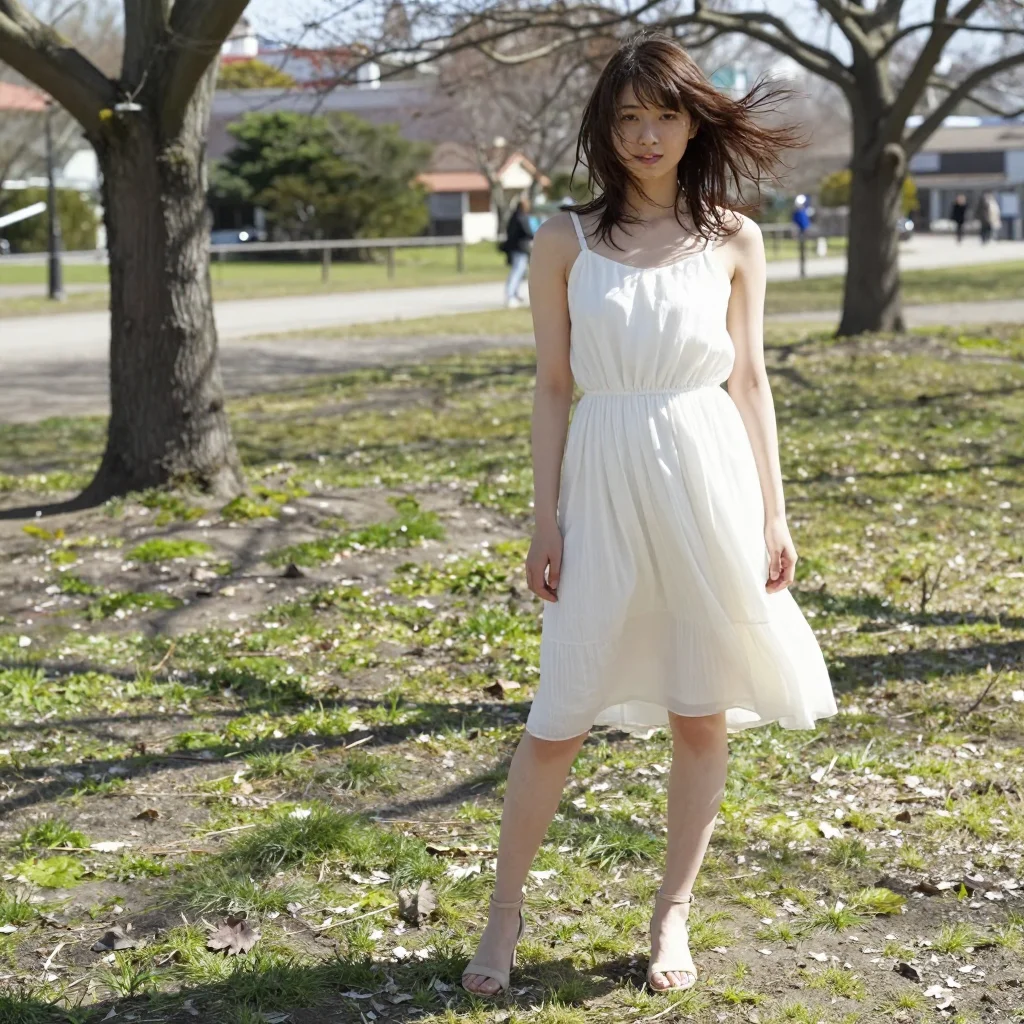 | 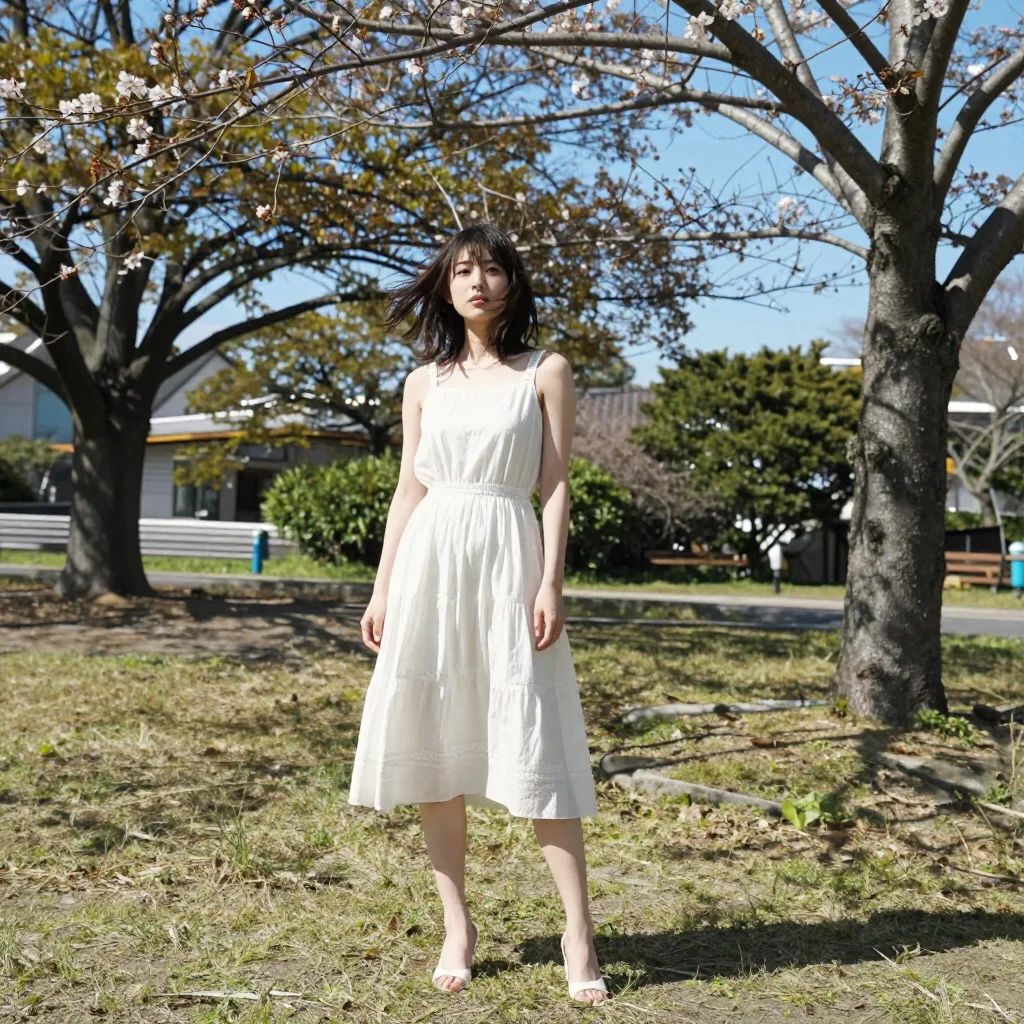 |
Observation: Moderate hair movement — similar to windswept hair. The nuance of “tousled” (messy) is difficult to visually distinguish and no difference from windswept hair was confirmed. Slight skirt effect from “in wind.”
Clothing Modifiers
B04: flowing white dress (white sundress → flowing white dress replacement)
| seed 1 | seed 2 | seed 3 |
|---|---|---|
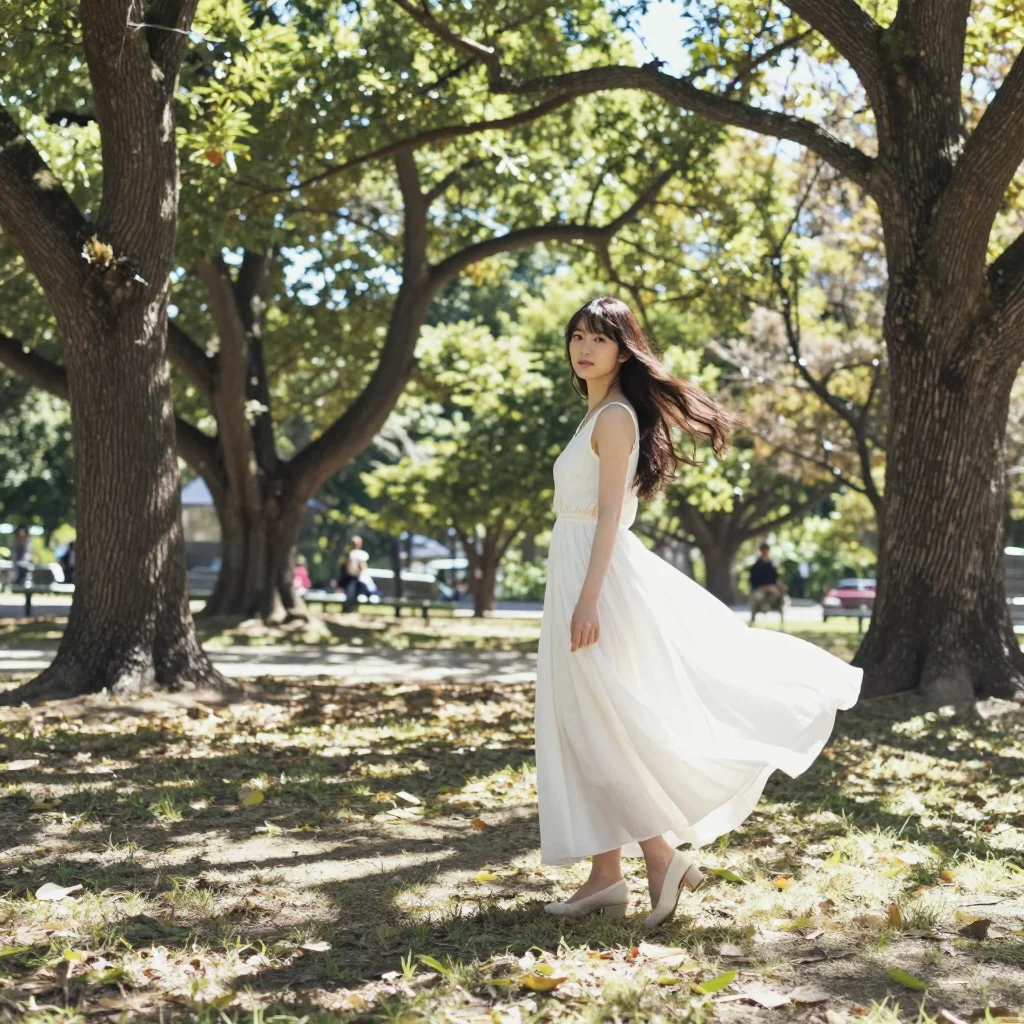 | 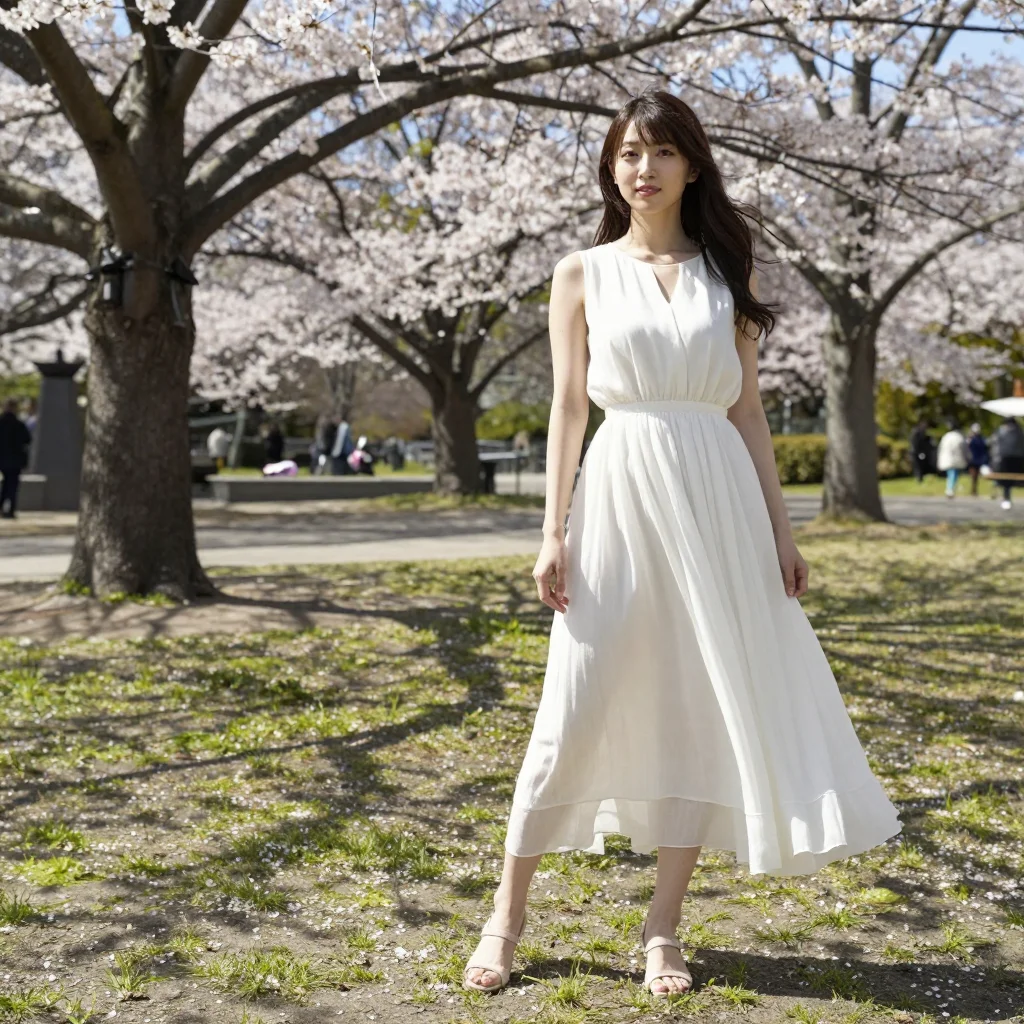 | 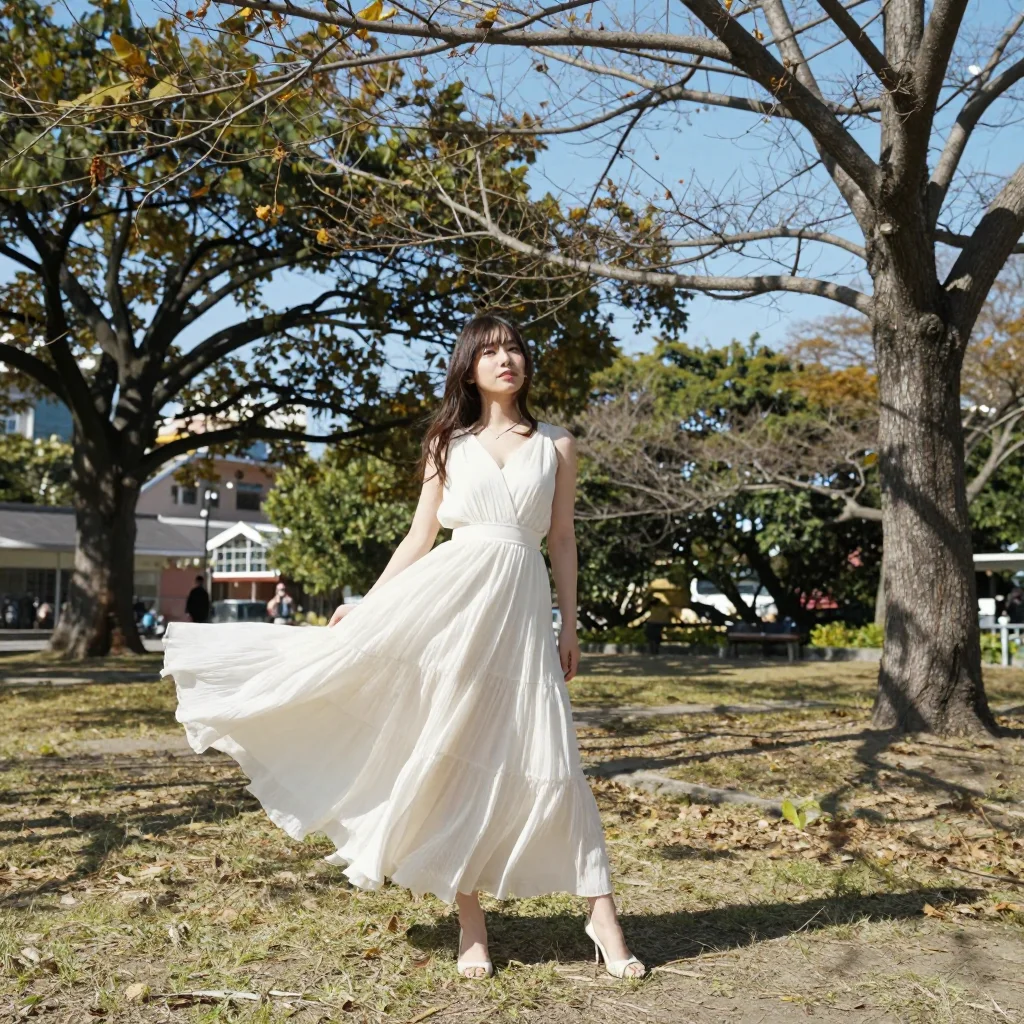 |
Observation: The dress became long and dramatically spread, creating a very dramatic silhouette. Skirt length increased and the hem spread widely in 3/3 images. Hair also has movement. However, note that flowing changes not just the dress movement but also the design itself. It appears the sundress has changed into a long dress. Rather than being blown by wind, the dress silhouette itself changed.
B05: billowing white dress (white sundress → billowing white dress replacement)
| seed 1 | seed 2 | seed 3 |
|---|---|---|
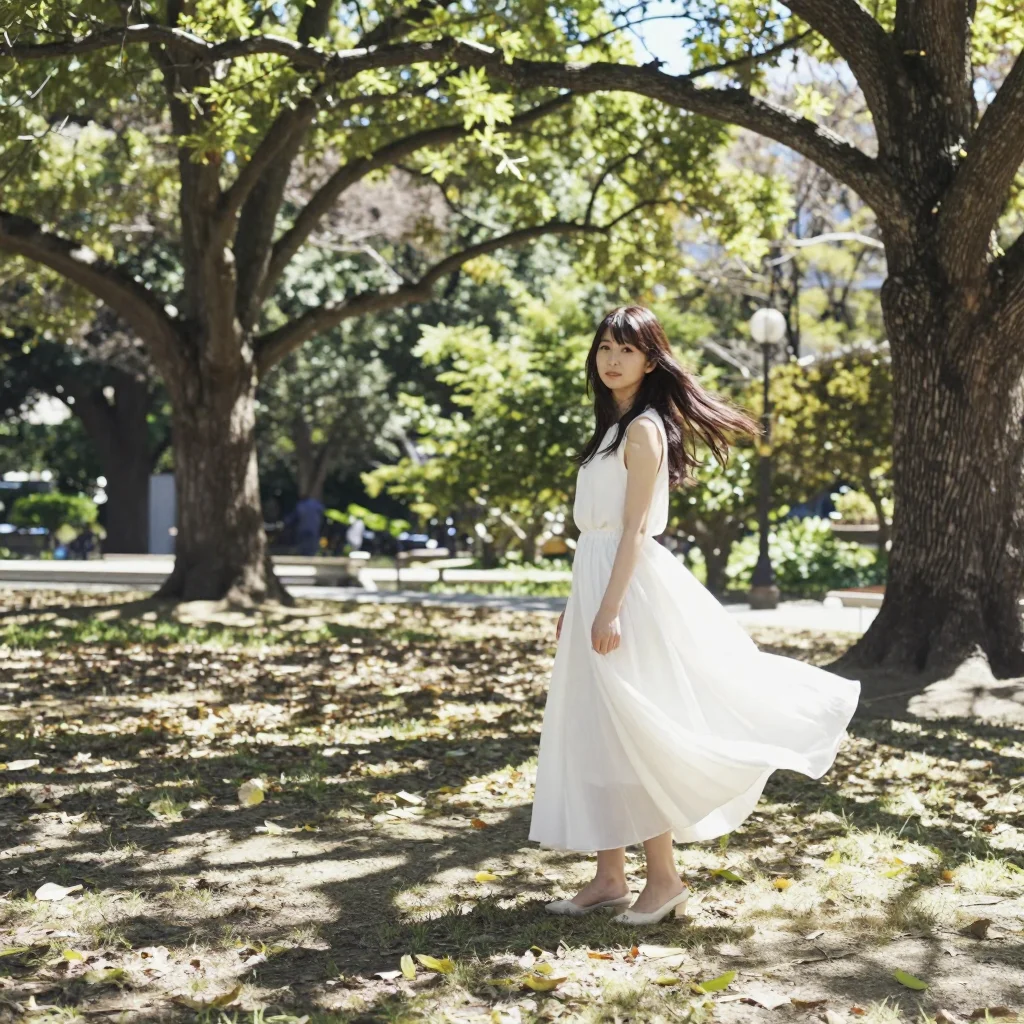 | 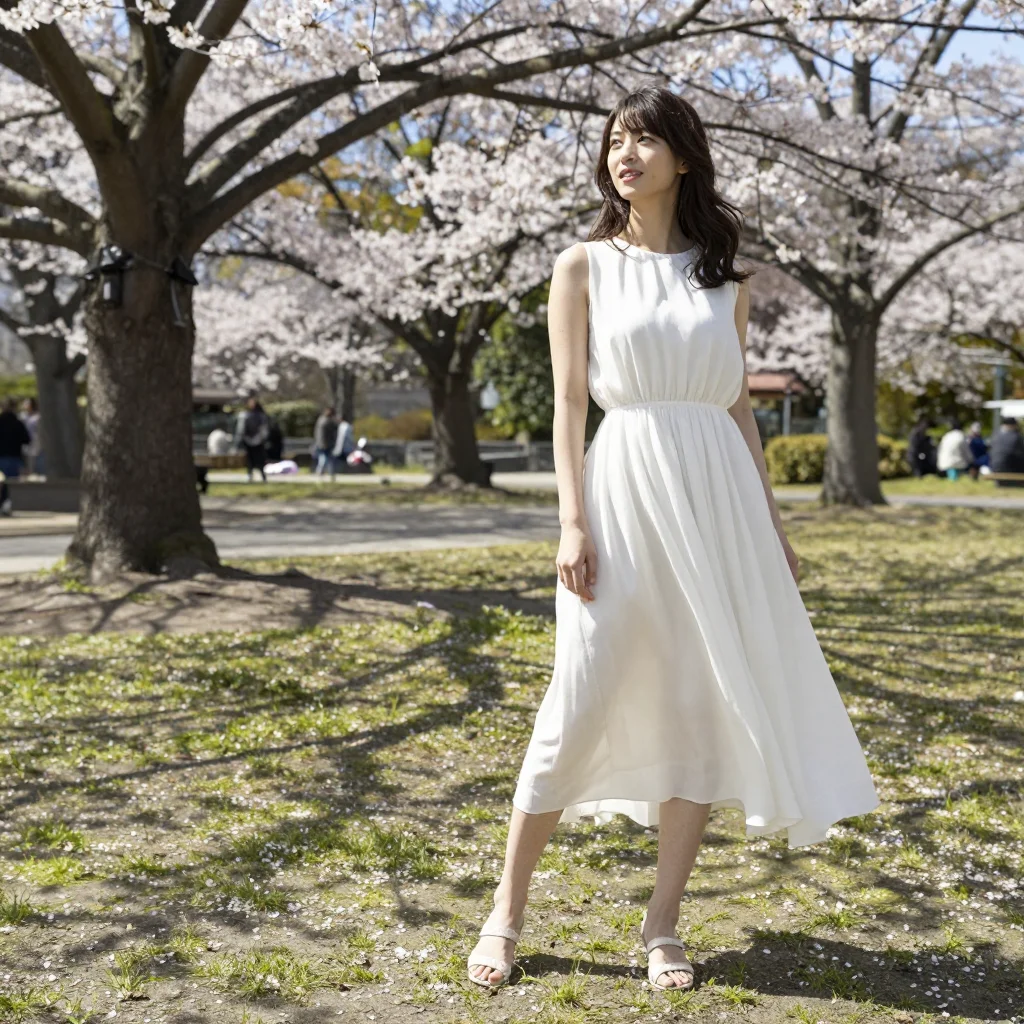 | 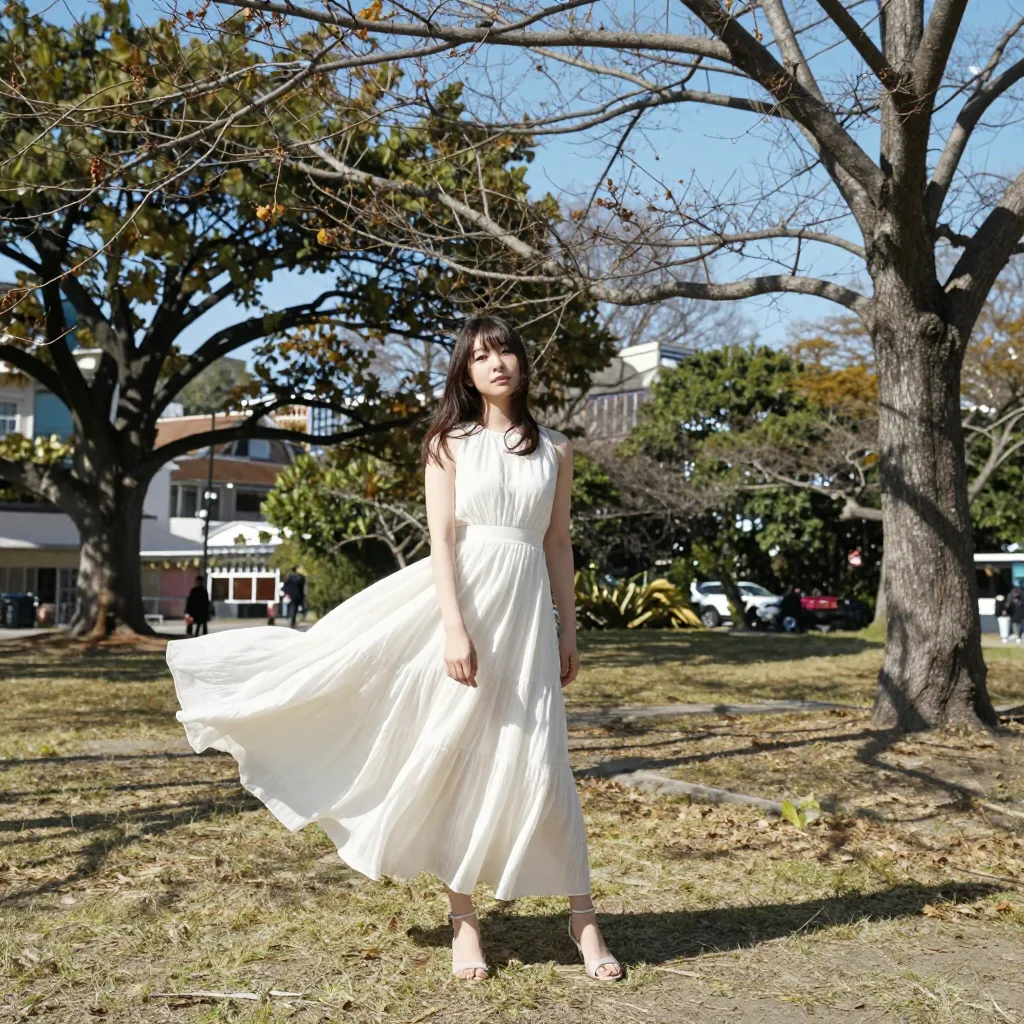 |
Observation: Dress spreading sideways with hem billowing widely. Like flowing white dress, dress length also changes, but this emphasizes more “lateral spreading.” Hair also has movement.
B06: fluttering white dress (white sundress → fluttering white dress replacement)
| seed 1 | seed 2 | seed 3 |
|---|---|---|
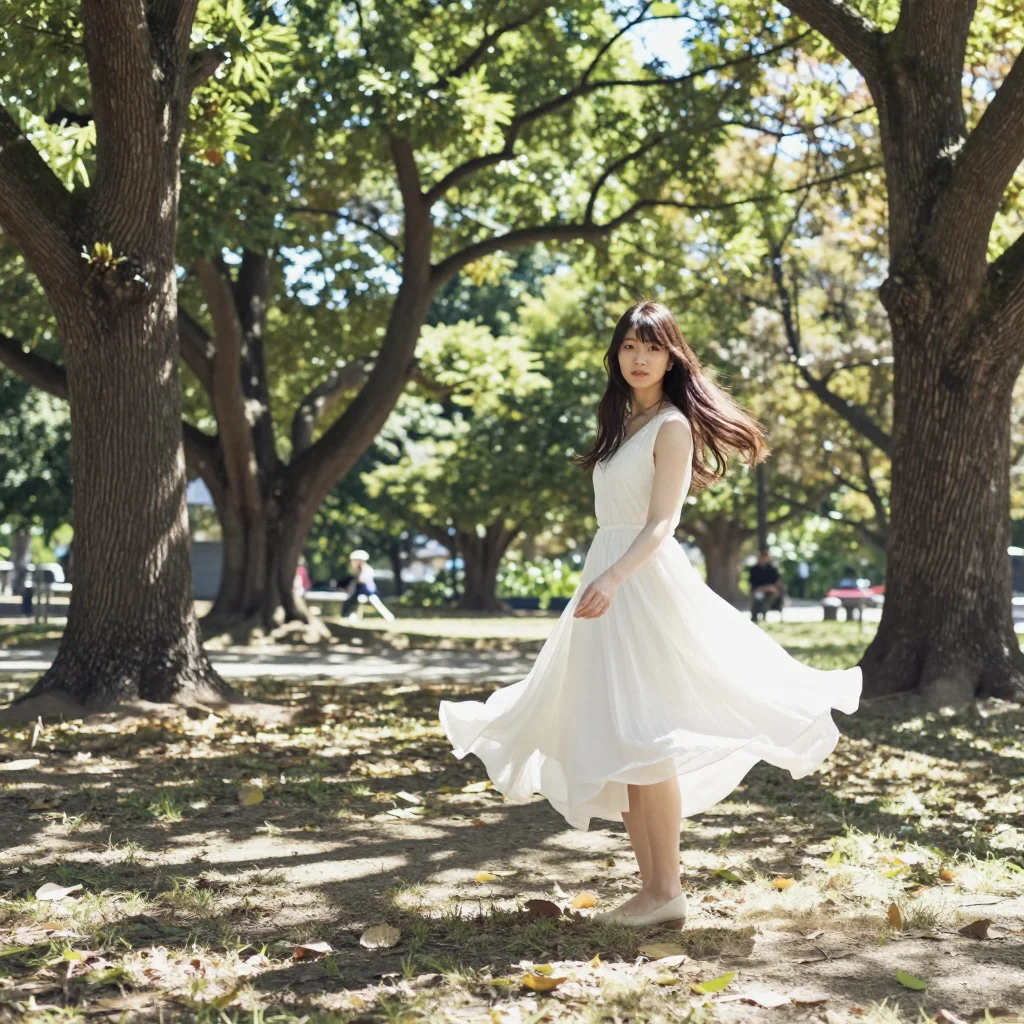 | 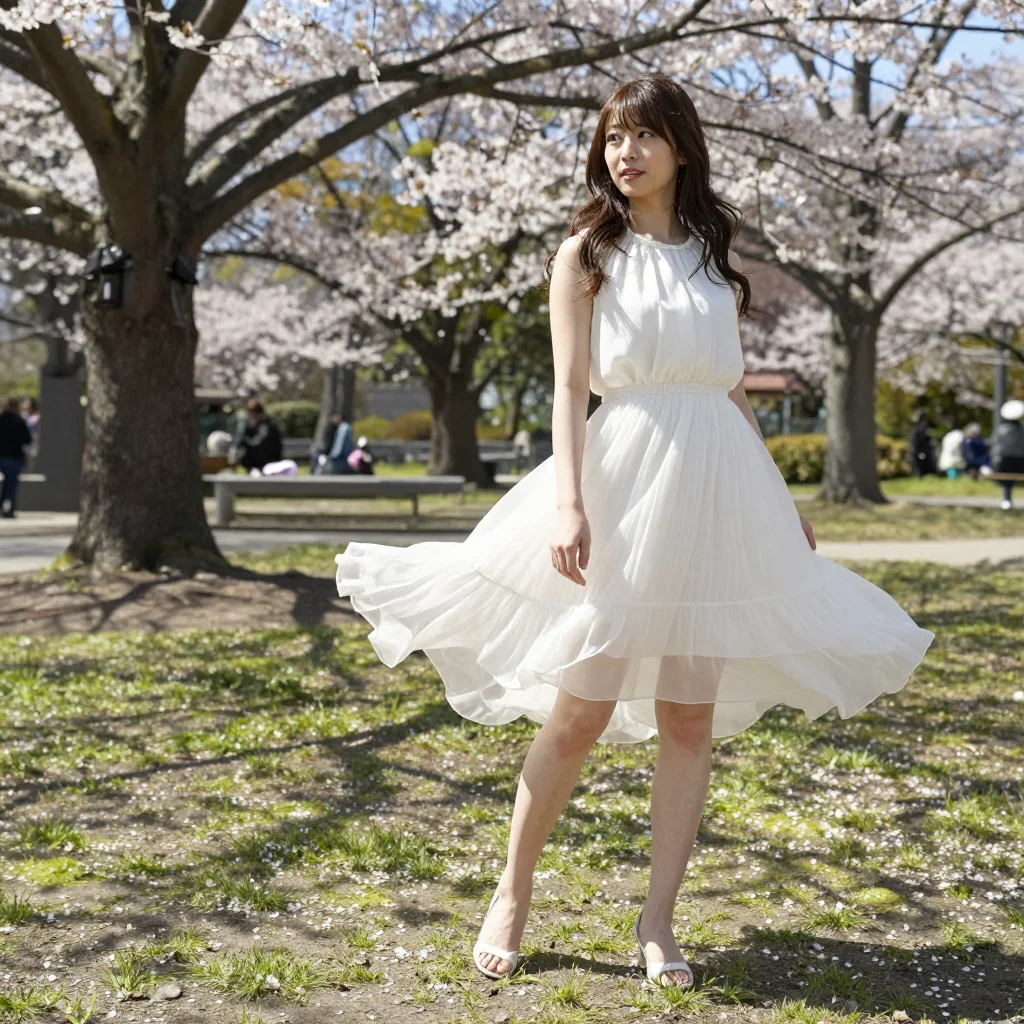 | 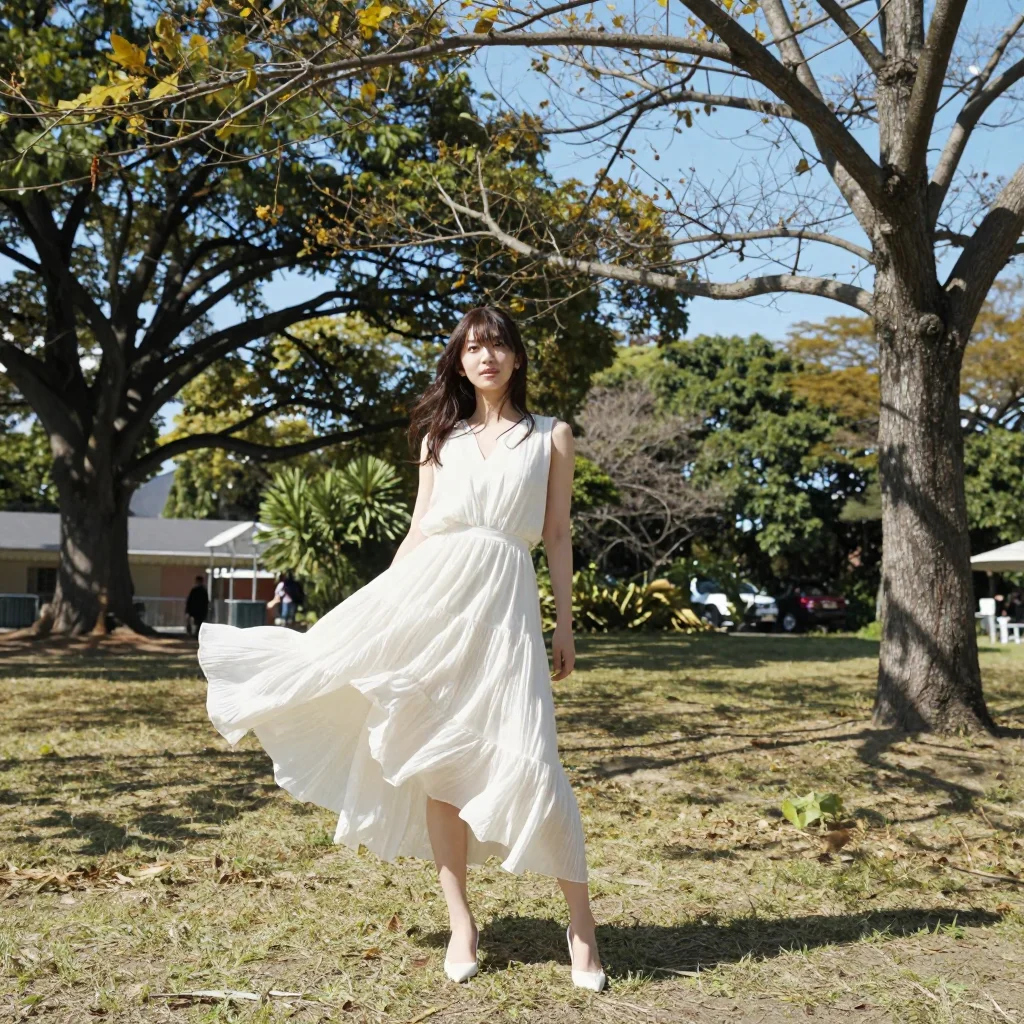 |
Observation: Skirt spreading widely with prominent fabric movement. Equivalent effect to A11 (adding fluttering at end). Whether used as a clothing modifier or as a trailing addition, fluttering’s skirt effect is consistently stable.
B07: white dress caught in wind (white sundress → white dress caught in wind replacement)
| seed 1 | seed 2 | seed 3 |
|---|---|---|
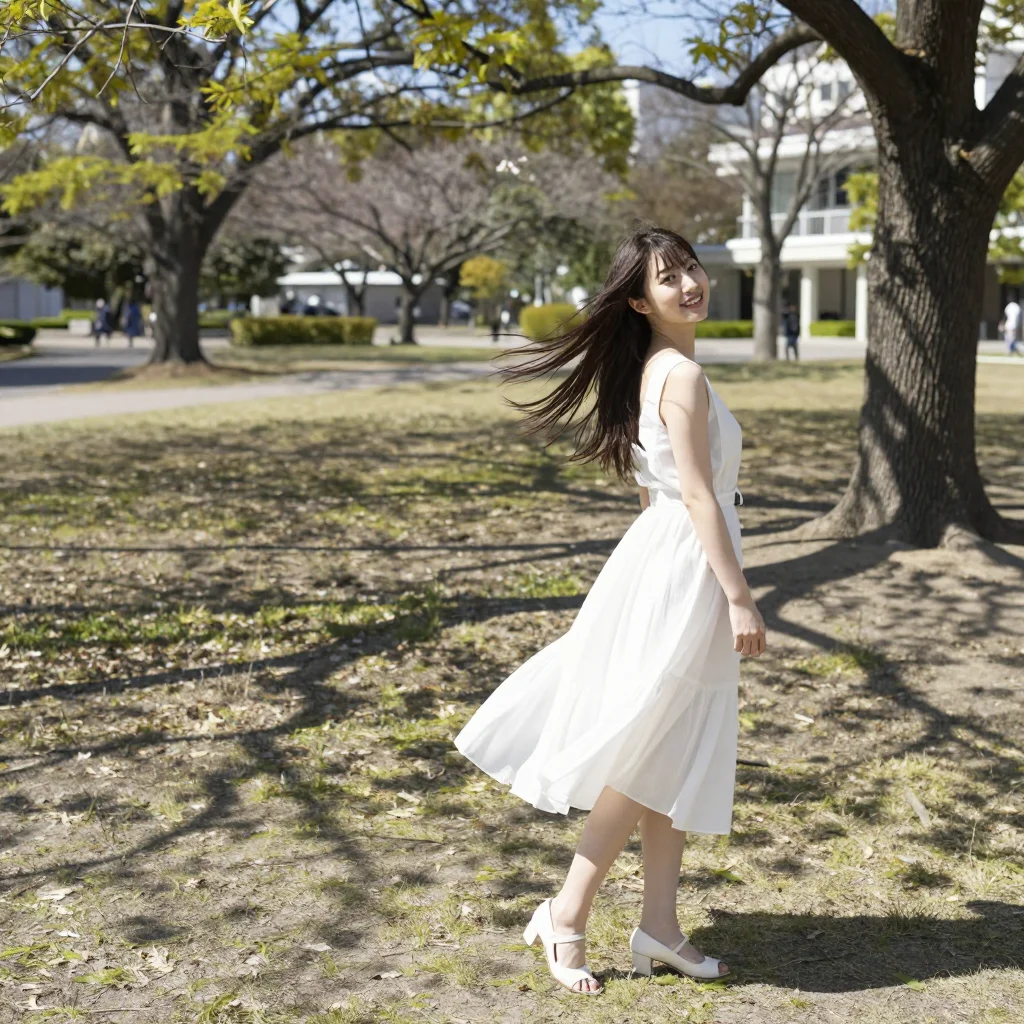 | 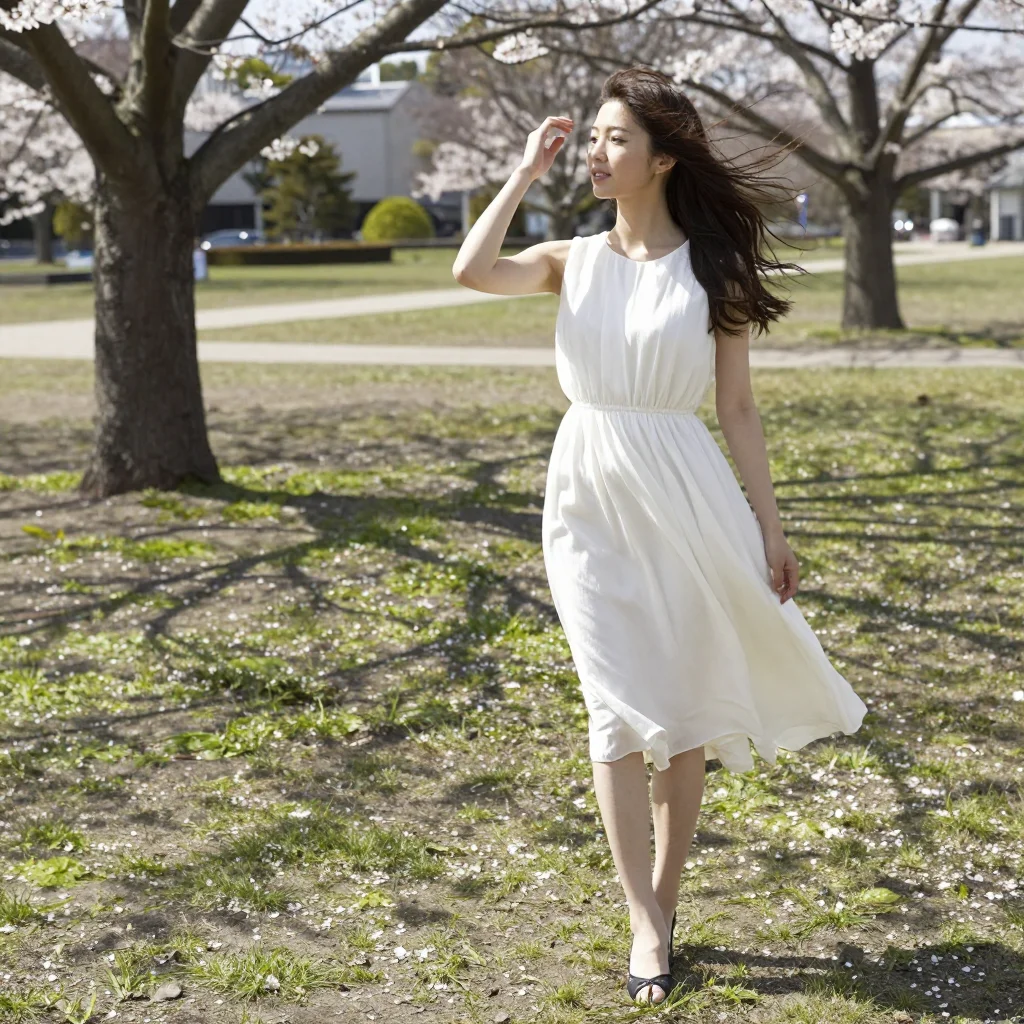 | 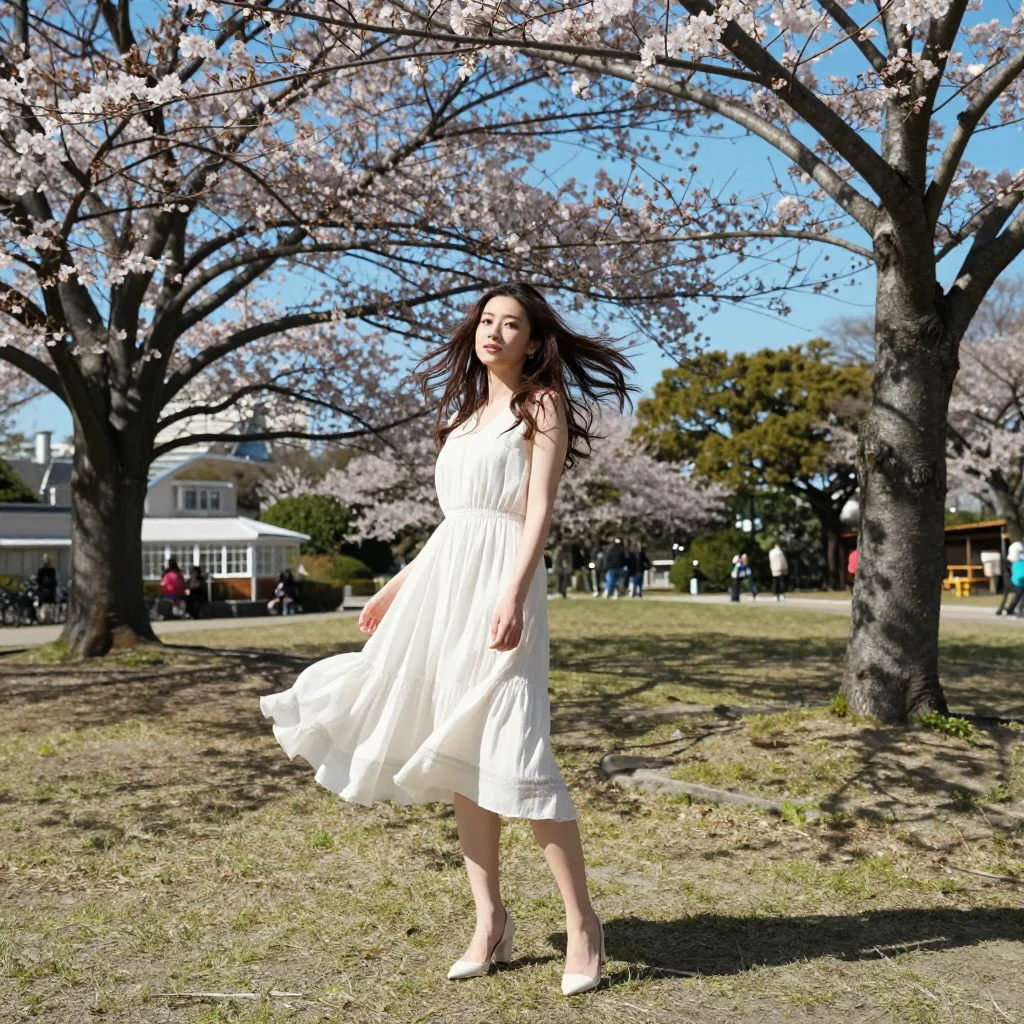 |
Observation: Hair flowing strongly with moderate skirt hem movement. “caught in wind” suggests the presence of wind, so hair is also affected. However, 5 token cost makes fluttering (1 token) more efficient.
Experiment B Summary
| Condition | Replaced Element | Tokens | Hair Displacement | Clothing Displacement | Notes |
|---|---|---|---|---|---|
| B00 flowing hair | long hair | 2 | Tips to moderate | Stationary | Hair texture also changes |
| B01 hair streaming in wind | long hair | 4 | Moderate | Slight | Poor efficiency |
| B02 windswept hair | long hair | 2 | Moderate | Slight | Same as A09 |
| B03 tousled hair in wind | long hair | 4 | Moderate | Slight | No diff from B02 |
| B04 flowing white dress | sundress | 3 | Movement | Length increases, silhouette changes | Design also changes |
| B05 billowing white dress | sundress | 3 | Movement | Wide lateral spread | Design also changes |
| B06 fluttering white dress | sundress | 3 | Movement | Wide spread | Same as A11 |
| B07 dress caught in wind | sundress | 5 | Strong movement | Moderate hem | Poor efficiency |
Findings:
- Clothing modifiers (
flowing/billowing) tend to change the dress design (length, silhouette) itself - Adding
flutteringat the end is better for adding movement without changing the dress design - Hair modifiers are all less efficient than
wind(1 token)
C. Can Wind Direction Be Controlled? (6 conditions)
When wind direction is explicitly specified, does hair and clothing blow in the specified direction?
C00: wind (no direction — control)
| seed 1 | seed 2 | seed 3 |
|---|---|---|
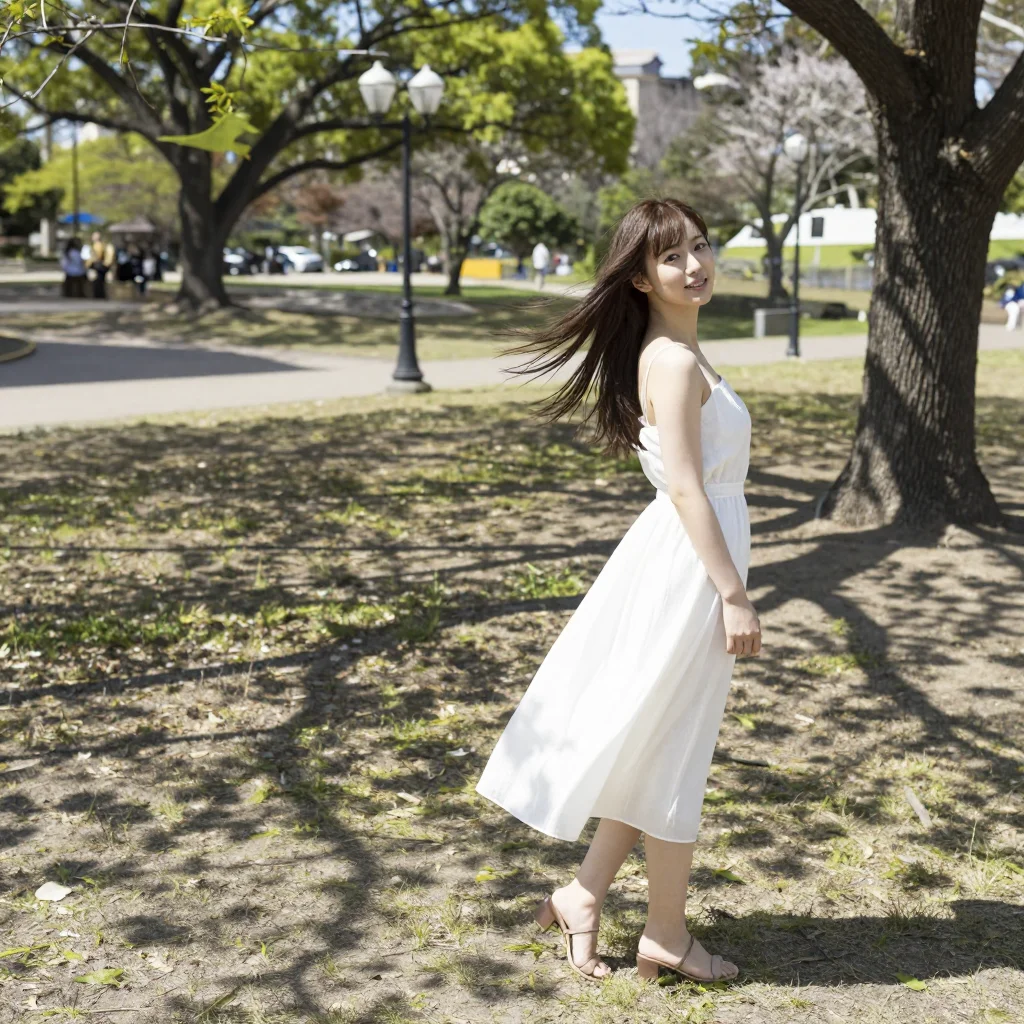 | 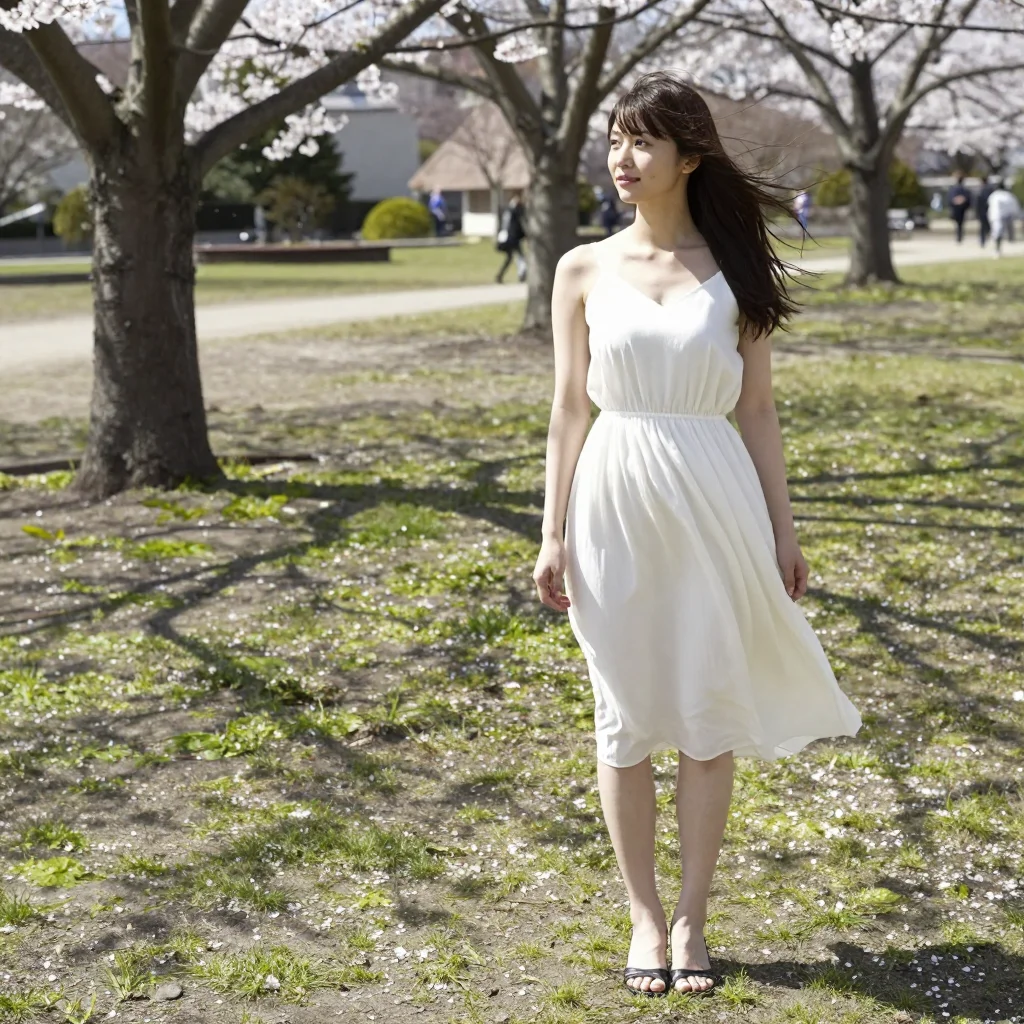 | 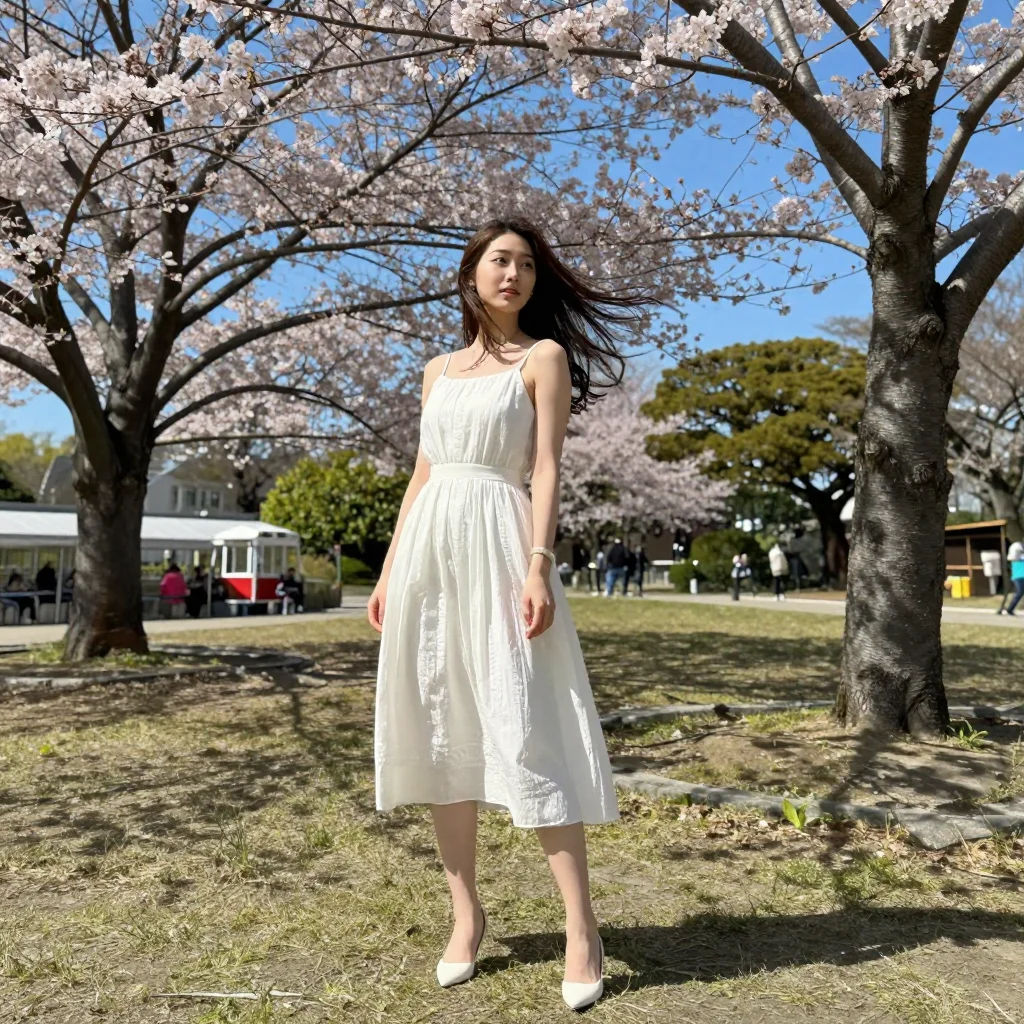 |
Observation: Hair flows to the right (from camera’s perspective) in 3/3 images. Without direction specified, there is a tendency to default to flowing right.
C01: wind from left (3 tokens)
| seed 1 | seed 2 | seed 3 |
|---|---|---|
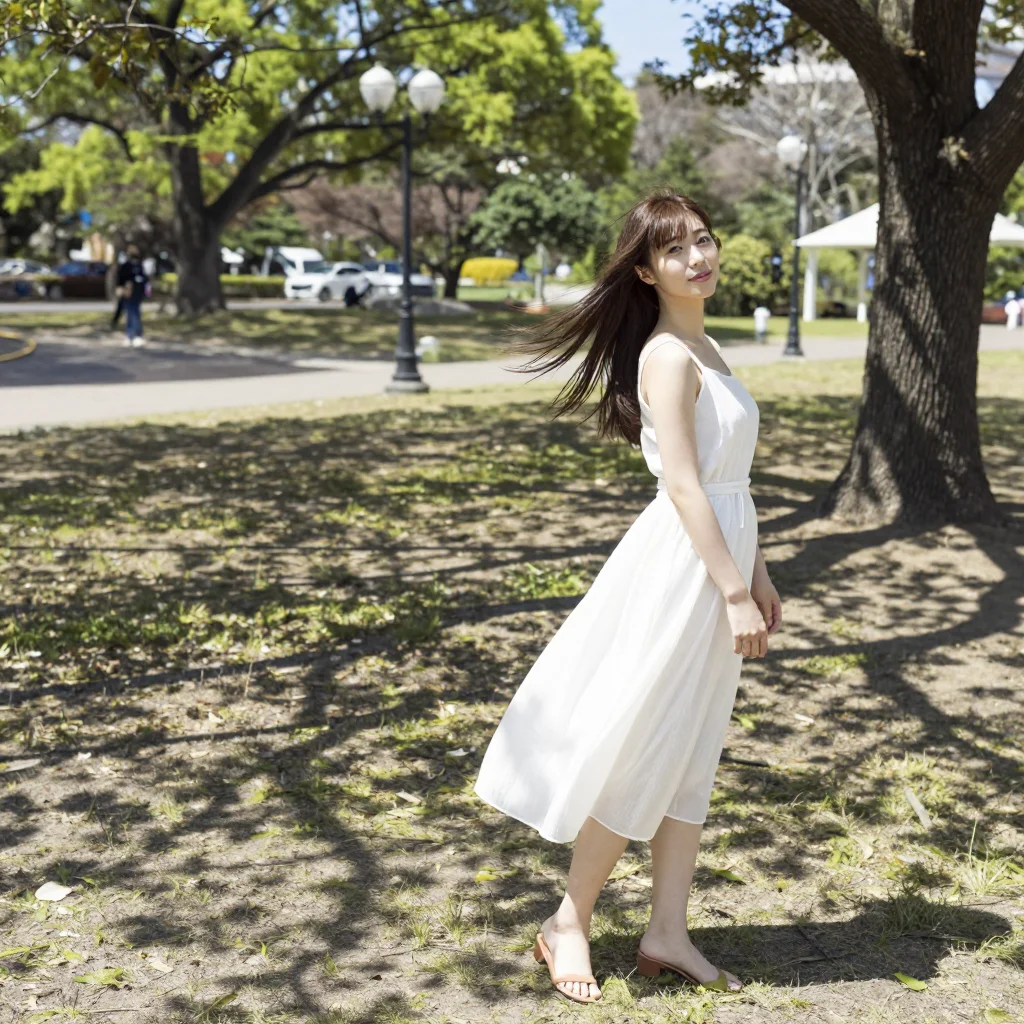 | 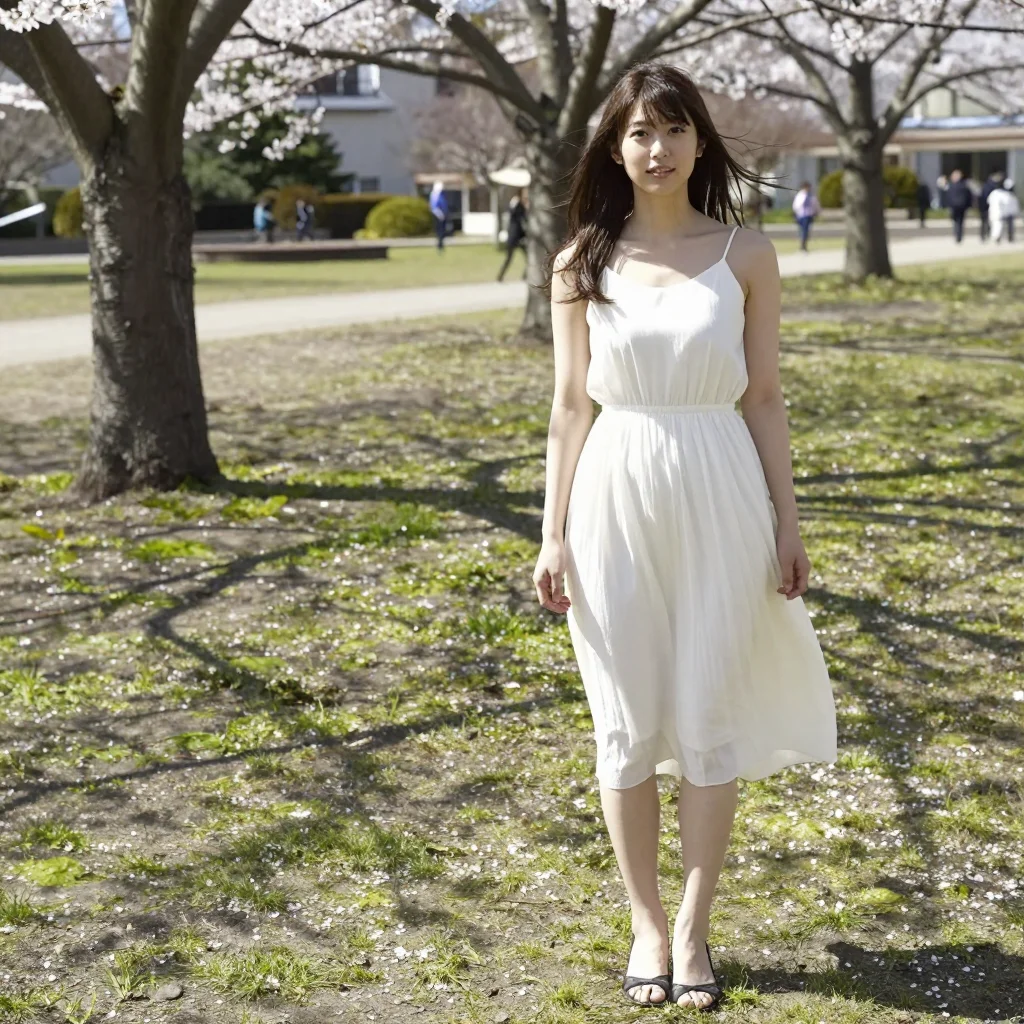 | 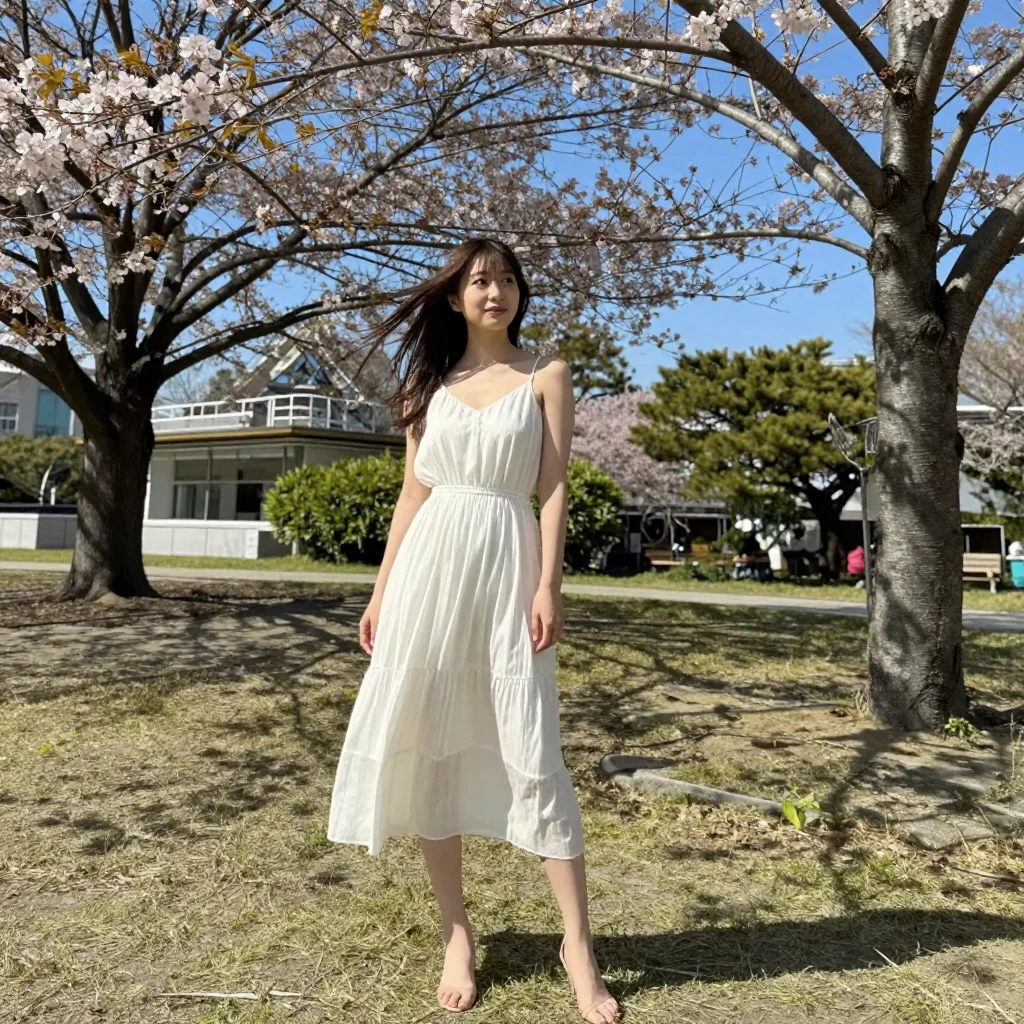 |
Observation: Hair flows to the right in 3/3. Wind from the left means hair flows right — matches specification (3/3). However, since C00 (no direction) also defaults to rightward, this condition alone cannot confirm directional control effect.
C02: wind from right (3 tokens)
| seed 1 | seed 2 | seed 3 |
|---|---|---|
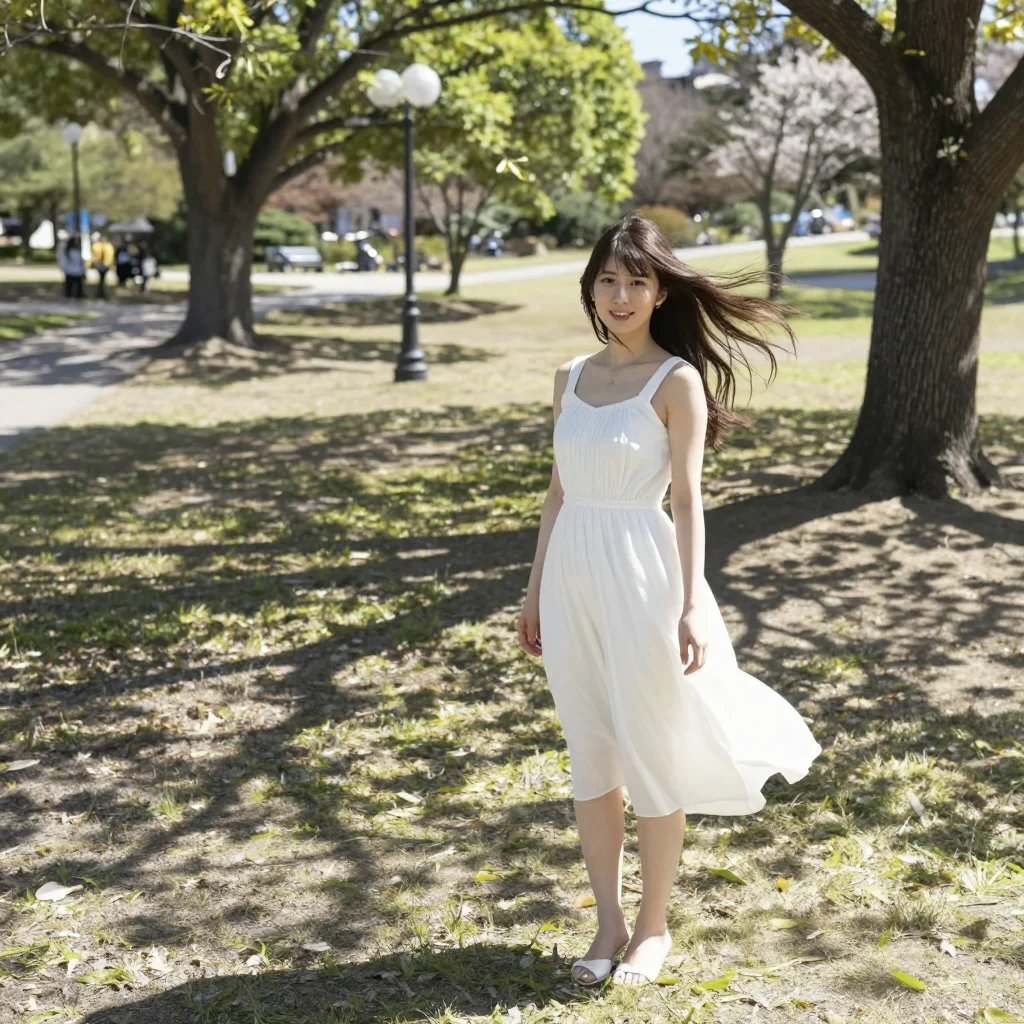 | 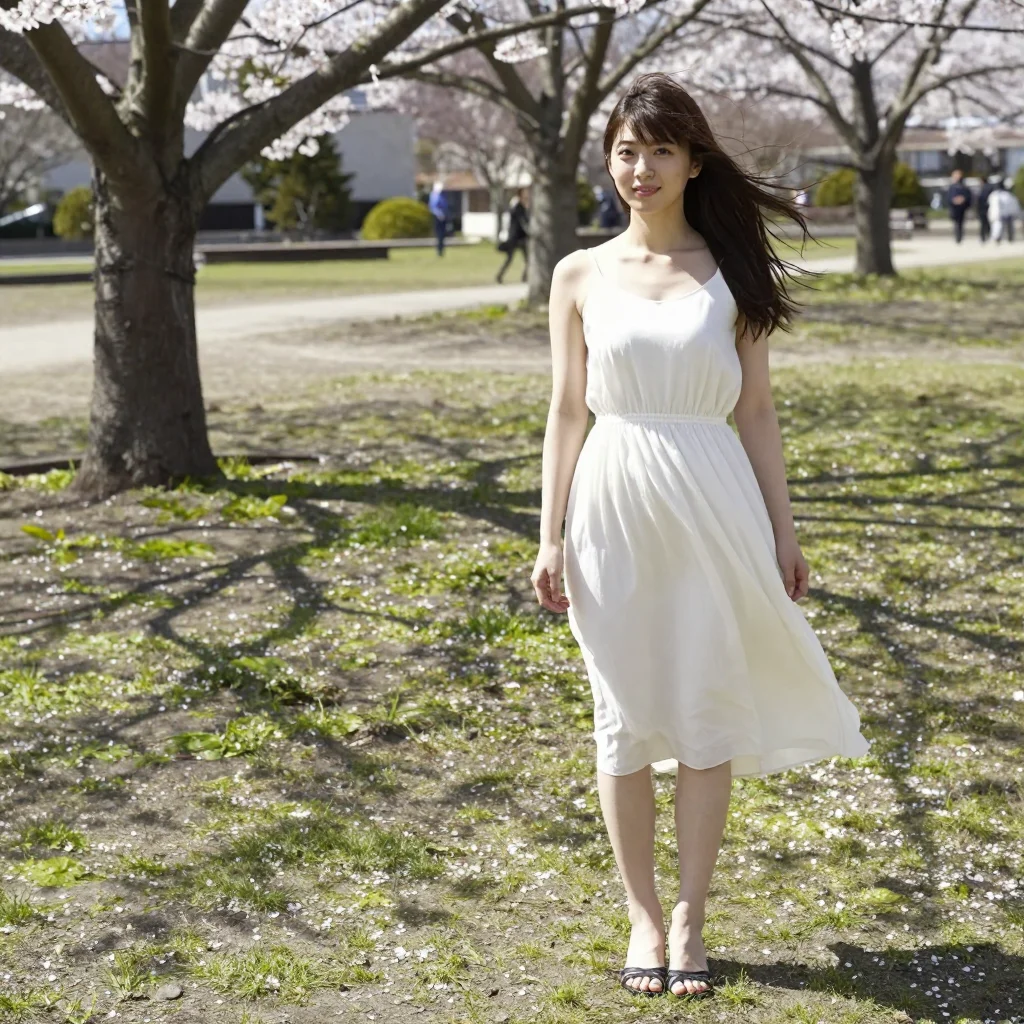 | 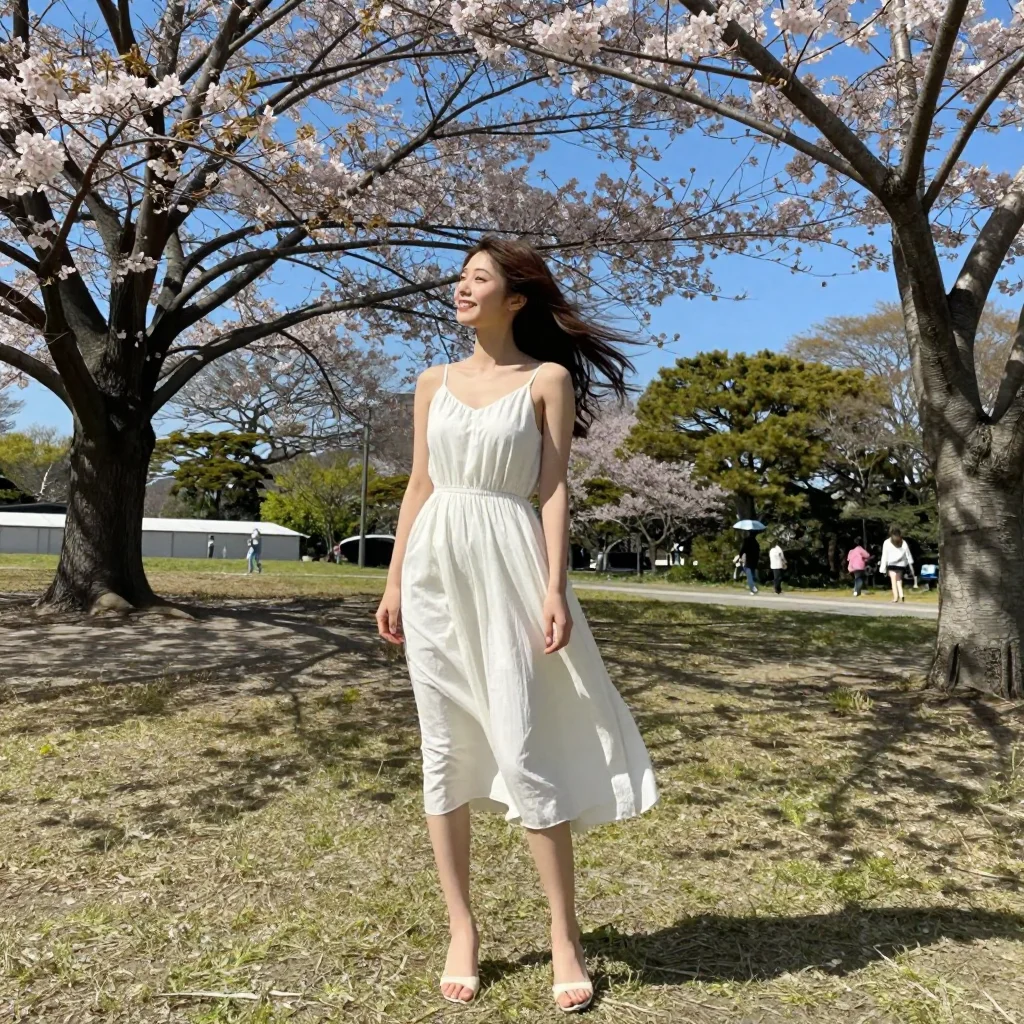 |
Observation: Hair flows to the left in 3/3. This is the opposite of the default (rightward). This is clear evidence that directional control is working. wind from right reliably reverses the default wind direction.
C03: wind from behind (3 tokens)
| seed 1 | seed 2 | seed 3 |
|---|---|---|
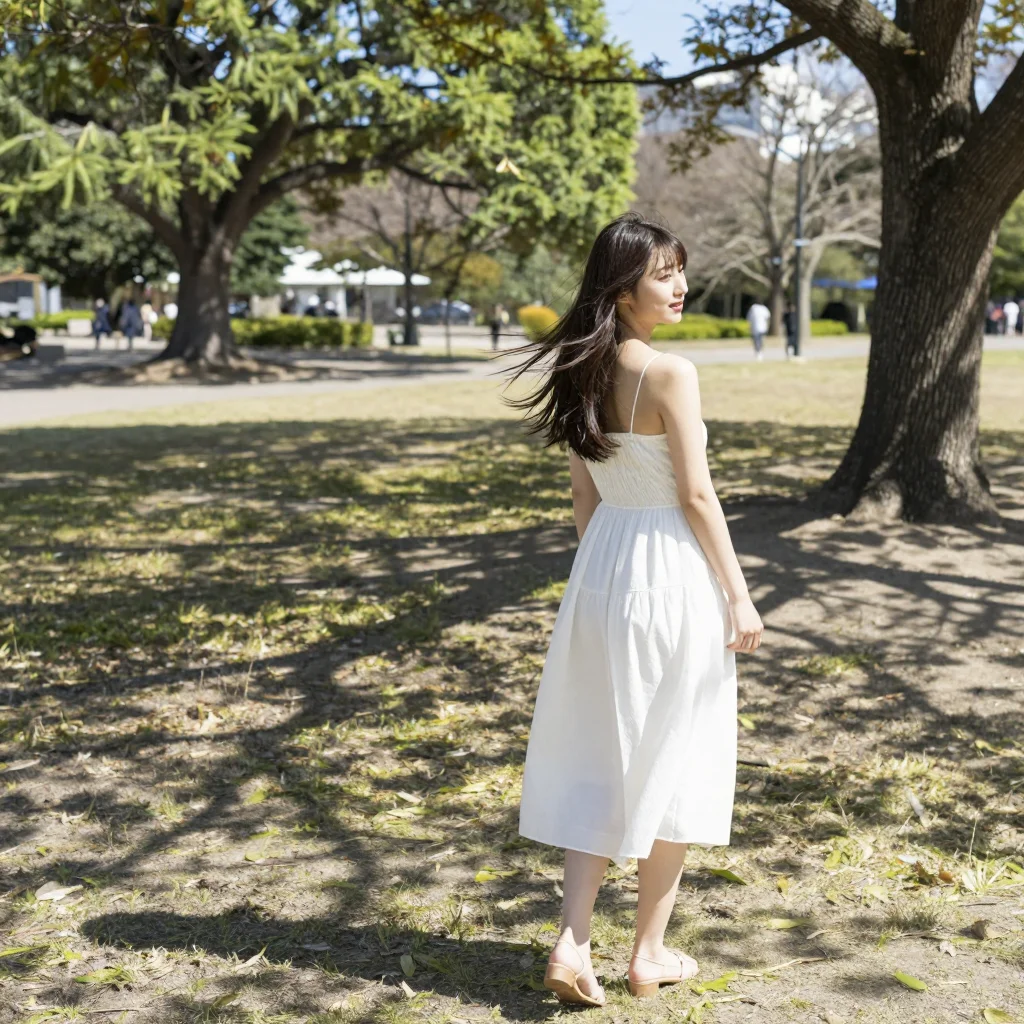 | 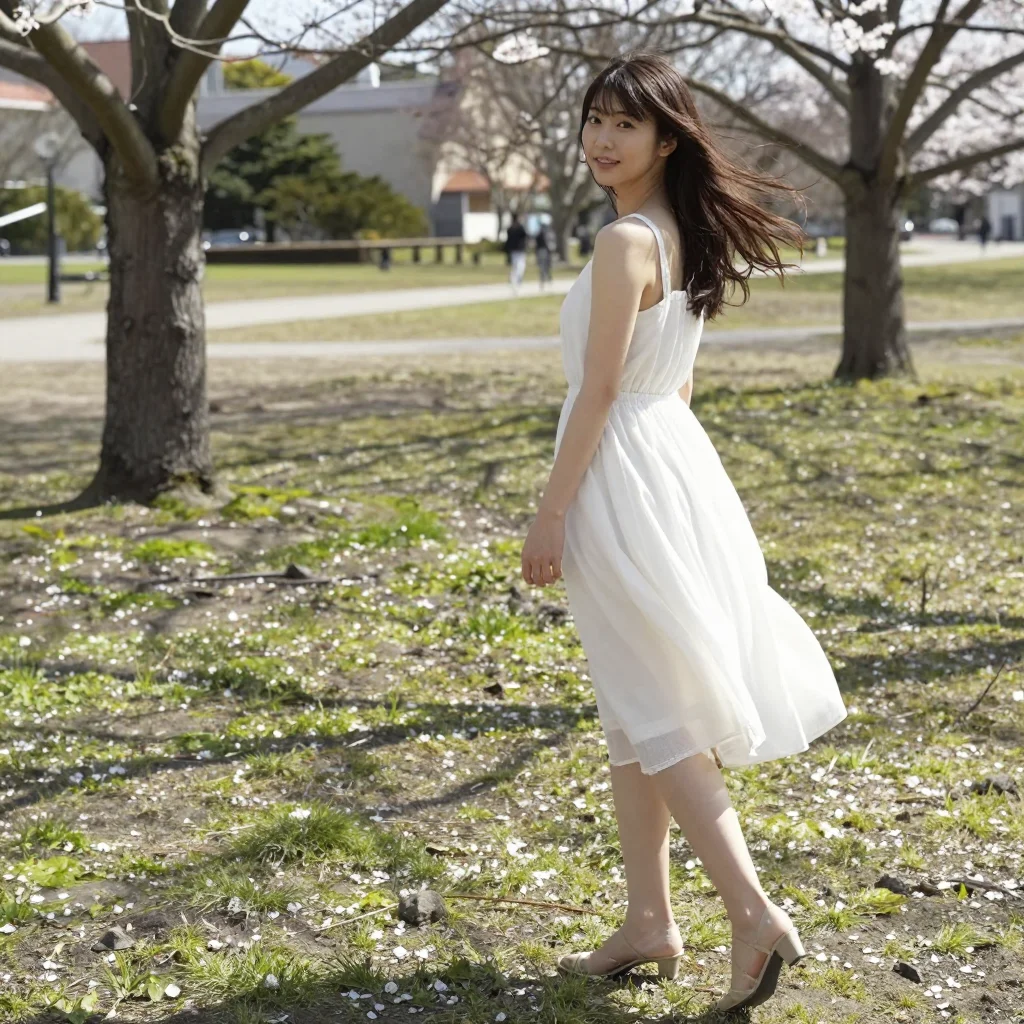 | 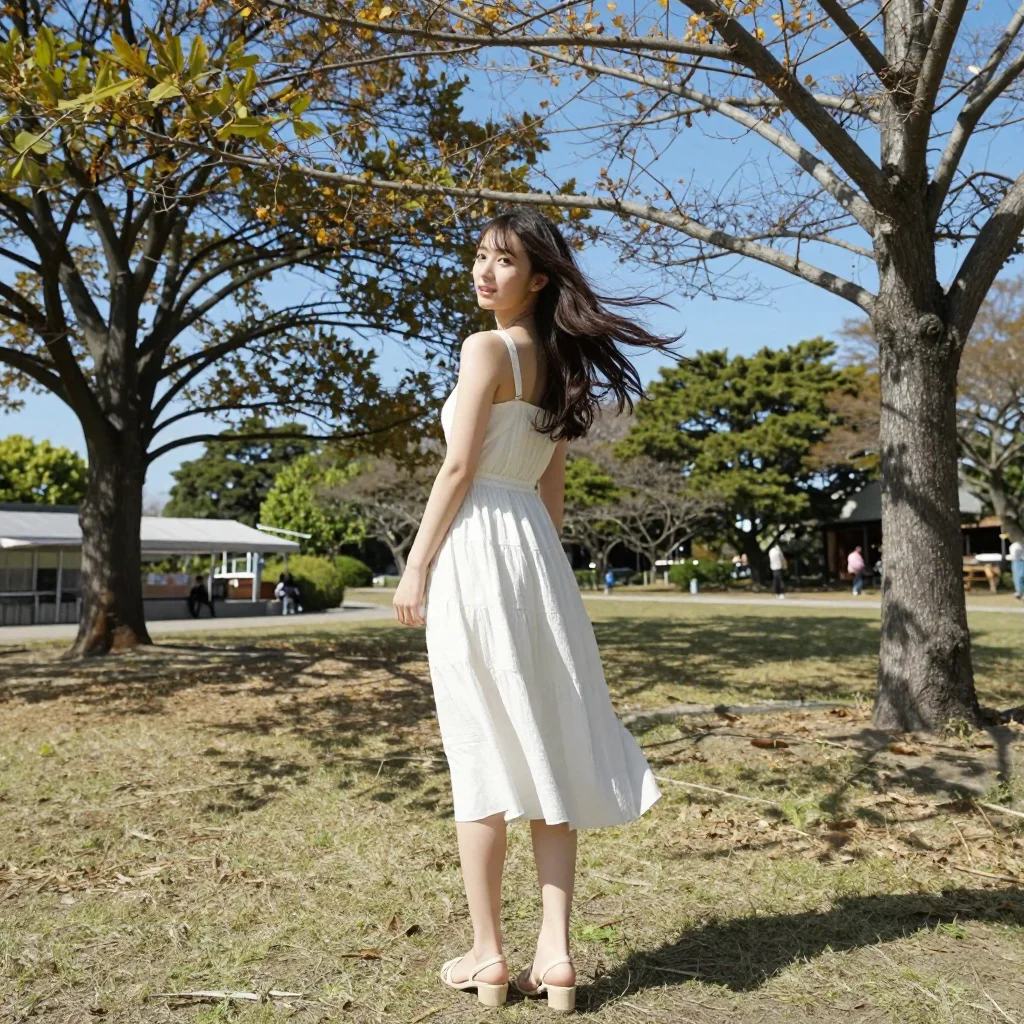 |
Observation: Hair flows forward in 3/3. There was also a tendency for the subject to be rendered from a back-facing angle. Wind from behind causing hair to flow forward is physically correct — matches specification (3/3).
C04: headwind (1 token)
| seed 1 | seed 2 | seed 3 |
|---|---|---|
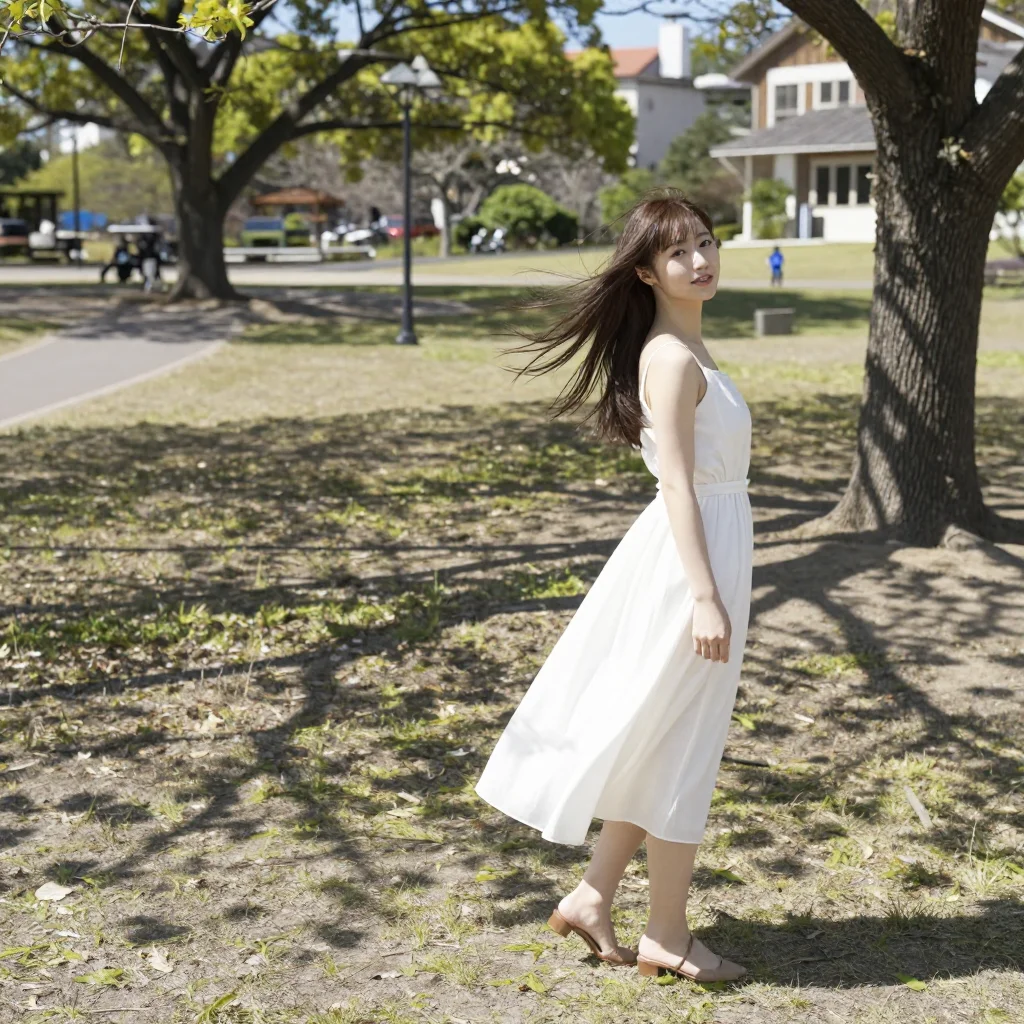 | 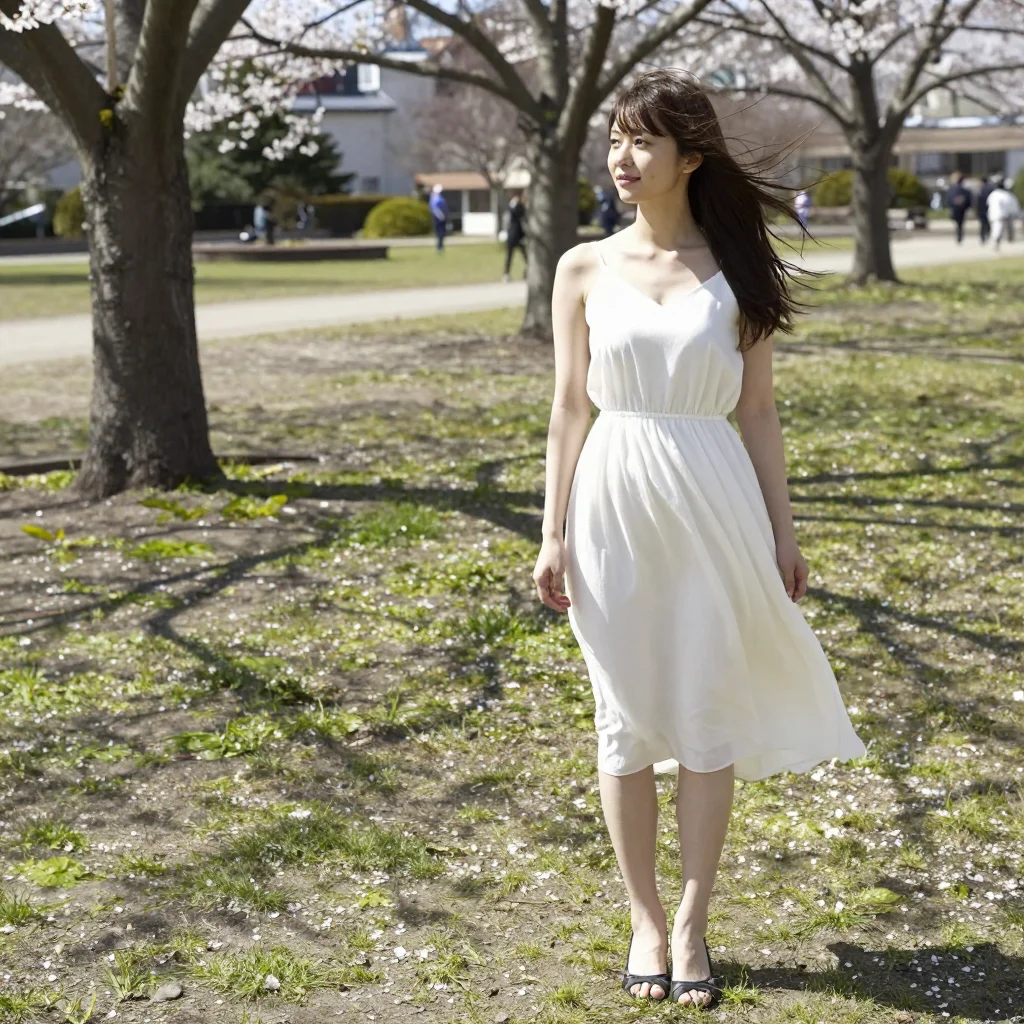 | 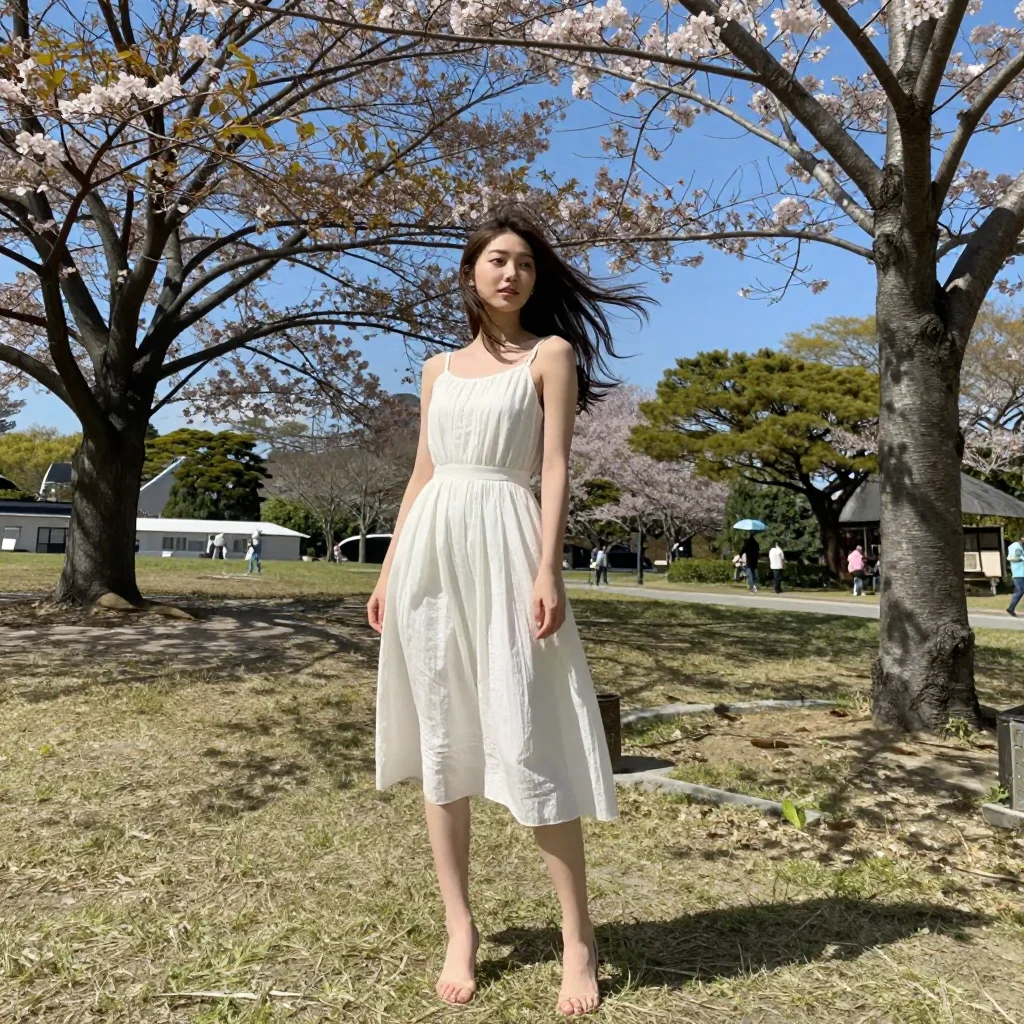 |
Observation: Hair flows backward. With a headwind (wind blowing from the front), hair flowing backward is correct. Consistent in 3/3. Looks similar to C00 (no direction) due to camera-subject positioning. Matches specification (3/3).
C05: side wind (2 tokens)
| seed 1 | seed 2 | seed 3 |
|---|---|---|
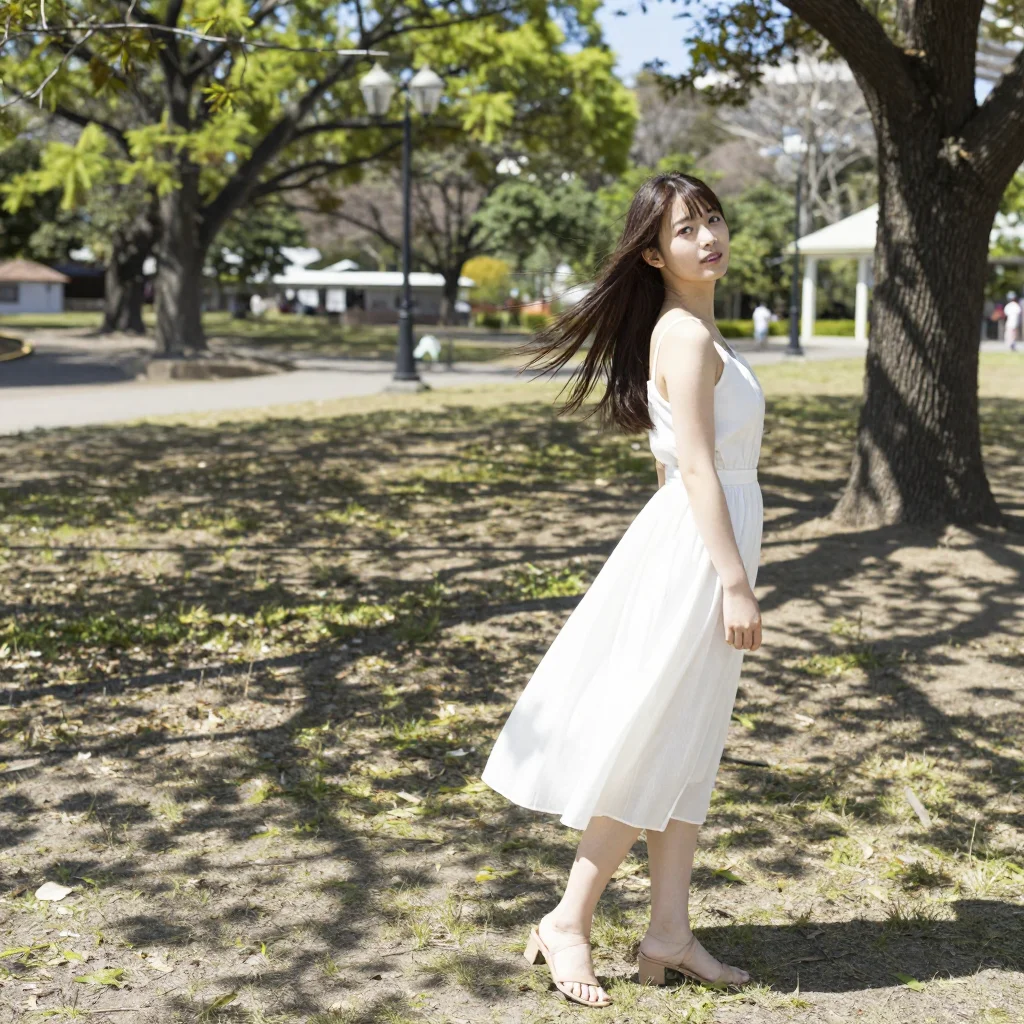 | 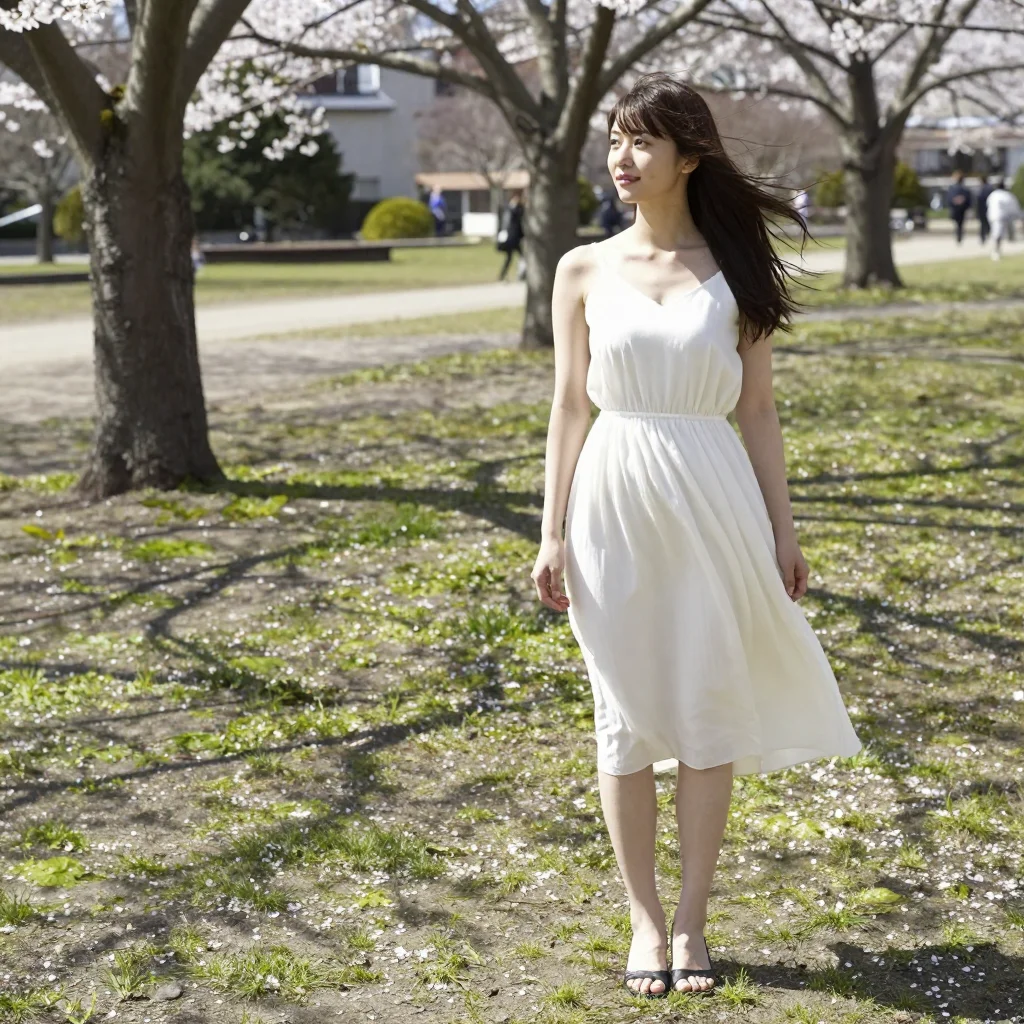 | 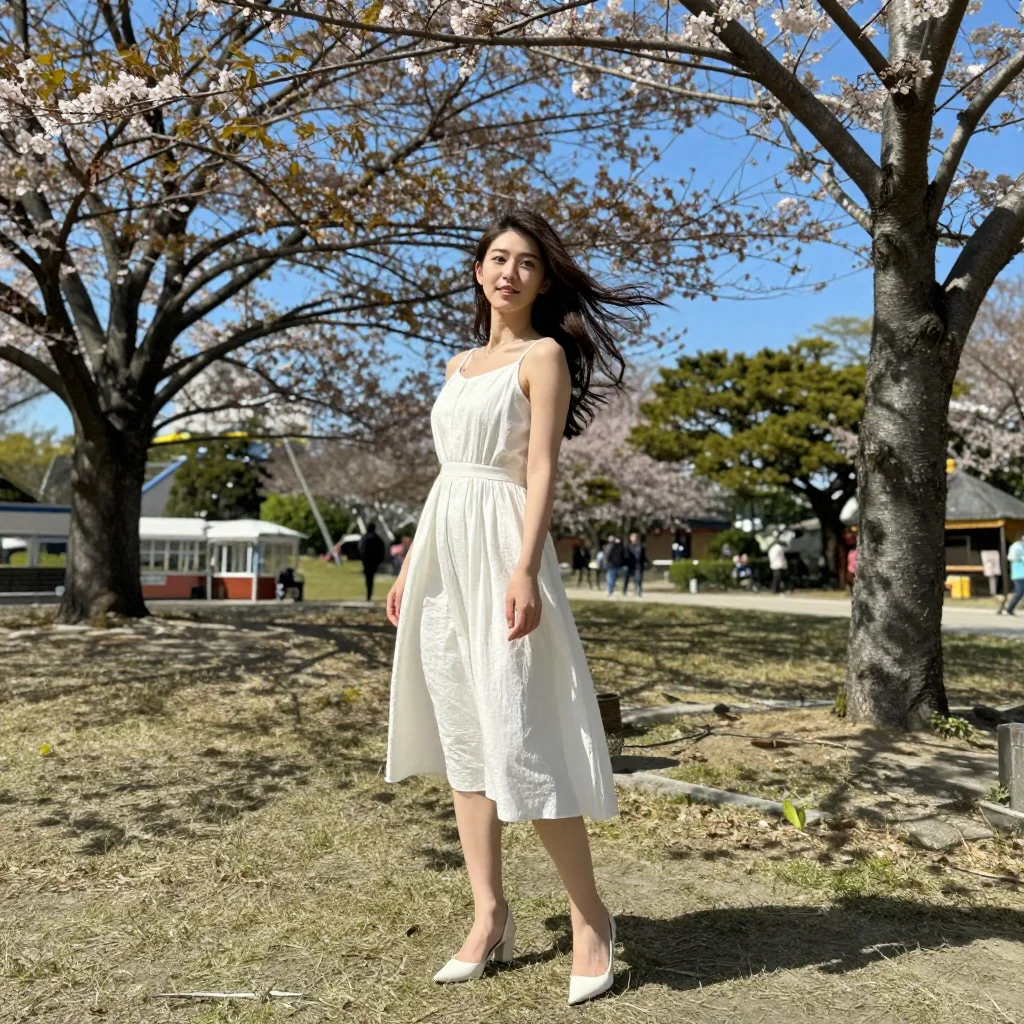 |
Observation: Hair flows sideways. Similar result to C00 (no direction). Since “side” doesn’t specify left or right, it tends to default to the rightward direction. For clear directional control, wind from left / wind from right is recommended.
Experiment C Summary
| Condition | Tokens | Flow Direction | Match Rate with Specification |
|---|---|---|---|
| C00 wind (no direction) | 1 | Right (default) | — |
| C01 wind from left | 3 | Right (from left → flows right) | 3/3 |
| C02 wind from right | 3 | Left (opposite of default) | 3/3 |
| C03 wind from behind | 3 | Forward (behind → flows forward) | 3/3 |
| C04 headwind | 1 | Backward | 3/3 |
| C05 side wind | 2 | Right (direction ambiguous) | — |
Findings:
- Wind direction control works. In particular,
wind from rightreversing the default rightward flow to leftward is clear evidence that directional control functions. wind from behindaffects not just hair direction but also the subject’s facing direction (back-facing).headwind(1 token) efficiently expresses “facing headwind” with few tokens.side windis ambiguous, makingwind from left/wind from rightmore reliable.
Note:
flutteringwas the most effective keyword overall.wind from rightreversing the default wind direction is clear evidence that directional control works. Note that clothing modifiers can change the entire garment design, which is worth watching for.
Overall Summary
Recommended Prompts
| Use Case | Recommended Keyword | Tokens | Effect |
|---|---|---|---|
| Skirt billowing | fluttering | 1 | Skirt spreads wide, hair also affected |
| Hair only | wind | 1 | Hair flows sideways, minimal clothing impact |
| Both hair and clothing reliably | wind blowing hair and clothes | 5 | Most reliable |
| Strong wind | strong wind | 2 | Body leans into the wind |
| Directional wind | wind from {direction} | 3 | Matches specification in 3/3 seeds |
What Wastes Tokens
| Keyword | Tokens | Reason |
|---|---|---|
gust of wind | 3 | Same effect as strong wind (2 tokens) |
hair blowing in wind | 4 | wind (1 token) is sufficient |
hair streaming in wind | 4 | wind (1 token) is sufficient |
tousled hair in wind | 4 | Same as windswept hair (2 tokens) |
white dress caught in wind | 5 | fluttering (1 token) is more dramatic |
Note: Clothing Modifiers Change the Design Too
When clothing is directly modified with flowing white dress or billowing white dress, not just the movement but the dress design (length, silhouette) itself changes. To add movement while keeping the original sundress design, it is recommended to add fluttering or wind at the end instead.
Next Verification Topics
- How does wind effect change with hair length (long / short / ponytail / bob)?
- Does the degree of fabric movement vary by material (silk / denim / chiffon / knit)?
![[Experiment] Prompts for Zero Gravity / Floating Expressions | 8 Conditions, 24 Images](/tips/zero-gravity-basic-test/a02_floating_s1_0_0000_7662393931790150590.webp)