“Ryousankata-kei” (mass-produced girl style) is a fashion aesthetic characterized by pink-and-white frilly clothes, ribbons, and stuffed animal charms — frequently seen in hotel room photoshoots on social media. This article tests how well each element of this style can be reproduced with z-image-turbo prompts.
Conclusions
- The three elements pink frill blouse, mini skirt, ribbon details alone reliably produce the archetypal ryousankata look
- Adding gothic lolita style shifts the output toward a black-and-pink goth-lolita aesthetic rather than ryousankata. Twin tails and knee-high socks are automatically added
- fur-trimmed jacket accurately reproduces a fur-accented outer layer, but the skirt tends to pull toward a longer length (3 out of 3 images)
- gingham check jumper skirt reproduces the check pattern, but without a “mini” specification, the skirt comes out below the knee. Explicit length specification is required for length control
- off-shoulder frill blouse stably outputs off-shoulder styling with lace details
- Adding mirror selfie composition successfully creates a mirror smartphone-shooting composition in 2 out of 3 images
- Flare skirt going long can be fixed with
flare mini skirt. The long-skirt problem in Condition C was resolved — all 3 images showed mini-length whenminiwas explicitly specified - The combination of
mirror reflection+looking at mirrorproduces mirror-aware poses
What You’ll Learn
- How each ryousankata fashion element is reproduced by z-image-turbo
- Stability of pink-toned fashion specifications
- Variation expressions for gothic lolita, fur, gingham check, etc.
- Control accuracy for mirror selfie compositions
Experiment Conditions
| Parameter | Value |
|---|---|
| Model | z-image-turbo (6B, photorealistic distilled model) |
| Steps | 8 |
| Sampler | euler |
| Scheduler | ddim_uniform |
| CFG | 1.0 |
| Image Size | 1024×1024 |
| Seeds | 3 fixed seeds: 42, 123, 789 |
| Variable | Outfit prompt only (1 variable) |
Base Prompt
The {VARIABLE} is replaced with each condition’s outfit prompt. The background is fixed to a hotel bedroom — a classic setting for ryousankata-kei photos.
Control: casual outfit
Baseline with no style direction specified.
| seed 42 | seed 123 | seed 789 |
|---|---|---|
 |  |  |
Observation: All 3 images show blue-toned casual outfits. 2 images have pants, 1 has a dress. No pink or frills appear — no ryousankata elements present.
Condition A: pink frill blouse, mini skirt, ribbon details
The three core elements of ryousankata style (pink, frills, ribbons).
| seed 42 | seed 123 | seed 789 |
|---|---|---|
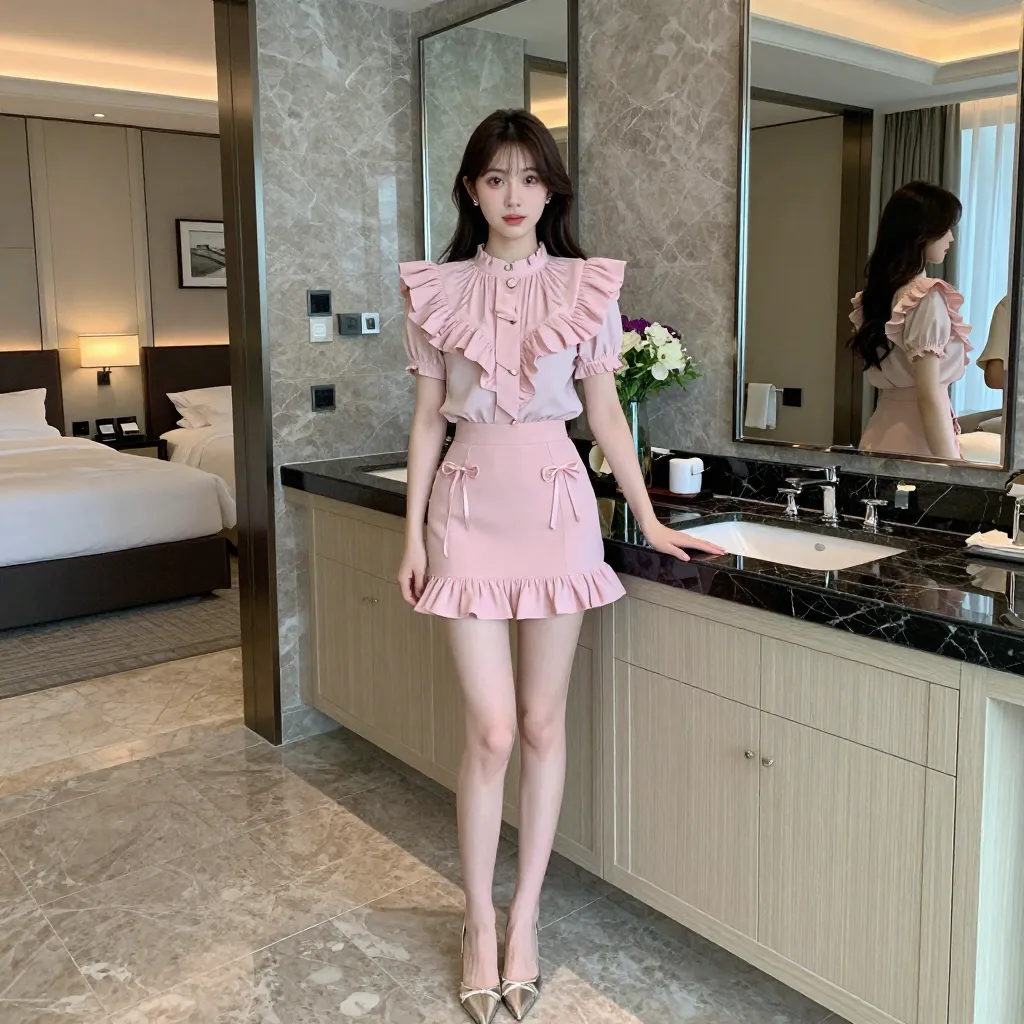 |  | 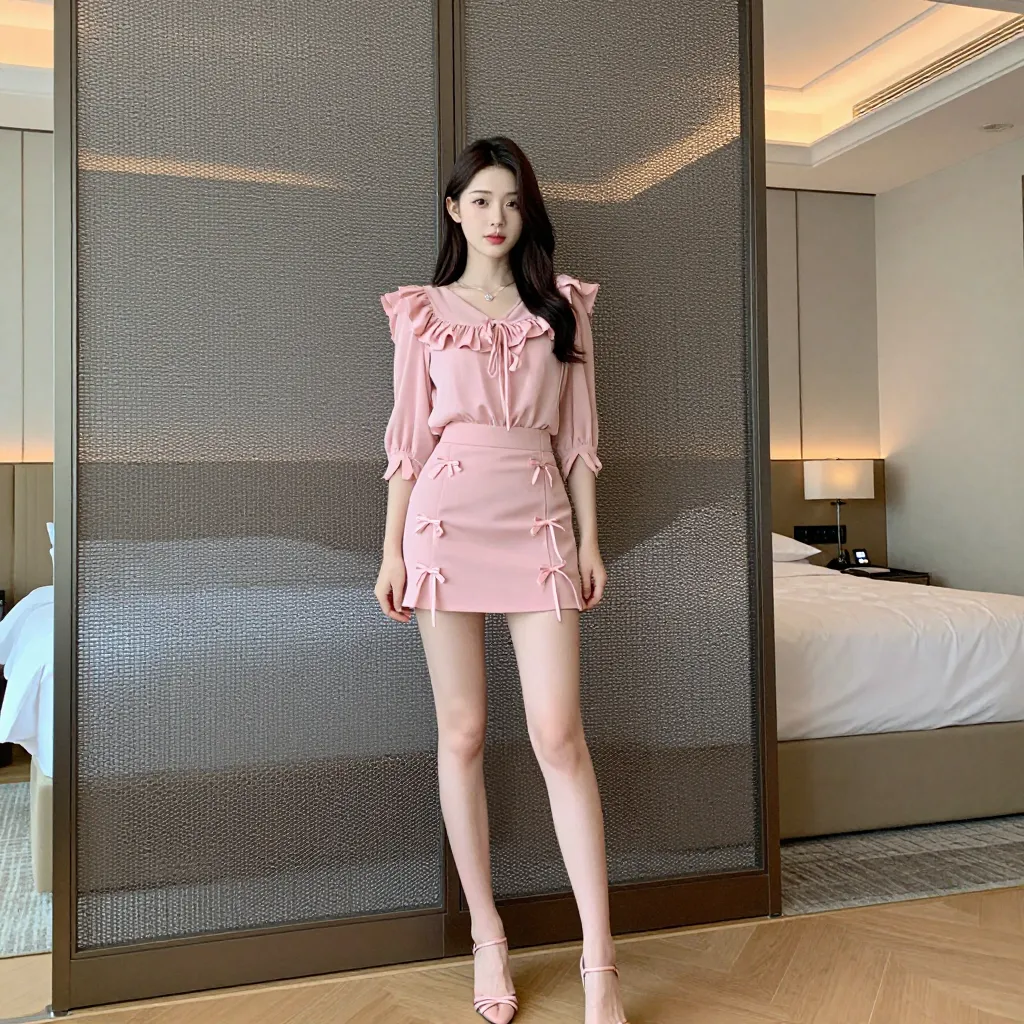 |
Observation: All 3 images output a pink frill blouse + mini skirt. Ribbon placement varies by seed (waist on seed 42, chest on seed 123), but ribbon elements are confirmed in all 3 images. Combined with the hotel background, the images closely resemble the ryousankata-style posts seen on social media.
Condition B: gothic lolita style, black and pink coordinate, twin tails
A gothic lolita subcategory of ryousankata style.
| seed 42 | seed 123 | seed 789 |
|---|---|---|
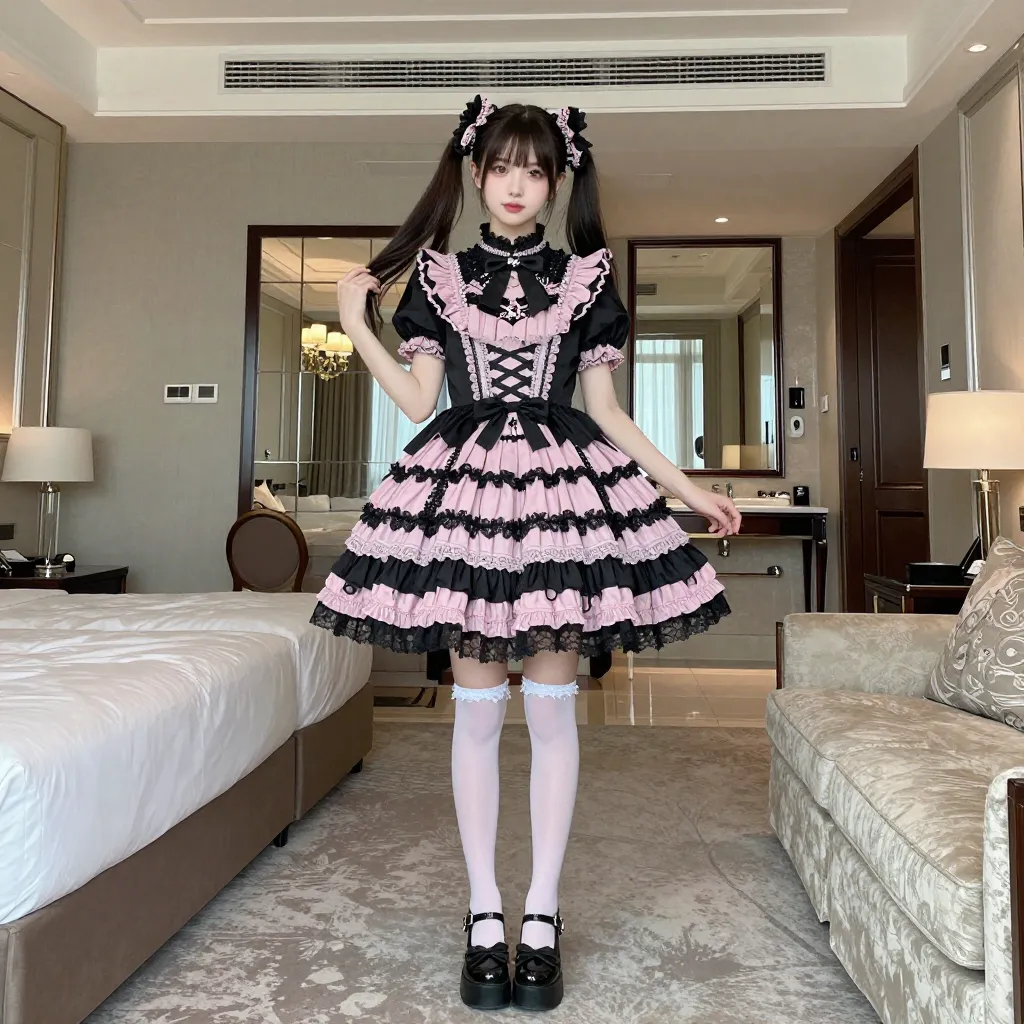 | 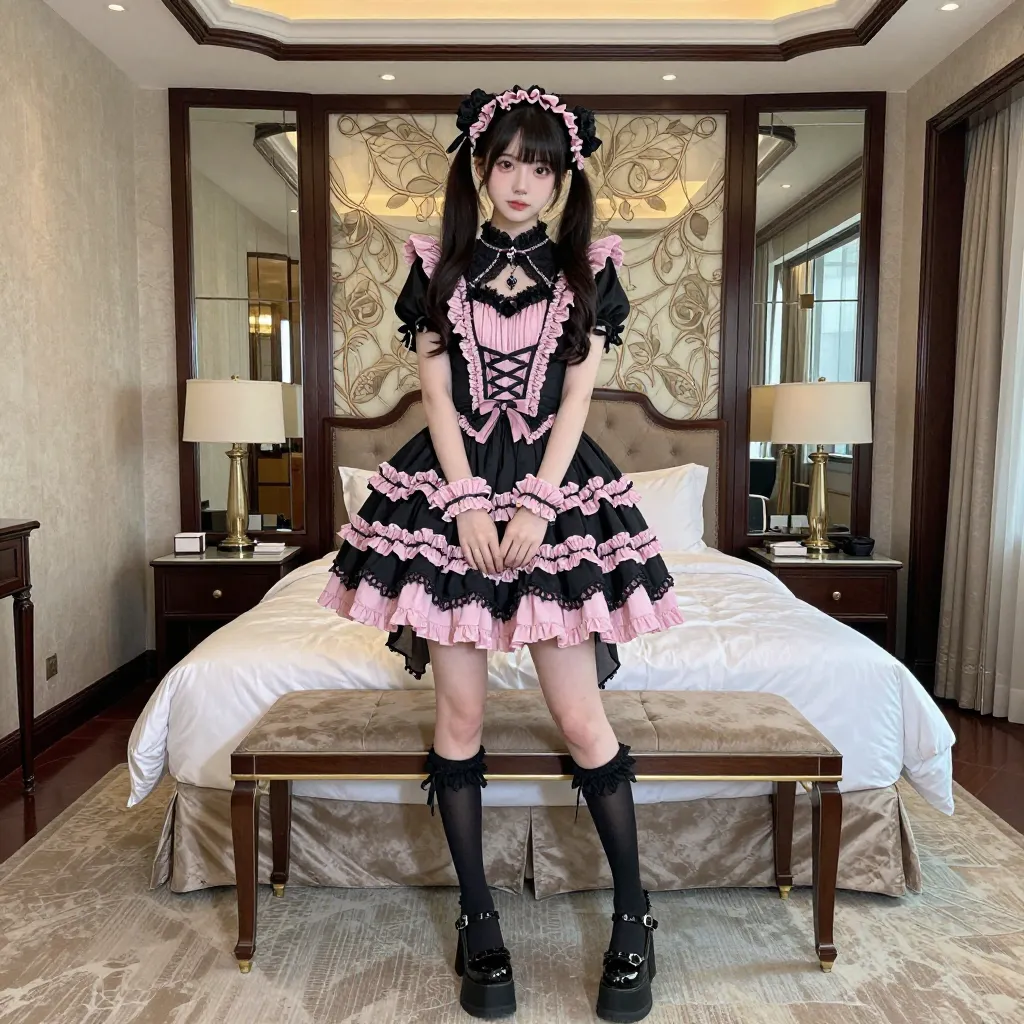 | 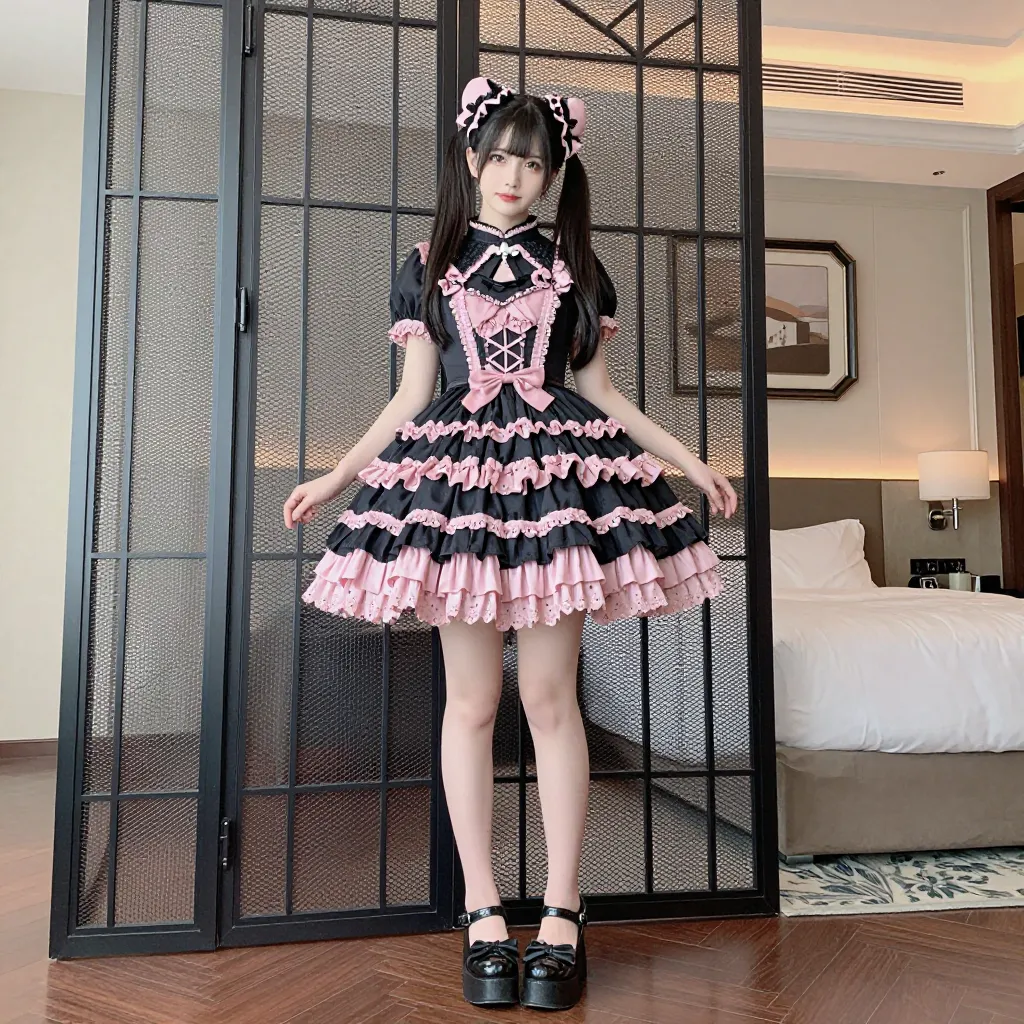 |
Observation: All 3 images output black-and-pink gothic lolita dresses. Twin tails appear in all 3 images. Multi-layered frills, lace-up details, and white knee-high socks (or tights) are automatically added. Compared to Condition A, the skirt length tends toward just above the knee with a flared silhouette.
Condition C: white and pink pastel coordinate, fur-trimmed jacket, flare skirt
A winter ryousankata style. Testing the reproduction of fur-accented outerwear.
| seed 42 | seed 123 | seed 789 |
|---|---|---|
 |  |  |
Observation: All 3 images accurately reflect the white-and-pink color scheme and fur-trimmed jacket. Fur appears at the collar and cuffs. However, “flare skirt” was interpreted as a long flare (below knee to mid-calf length) — all 3 images failed to produce a mini length. Specifying flare mini skirt explicitly is required to get a mini-length skirt in ryousankata style.
Condition D: gingham check jumper skirt, white blouse, girly style
A girly-type ryousankata style. Testing gingham check pattern reproduction.
| seed 42 | seed 123 | seed 789 |
|---|---|---|
 |  | 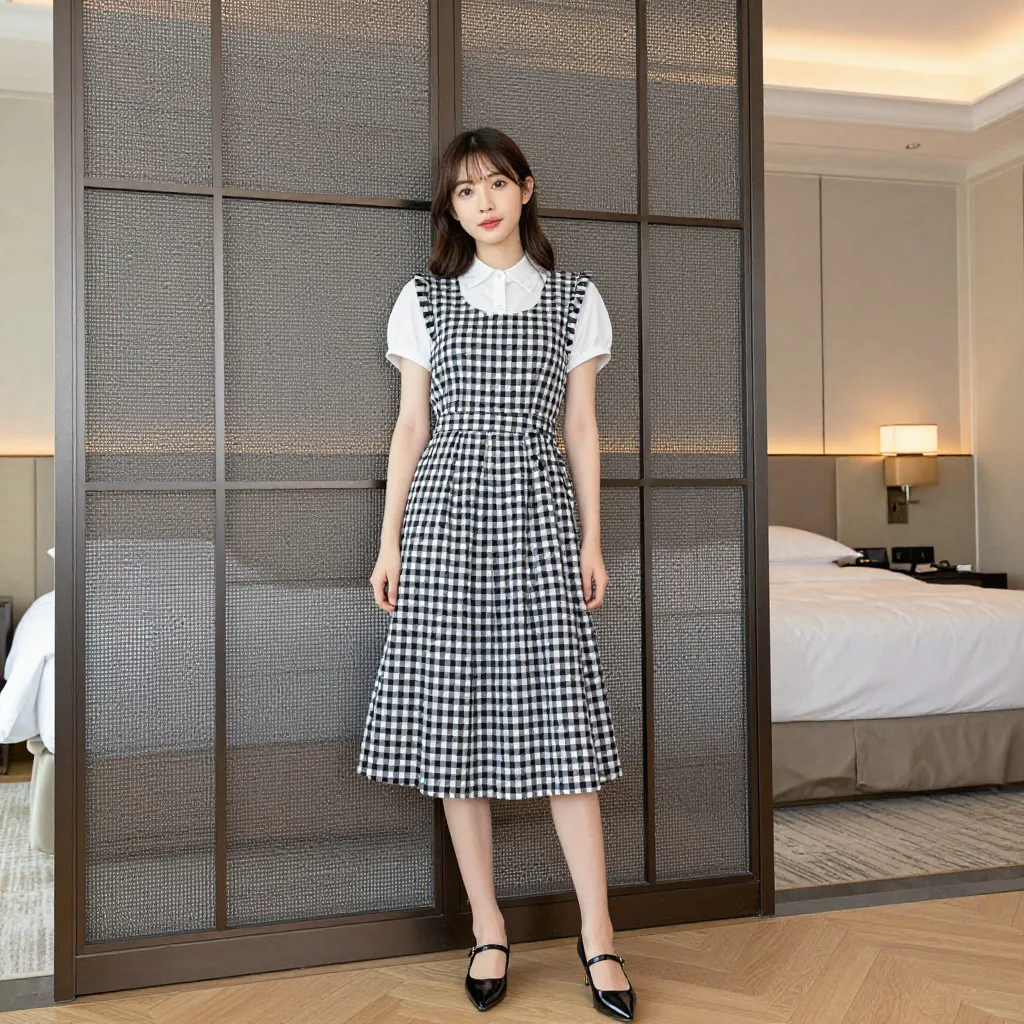 |
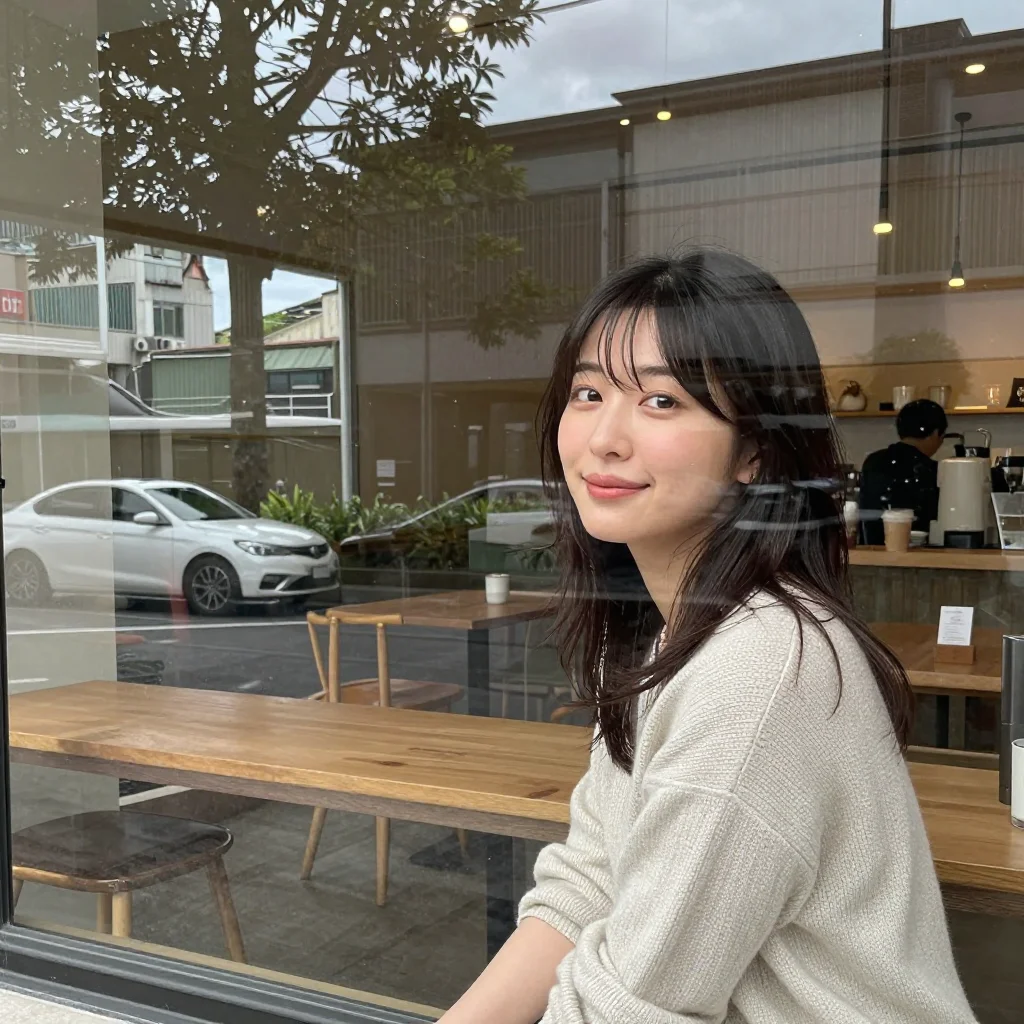
Observation: Gingham check pattern was reproduced in all 3 images. However, the check color varied — white-and-black (seeds 42, 789) vs white-and-navy (seed 123). Skirt length is below the knee, which differs from the mini-skirt image typical of ryousankata. The white blouse was output with frill sleeves.
Condition E: off-shoulder frill blouse, high-waist pink skirt, lace decoration
A feminine ryousankata style. Testing off-shoulder and lace reproduction.
| seed 42 | seed 123 | seed 789 |
|---|---|---|
 | 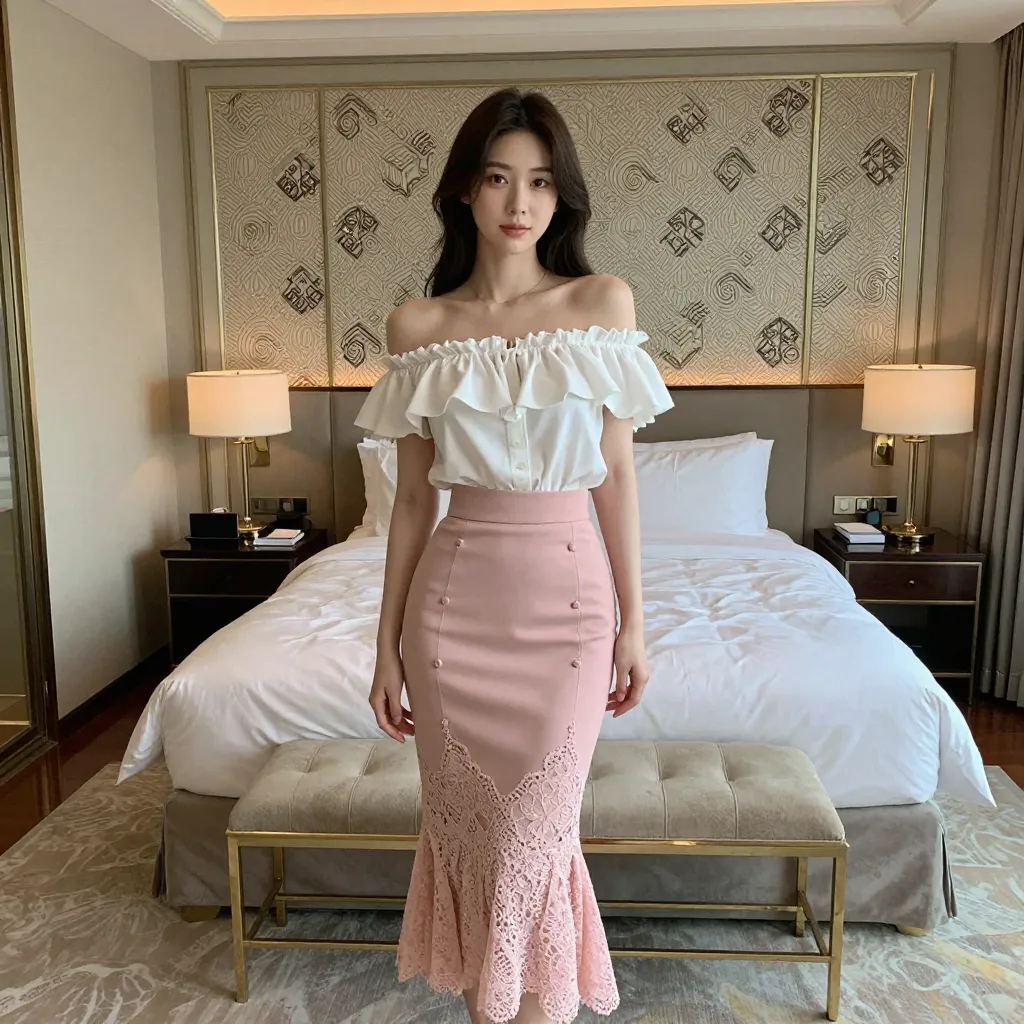 | 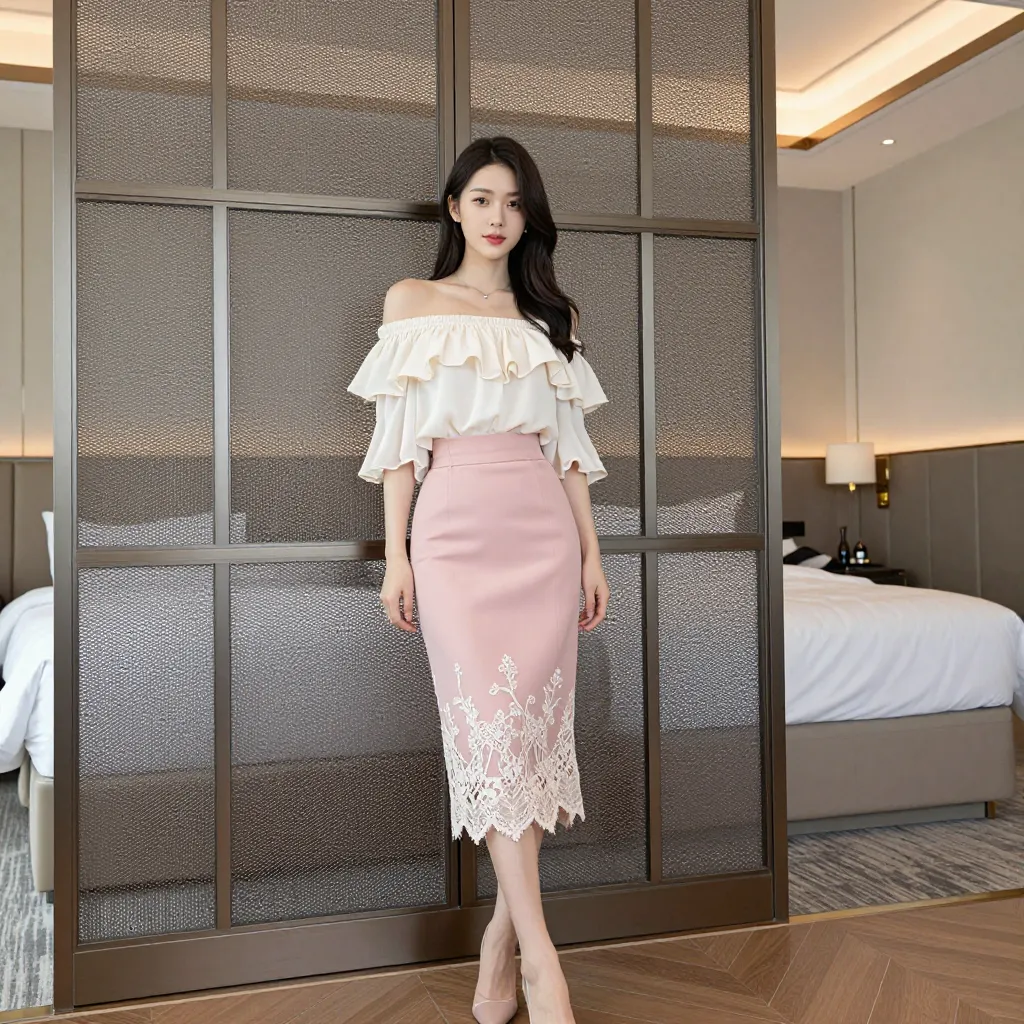 |
Observation: Off-shoulder frill blouse was reproduced in all 3 images with clear shoulder exposure. Pink skirt lace decoration is expressed consistently — cutwork lace at the hem (seed 42), lace trim along the side (seed 123), etc. Skirt length trends toward midi-to-long, again failing to produce a mini length.
Condition F: mirror selfie composition
Condition A outfit with mirror selfie composition added. Testing composition control.
| seed 42 | seed 123 | seed 789 |
|---|---|---|
 |  |  |
Observation: The mirror selfie composition (photographing via mirror with a smartphone) succeeded in 2 out of 3 images. Seed 42 reproduces a pose of shooting toward the mirror while partially covering the face with the smartphone. Seed 789 shows a similar composition. Seed 123 holds a smartphone but faces forward — the mirror effect is weak. mirror selfie composition shows moderate control effectiveness in z-image-turbo.
Condition G: Explicit flare mini skirt (improved version of Condition C)
Testing whether specifying flare mini skirt can fix the long-skirt problem from Condition C.
| seed 42 | seed 123 | seed 789 |
|---|---|---|
 | 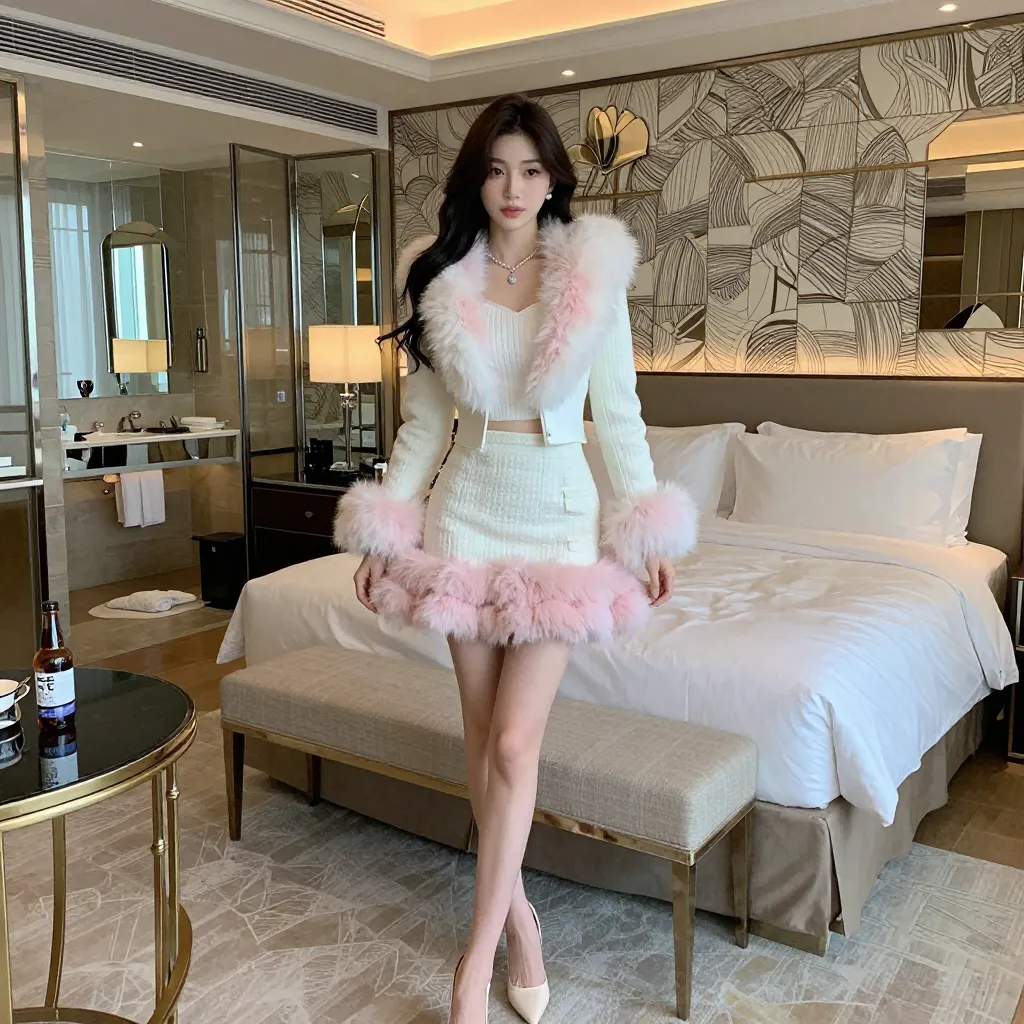 | 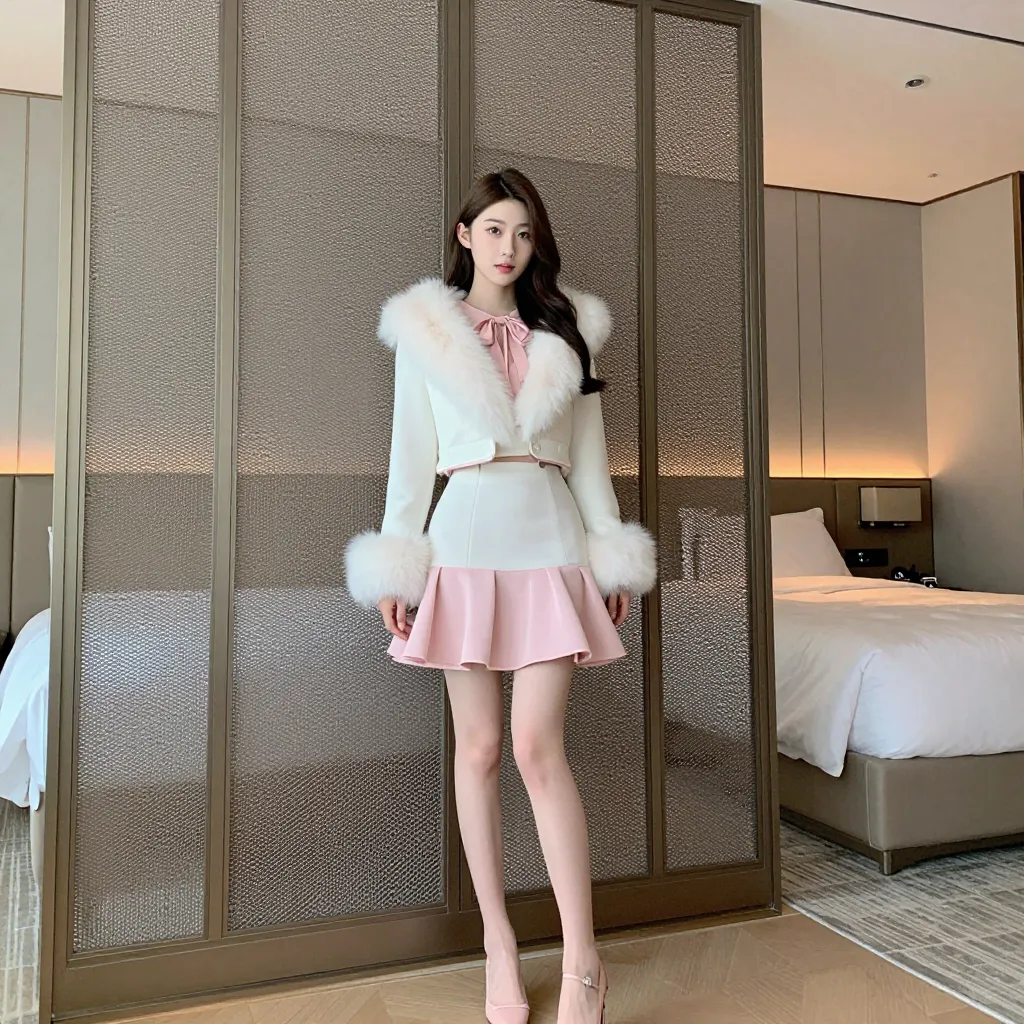 |
Observation: flare mini skirt successfully achieved mini length. Seed 42 outputs a white-and-pink fur jacket combined with a mini flare skirt — with pink fur decoration at the skirt hem. All 3 images achieved the fur coat + mini skirt combination. The long-skirt problem from Condition C is solvable by explicitly adding mini.
Condition H: Improved mirror selfie (improved version of Condition F)
To improve the 2/3 success rate from Condition F, switching to a mirror reflection expression.
| seed 42 | seed 123 | seed 789 |
|---|---|---|
 |  | 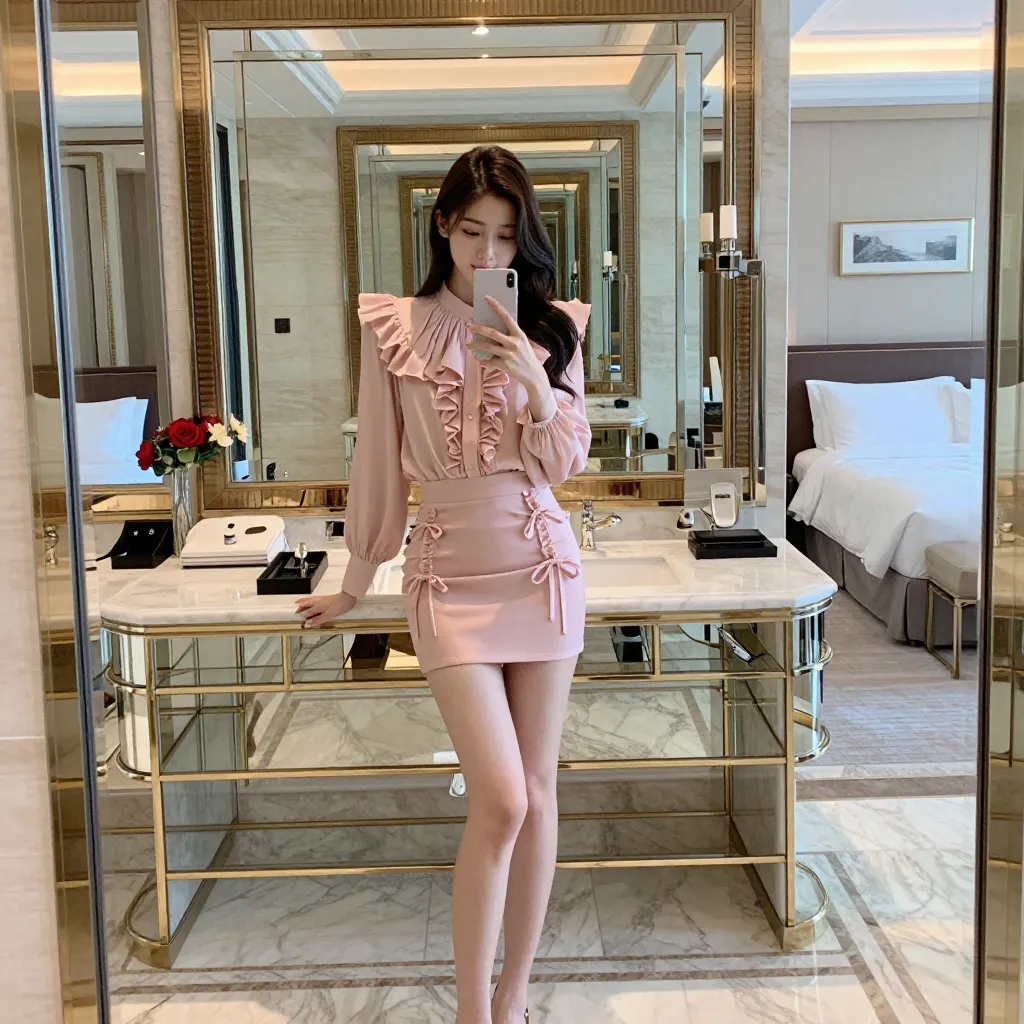 |
Observation: Seed 42 reproduces the mirror-shooting composition, with both the subject and their reflection visible in the mirror. The pink frill blouse with ribbon-accented mini skirt is accurately reflected. The mirror reflection + looking at mirror combination produces mirror-aware gaze and posture.
Summary
| Condition | Outfit Reproduction | Color Control | Length Control | Composition |
|---|---|---|---|---|
| A: pink frill + ribbon | ○ 3/3 | ○ Pink stable | ○ Mini | − |
| B: gothic lolita | ○ 3/3 | ○ Black × Pink | △ Slightly long | − |
| C: fur jacket | ○ 3/3 | ○ White × Pink | × Goes long | − |
| D: gingham check | ○ 3/3 | △ Color varies | × Below knee | − |
| E: off-shoulder lace | ○ 3/3 | ○ White × Pink | × Midi to long | − |
| F: mirror selfie | ○ 3/3 | ○ Pink stable | ○ Mini | ○ 2/3 |
| G: flare mini skirt | ○ 3/3 | ○ White × Pink | ○ Mini | − |
| H: mirror reflection | ○ 3/3 | ○ Pink stable | ○ Mini | ○ Mirror reflection present |
The most simple and stable approach to ryousankata fashion reproduction is the 3-element combo pink frill blouse, mini skirt, ribbon details. When you want a shorter length, always specify mini explicitly. The flare skirt going long can be fixed with flare mini skirt. Mirror selfie composition can be controlled with mirror selfie composition, holding smartphone.
Note: A mere 3-word combination is enough to reproduce the ryousankata look. Notably, the gothic lolita condition produced knee-highs and lace-ups without them being explicitly specified. The flare skirt’s tendency to go long was fixed by adding
mini, and the mirror selfie composition was controllable viamirror reflection+looking at mirror. Length control likely applies to other fashion prompts as well.
![[Experiment] Reproducing Jirai-Kei Fashion with Prompts](/tips/jirai-kei-fashion-prompt-test/D_seed42.webp)
