Conclusion first
bridal carry,man carrying woman in his arms, and the natural-sentence condition all succeeded 3 out of 3. The man stands upright, holds the woman horizontally in both arms, and the composition comes out clean and consistentprincess carryalone succeeded 2 out of 3. The remaining seed produced a broken composition with three people, and the carry itself failed to form- In the 6 images from
princess carryandbridal carry— the conditions that don’t specify who carries — the man was the carrier in 6 of 6, matching the male-carries-female bias confirmed in our earlier article bridal carryhas a side effect of pulling in a wedding dress and tuxedo. If you want to keep casual clothing,man carrying woman in his armsor the natural sentence works better- Even the control (no pose specified) produced a three-person duplication in 1 of 3 seeds. This person-duplication tendency appears to be a general model behavior, not something tied specifically to pose keywords
Experiment design
| Item | Value |
|---|---|
| Model | z-image-turbo (6B, photorealism-distilled) |
| Steps | 8 |
| Sampler | euler |
| Scheduler | ddim_uniform |
| CFG | 1.0 |
| Size | 1024x1024 |
| Seed | 42 / 43 / 44 fixed (shared across all conditions) |
| Images per condition | 3 (3 seeds) |
| Total | 5 conditions = 15 images |
Base prompt
Most people searching for princess carry prompts are looking for the common composition where a man lifts and carries a woman. Our existing article instead tackled the reversed, unconventional composition — a woman carrying a man. This article starts from the mainstream pattern and compares only how the pose is phrased.
Note on methodology: only the {VARIABLE} portion was swapped between conditions; the character setup, location, and lighting were kept fixed across all conditions.
A00: control (no pose specified)
| seed 42 | seed 43 | seed 44 |
|---|---|---|
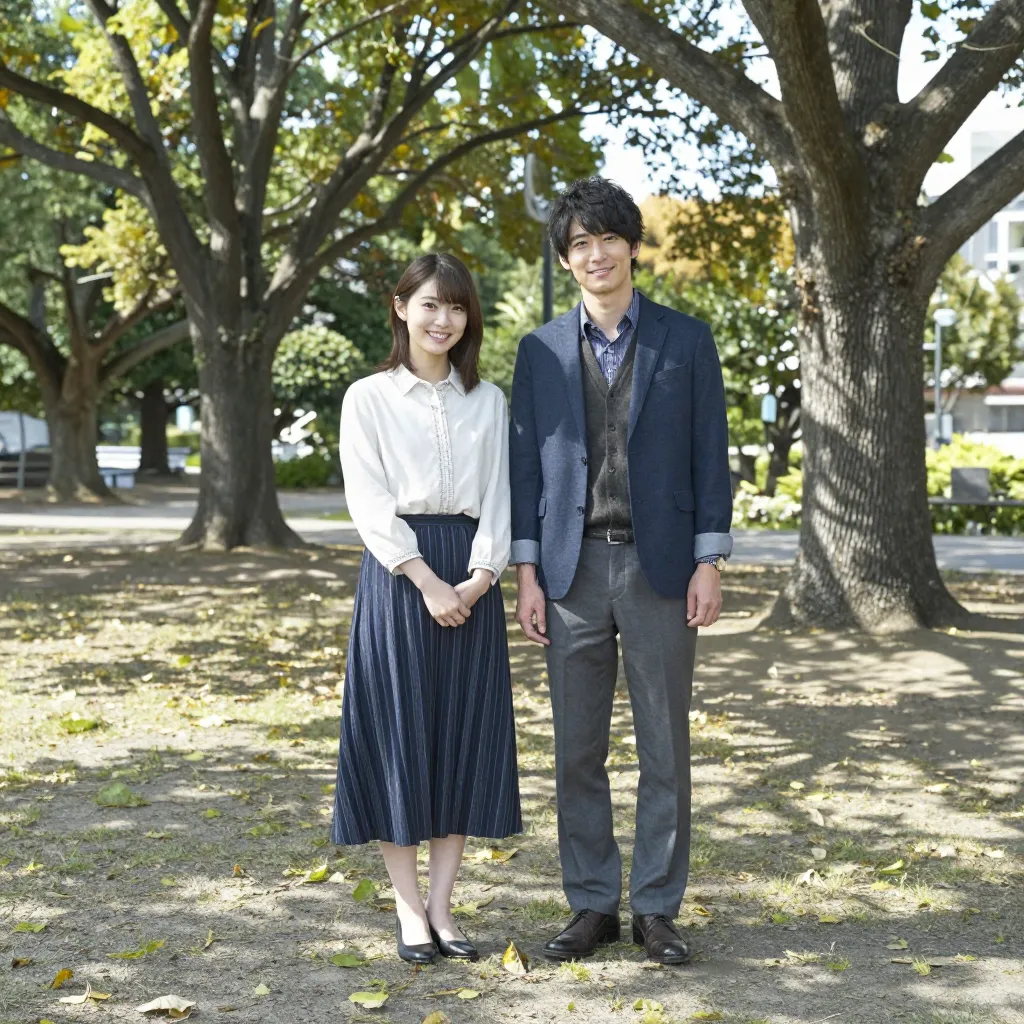 | 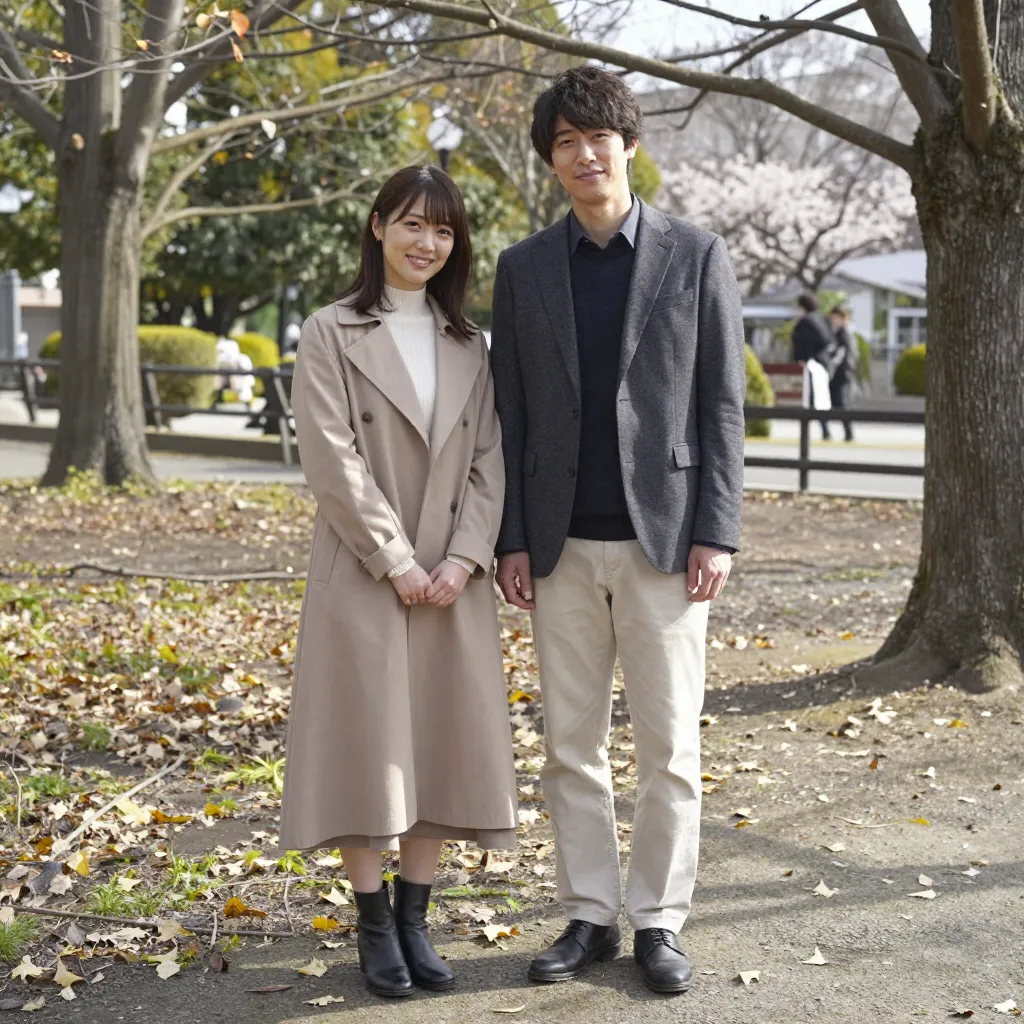 | 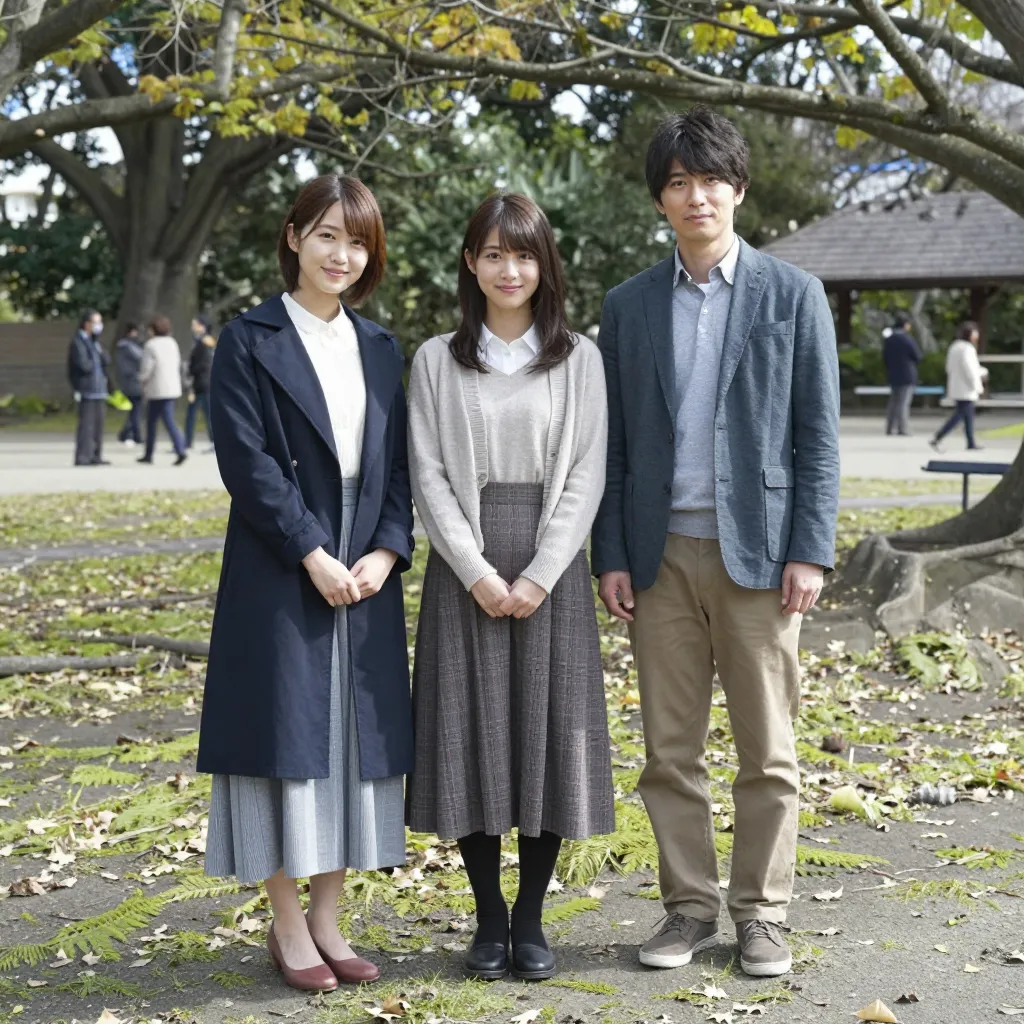 |
Observations: seed 42 and 43 show the man and woman standing side by side as specified, with no carry (as expected). Seed 44 produced a duplicated third person — two women and one man. This confirms the duplication issue can occur with this character count regardless of pose keywords.
A01: princess carry
| seed 42 | seed 43 | seed 44 |
|---|---|---|
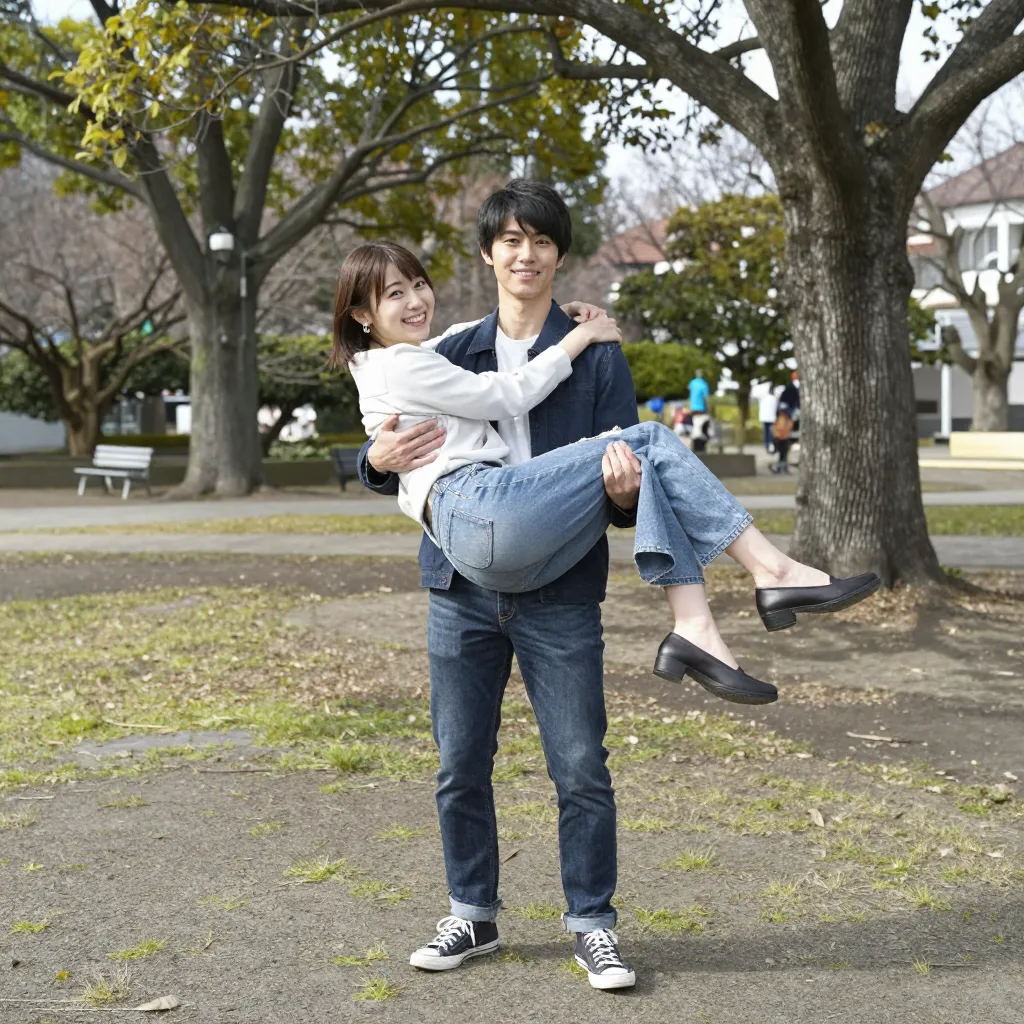 | 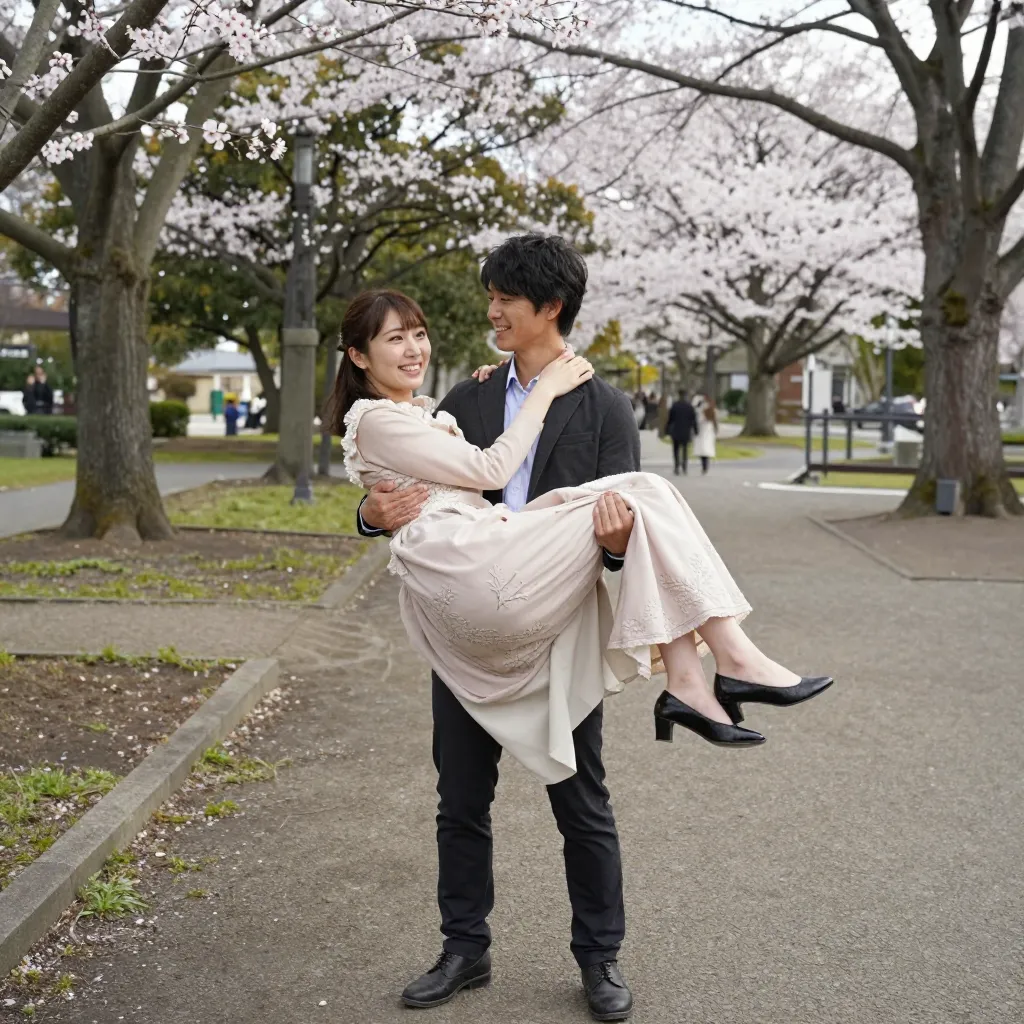 | 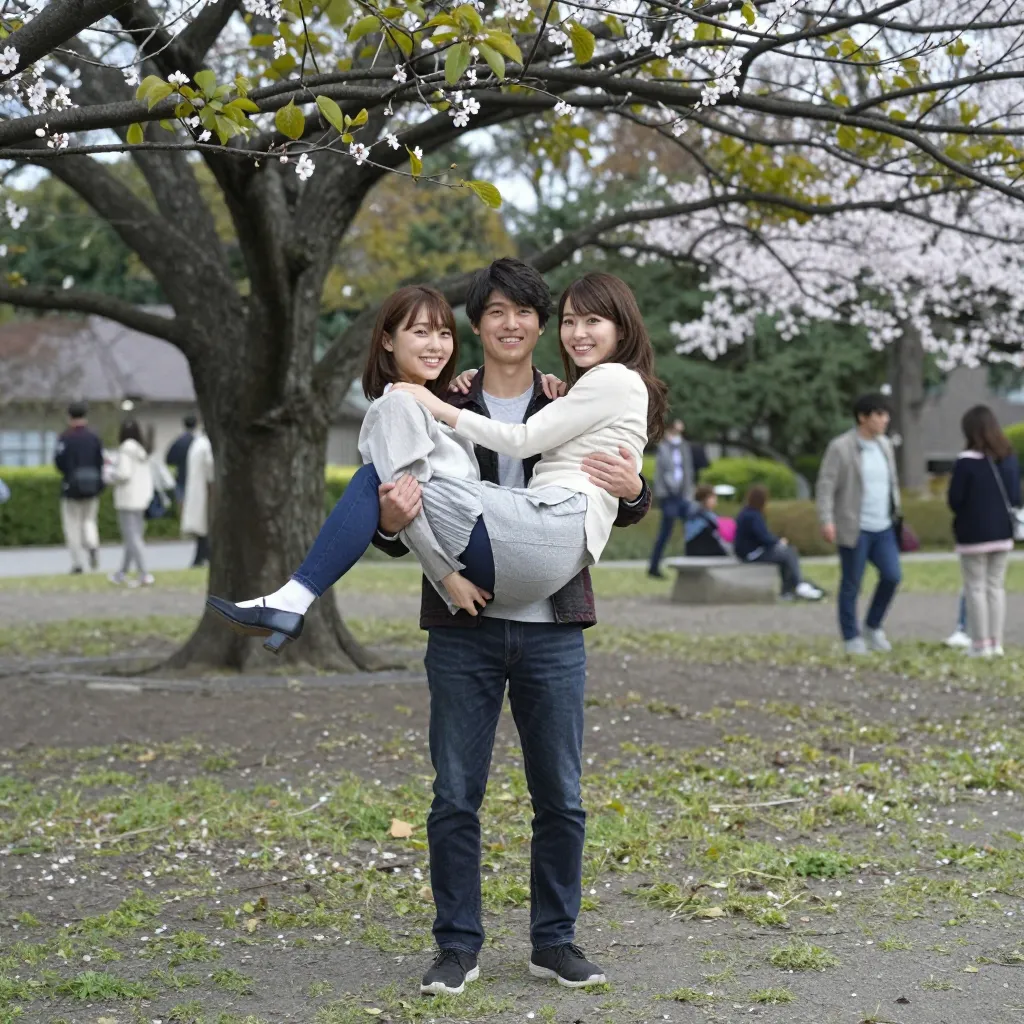 |
Observations: succeeded in 2 of 3 seeds (42, 43). The man stands upright, holding the woman horizontally in both arms, with her legs clearly off the ground. Seed 44 duplicated the woman, producing a composition where the man has one arm around each of two women, and no carry pose formed. The word princess carry reliably evokes the correct pose concept, but the duplication risk remains.
A02: bridal carry
| seed 42 | seed 43 | seed 44 |
|---|---|---|
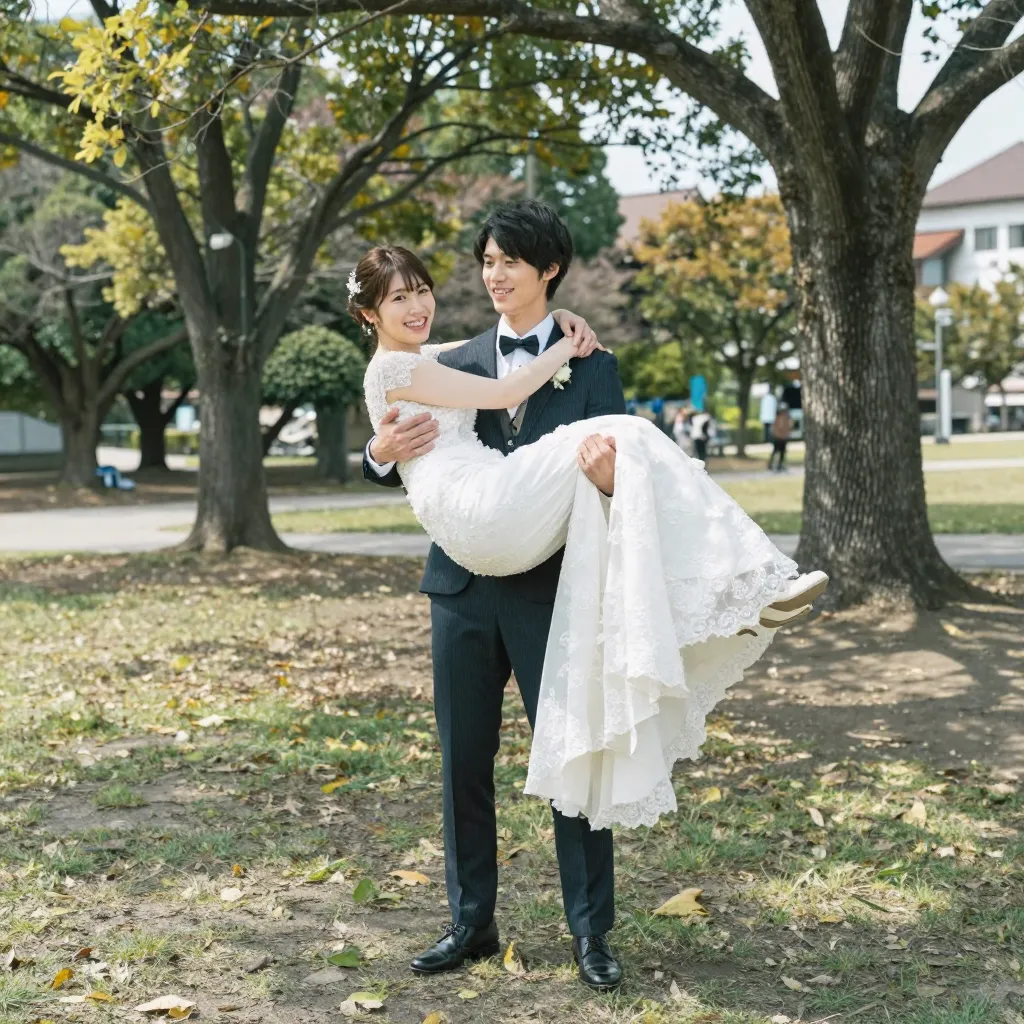 | 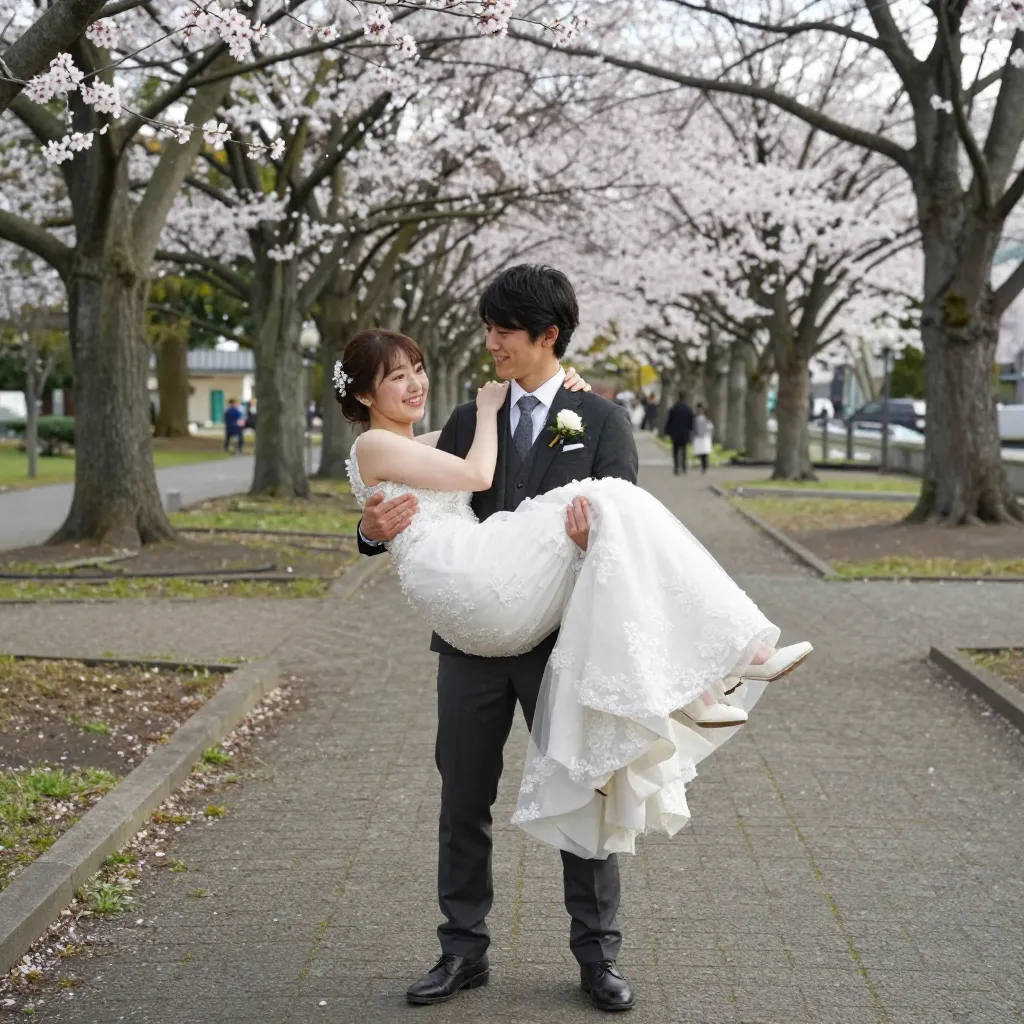 | 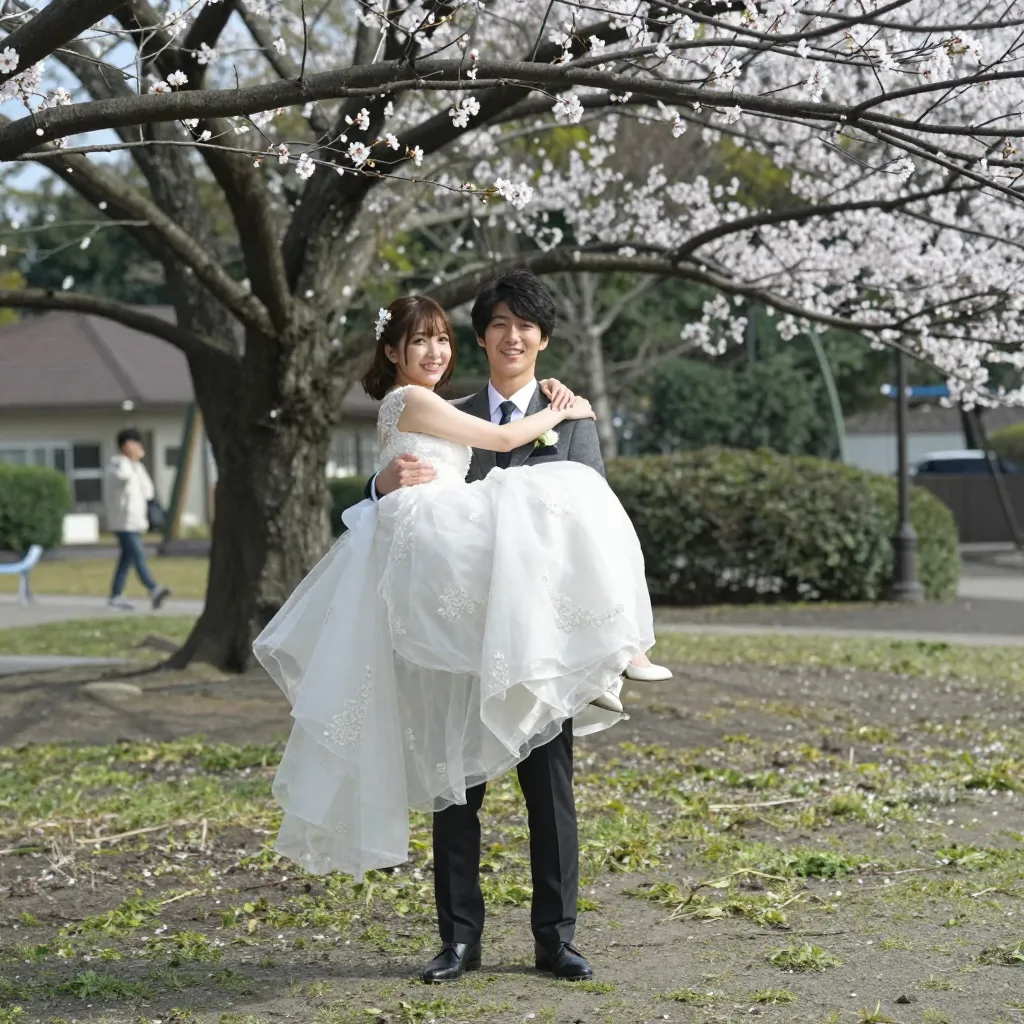 |
Observations: succeeded 3 out of 3. All three seeds put the man in a dark suit and the woman in a lace wedding dress, resembling a wedding photo scene. The word bridal pulled the wardrobe strongly toward wedding attire. The carry pose itself was stable across all three seeds, with no anatomical breakdown observed.
A03: man carrying woman in his arms
| seed 42 | seed 43 | seed 44 |
|---|---|---|
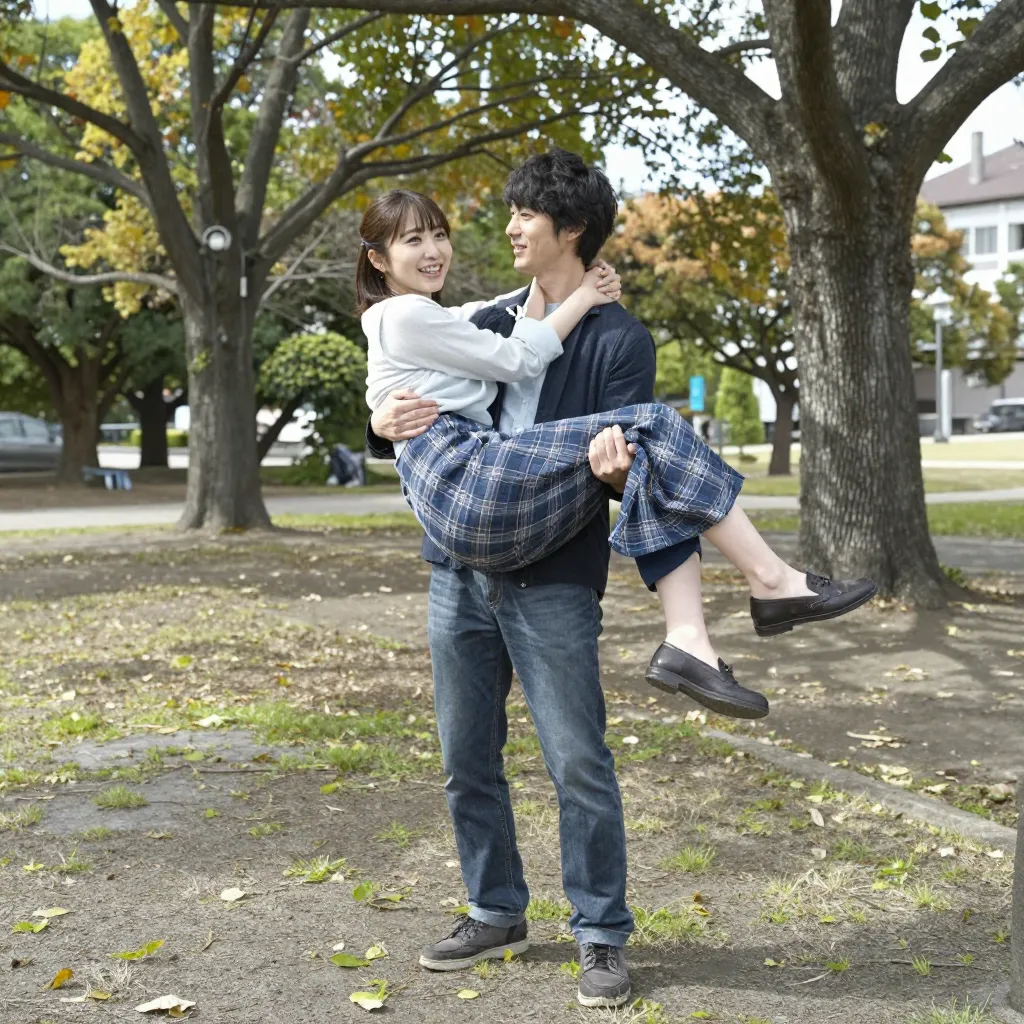 | 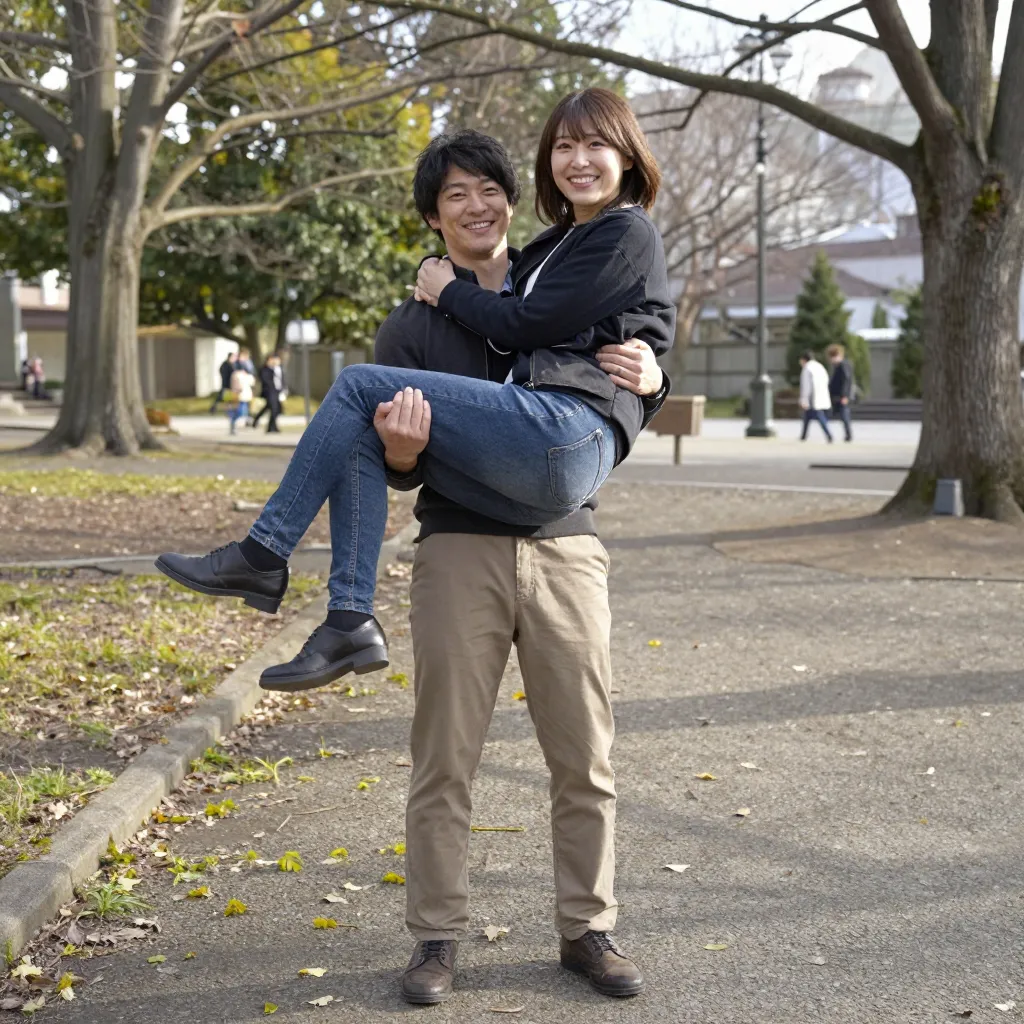 | 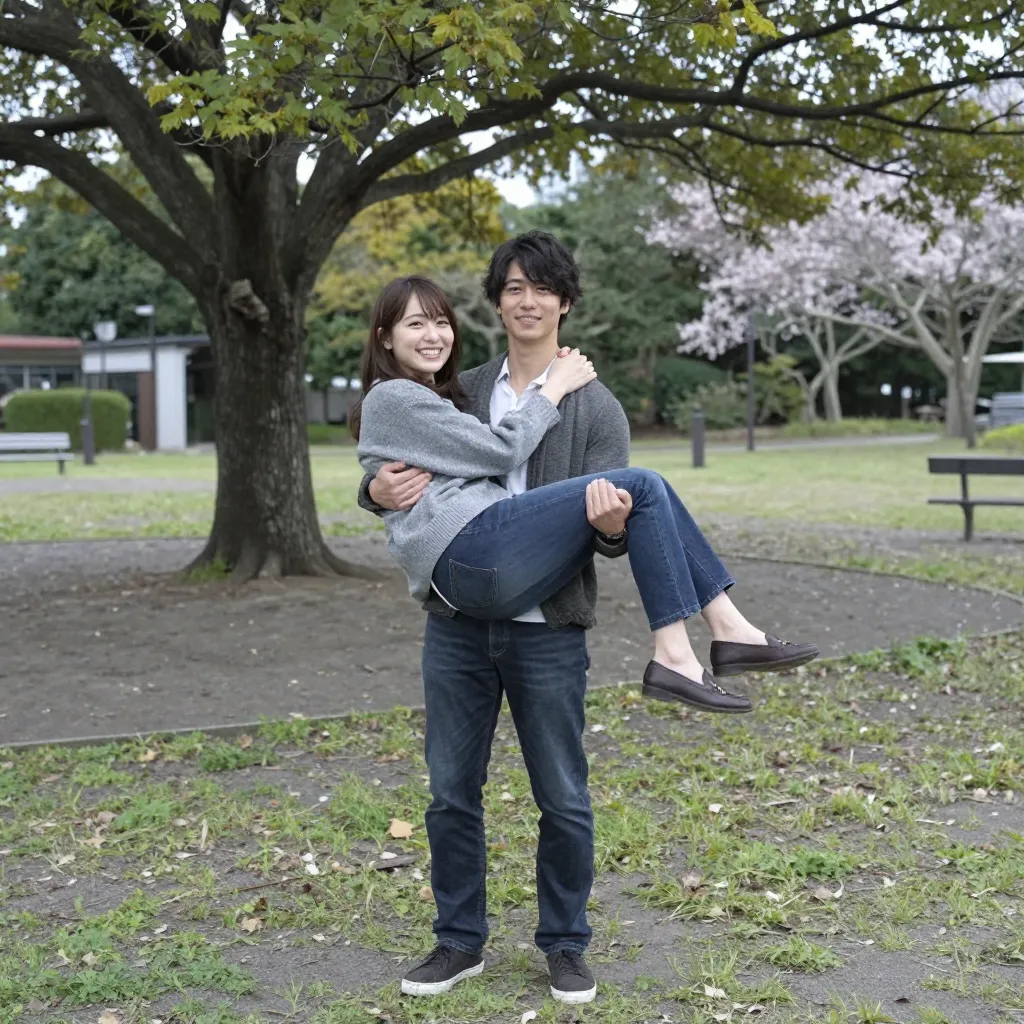 |
Observations: succeeded 3 out of 3. By describing the action directly (“a man carrying a woman in his arms”) instead of naming a pose, all three seeds kept the couple in casual outfits (cardigans, denim) while still reproducing the carry pose. No pull toward wedding attire, unlike bridal carry.
A04: natural sentence
| seed 42 | seed 43 | seed 44 |
|---|---|---|
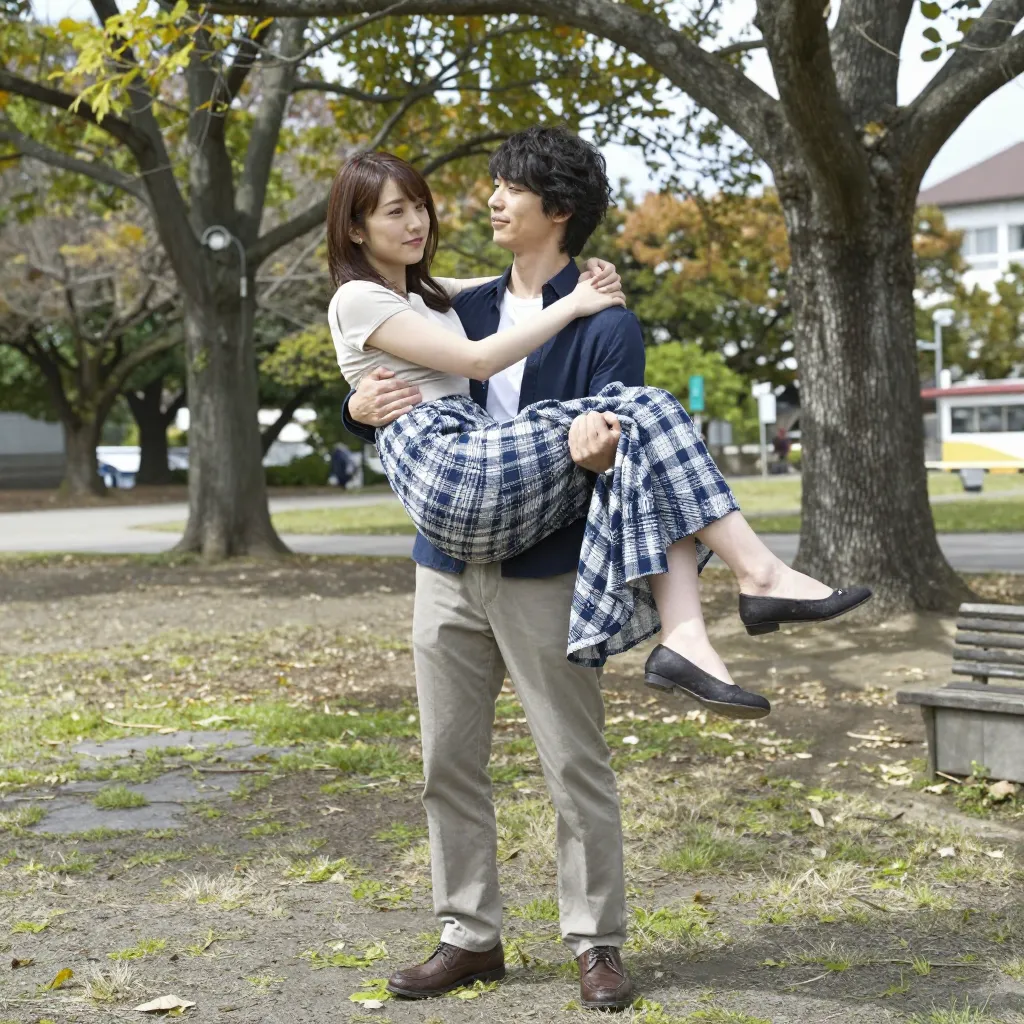 | 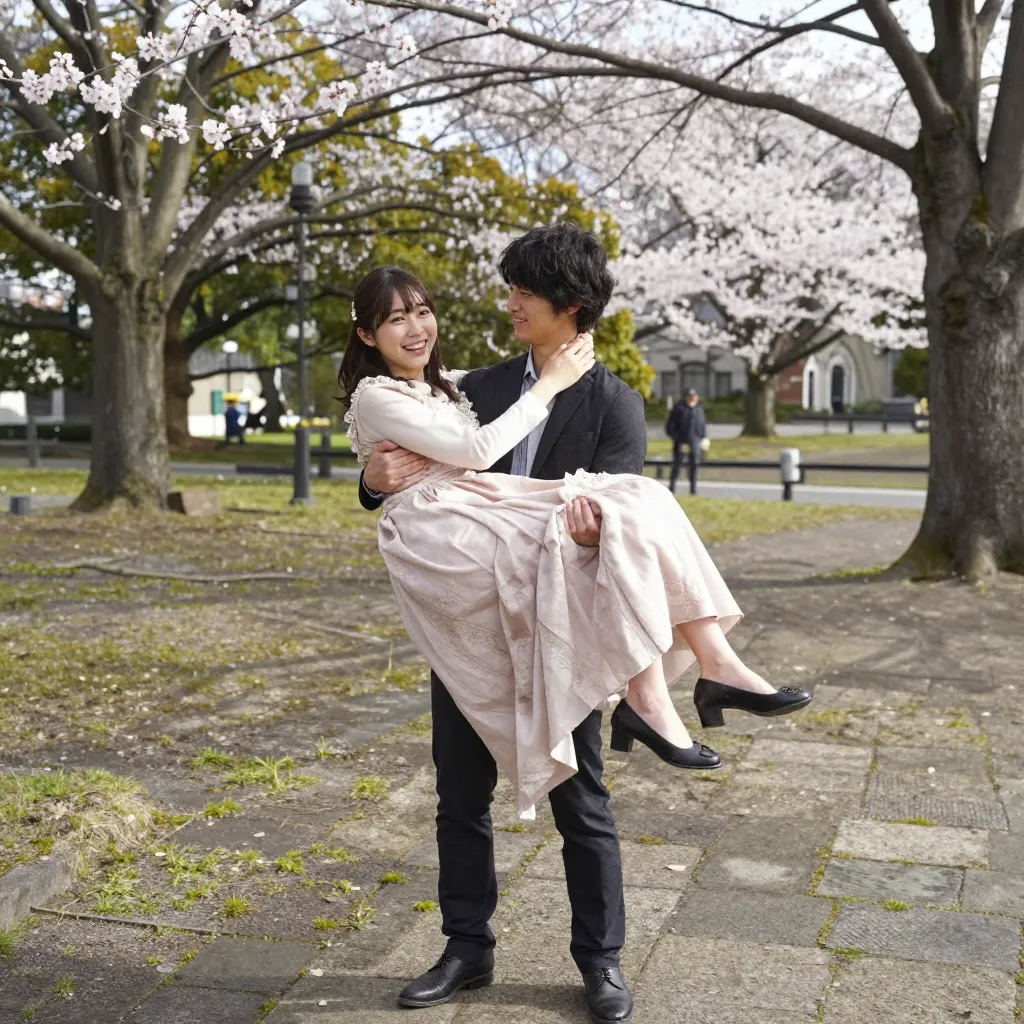 | 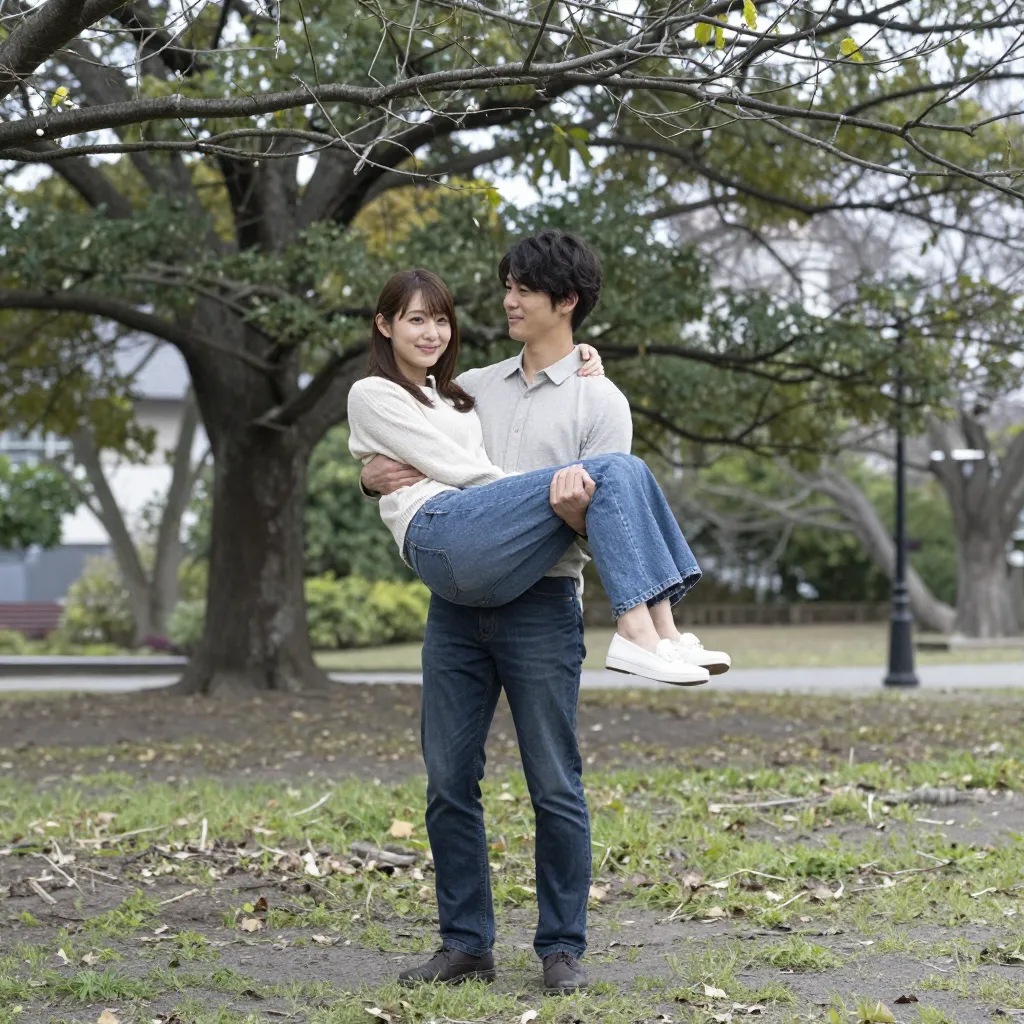 |
Observations: succeeded 3 out of 3. Even with a natural sentence containing the simile “like a princess,” the couple stayed in casual clothing and the carry pose was reproduced consistently, same as A03. We saw no clear difference in success rate or wardrobe outcome between keyword-style phrasing (A01–A03) and a full sentence (A04).
Note: Only
bridal carrypulled in wedding attire;princess carry,man carrying woman in his arms, and the natural sentence all kept the couple in casual clothes. It’s interesting that the word “bridal” affected wardrobe more strongly than the “princess” nuance did.
Summary
| Condition | Added keywords | Success rate | Effect on wardrobe | Notes |
|---|---|---|---|---|
| A00 control | none | 0/3 (as expected) | - | seed 44 duplicated to 3 people |
| A01 princess carry | princess carry | 2/3 | none | seed 44 duplicated the woman, carry failed |
| A02 bridal carry | bridal carry | 3/3 | wedding attire | tuxedo + dress in all 3 seeds |
| A03 carrying in arms | man carrying woman in his arms | 3/3 | none | stayed casual |
| A04 natural sentence | natural sentence (“like a princess”) | 3/3 | none | stayed casual |
In the two conditions that leave the carrier unspecified — princess carry and bridal carry (6 images) — the man was the carrier in 6 of 6, with no role reversal (A03/A04 state explicitly that the man carries, so they are excluded from this count; our base prompt also kept the fixed order of 1man before 1girl, and the effect of reversing that order was not tested). This is consistent with the finding in our earlier article on a muscular woman carrying a man, which noted that “the princess carry bias toward male-carries-female is extremely strong — a plain prompt produces the male-carries side 100% of the time.” Conversely, when the goal is this mainstream composition (man carries woman), that same bias works in your favor: princess carry, bridal carry, carrying in arms, and the natural sentence all succeed at a high rate.
If you want to keep the outfit casual, use man carrying woman in his arms or the natural sentence; if you want a wedding-photo look, bridal carry is the phrasing to reach for. princess carry alone had a slightly lower success rate (2/3), so if reliability matters more than word choice, one of the other three conditions is the safer bet. That said, this is a small sample of N=3 per condition, and we can’t conclude from this experiment alone whether the person-duplication issue observed here (which also occurred in the control) is tied to any specific condition.

![[Experiment] Dynamic Pose Comparison — How Far Can Running, Jumping, and Looking Back Go Without Distortion?](/tips/dynamic-pose-comparison/cover.webp)