Key Takeaways
princess carryhas an extremely strong male→female bias — writing it straightforwardly results in the man carrying the woman 100% of the timeholding horizontallywas the first breakthrough — describing physical body positions instead of pose names bypassed the bias- The final solution:
giant muscular woman+east asian— extreme size difference pluseast asianfor ethnicity control. Stable across all 3 seeds amazonianchanges ethnicity — creates great size contrast but overridesjapanese. Useeast asianinstead- Making the man more upright tends to reverse roles — but
giantsize difference improves success rate
Goal: A muscular woman princess-carrying a handsome man. She’s standing, he’s in her arms.
Step 0: The Naive Approach
Just writing what we want, plain and simple.
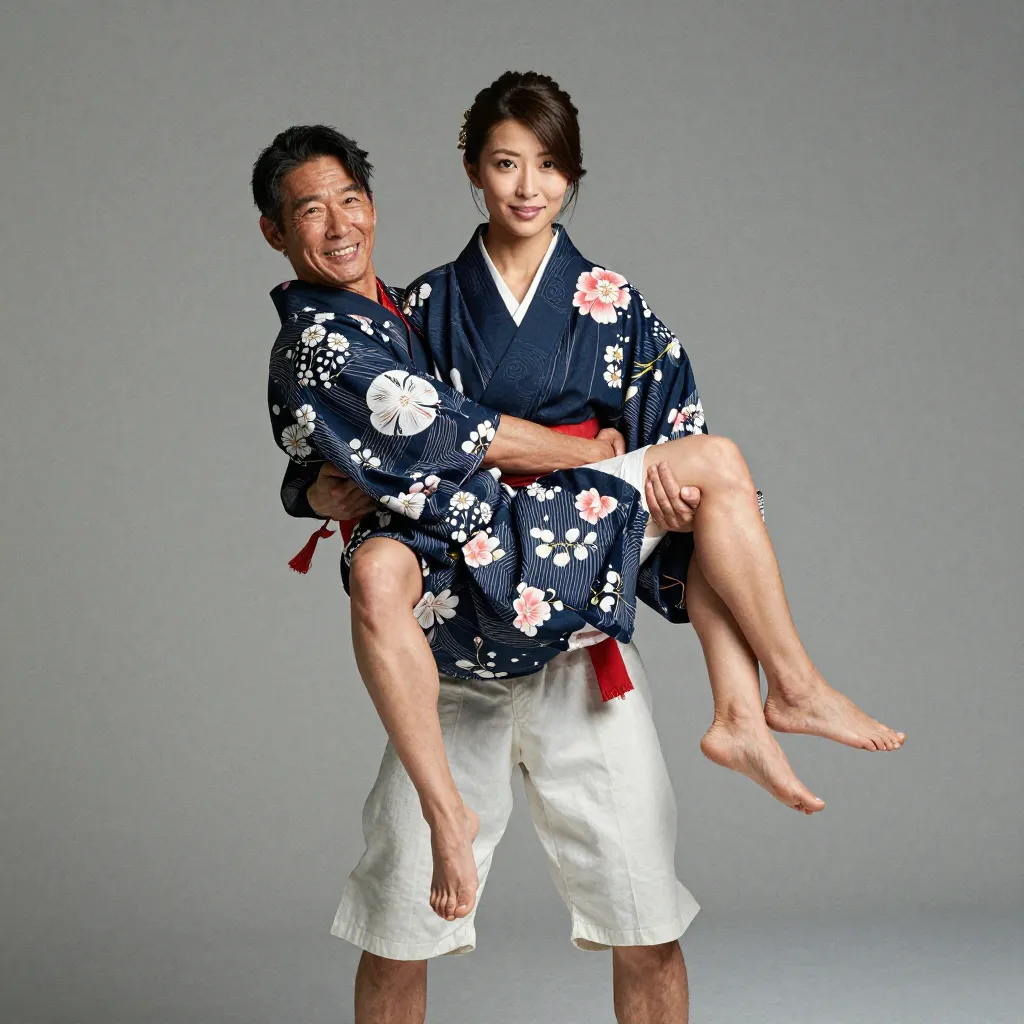
Result: Completely reversed. The man is princess-carrying the woman. They’re even wearing yukata — japanese pulled the model toward traditional clothing.
Issues:
- The
princess-carryingbias is too strong — the woman simply won’t be the carrier japanesetriggered kimono/yukata- The woman isn’t muscular at all
- The man looks middle-aged
The training data overwhelmingly associates princess carry with male→female, so even making the woman the grammatical subject doesn’t help. A different approach is needed.
Step 1: Natural Language Role Clarification
Leading with an English sentence explicitly stating “a strong woman lifting a man,” plus specifying body type and clothing.
- 1girl, 1boy, 32yo muscular japanese woman princess-carrying a japanese man, simple white background
+ A strong muscular woman lifting and carrying a slim man in her arms, bridal carry pose. 1girl, 32yo japanese actress, athletic build, toned arms, sports bra and shorts. 1boy, 25yo japanese actor, slim build, casual t-shirt and jeans. studio lighting, gray background
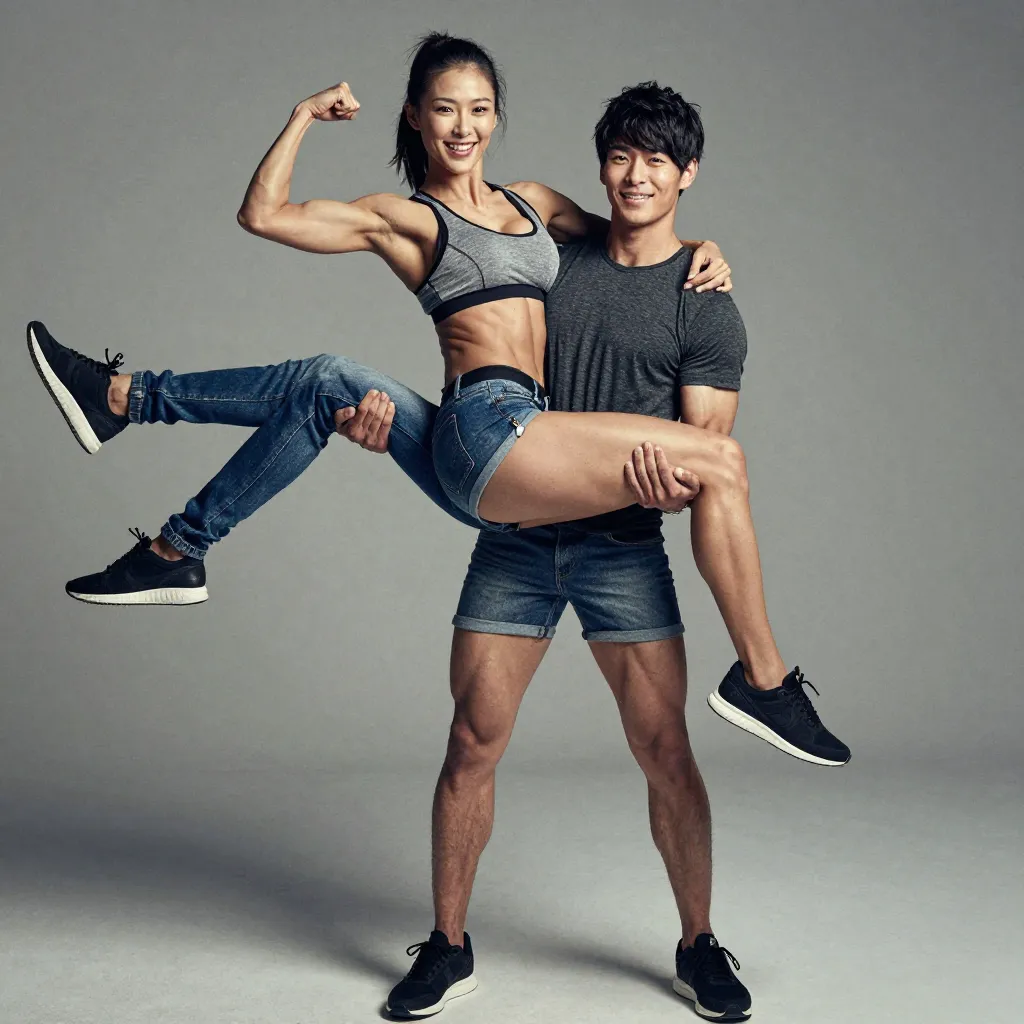
Progress, but still far off.
What worked:
- The woman’s athletic build came through (visible abs and biceps)
- Clothing differentiation is correct
- Two distinct people (no fusion)
What didn’t:
- Not a princess carry pose — looks more like a fitness shoot pose
bridal carry posedidn’t improve pose accuracy
Note: Writing “lifting and carrying” in natural language produced output that read more like “two people doing fitness poses together” than the intended carry pose. The pose breakthrough needed a different approach.
Step 2: Breaking Through with “Holding Horizontally”
The turning point. Instead of using pose names like princess carry, I described the physical position of the bodies: holding horizontally and off the ground.
- A strong muscular woman lifting and carrying a slim man in her arms, bridal carry pose.
+ A tall muscular woman holding a man horizontally in her arms. She stands upright, he is off the ground with his legs dangling.
Key changes:
holding horizontally— explicitly stating the man’s body orientationShe stands upright, he is off the ground— clarifying the spatial relationshipbodybuilder physique, defined abs— more specific muscle description
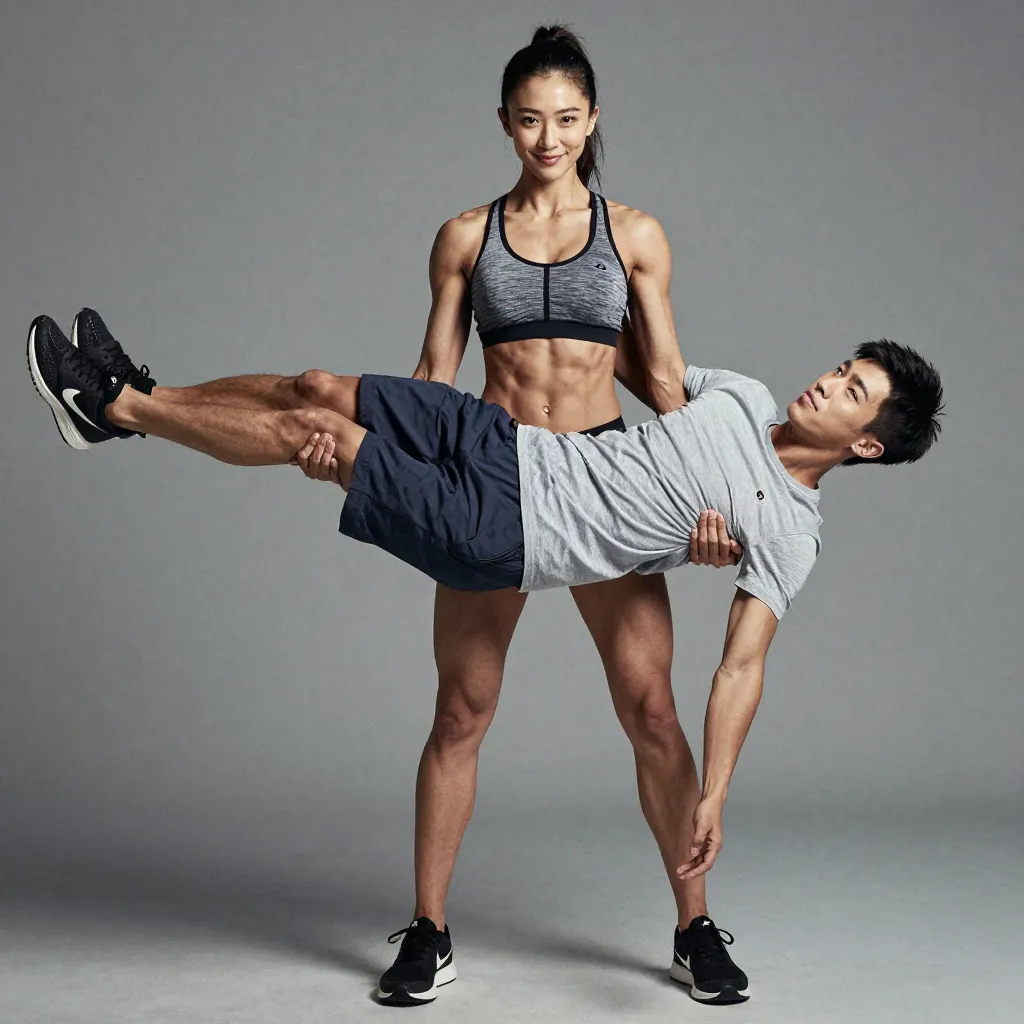
First time the intended composition appeared!
- Woman standing upright, man floating horizontally
- Woman’s bodybuilder physique is clearly visible (abs, arm muscles)
- Man in a relaxed pose being held
Remaining issues:
- Man’s head drops too low (closer to a dance dip than princess carry)
- More of a “horizontal hold” than a classic princess carry
The reason holding horizontally broke through the bias: instead of using a specific pose name (which carries gender associations), we directly described the physical positions of the bodies.
Step 3: Stability Check (3 Seeds)
Refining the Step 2 prompt with fair skin for the man and checking stability across 3 seeds.
| seed 42 | seed 123 | seed 789 |
|---|---|---|
 | 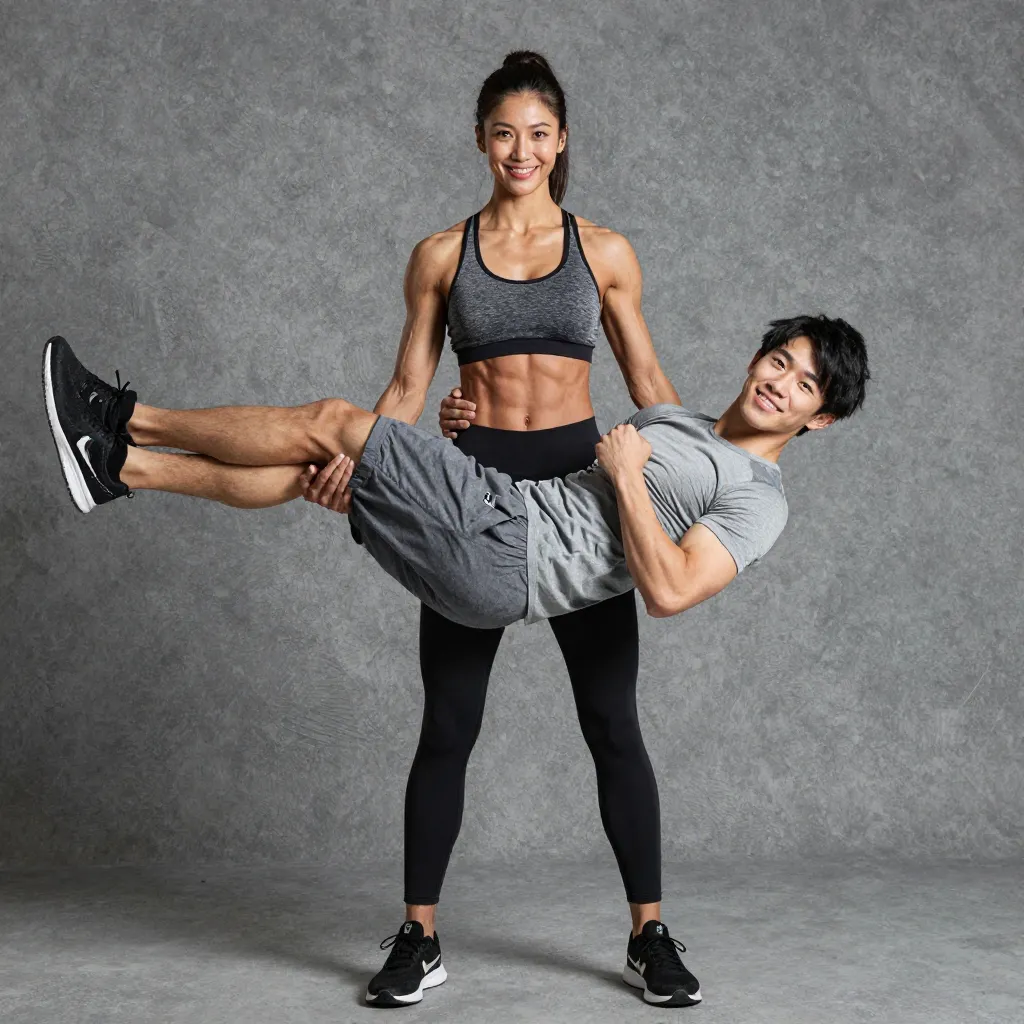 | 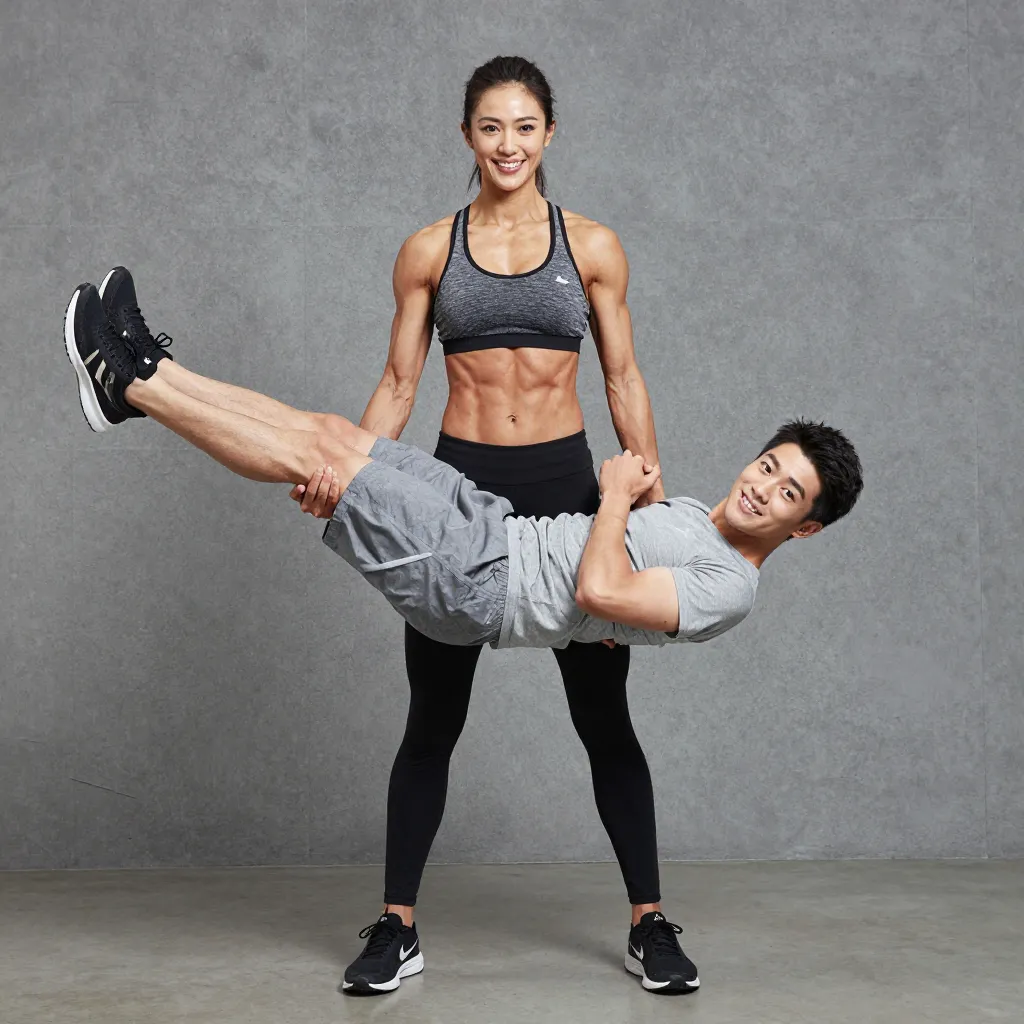 |
Stable across all 3 seeds. Every image shows “woman standing upright, man floating horizontally.” But still a horizontal hold rather than a true princess carry.
Step 4: Extreme Size Difference with “Amazonian”
holding horizontally is stable but feels more like a barbell hold than a princess carry. Thinking extreme size contrast might produce a more natural carry pose.
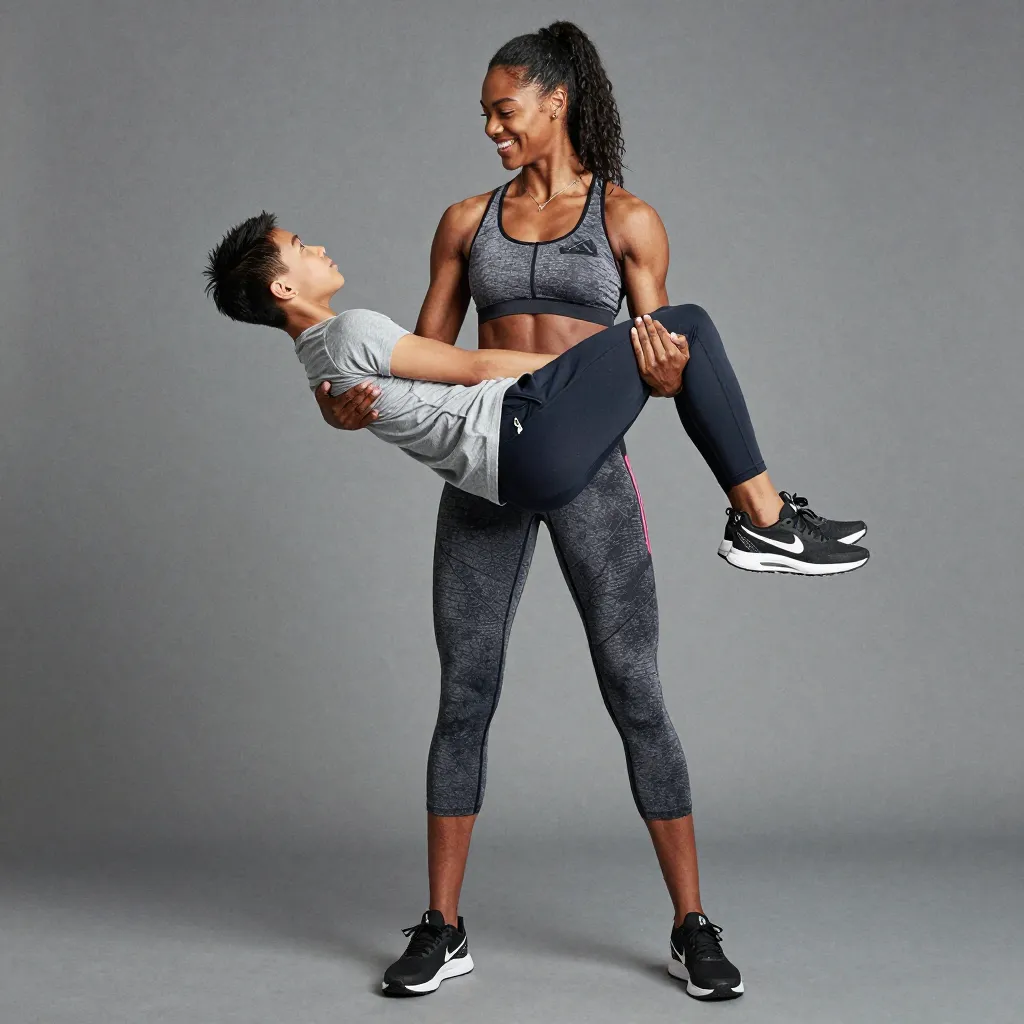
Best composition so far. The woman is carrying the man, and the size difference is clear. But amazonian changed the ethnicity. Despite writing japanese actress, the woman doesn’t look Japanese. amazonian carries ethnic connotations beyond just body size.
Step 5: Final Breakthrough with giant + east asian
Replacing amazonian with giant muscular woman and japanese with east asian. east asian lets the model interpret facial features more flexibly.
- A very tall amazonian woman effortlessly carrying a small man in princess carry.
+ A giant muscular woman effortlessly carrying a slim man in princess carry, like he weighs nothing.
- 1girl, 32yo japanese actress, extremely muscular, tall, sports bra, leggings.
+ 1girl, 32yo east asian actress, tall powerful build, muscular arms and legs, sports bra, leggings, smiling.
- 1boy, short slim fair-skinned japanese man, t-shirt, shorts, looking up at her.
+ 1boy, slim fair-skinned east asian man, oversized t-shirt, shorts.
Key changes:
amazonian→giant muscular woman— keeps size difference without ethnic connotationsjapanese→east asian— allows the model more flexibility in facial featuressmall→slim—petite/smallrisks making the man look like a childlike he weighs nothing— adds effortless feeling
| seed 42 | seed 123 | seed 789 |
|---|---|---|
 |  |  |
All 3 seeds successful! Every image shows a muscular woman princess-carrying a man.
- Woman’s muscles are clear in all 3 (abs, shoulders, arms)
- Woman looks East Asian (
east asianworking correctly) - Man looks like an adult (
slimonly, no child-like appearance) - Seed 789 has the man’s upper body most upright — closest to a classic princess carry
Note:
east asianproved effective. Speculatively, using a broader category thanjapanesemay have widened the range of facial features the model could select from.giantalso proved effective for creating a size difference without the ethnic connotations carried byamazonian.
Failed Patterns
Recording failed attempts for reference.
Failure A: Describing the Man’s Upper Body as Upright

Reversed. sits upright in her arms and his arm around her neck were interpreted as making the man the standing (carrying) subject.
Failure B: Low Angle for Vertical Emphasis
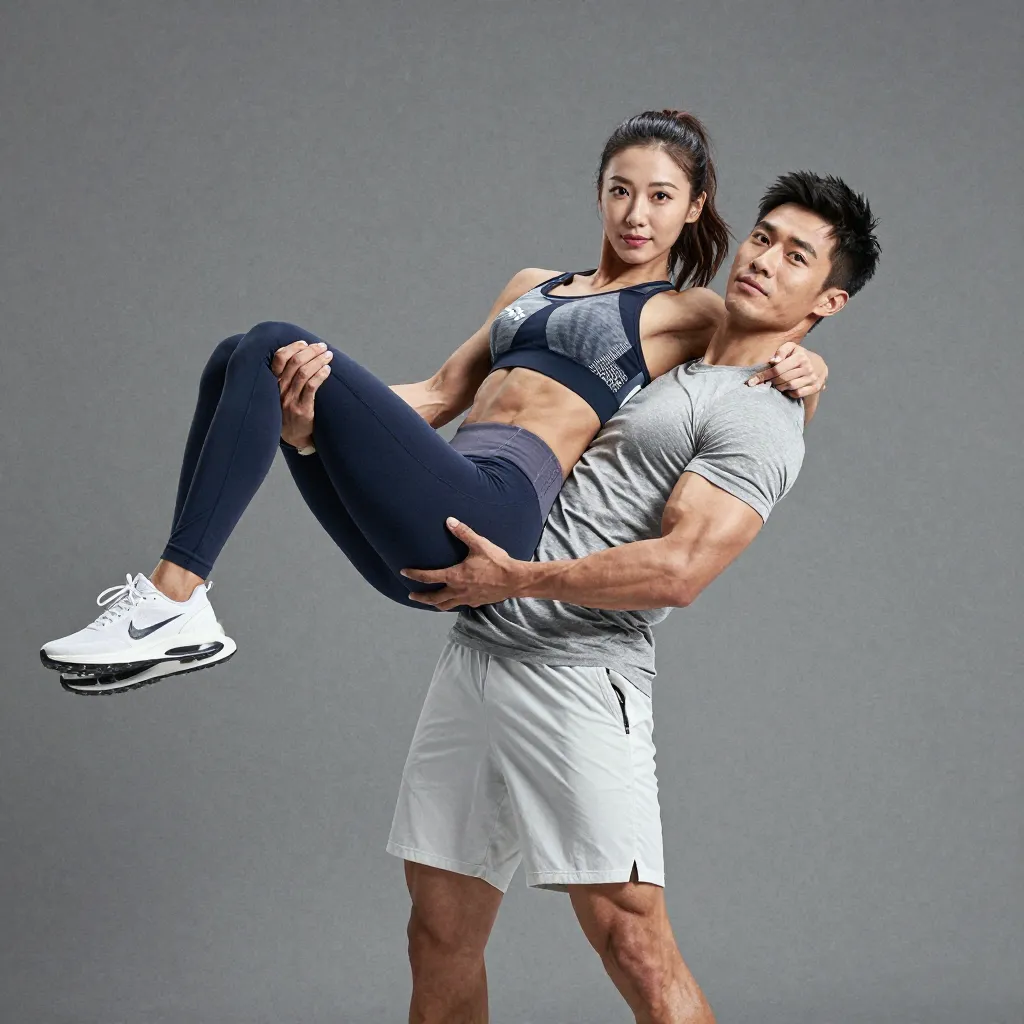
A beautiful princess carry appeared. But male→female. Low angle, diagonal body position, muscular physique — almost exactly what we wanted. Just the wrong genders.
Summary
What these trials revealed:
princess carryhas an extremely strong gender bias — writing the woman as the subject, natural language, nothing overcomes the male→female default on its ownholding horizontallybypasses the bias — describing physical positions instead of pose names was the first breakthroughgiant muscular woman+east asianis the final solution — extreme size difference plus flexible ethnicity control. Stable across all seedsjapanese→east asianhelps in some cases — when ethnicity isn’t rendering correctly, broadening the concept gives the model more flexibilitypetite/smallrisks child-like appearance — useslimonly for safe results
Two-person compositions are dramatically harder than single-person ones. Gender role reversal becomes a battle against training data bias. The key techniques: avoid pose names and describe physical positions, relax ethnicity specifications when needed, and use size difference to imply power dynamics.
![[Verified] Image Generation Prompt Best Practices](/tips/prompt-best-practices/cover_0_0000_4517457392071889496.webp)
![[Experiment] Dynamic Pose Comparison — How Far Can Running, Jumping, and Looking Back Go Without Distortion?](/tips/dynamic-pose-comparison/cover.webp)
![[Tested] Can You Generate Kuchisake-onna? Mask On/Off Pairs and 3 Slit-Mouth Phrasings on the Same Seed](/tips/kuchisake-onna-mask-expression-test/c01_lacer_s1.webp)
![[Tested] Can You Generate Yuki-onna? Pale Skin, Visible Cold Breath, and a Loosened White Juban](/tips/yuki-onna-pale-skin-test/b01_juban_s2.webp)
![[Tested] Can You Generate a Hachishaku-sama-Style Tall Woman? Testing extremely tall, 8 feet tall, and Low Angle](/tips/hachishaku-sama-height-test/c04_minireal_s2.webp)
![[Tested] 15 Ero-Horror Combo Recipes — Do the Best Elements From 5 Articles Stack?](/tips/horror-combo-recipes/c11_vampire_candle_s1.webp)
![[Tested] 15 Ghost & Zombie Styling Prompts — Which Ones Turn a Beauty Inhuman Without Breaking Her?](/tips/inhuman-styling-test/z04_cloudy_eyes_s1.webp)
![[Tested] 16 Horror Poses — Limp Ghost Hands, Head Tilts, Peeking Through Gaps… How Far Can "Unnatural" Go?](/tips/horror-pose-catalog/p10_door_peek_s3.webp)