Conclusion First
peace signalone reliably produced a one-hand, palm-forward peace sign in 3 out of 3 images. Hand position was at shoulder-to-face height, with no finger anomaliesdouble peace signproduced both hands raised in 3 out of 3 images. Both hands were palm-forward, and 0 out of 6 hands showed finger anomaliesinverted peace sign— the pose that defines the “gyaru peace” look, with the back of the hand facing the camera — only reproduced correctly in 1 out of 3 images. The other 2 ignored the “inverted” instruction and rendered a normal palm-forward peace signpeace sign next to eyeplaced a single hand next to the eye in 2 out of 3 images, but 1 image produced both hands, one at each eye- Across all 15 images, no major finger anomalies (missing or extra digits) were observed. Only one image, in the inverted-peace condition, showed a slightly unnatural outline in the folded fingers
Experiment Design
| Item | Value |
|---|---|
| Model | z-image-turbo (6B, photorealism-distilled) |
| Steps | 8 |
| Sampler | euler |
| Scheduler | ddim_uniform |
| CFG | 1.0 |
| Size | 1024x1024 |
| Seed | 42 / 43 / 44 fixed (shared across all conditions) |
| Per condition | 3 images (3 seeds) |
| Total | 5 conditions = 15 images |
Base Prompt
gyaru was kept fixed across all conditions, with only the pose keyword varied. Note that including gyaru did not noticeably change hair color, skin, or makeup toward a stereotypical gal look — the same weak effect of gyaru alone observed in the gyaru style comparison test showed up again in this composition.
A00: Control (no pose keyword)
| seed 42 | seed 43 | seed 44 |
|---|---|---|
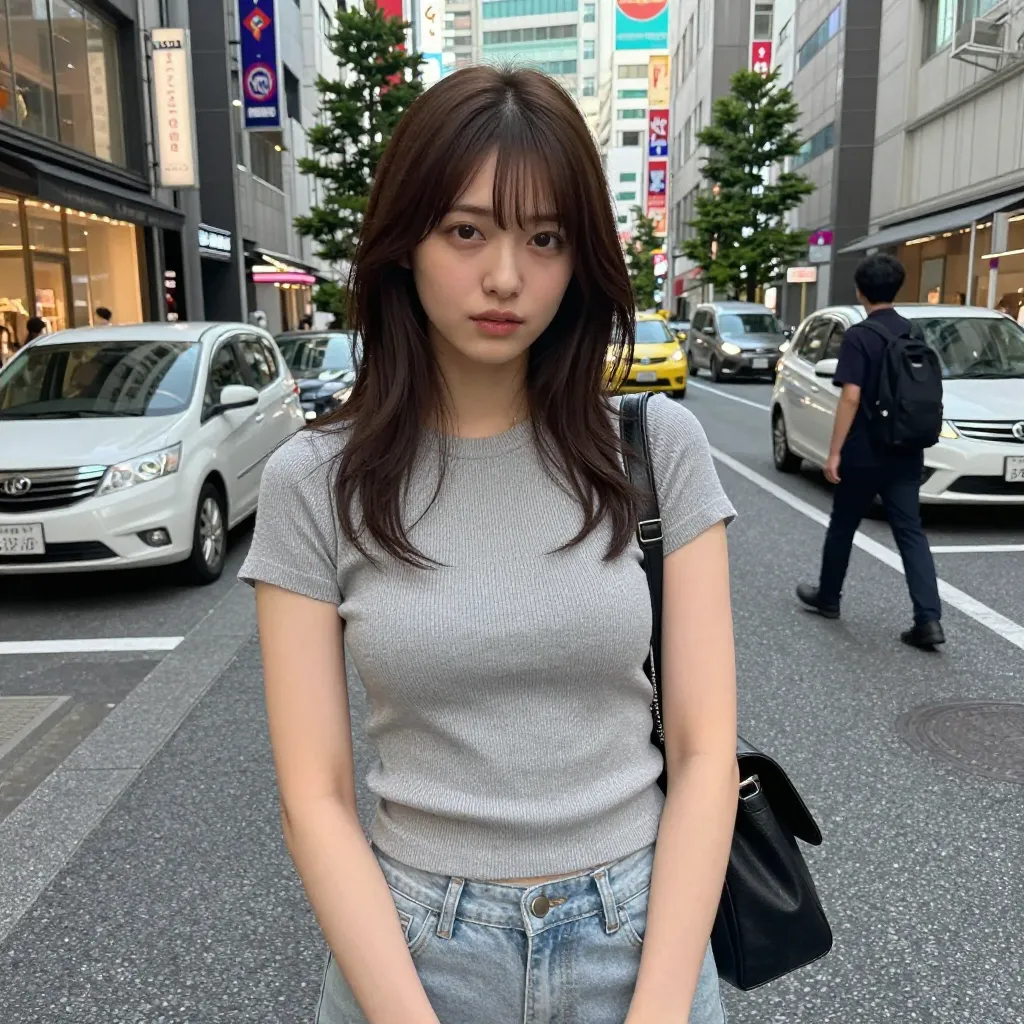 | 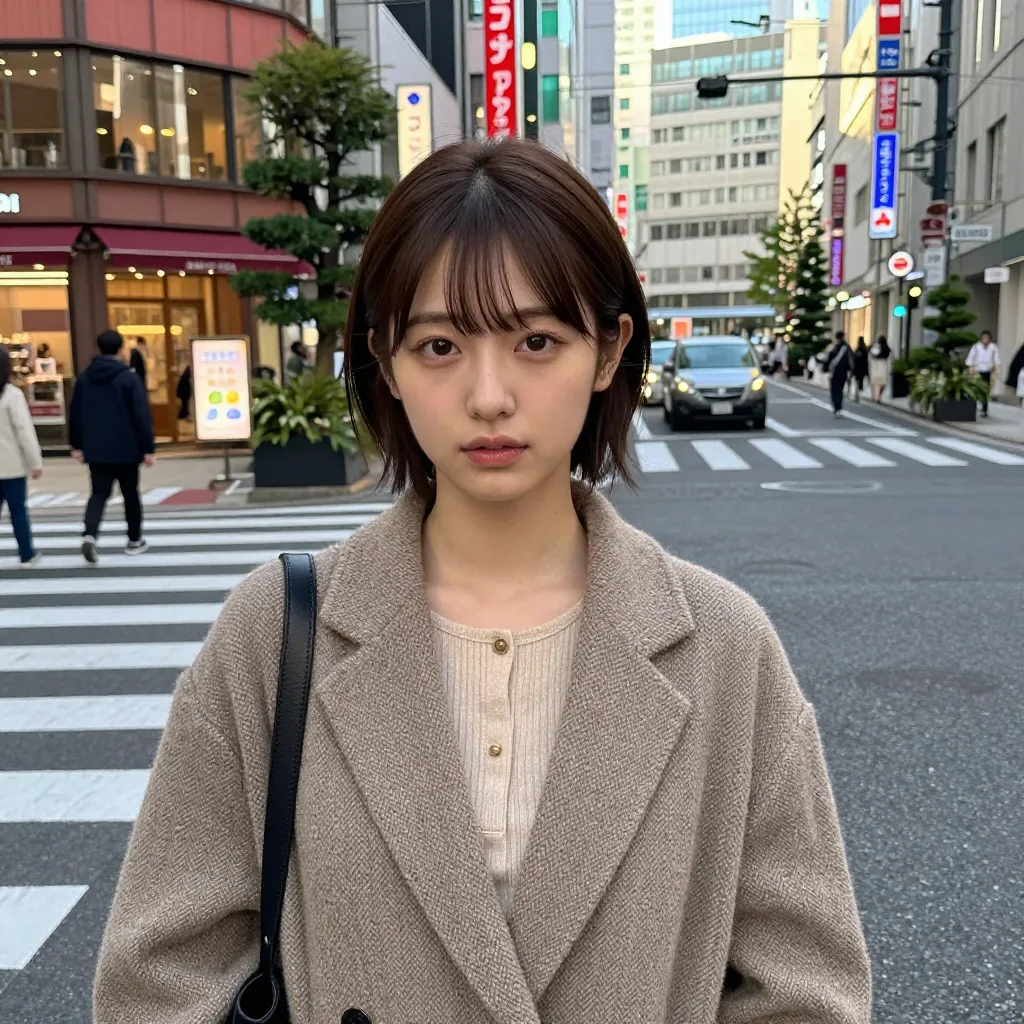 | 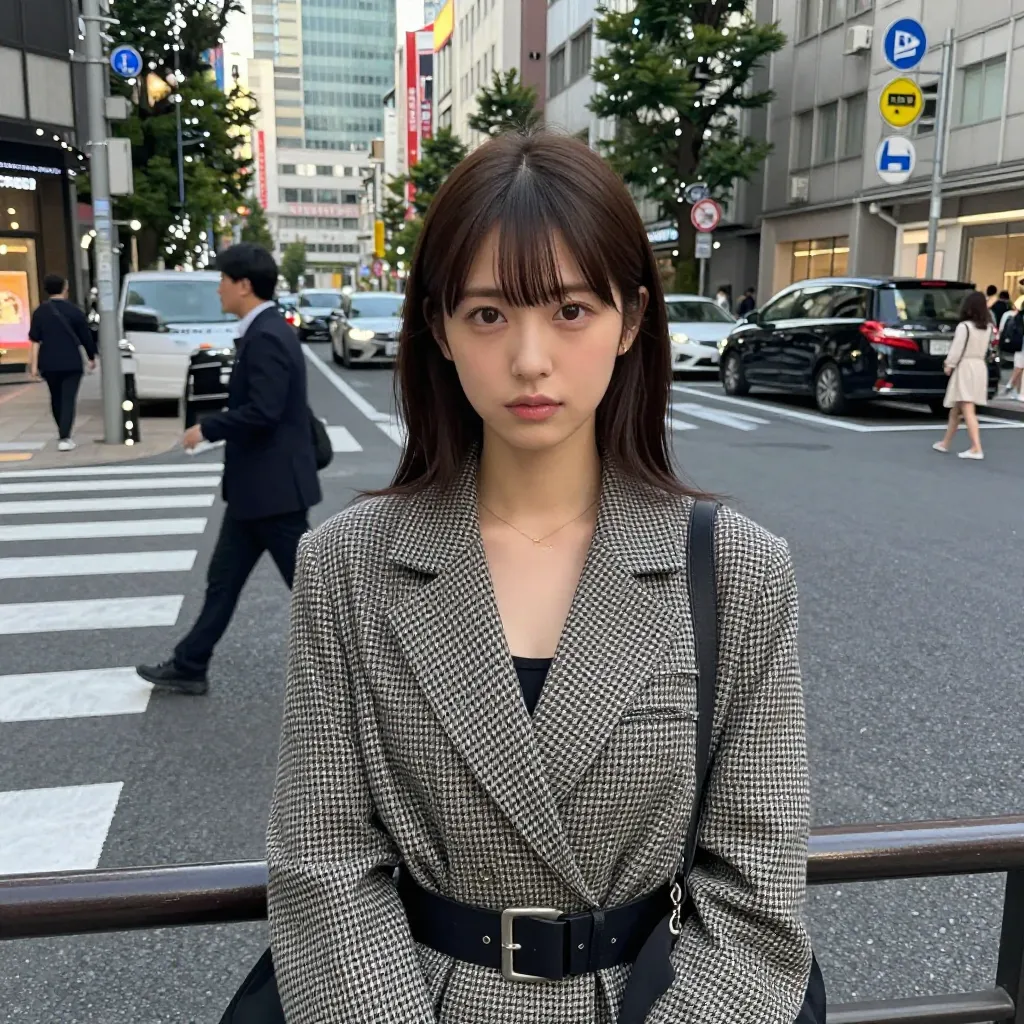 |
Observation: In all 3 images, the hands were either lowered or resting on the shoulder bag — 0 out of 3 showed a peace sign. This confirms no peace sign appears without an explicit pose keyword.
A01: peace sign (single hand)
| seed 42 | seed 43 | seed 44 |
|---|---|---|
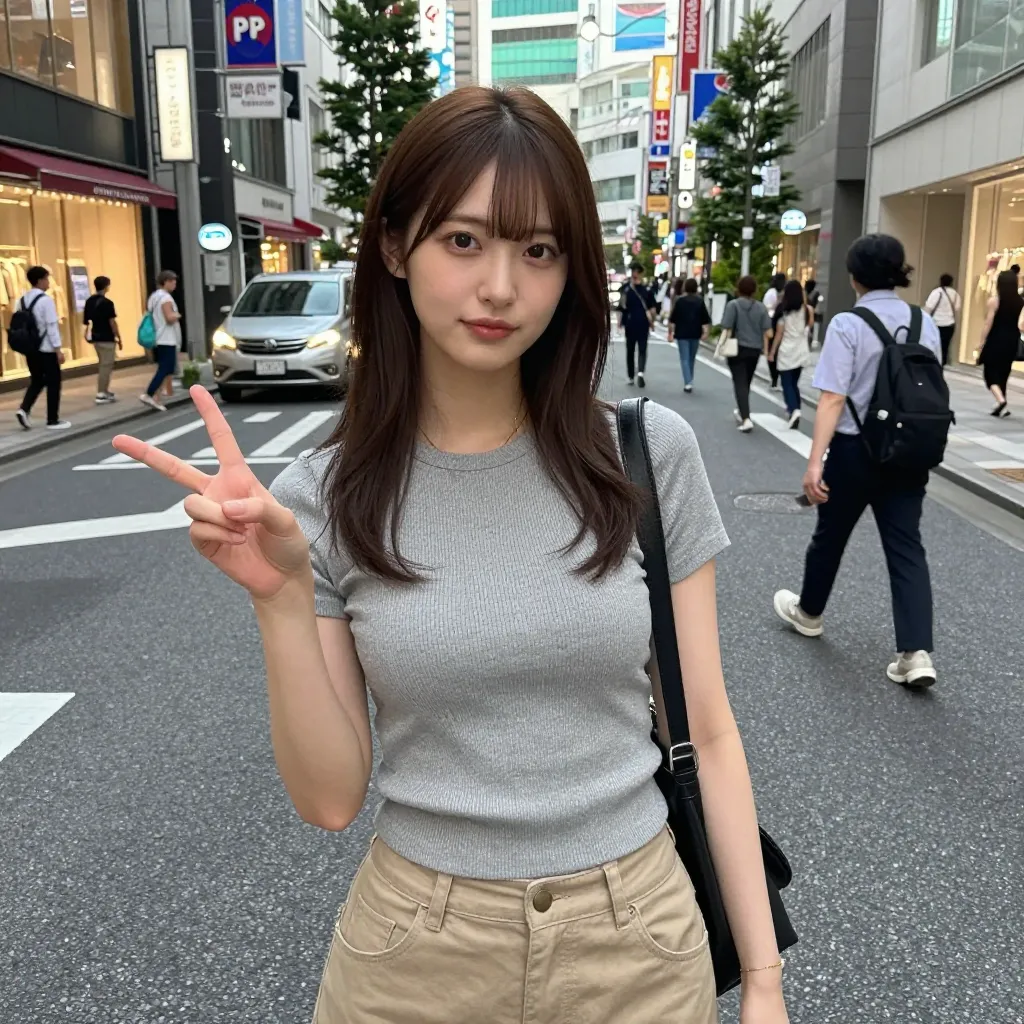 | 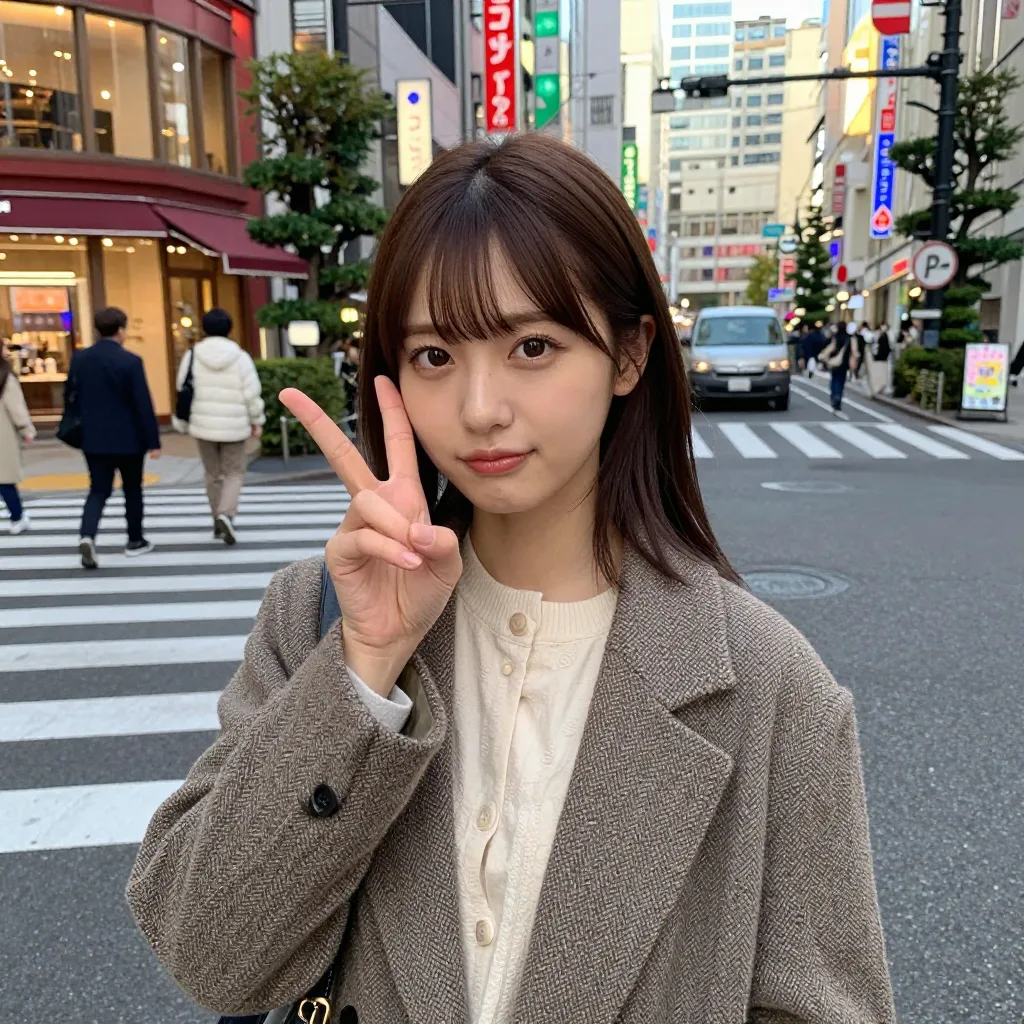 | 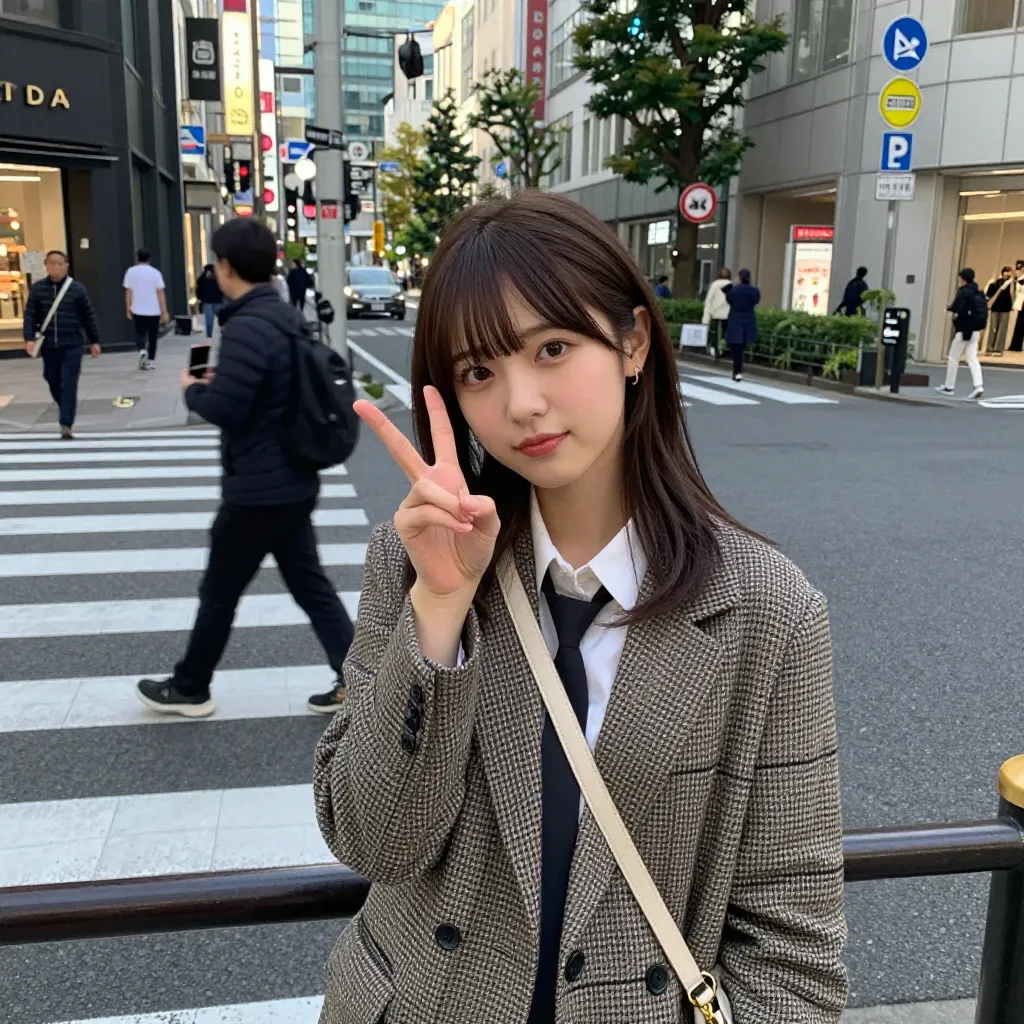 |
Observation: A single-hand peace sign appeared in 3 out of 3 images. All three were palm-forward, with position ranging from shoulder height (seed42) to right beside the face (seed43, seed44). The index and middle fingers extended, ring and little fingers folded, thumb resting across the palm — the shape looked natural in all three, with no anomalies in finger count or form.
A02: double peace sign (both hands)
| seed 42 | seed 43 | seed 44 |
|---|---|---|
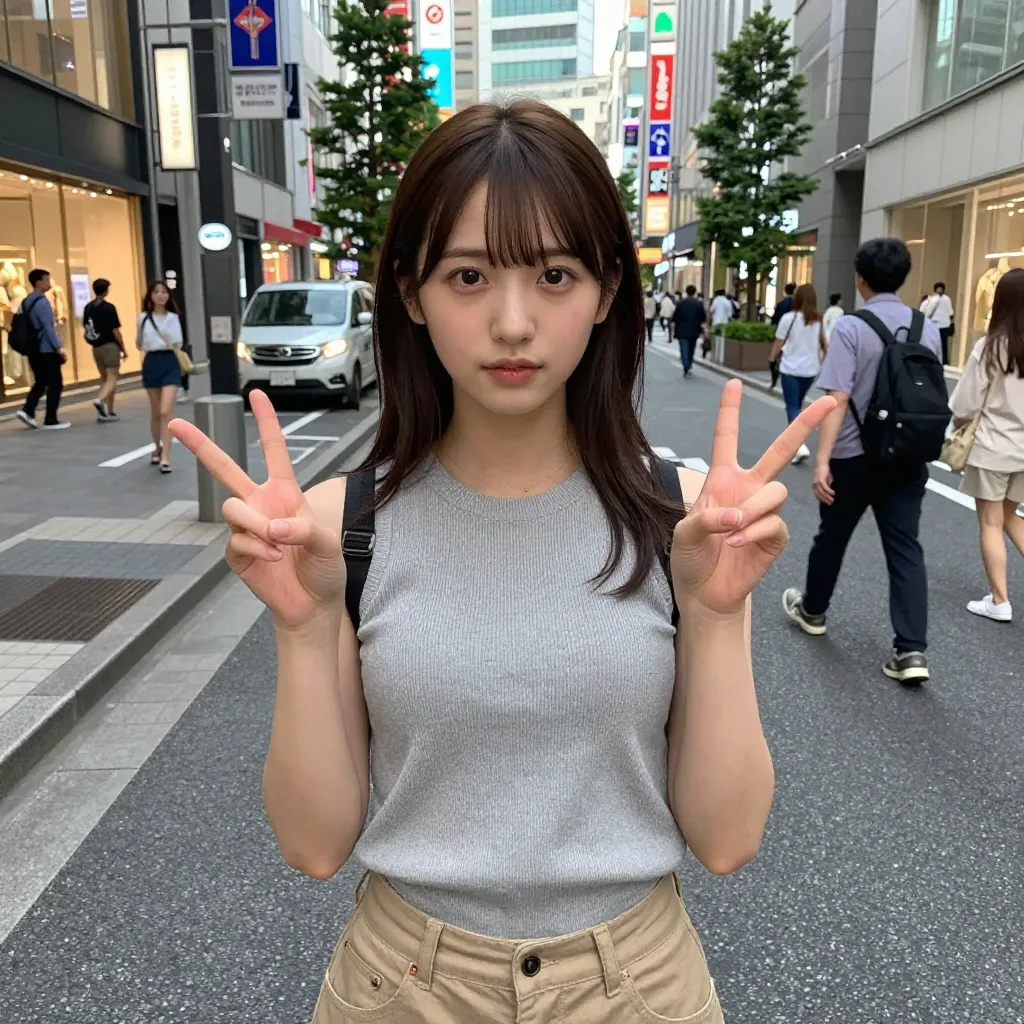 | 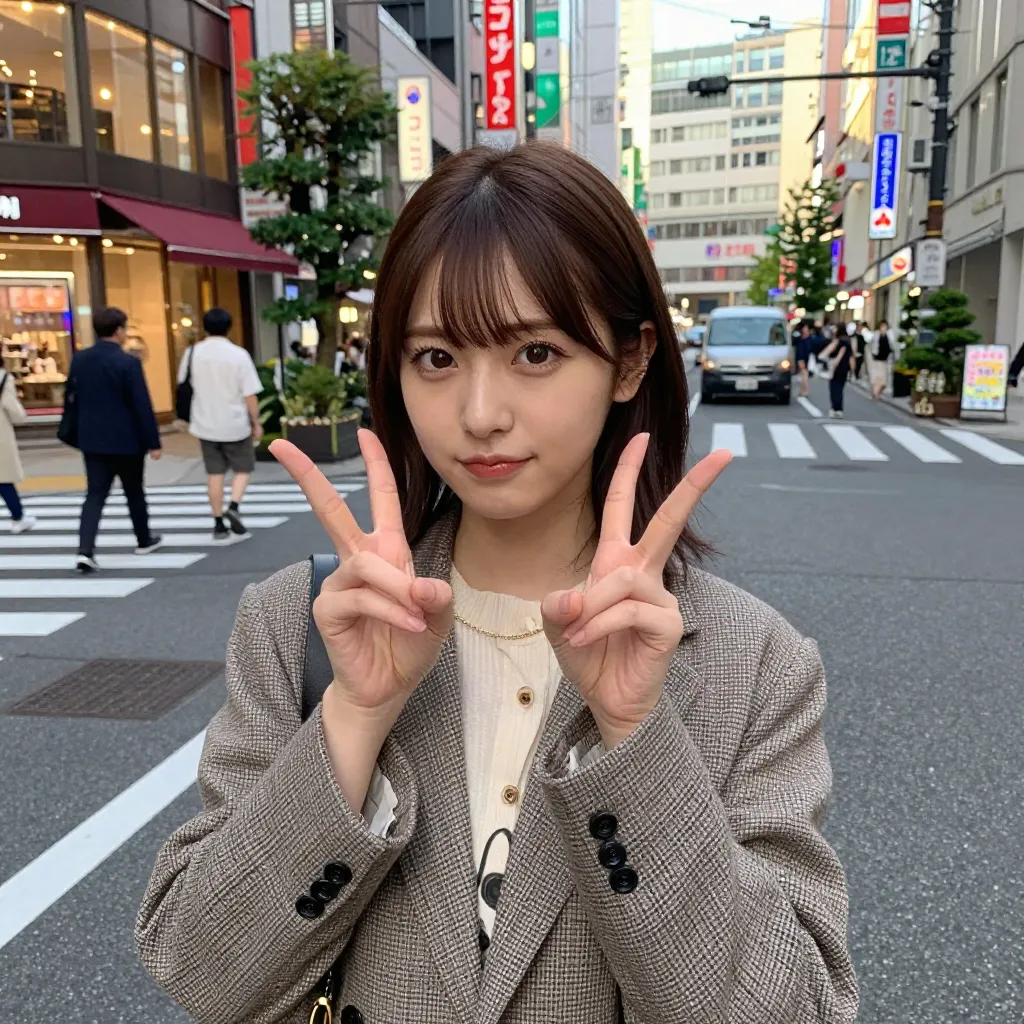 | 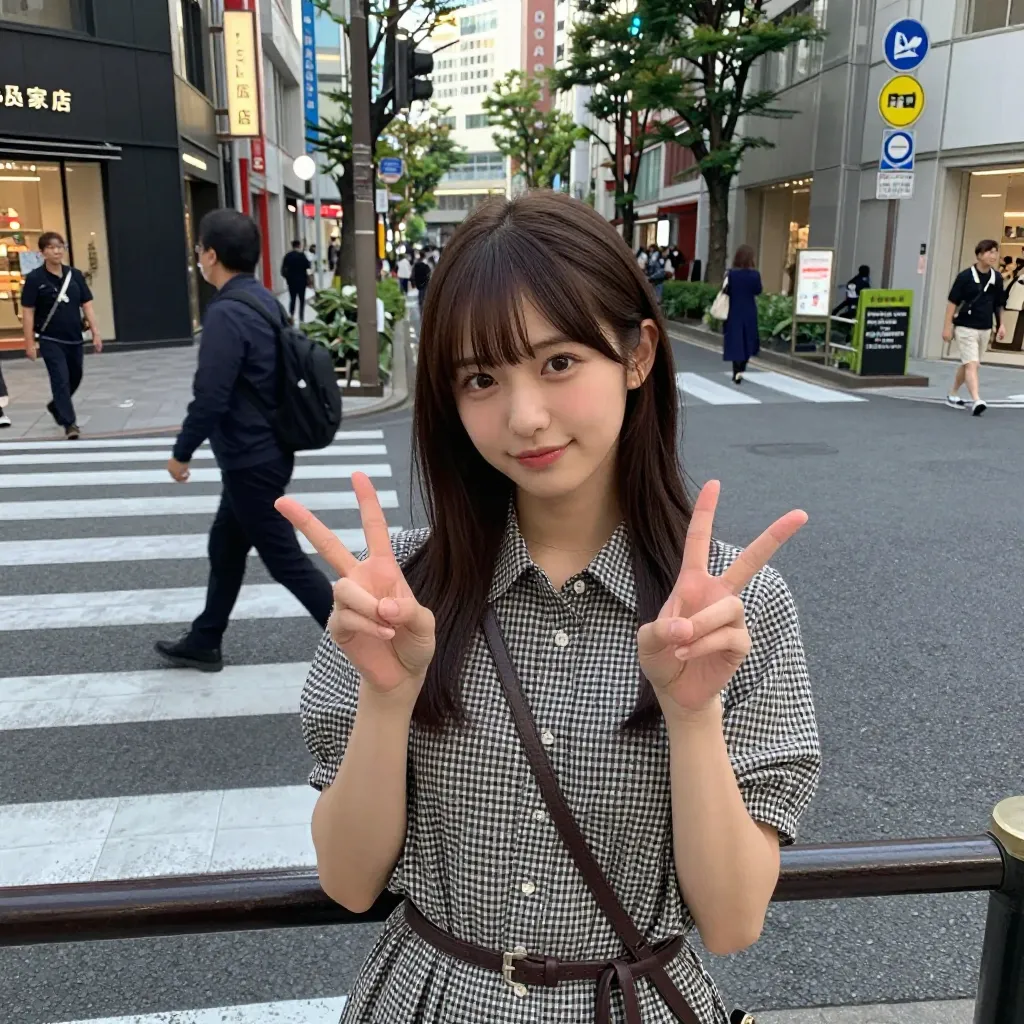 |
Observation: Both hands raised in a peace sign appeared in 3 out of 3 images. Both hands were consistently raised to face height and palm-forward. None of the 6 hands across the 3 images showed anomalies in finger count or form — this condition reproduced more consistently than the single-hand peace sign condition.
A03: inverted peace sign (the defining “gyaru peace” pose)
| seed 42 | seed 43 | seed 44 |
|---|---|---|
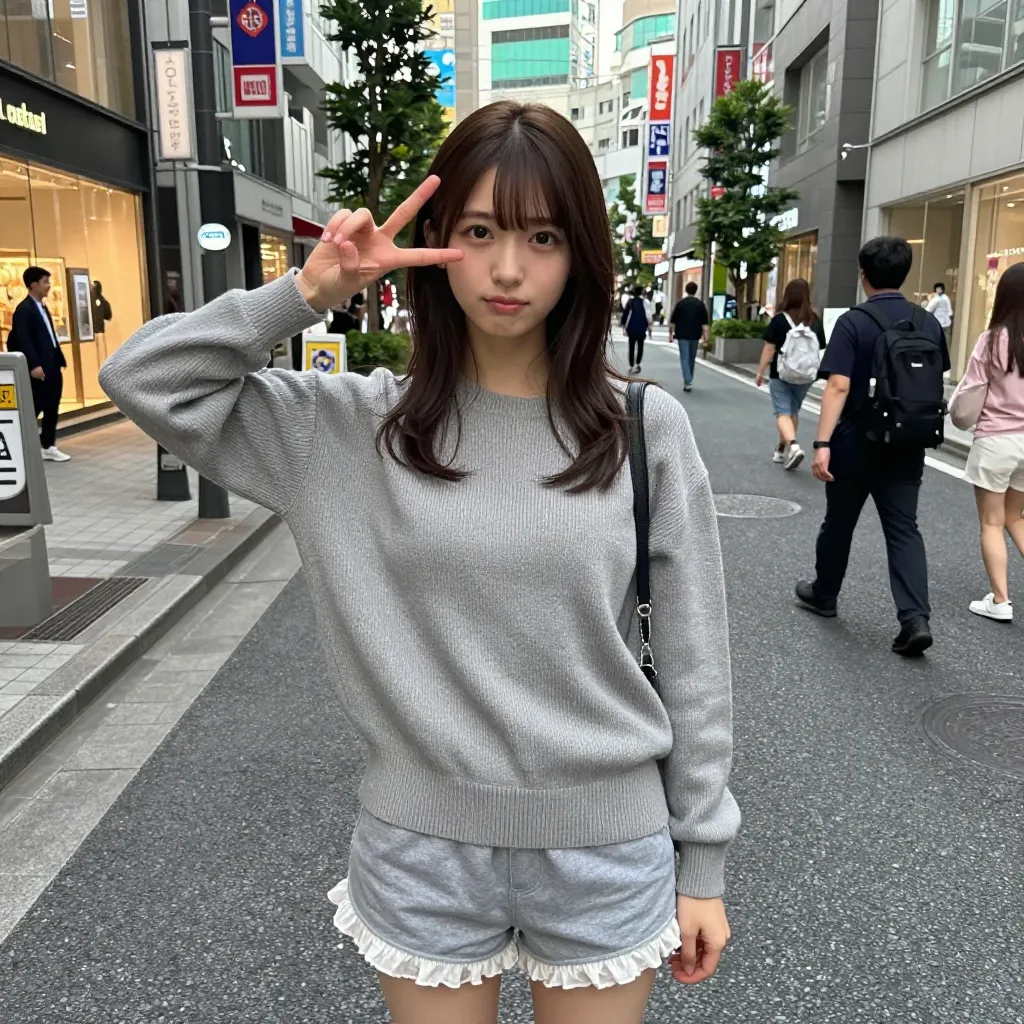 | 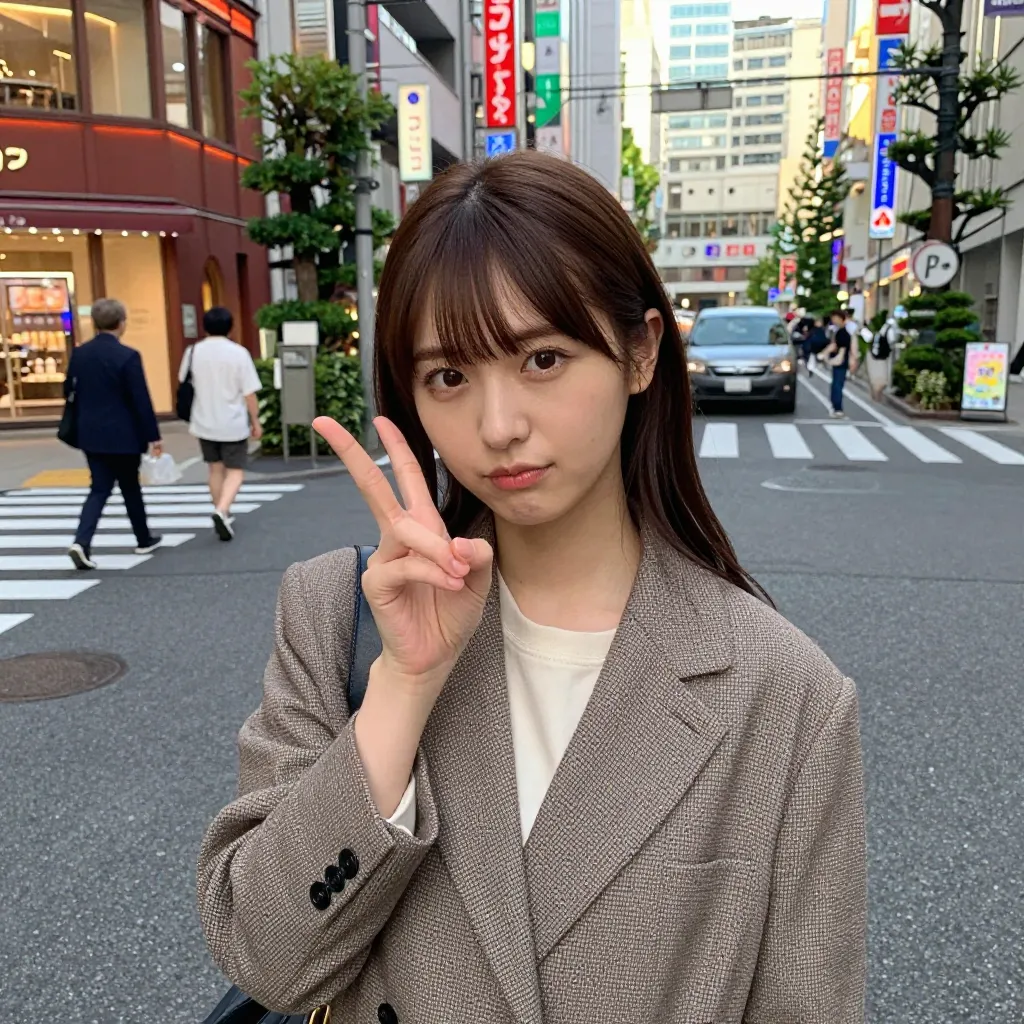 | 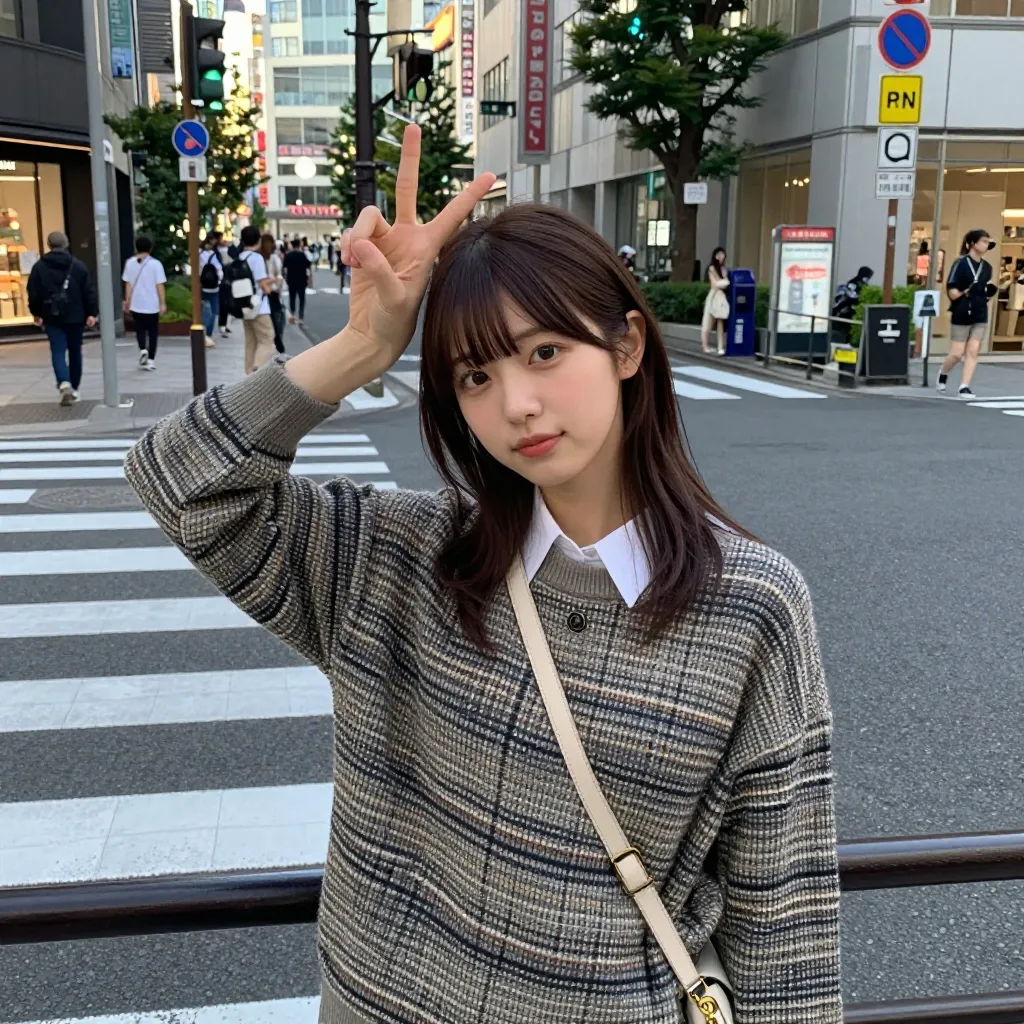 |
Observation: Zooming in on the palm and fingertip sides, only 1 out of 3 images (seed42) actually showed the back of the hand facing the camera — the orientation that defines the “gyaru peace” gesture. Seed43 and seed44 both showed a normal, palm-forward peace sign with clearly visible palm creases, despite the “inverted” instruction. Hand position in all three tended toward the cheek-to-temple area, closer to the “peace next to eye” composition. Finger count itself (2 extended + 3 folded) was not broken in any of the three, but in the one image that did show the inverted orientation (seed42), the outline of the folded fingers was somewhat unclear, with blurred boundaries between digits.
Note: Specifying “inverted” in words alone did not reliably flip the hand orientation — it succeeded in only 1 out of 3 images. If the gyaru-peace orientation is the goal, generating multiple images and visually checking palm orientation is the practical approach.
A04: peace sign next to eye
| seed 42 | seed 43 | seed 44 |
|---|---|---|
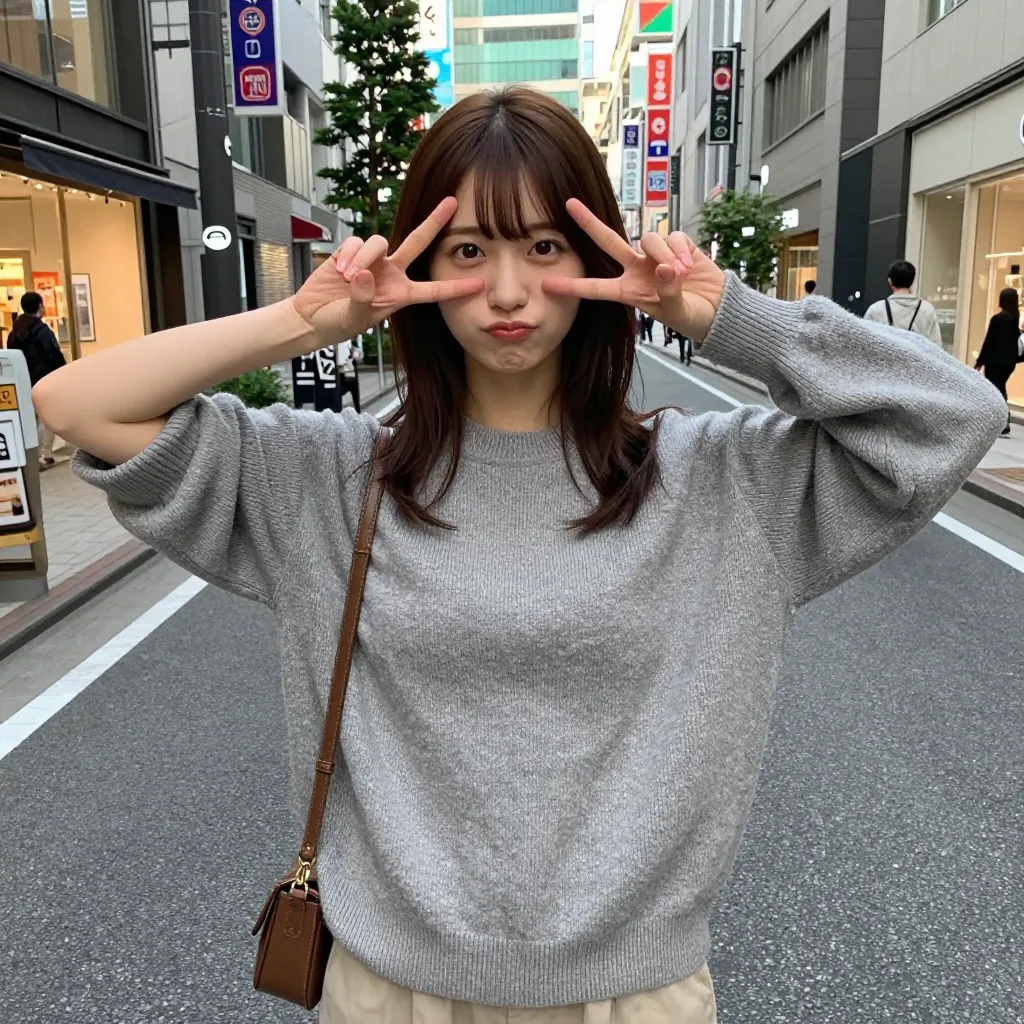 | 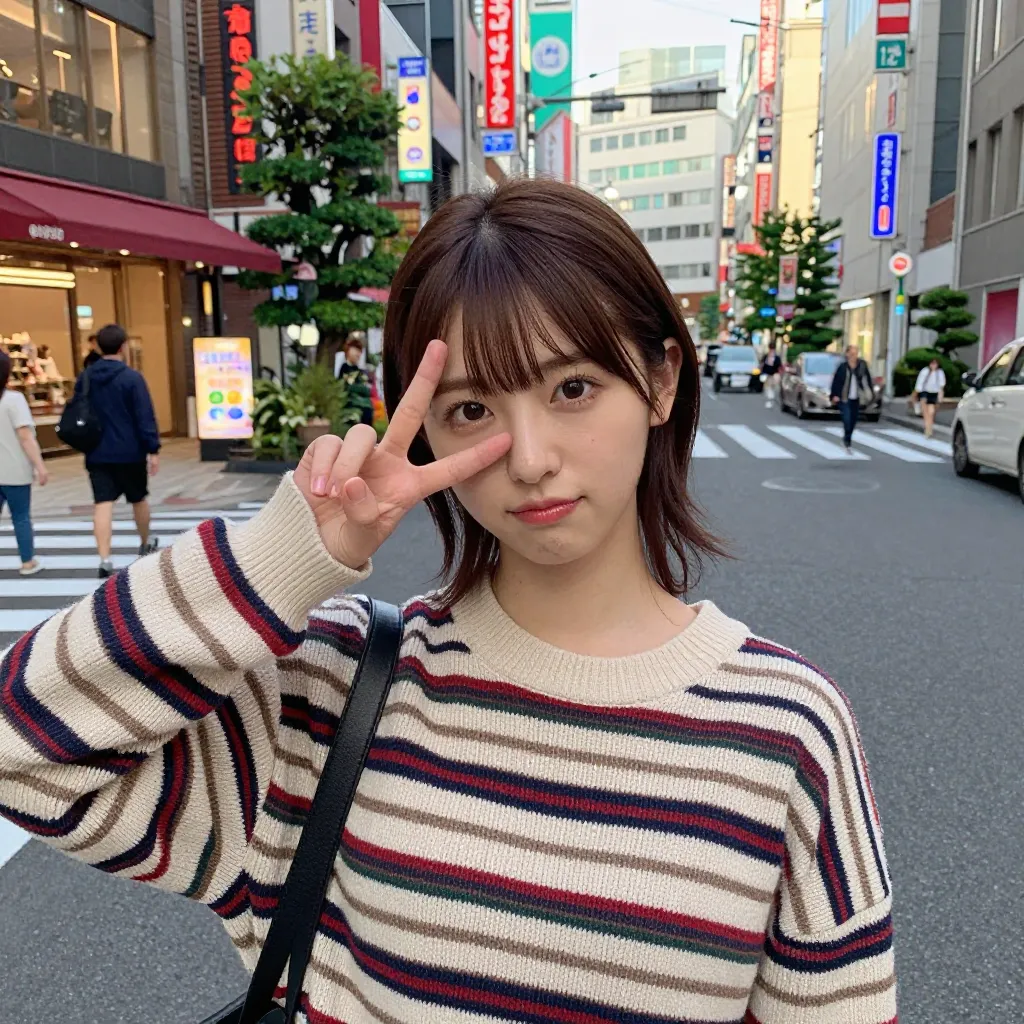 | 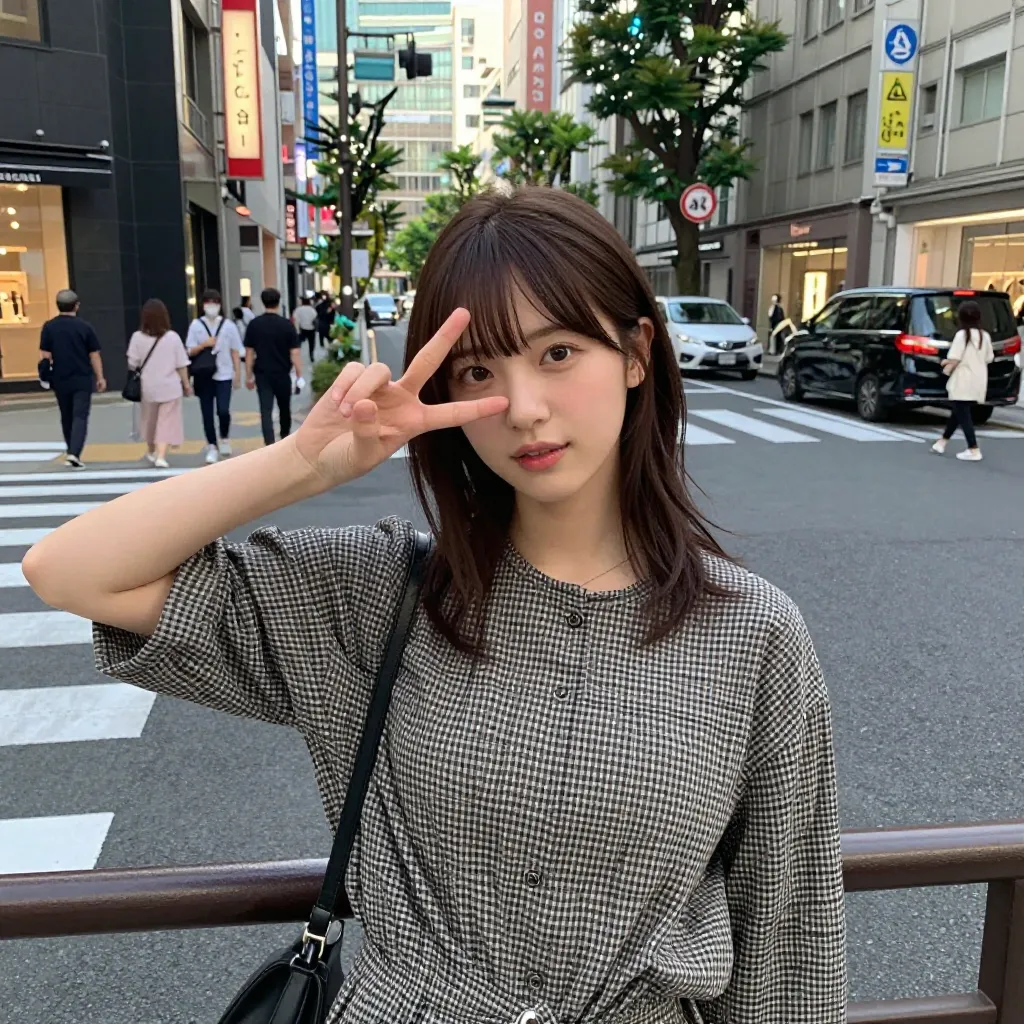 |
Observation: A single hand positioned next to the eye appeared in 2 out of 3 images (seed43, seed44). Both were palm-forward, with fingertips placed just below or beside the eye. Seed42, however, showed both hands raised to each eye, resembling the double_peace composition instead. None of the 3 images showed anomalies in finger count or form.
Note: This condition was intended to produce a single hand, but both hands appearing at once was also observed. Targeting an asymmetric, single-hand composition may also require generating multiple images and selecting the right one.
Summary
| Condition | Hand count | Orientation (normal/inverted) | Pose success rate | Finger anomalies |
|---|---|---|---|---|
| control | - | - | 0/3 | - |
| peace sign | single | normal 3/3 | 3/3 | 0/3 |
| double peace sign | both | normal 3/3 | 3/3 | 0/6 hands |
| inverted peace sign | single | inverted 1/3, normal 2/3 | 1/3 (orientation basis) | 1/3 (minor) |
| peace sign next to eye | single 2/3, both 1/3 | normal 3/3 | 2/3 (single-hand basis) | 0/3 |
peace sign and double peace sign both reproduced reliably in both pose and finger rendering, but the pose that defines “gyaru peace” — the inverted hand orientation of inverted peace sign — only succeeded in 1 out of 3 images. Broken finger counts were rarely seen across all 15 images; the bottleneck in this test was controlling hand orientation and hand count, not finger shape.

![[Experiment] Prompts for Gyaru Makeup | 8 Conditions, 24 Images](/tips/gyaru-makeup-test/a05_false_lashes_s2_0_0000_7295072554507705269.webp)