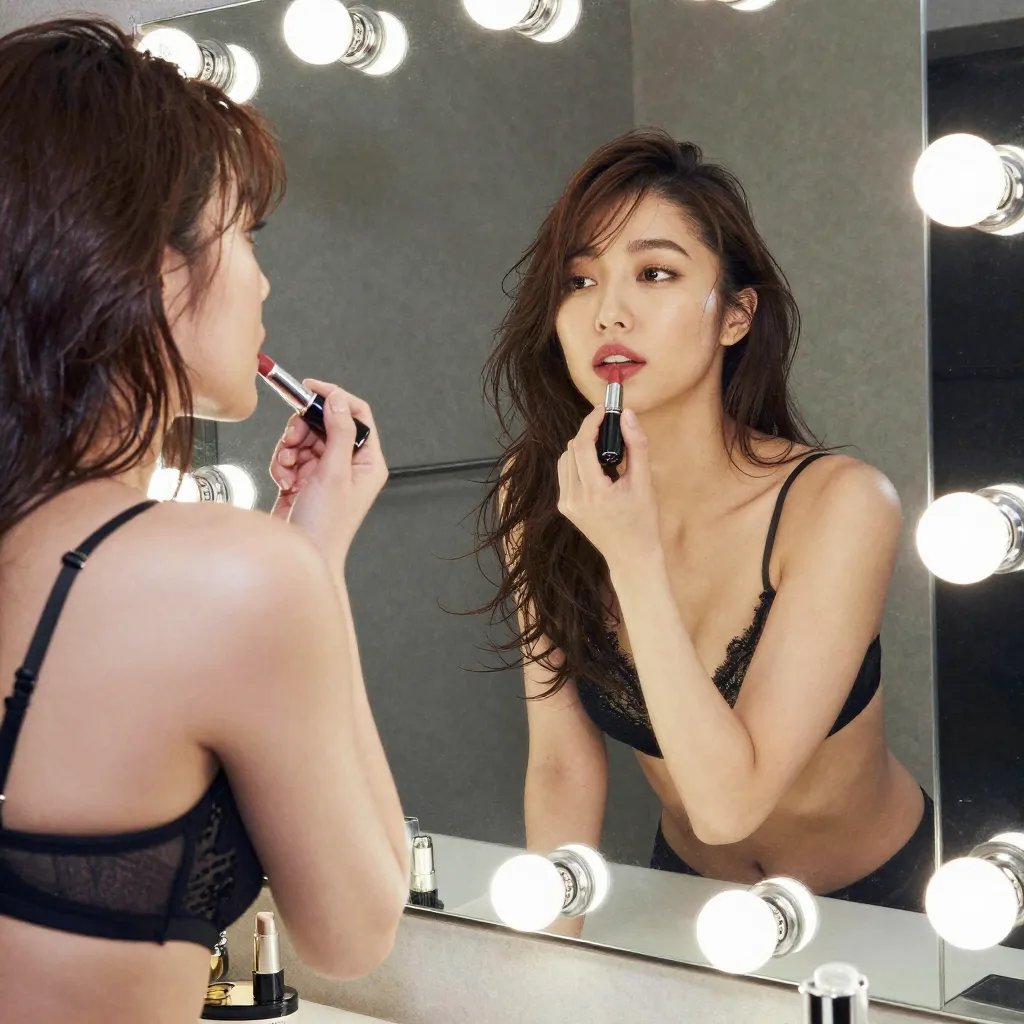
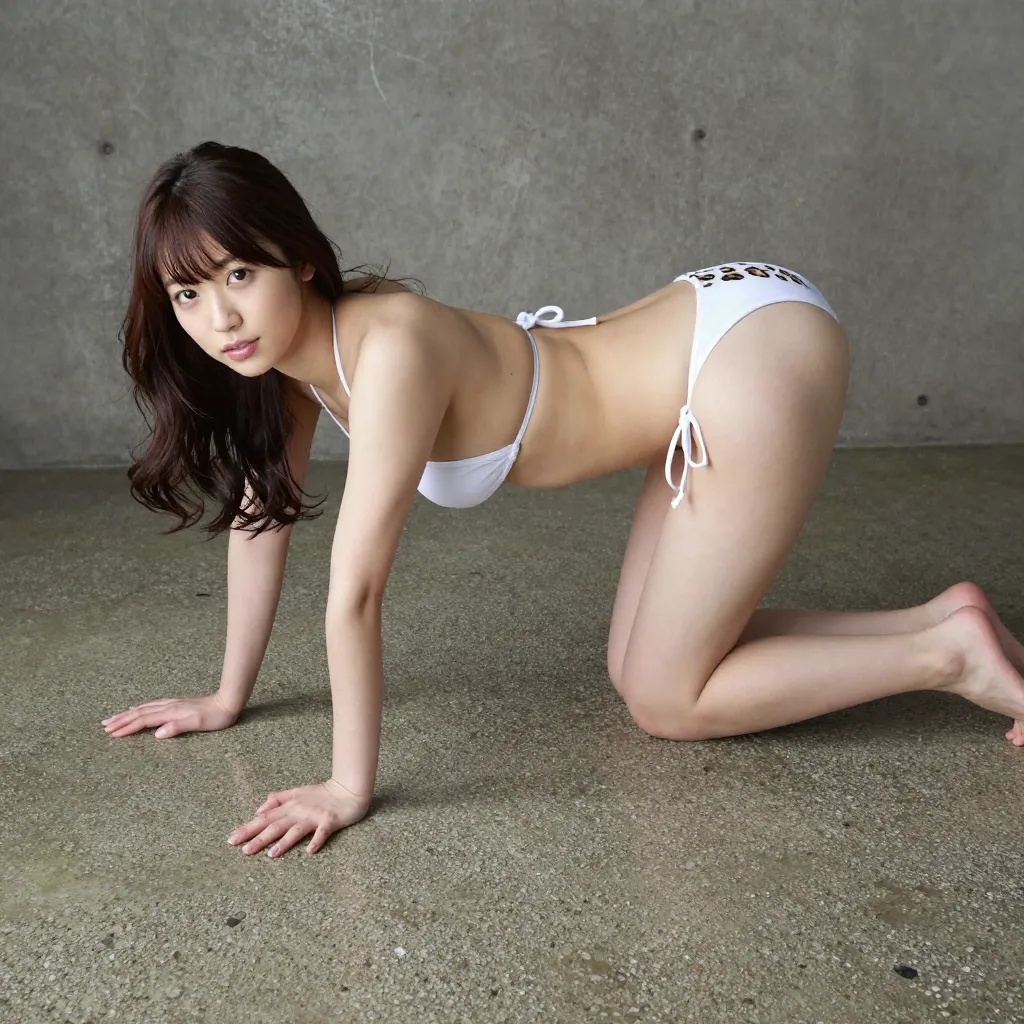
Conclusions First
- Prompts including
vintage 35mm film camera(A02, A03) affect props more than color tones. Both Kodak Portra 400 and Fuji Superia 400 caused the subject to hold or wear a film camera in nearly all seeds. By contrast, A01 (Fujifilm) did not trigger camera props. Color changes were minimal — just a slight desaturation compared to control. - Style keywords (Group B) produce clear changes to color tone and composition. Polaroid in particular outputs as a white-bordered instant photo, and retro film showed clear desaturation and warm shift. Ethereal and Kawauchi both produced similar effects of blown highlights and pastel tones.
- Best cost-performance goes to B05 (cinematic) and B06 (J-drama). These stably control saturation and color temperature with minimal negative impact on skin tone.
- Film stock names risk triggering “person holding a film camera.” For color control, style keywords are more reliable.
Experiment Design
| Item | Value |
|---|---|
| Model | z-image-turbo (6B, realism-focused distilled) |
| Steps | 8 |
| CFG | 1.0 |
| Size | 1024x1024 |
| Seeds | 3 fixed (shared across all conditions) |
| Framing | upper body |
| Per condition | 3 images (3 seeds) |
| Total | 10 conditions = 30 images |
Base Prompt
A small cafe with natural light was chosen as an indoor environment where color changes (skin tone, warm/cool shift, contrast) are easy to observe.
Evaluation Criteria
The following attributes were observed and recorded:
- Color tone change: Warm/cool shift, saturation, contrast changes
- Film grain: Presence and strength of grain
- Overall atmosphere: Is the intended style keyword atmosphere reproduced?
- Effect on subject’s skin tone: Is the skin tone natural? Is there a color cast?
A. Film Stock Names (4 Conditions)
Comparing effects when actual film stock names or camera brand names are included in prompts.
A00: Control (no style specified)
| seed 1 | seed 2 | seed 3 |
|---|---|---|
 |  |  |
Observation: Under natural light in a cafe, outfits and compositions vary between seeds but color tone is consistent. Color temperature is neutral to slightly warm, saturation is moderate, contrast is standard. No visible grain. Natural skin tone with no color cast. This serves as the baseline for all subsequent comparisons.
A01: Fujifilm (Fujifilm color science)
| seed 1 | seed 2 | seed 3 |
|---|---|---|
 |  |  |
Observation: Compared to control, overall saturation is slightly lower and color temperature has shifted slightly cooler. Contrast is slightly lower. No visible grain. Skin tone is slightly cooler than control. However, the change is minor, with high seed consistency.
A02: Kodak Portra 400
| seed 1 | seed 2 | seed 3 |
|---|---|---|
 |  |  |
Observation: In all 3 seeds, the subject holds or wears a film camera. “vintage 35mm film camera” is triggering camera prop generation. Color tone shows slight desaturation and cool shift compared to control, similar to A01. No visible grain. Skin tone is slightly cooler.
A03: Fuji Superia 400
| seed 1 | seed 2 | seed 3 |
|---|---|---|
 |  |  |
Observation: Similar to A02, film camera props appear in all 3 seeds. Color tone is nearly identical to A02 — slightly desaturated and cool. No visually distinguishable difference between Kodak Portra 400 and Fuji Superia 400. No visible grain. Skin tone impact is similar to A02.
Group A Summary
| Condition | Color change | Grain | Atmosphere | Skin tone impact | Recommendation |
|---|---|---|---|---|---|
| A00: control | Neutral to slightly warm | None | Standard snapshot | Natural | — |
| A01: Fujifilm | Slight cool shift, minor desaturation | None | Little difference from control | Slightly cooler | C |
| A02: Kodak Portra 400 | Slight cool shift, minor desaturation | None | Camera props appear | Slightly cooler | D |
| A03: Fuji Superia 400 | Slight cool shift, minor desaturation | None | Camera props appear | Slightly cooler | D |
B. Shooting Style Keywords (6 Conditions)
Comparing effects of style/atmosphere description keywords rather than film stock names.
B01: Retro film (1990s compact camera style)
| seed 1 | seed 2 | seed 3 |
|---|---|---|
 |  |  |
Observation: Compared to control, saturation is clearly lower and the image has shifted warm overall. Highlights are slightly blown out, contrast is low. A consistent faded film look across all 3 seeds. Slight grain is visible. Skin tone appears yellowish and less rosy than control. The subject tends to appear younger than in control.
B02: Polaroid style
| seed 1 | seed 2 | seed 3 |
|---|---|---|
 |  |  |
Observation: All 3 seeds generated a white-bordered instant photo placed on a wooden table — a product-shot-style composition. The image inside the photo is small with reduced resolution. Color is slightly warm with lower saturation. Since the composition becomes a “product shot of a Polaroid photo,” this is unsuitable for portrait use. Highly consistent between seeds (all have white borders).
Note: Writing “Polaroid” produced a product shot of a photograph rather than a portrait. This is a notable pitfall when a portrait is the intended output.
B03: Ethereal / moody film
| seed 1 | seed 2 | seed 3 |
|---|---|---|
 |  |  |
Observation: Highlights are blown throughout; overall is a pale, pastel tone. Saturation is clearly lower than control, contrast also low. Color temperature is neutral to slightly cool. Slight grain visible. Skin tone is bright and nearly blown out, with less color information than control. Pale tones are consistent across seeds, but the difference from B04 (Kawauchi) is small.
B04: Soft light / transparency (Rinko Kawauchi inspired)
| seed 1 | seed 2 | seed 3 |
|---|---|---|
 |  |  |
Observation: Very similar results to B03 (ethereal). Blown highlights, pastel low-saturation, low contrast. Color temperature is slightly warmer than B03. Slight grain visible. Skin is bright and nearly blown. The difference from B03 is only a slight color temperature variation — practically the same effect in terms of usage. High seed consistency.
B05: Cinematic
| seed 1 | seed 2 | seed 3 |
|---|---|---|
 |  |  |
Observation: Saturation is slightly lower compared to control, with warm-shifted color grading applied. Contrast is moderate with slightly lifted shadows. Depth of field is slightly shallower with increased background bokeh. No visible grain. Skin tone is natural and warm. High consistency across seeds. Unlike B03/B04, no extreme blown highlights — a natural, control-adjacent finish.
B06: Japanese drama color grade
| seed 1 | seed 2 | seed 3 |
|---|---|---|
 |  | 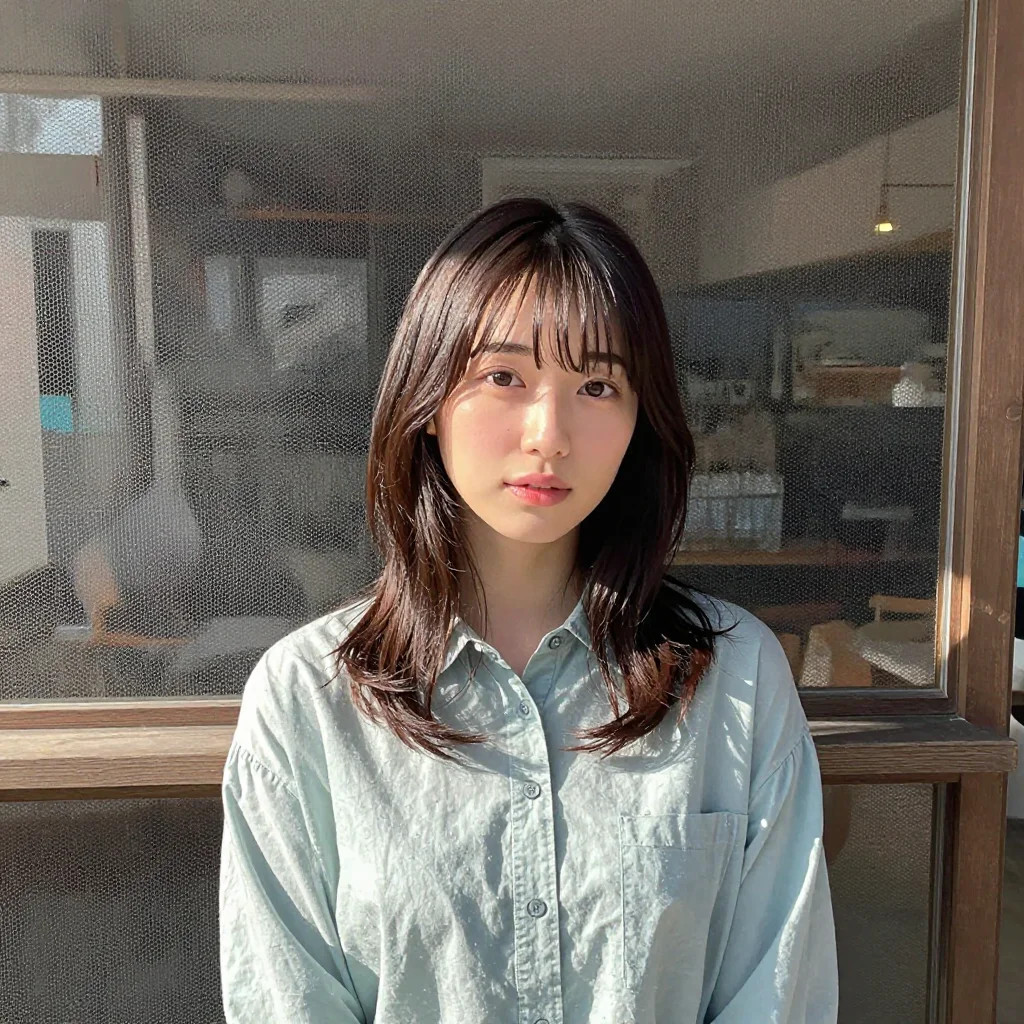 |
Observation: Saturation is lower than control, with teal (blue-green) color cast visible in shadows. Contrast is low with a matte quality. Skin tone is relatively preserved naturally, but slightly less rosy due to overall desaturation. Background desaturation is notable, creating separation between subject and background. Color direction is consistent across seeds.
Group B Summary
| Condition | Color change | Grain | Atmosphere | Skin tone impact | Recommendation |
|---|---|---|---|---|---|
| B01: Retro film | Warm shift, desaturation | Slight | Faded film look | Yellowish | B |
| B02: Polaroid | Slightly warm, desaturation | None | White-bordered instant photo shot | Hard to tell (photo is small) | D |
| B03: Ethereal | Cool, low saturation | Slight | Blown highlights, pastel | Blown out | B |
| B04: Soft light | Slightly warm, low saturation | Slight | Nearly identical to B03 | Blown out | C |
| B05: Cinematic | Warm, slight desaturation | None | Shallow DoF, warm tone | Natural, warm | A |
| B06: J-drama | Teal cast, low saturation | None | Matte finish, background separation | Slightly less rosy | A |
Overall Summary — Film Stock Names vs Style Keywords
Strength of Color Change
Style keywords (Group B) produce clearly stronger color changes than film stock names (Group A). All 3 A-group conditions showed minimal difference from control, sometimes hard to distinguish visually. B-group conditions, by contrast, showed clear and distinct changes — retro film’s warm shift, ethereal/Kawauchi’s blown highlights, cinematic’s warm grading, and J-drama’s teal cast were all clearly distinguishable from control.
Side Effects
A-group prompts including “vintage 35mm film camera” (A02, A03) triggered film camera props on the subject. B02 (Polaroid) generated an instant photo’s white border, resulting in a product shot rather than a portrait. B05 (cinematic) and B06 (J-drama) have few side effects and are reliable for color control.
Token Efficiency
A01 (Fujifilm) uses 11 tokens for minimal effect. B05 (cinematic) uses approximately 12 tokens for a clear color change — high token efficiency. B06 (J-drama) uses about 18 tokens, but the teal-orange separation is unique and hard to replicate otherwise. B03 (ethereal) and B04 (Kawauchi) produce nearly identical effects, so the lower-token ethereal-style keywords are sufficient.
B03 and B04 Overlap
Ethereal film photography (B03) and Rinko Kawauchi inspired (B04) produced nearly identical outputs — blown highlights, pastel tones, low saturation. The photographer name specification did not produce a difference worth the extra token cost.
Recommended Prompts
Recommended prompts by color control goal:
For warm tones and shallow depth of field:
For low saturation, matte finish, and subject-background separation:
For blown highlights and pastel tones:
Not recommended: Film stock names (Kodak Portra 400, etc.) produce minimal color change and trigger camera props as a side effect. Polaroid produces a product shot composition, so avoid for portrait use.
Note: The takeaway here is to use style keywords rather than film stock names.
cinematicand the J-drama color grade were the two practical options with minimal side effects. Film stock names tend to produce a camera appearing in the frame, so they are best avoided.
![[Tested] How Far Can You Push the Horror? Escalating Fear with VHS Grain, a Crawling Pose, and Corpse-Pale Skin](/tips/jhorror-escalation-test/g05_maxhorror_s1.webp)