Introduction
When building a dark fantasy aesthetic in AI image generation, wings are one of the most impactful elements. But does simply writing wings give you what you want? How does the concept word fallen angel influence the overall mood? We put it to the test.
In this article, we progressively modify the prompt across three stages – adding white wings, introducing a fallen angel concept, and layering dark gothic direction – to observe how wing texture, clothing, and overall atmosphere change.
Experiment Setup
Subject standard: 1girl, 32yo japanese actress
Base prompt (shared across all conditions):
Four conditions:
| Condition | Prompt Change |
|---|---|
| Control | Base only |
| White Wings | + large white feathered wings spread behind her |
| Fallen Angel | white bodysuit changed to tattered white bodysuit + fallen angel, broken halo, large white feathered wings |
| Dark Gothic | + fallen angel, dark ethereal atmosphere, pale luminous skin, large black feathered wings, gothic cinematic |
- Seeds: 2001, 2100, 2200 (3 images per condition, 12 total)
- Only the prompt was changed. All other parameters remained constant
Control (Base Only)
The baseline with no wings or decorative elements.
| seed 2001 | seed 2100 | seed 2200 |
|---|---|---|
 | 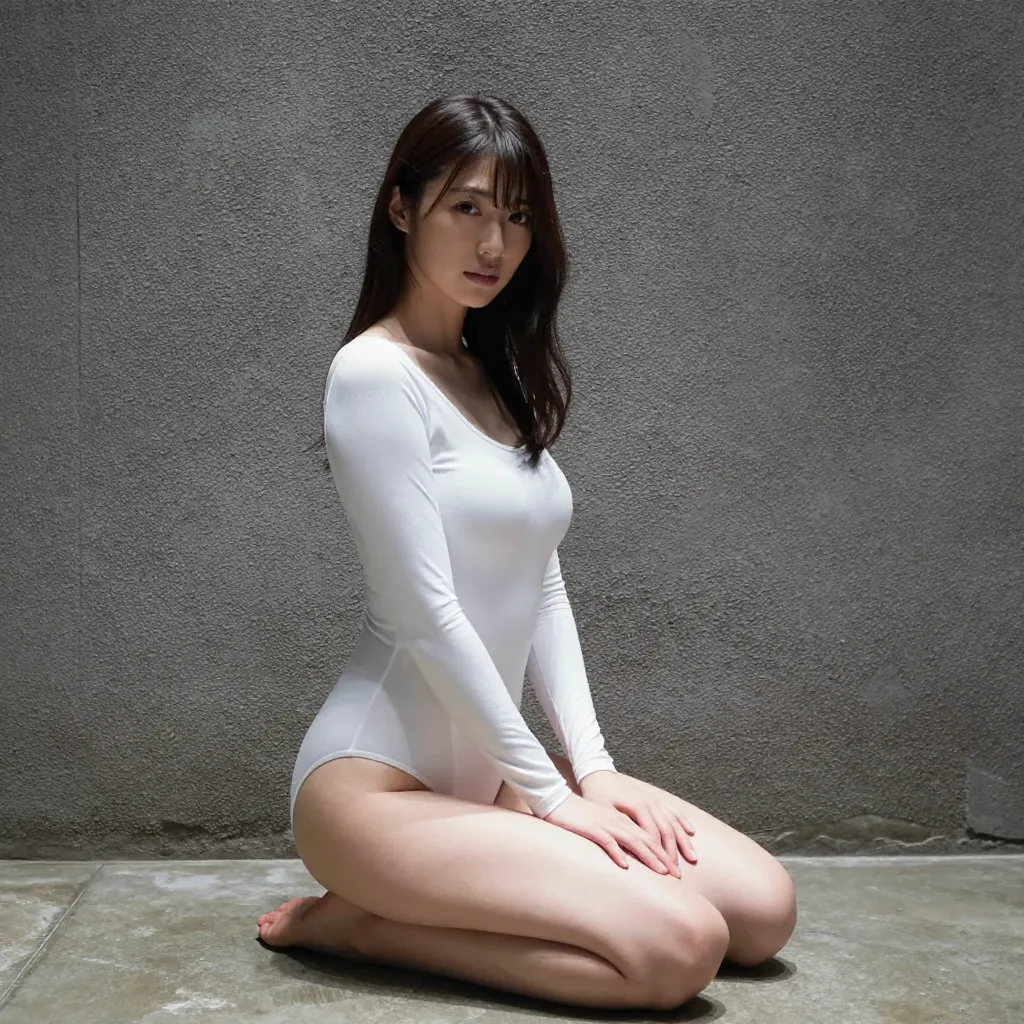 | 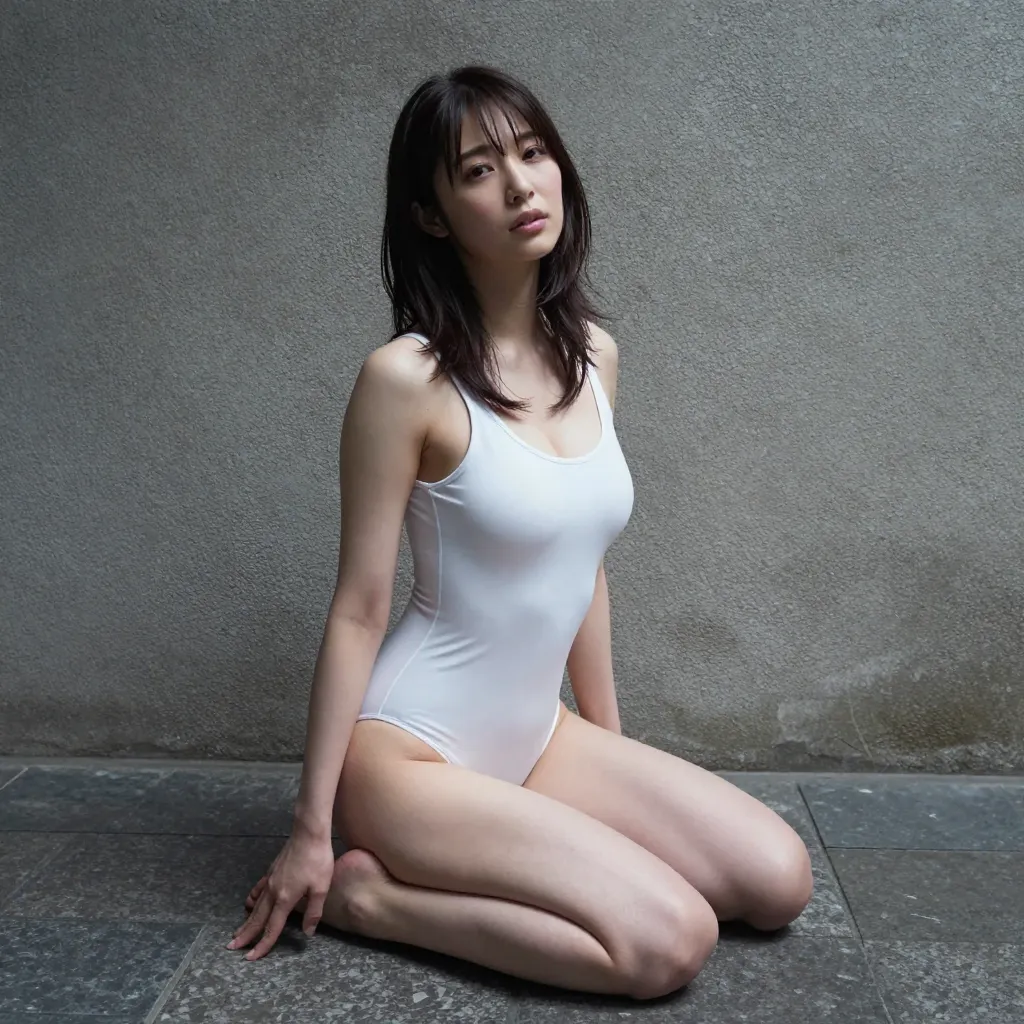 |
All 3 images consistently produced the simple composition of white bodysuit, stone floor, and dark background. No wings or decorative elements appeared. Dramatic lighting effectively highlighted the subject. The bodysuit design varied slightly across seeds – tank top, long sleeve, and camisole styles.
Experiment 1: Adding White Wings
| seed 2001 | seed 2100 | seed 2200 |
|---|---|---|
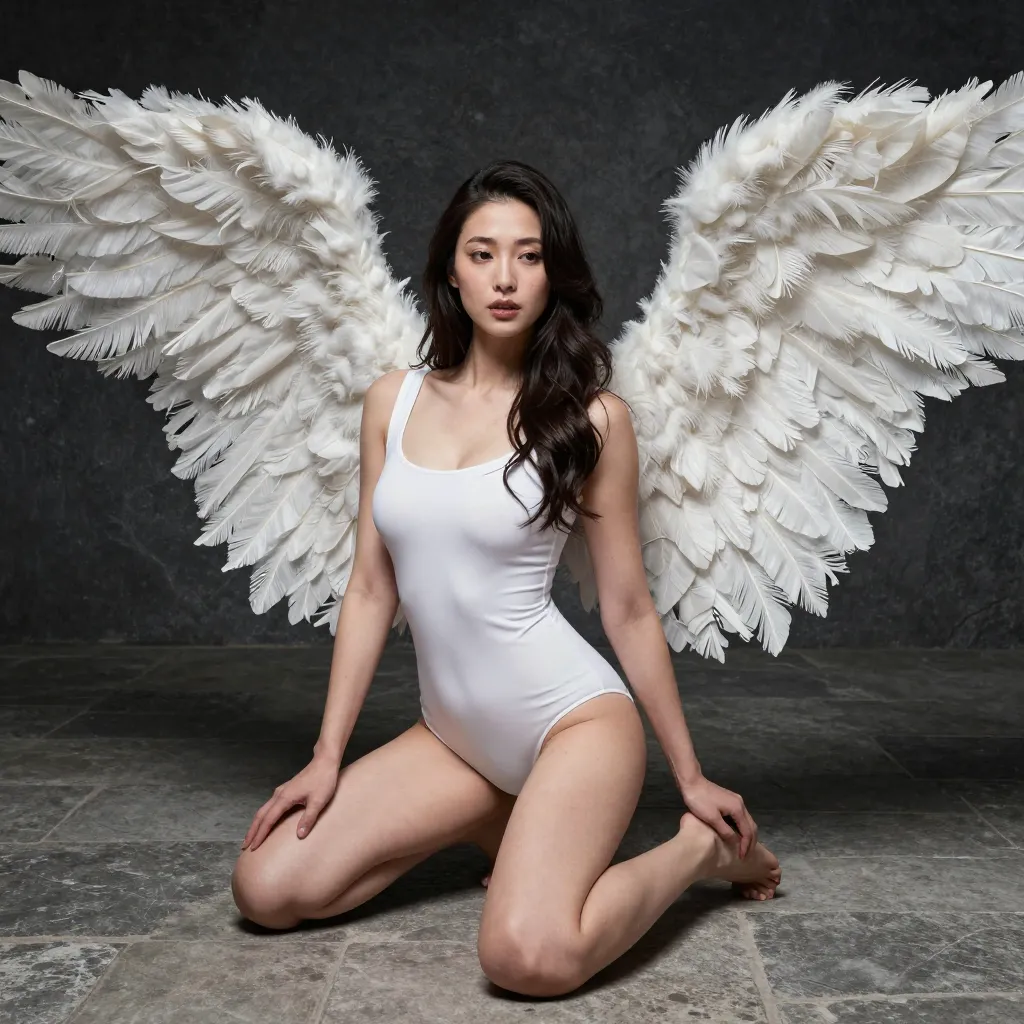 | 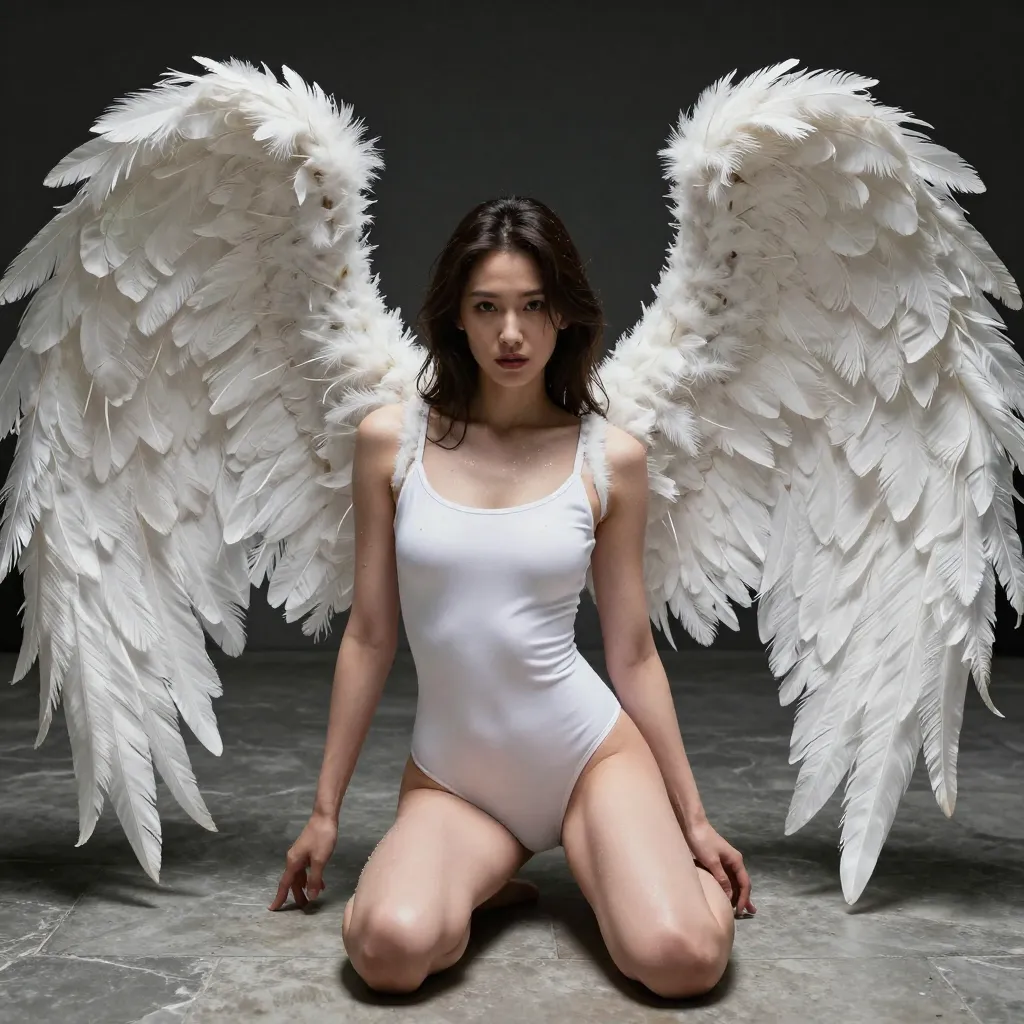 |  |
Adding large white feathered wings spread behind her produced large white wings symmetrically spread in 3 out of 3 images – a 100% reproduction rate.
The wing texture is particularly noteworthy. All 3 images show clearly defined individual feather detail, with visible layering from flight feathers to down feathers. The adjective feathered is clearly effective for specifying wing texture.
Wing size was consistently large, roughly matching or exceeding the subject’s height. The combination of large and spread behind her appears to encourage full wing extension.
Note: The feather layering is finely detailed, from flight feathers down to the down layer, producing wings that read as elaborate rather than a cheap cosplay prop. The word
featheredis doing effective work here.
Experiment 2: Fallen Angel Concept
| seed 2001 | seed 2100 | seed 2200 |
|---|---|---|
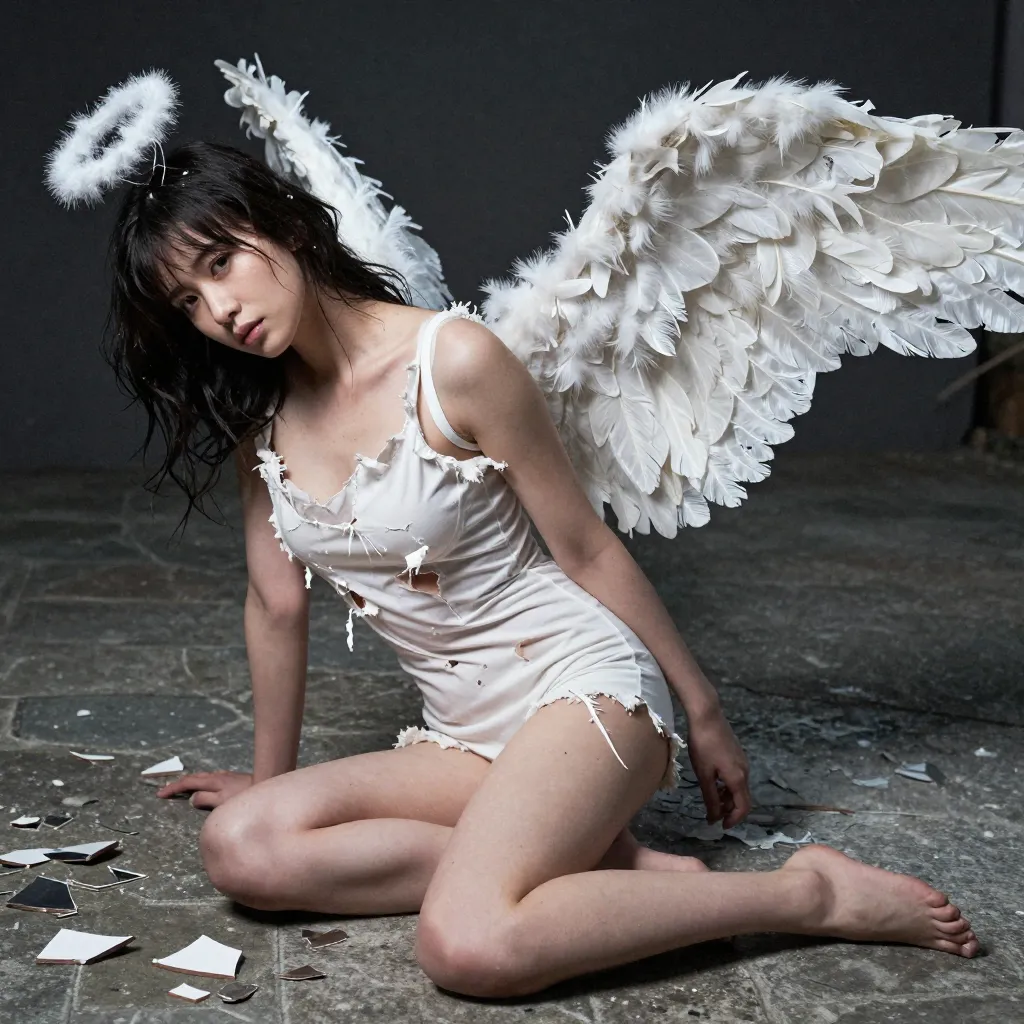 |  | 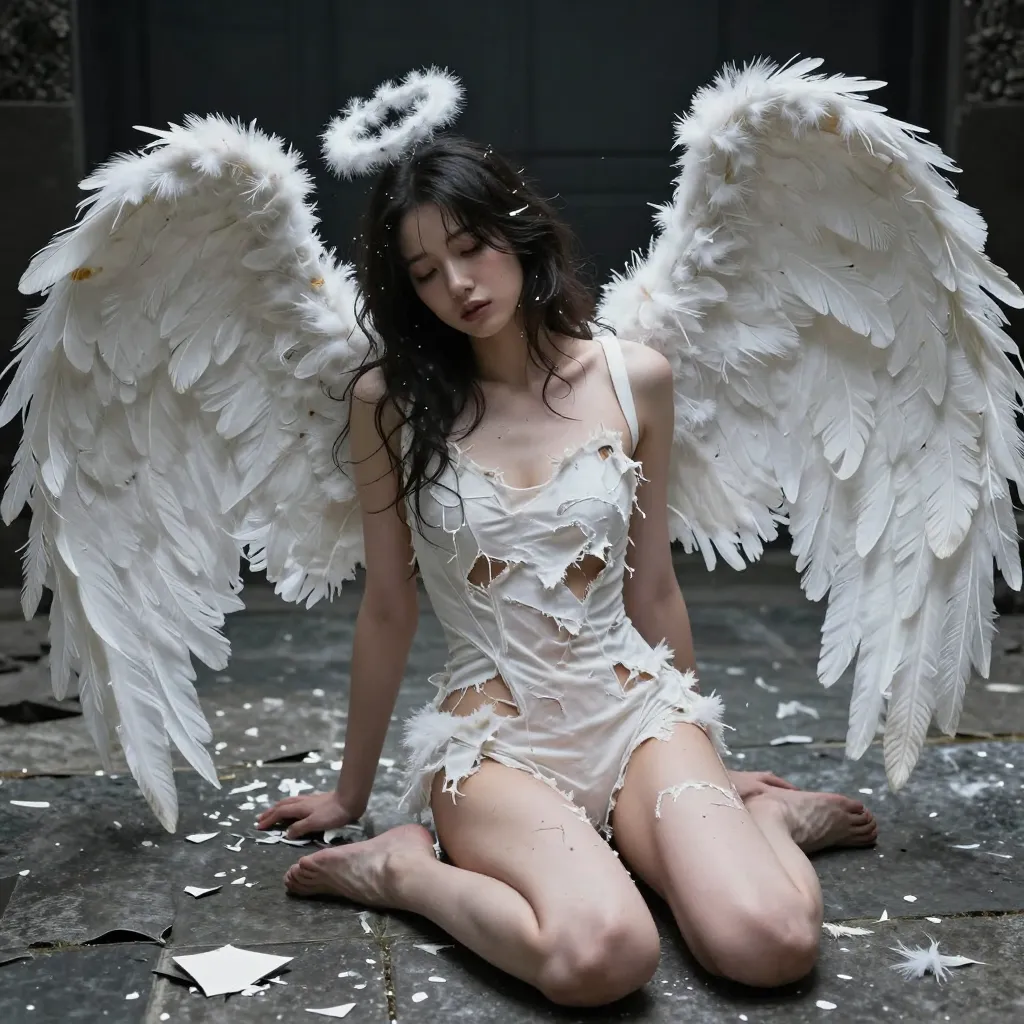 |
The combination of fallen angel + tattered white bodysuit + broken halo produced the following changes in 3 out of 3 images.
Clothing change: tattered was clearly reflected, with torn edges visible on the bodysuit’s hem and shoulder areas. The worn, ruined appearance contrasts sharply with the clean white bodysuit in the control images.
Halo: A white, fluffy ring appeared above the head in 3 out of 3 images. Despite specifying broken halo, it appeared as a slightly warped or unstable ring rather than a completely shattered one.
Floor debris: All 3 images show white fragments scattered across the stone floor. This was not directly specified in the prompt, but the fallen angel concept word appears to have reinforced the scene’s sense of ruin.
Wing color: Wings remained white in all 3 images. fallen angel alone did not change the wing color to black.
Experiment 3: Dark Gothic Direction
| seed 2001 | seed 2100 | seed 2200 |
|---|---|---|
 | 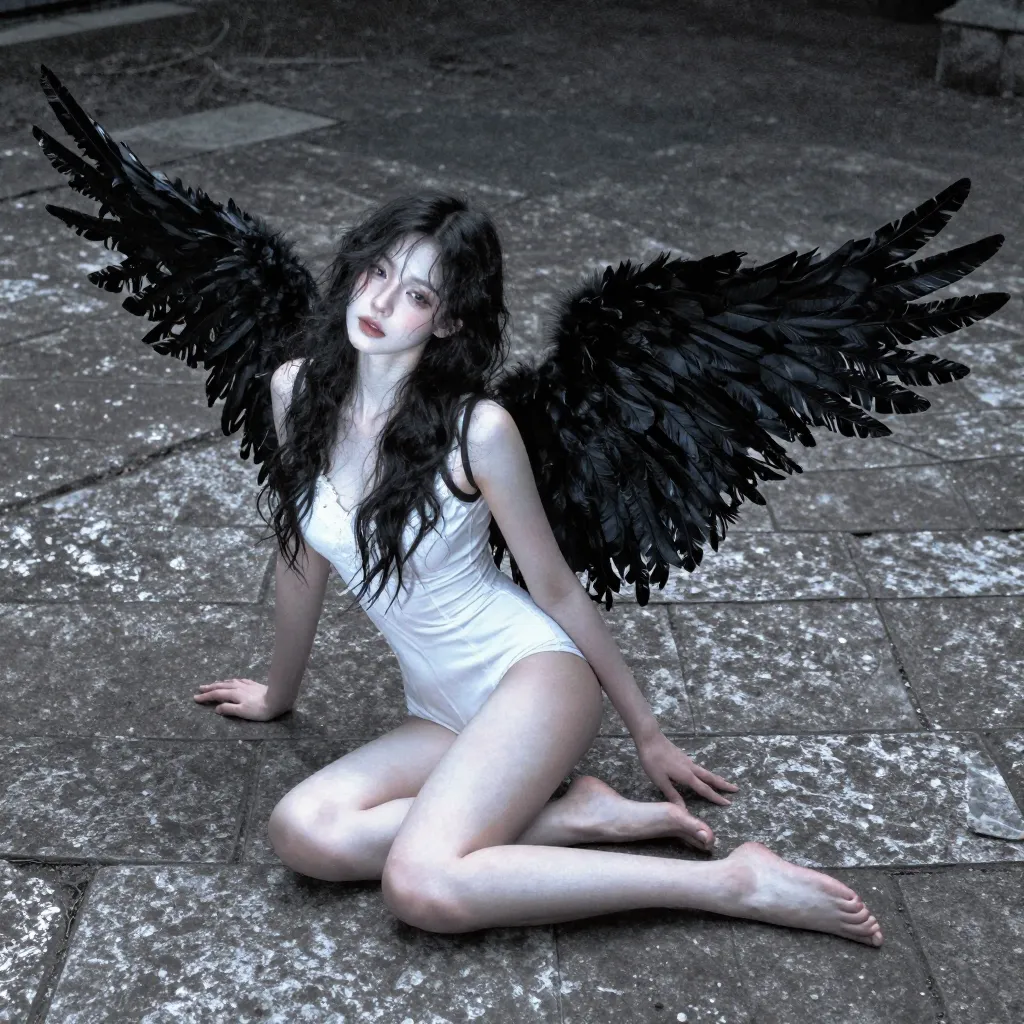 |  |
Adding black feathered wings + dark ethereal atmosphere + pale luminous skin + gothic cinematic dramatically transformed the overall mood.
Wing color change: Black wings appeared in 3 out of 3 images. Explicitly specifying large black feathered wings reliably controlled wing color. Compared to the white wings, these showed increased glossiness with a sleek, raven-like texture.
Skin texture: The effect of pale luminous skin was confirmed in 3 out of 3 images. Overall skin tone shifted to a pale, almost translucent quality with noticeably higher brightness compared to the control.
Color grading shift: The combination of dark ethereal atmosphere + gothic cinematic desaturated the entire image into a cool, blue-tinted tone. This stands in sharp contrast to the warm lighting in the control images.
Clothing change: Despite the prompt retaining white bodysuit, all 3 images shifted to a thin camisole-style garment. Mood words like gothic cinematic and dark ethereal atmosphere appear to influence clothing design as well.
Note: The black wings have a glossy texture, appearing to absorb light rather than reflect it – a clear contrast to the fluffy white wings. Adding
gothic cinematicalone shifts the overall mood of the piece.
Side-by-Side Comparison
Seed 2001 across all 4 conditions:
| Control | White Wings | Fallen Angel | Dark Gothic |
|---|---|---|---|
| | | |
Seed 2100 across all 4 conditions:
| Control | White Wings | Fallen Angel | Dark Gothic |
|---|---|---|---|
| | | |
Seed 2200 across all 4 conditions:
| Control | White Wings | Fallen Angel | Dark Gothic |
|---|---|---|---|
| | | |
Summary
| Observation | White Wings | Fallen Angel | Dark Gothic |
|---|---|---|---|
| Wing appearance rate | 3/3 | 3/3 | 3/3 |
| Wing color | White | White | Black |
| Wing texture | Soft, fluffy feathers | Soft, fluffy feathers | Glossy, hard-edged feathers |
| Halo appearance | 0/3 | 3/3 | 0/3 |
| Clothing deterioration | None | Present (3/3) | Clothing design itself changed |
| Color grading shift | Minimal | Minimal | Major (cool tone) |
Key findings from this experiment:
feathered wingsreliably produces wings: Wings appeared across all seeds.featheredencourages detailed feather texture renderingfallen angeldoes not change wing color: Even with the fallen angel concept, wings remained white. Black wings require an explicitblack feathered wingsspecificationtatteredeffectively conveys clothing deterioration: Torn clothing was confirmed in 3 out of 3 imagesbroken halotriggers halo appearance: Rendered as a slightly unstable ring rather than a broken onegothic cinematic+dark ethereal atmosphereshifts the entire color grade: A desaturated cool tone was observed in 3 out of 3 images, also influencing clothing designpale luminous skinmakes skin appear pale and translucent: An effective word for building gothic atmosphere
Note: White angel wings and black fallen angel wings differ significantly in texture despite both being “wings.”
fallen angelalone does not make the wings black –blackmust be specified explicitly. This adds a step, but also means finer control.
![[Verified] Image Generation Prompt Best Practices](/tips/prompt-best-practices/cover_0_0000_4517457392071889496.webp)
![[Experiment] Gothic × Glamour Fashion Test — What Does the Single Word 'gothic' Change?](/tips/gothic-glamour-fashion-test/C_seed42_0_0000_42.webp)
![[Experiment] Comparing 6 Lighting Types — How Do Effects Change Between Beach and Indoor Bar?](/tips/lighting-type-comparison/cover.webp)