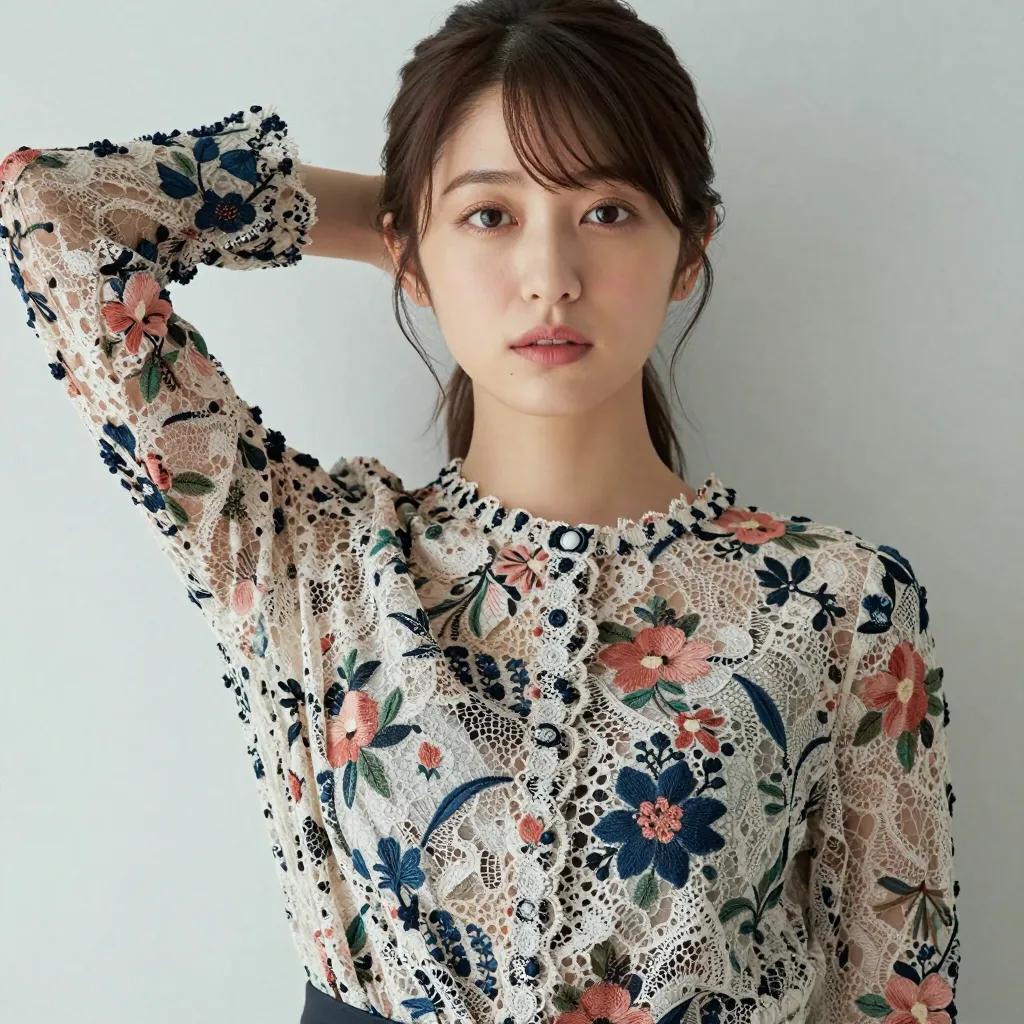
Conclusions First
- Material keywords reproduce textures well. Lace, leather, denim, and knit generated clearly identifiable textures in 3/3 images. Silk reproduced sheen well but consistently added floral or decorative patterns as a side effect (3/3). Mesh reproduced a net texture with transparency, but tends to shift color toward black.
- Shape keywords are also effective.
tight-fittingreproduced a body-hugging silhouette,loose-fittinggenerated a relaxed silhouette, andfrillyconsistently added frill decoration to collar, sleeves, and hem. - The most notable side effect is color change due to material specification. Leather tends toward dark brown or black, mesh toward black, silk toward gray. If you need to preserve white, you must specify it explicitly.
Experiment Design
| Item | Value |
|---|---|
| Model | z-image-turbo (6B, realism-focused distilled) |
| Steps | 8 |
| CFG | 1.0 |
| Size | 1024x1024 |
| Seeds | 3 fixed (shared across all conditions) |
| Framing | upper body |
| Per condition | 3 images (3 seeds) |
| Total | 11 conditions × 3 = 33 images |
Base Prompt
A simple white background with studio lighting was chosen to maximize visibility of fabric texture. Upper body only keeps focus on the clothing texture.
Evaluation Criteria
The following attributes were observed and recorded:
- Material texture reproduction: Are visual characteristics like sheen, surface texture, and weave identifiable as the specified material?
- Shape specification reflection: Do silhouette changes like tight, loose, and frilly appear?
- Silhouette change vs control: Has the silhouette changed compared to control (no specification)?
- Side effects on subject: Has the material specification caused unintended changes to skin tone, expression, pose, etc.?
A. Material Keyword Comparison (7 Conditions)
Changing one material at a time to compare texture reproduction and silhouette impact.
A00: Control (no material specified)
| seed 1 | seed 2 | seed 3 |
|---|---|---|
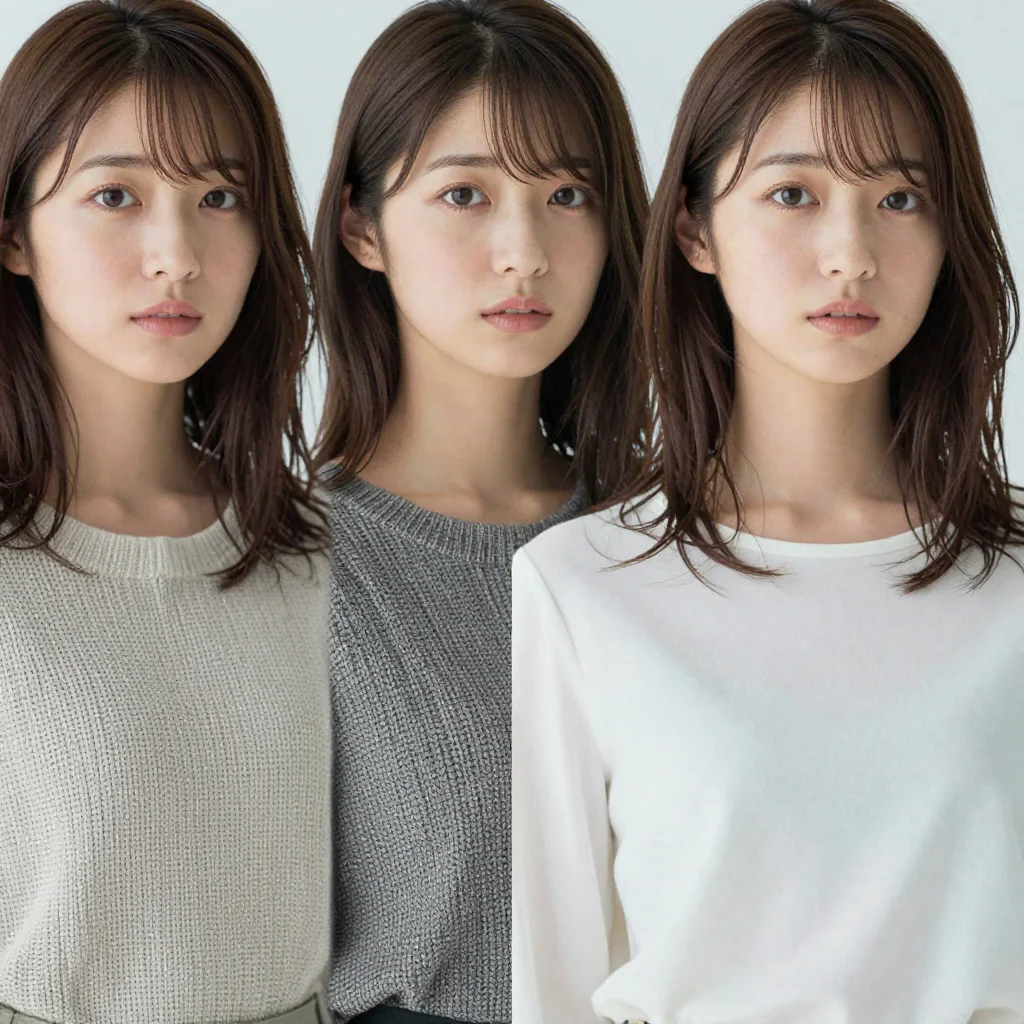 | 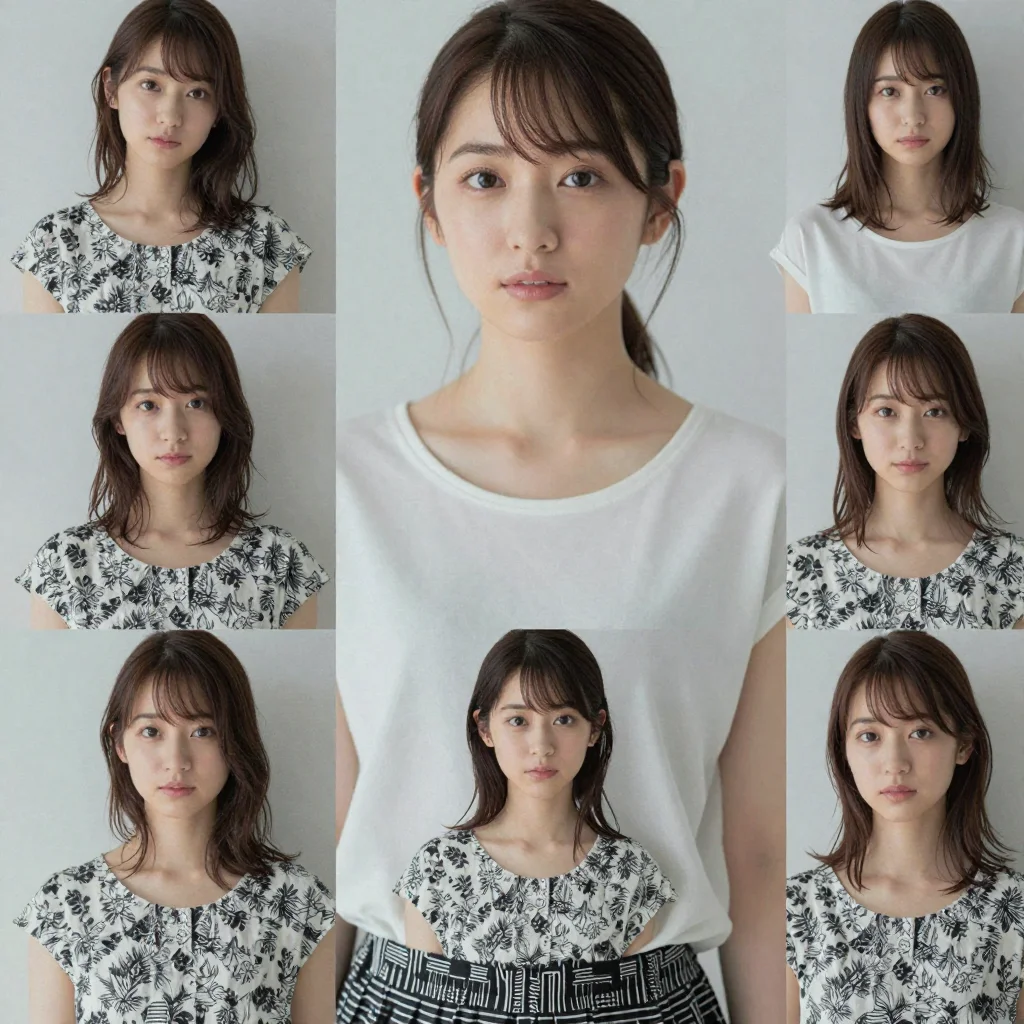 | 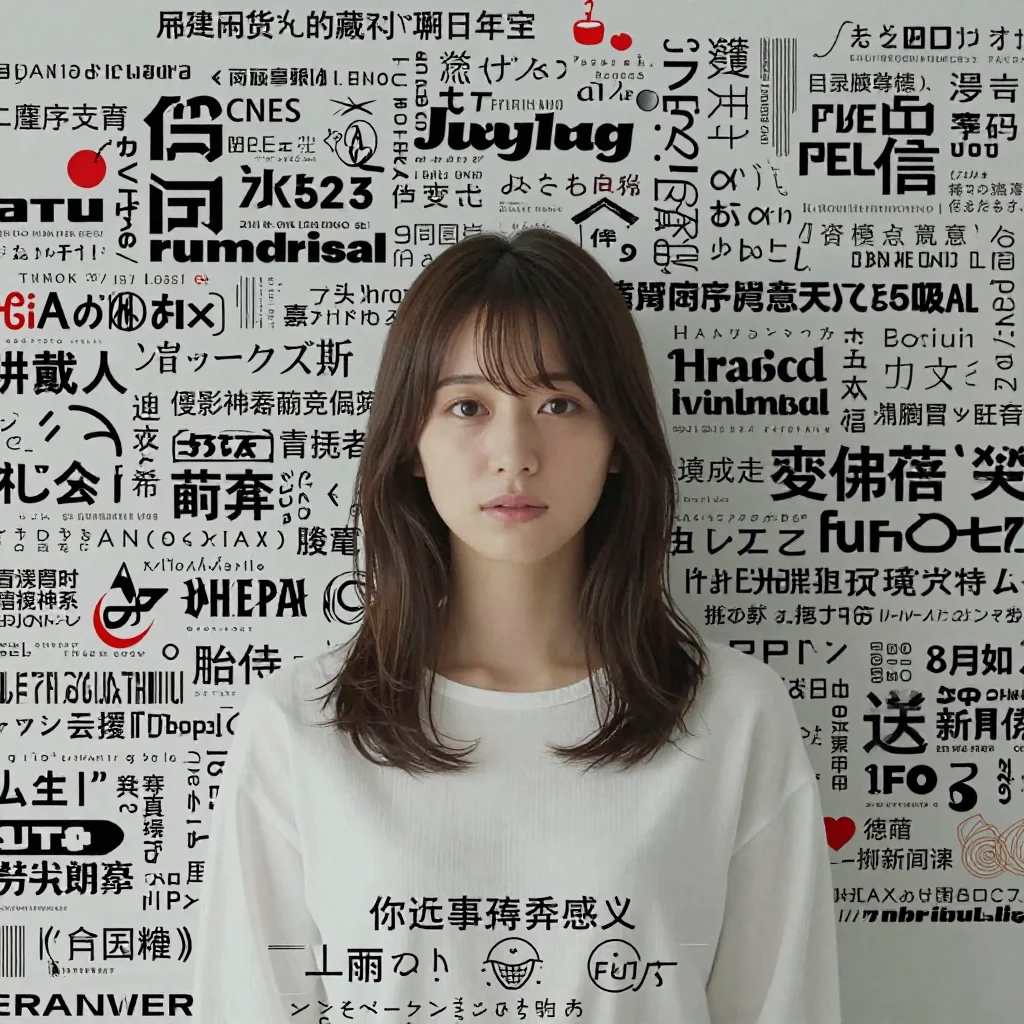 |
Observation: All 3 images show simple white tops. Seed 1 is a knit-like fabric (two-outfit composition with beige and gray), seed 2 is a white T-shirt (multi-person composition), seed 3 is a white top with text decoration in the background. Without material specification, top style and material vary greatly by seed — knit, T-shirt, and blouse-style all appear. White background is maintained in approximately 2/3 images.
A01: lace top
| seed 1 | seed 2 | seed 3 |
|---|---|---|
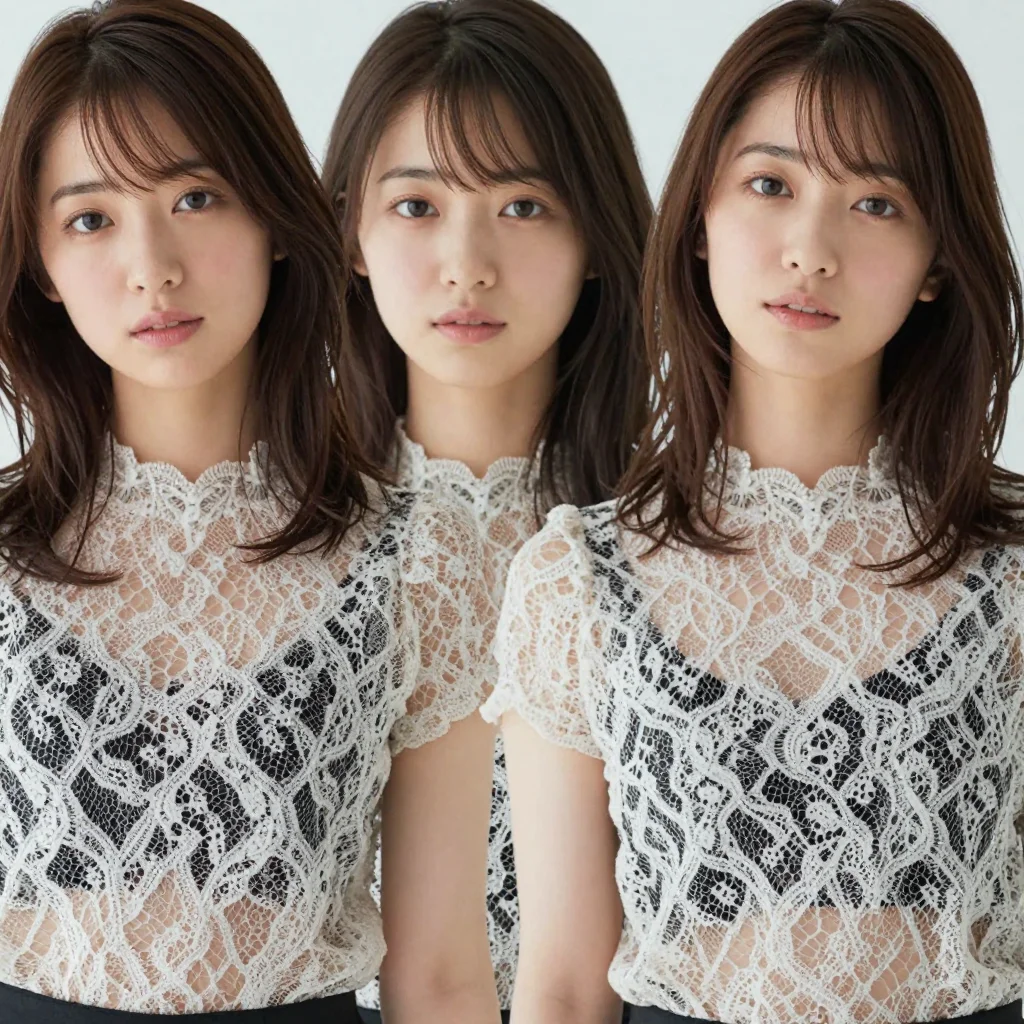 |  | 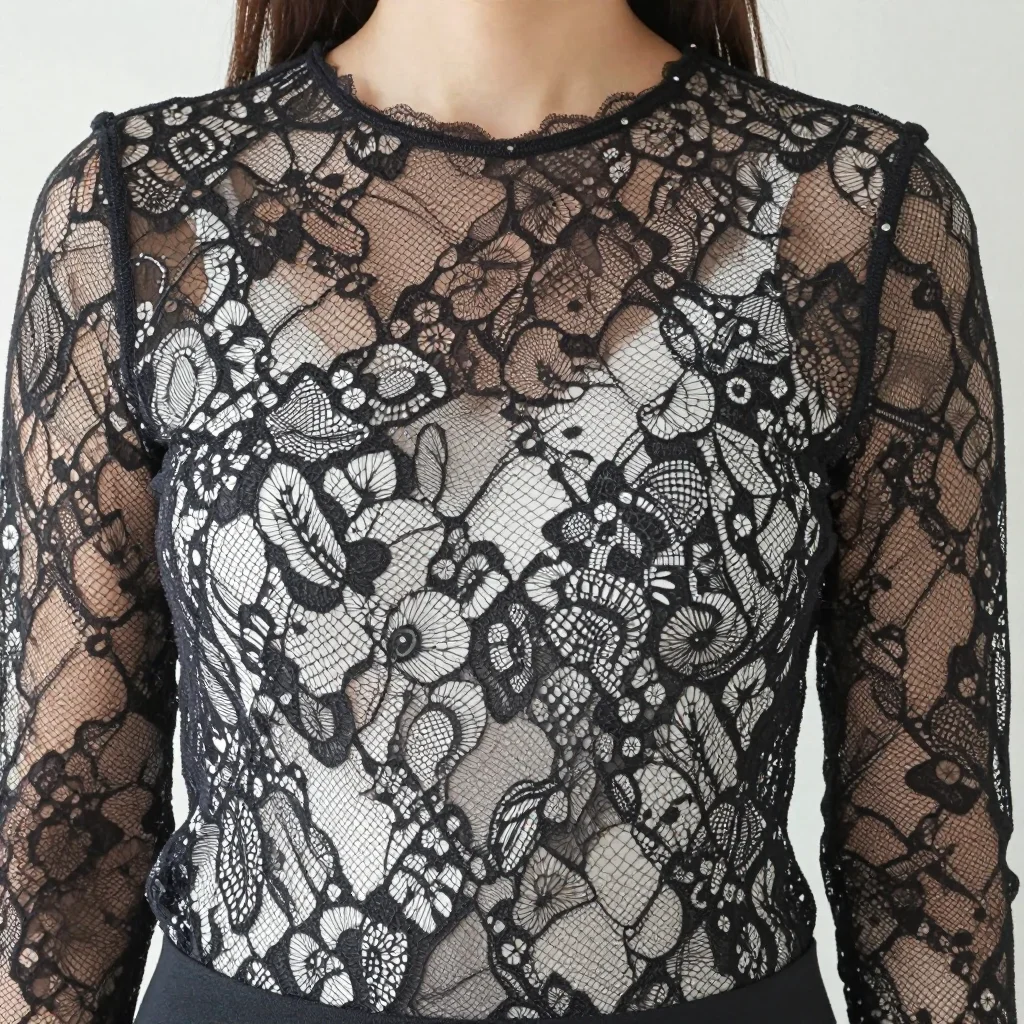 |
Observation: 3/3 images clearly reproduce lace floral or mesh patterns. Seed 1 is white lace in a three-person composition; seed 2 is a beige lace blouse with an arm-raised pose; seed 3 is black lace with visible skin transparency. The lace pattern is intricate with high detail. Even with white specified, color can shift to black (1/3), reflecting a strong association between lace and black. Silhouette tends toward a slightly more fitted look compared to control.
A02: leather top
| seed 1 | seed 2 | seed 3 |
|---|---|---|
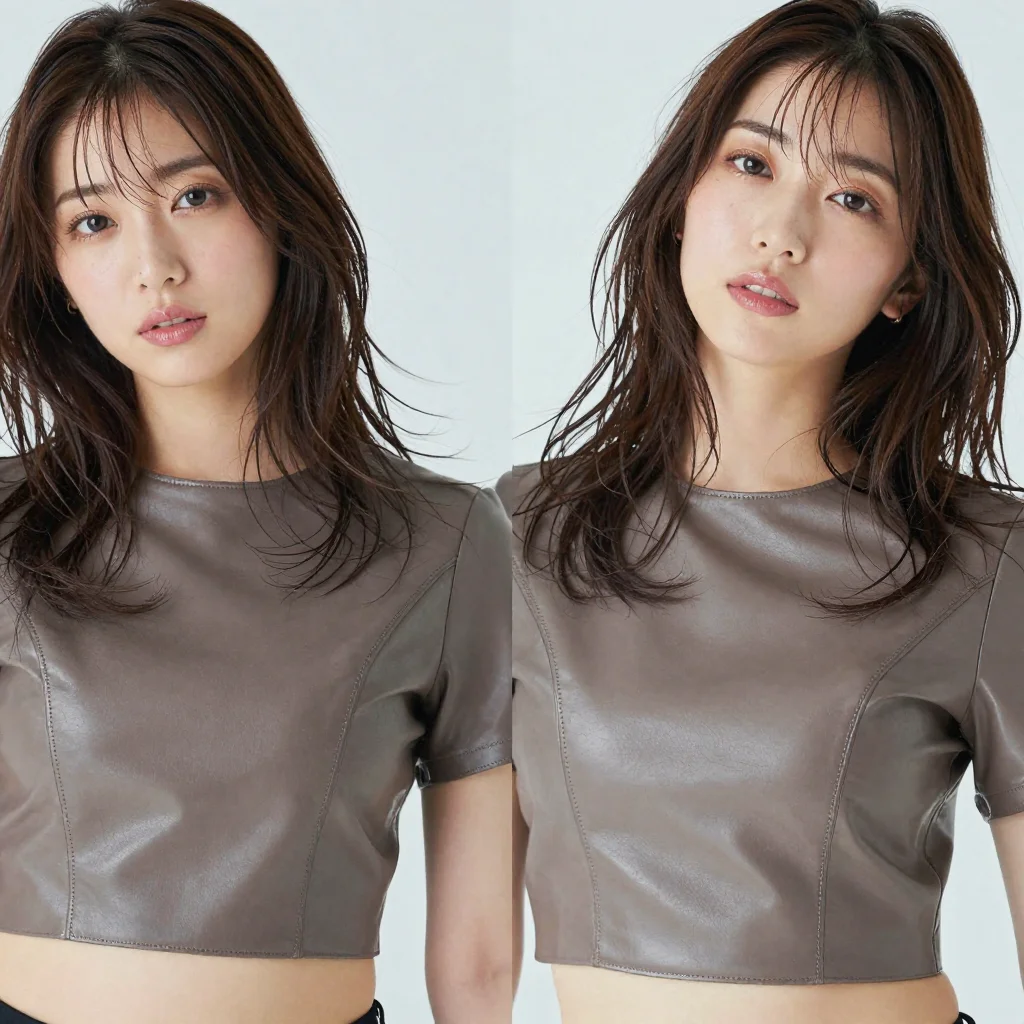 | 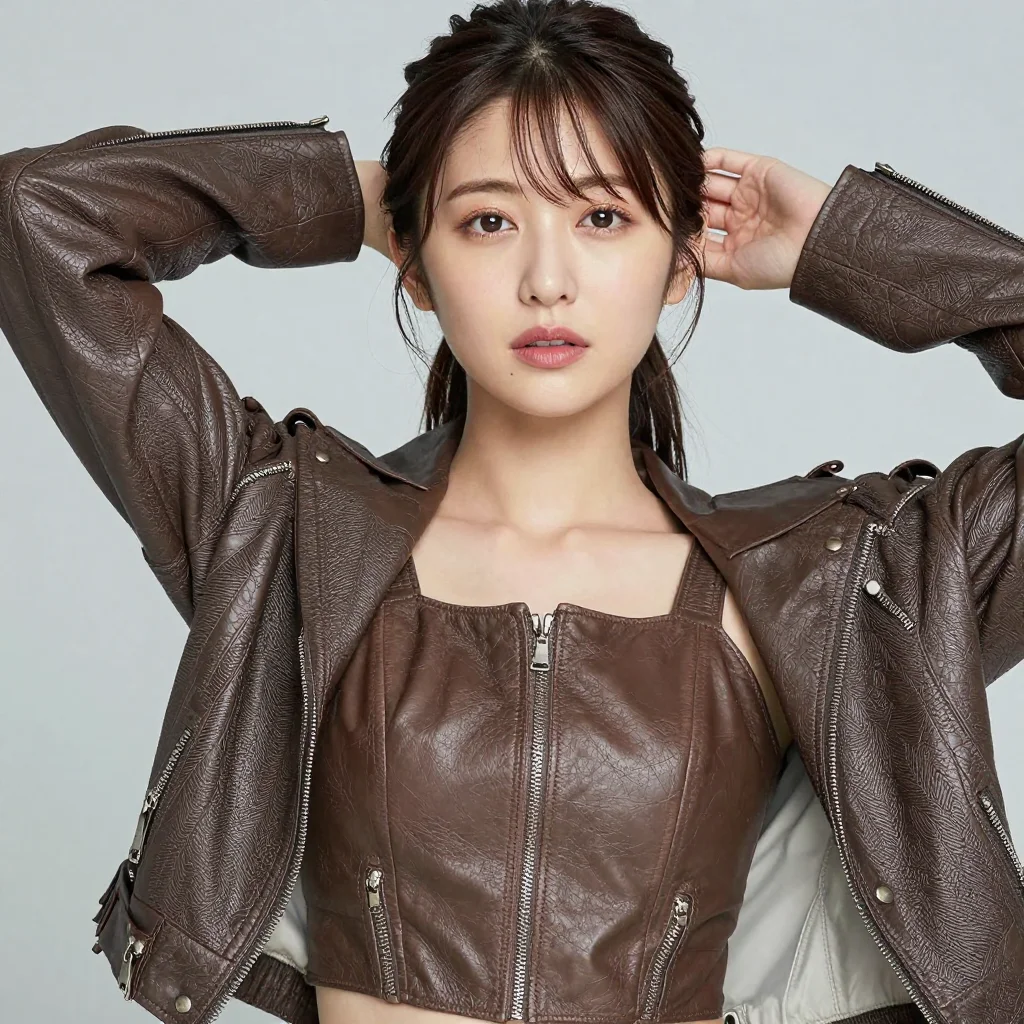 | 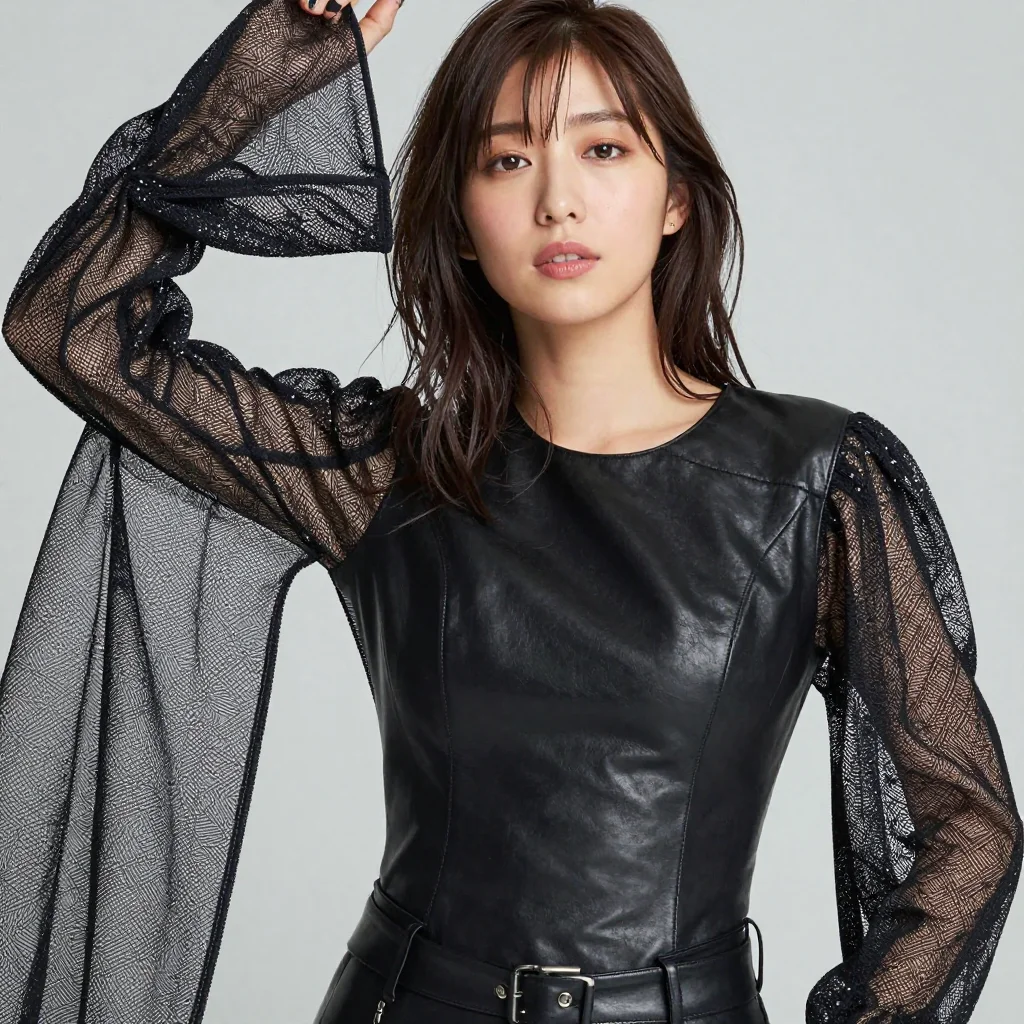 |
Observation: 3/3 images reproduce leather’s characteristic sheen and smooth surface. Seed 1 is a gray-brown cropped leather top; seed 2 is a brown rider-style jacket with zipper and hardware; seed 3 is a black leather bodice with mesh sleeves. All shifted to dark tones — white is not maintained. Silhouette shifts to a tight fit; “top” is interpreted as a jacket or cropped top. Side effect: hair tends to appear wet (2/3).
A03: silk top
| seed 1 | seed 2 | seed 3 |
|---|---|---|
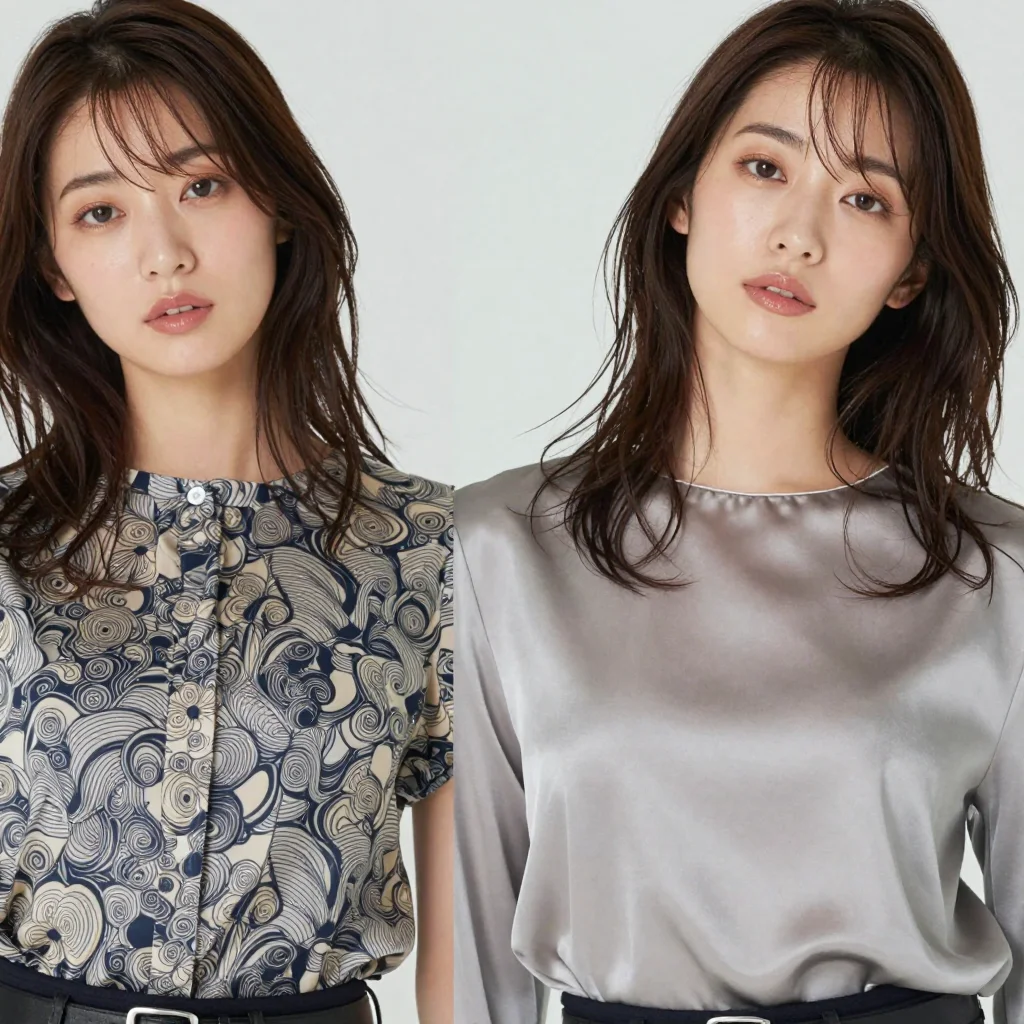 | 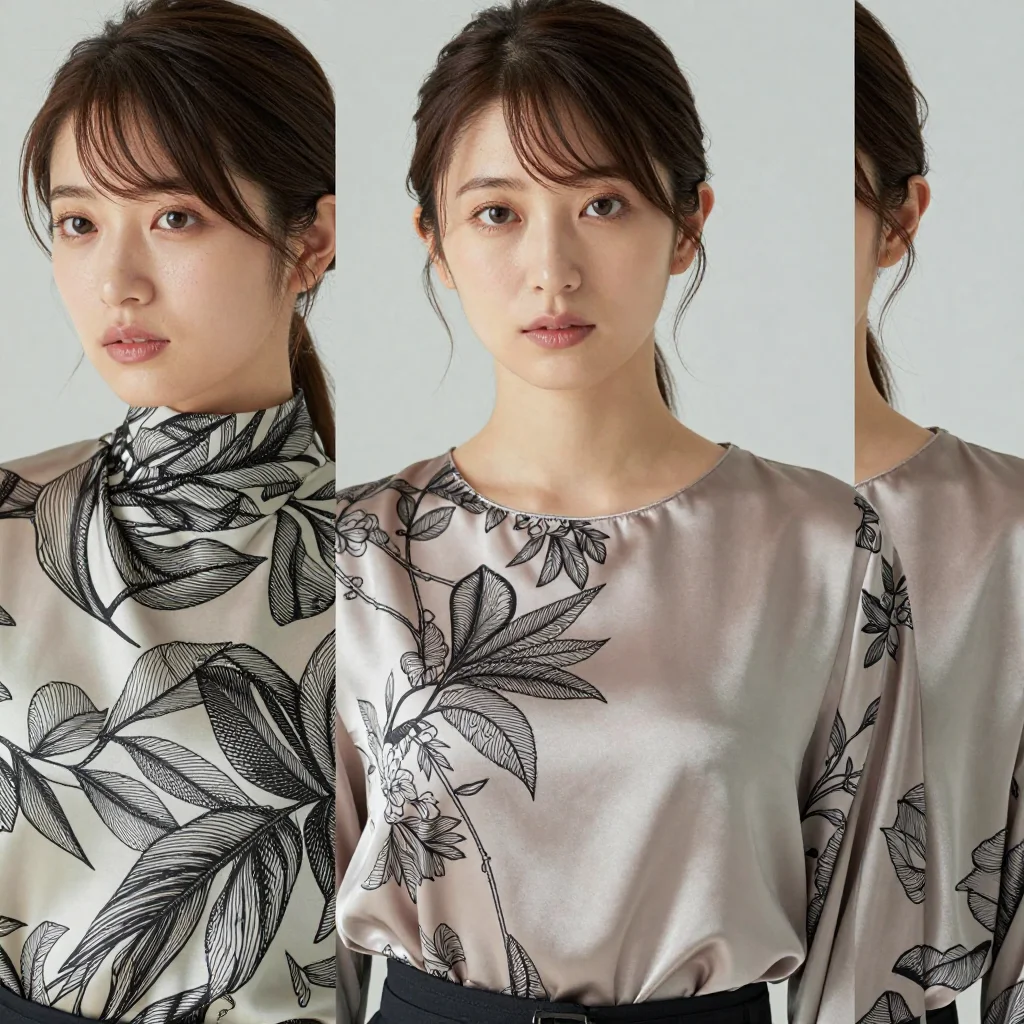 | 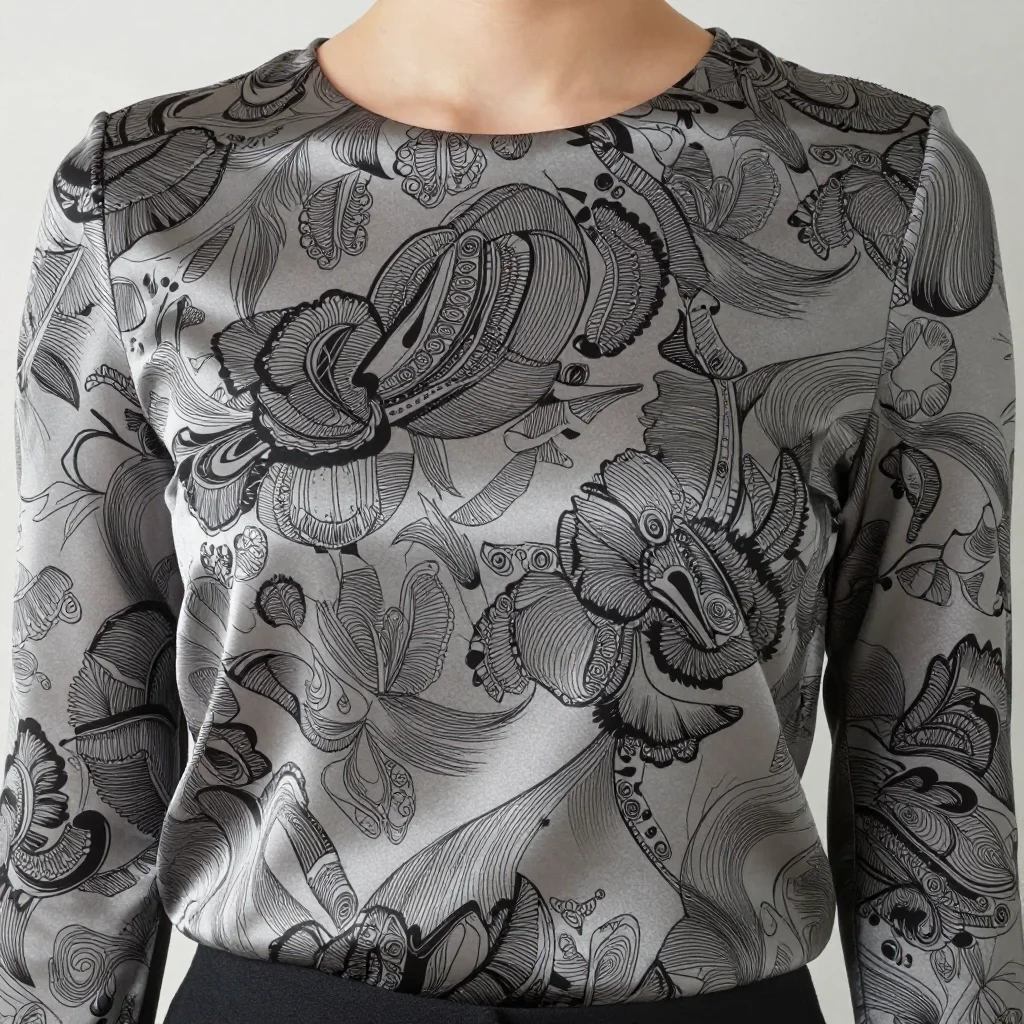 |
Observation: 3/3 images reproduce silk’s smooth, lustrous quality with soft highlights and fabric drape. However, color shifts to gray or silver — white is not maintained. Additionally, 3/3 images show a side effect of large floral or botanical print patterns added to the fabric, making it difficult to achieve a plain silk look. Silhouette tends toward a looser blouse shape.
Note: Silk has a side effect of adding a floral pattern unintentionally, which is a pitfall to watch for when you only want to change the material.
A04: denim top
| seed 1 | seed 2 | seed 3 |
|---|---|---|
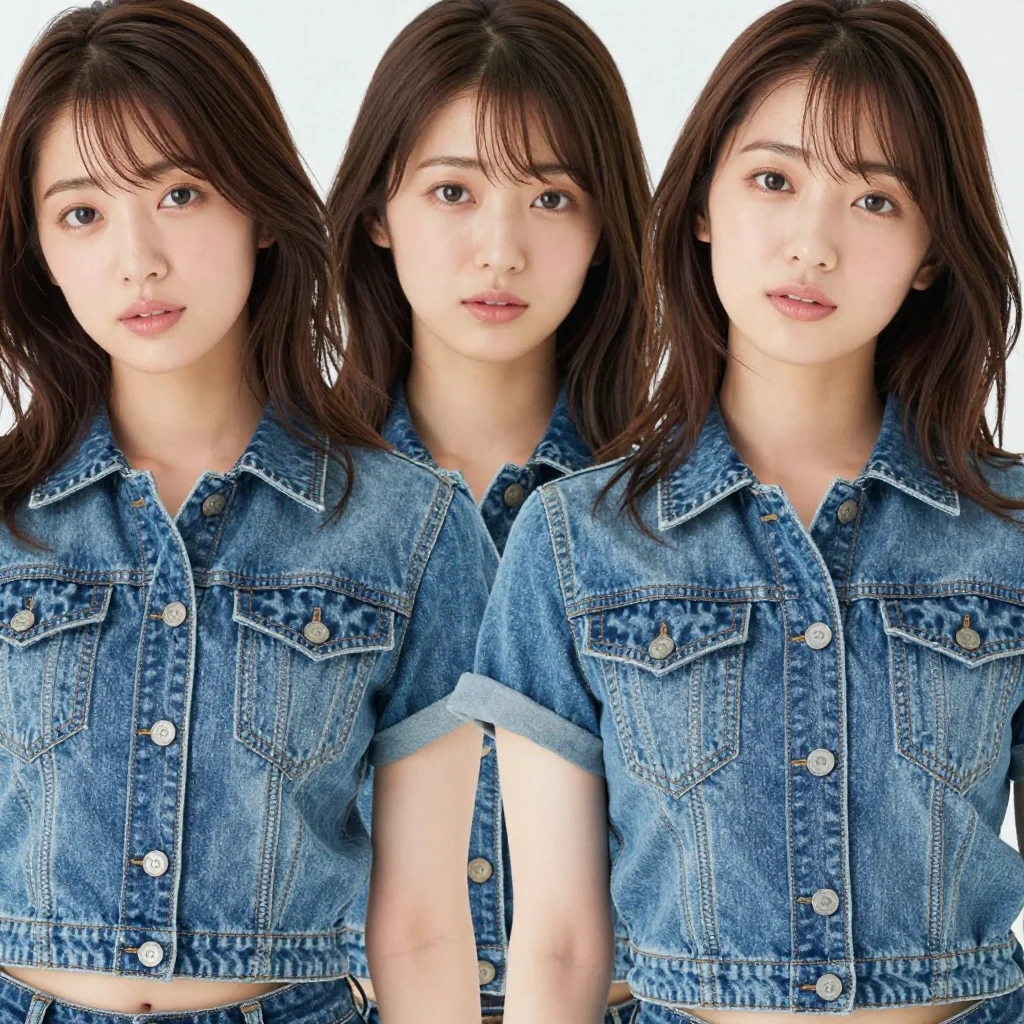 | 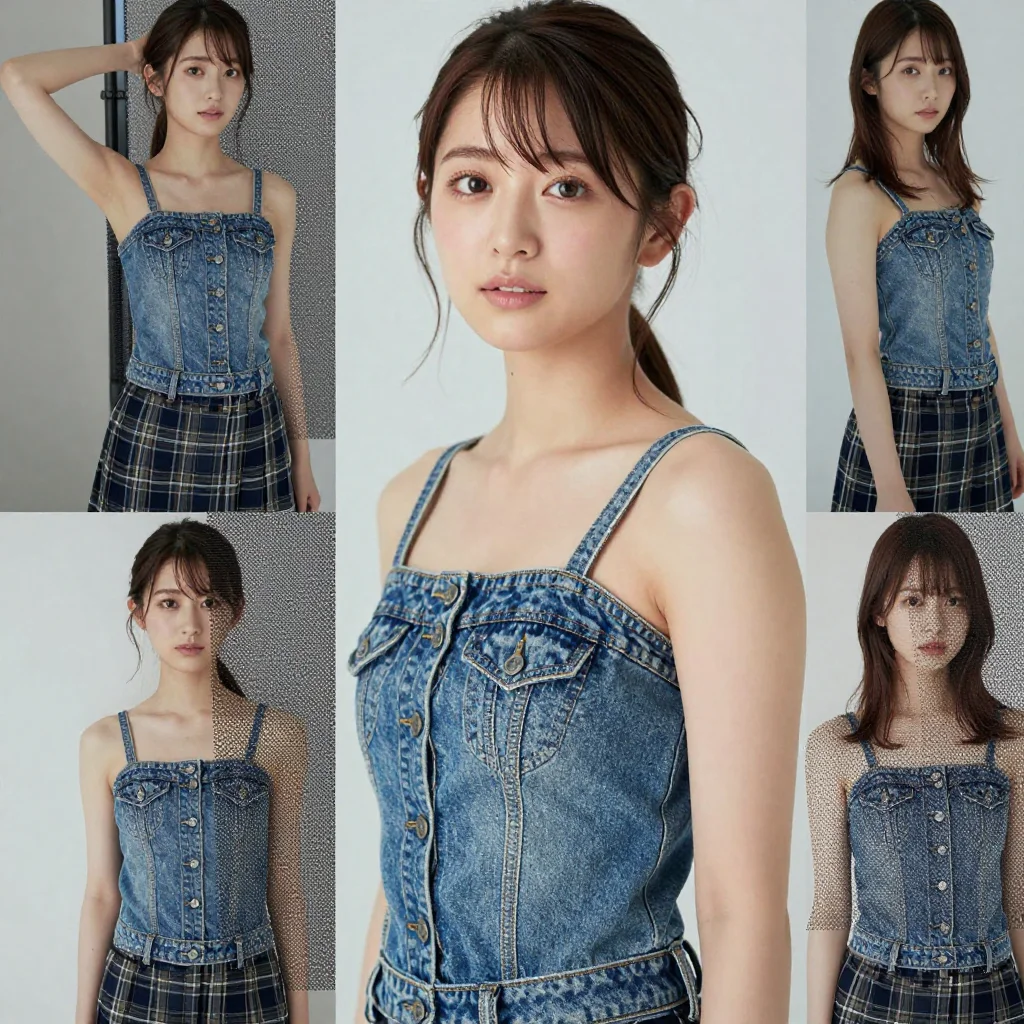 | 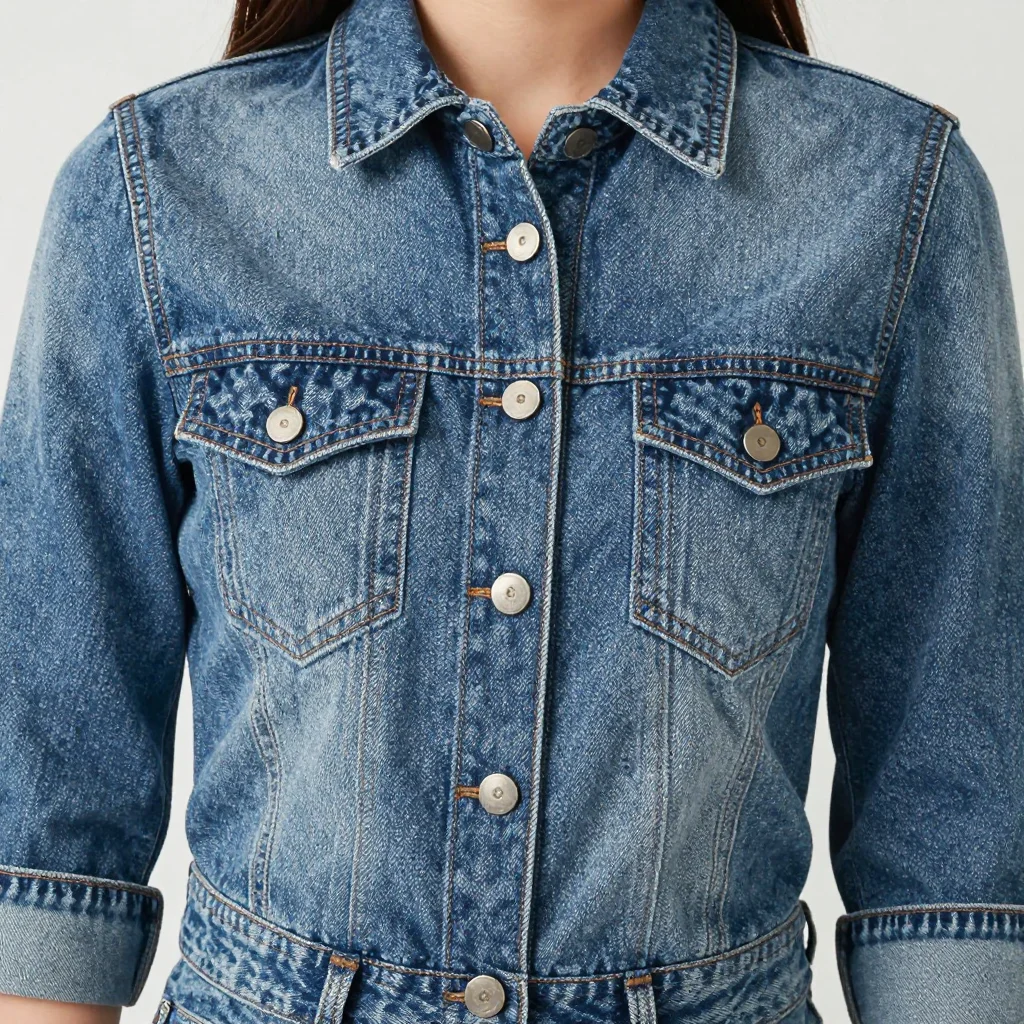 |
Observation: 3/3 images clearly reproduce denim texture (indigo blue, stitch detail, button/hardware). Seed 1 is a cropped denim jacket; seed 2 is a denim camisole top (multi-person composition); seed 3 is a close-up of a denim jacket torso. “Top” tends to be interpreted as a jacket or camisole. Color stably shifts to denim blue. Few side effects on the subject.
A05: knit top
| seed 1 | seed 2 | seed 3 |
|---|---|---|
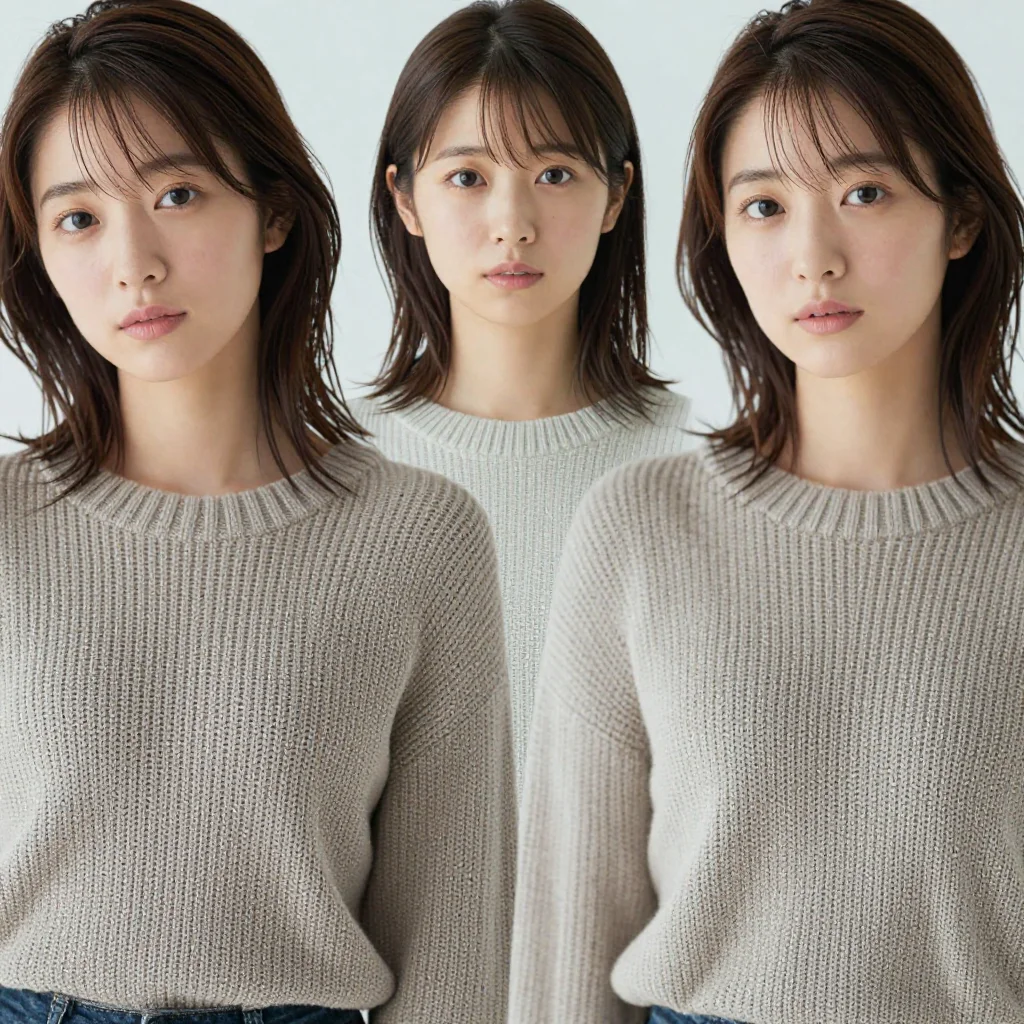 | 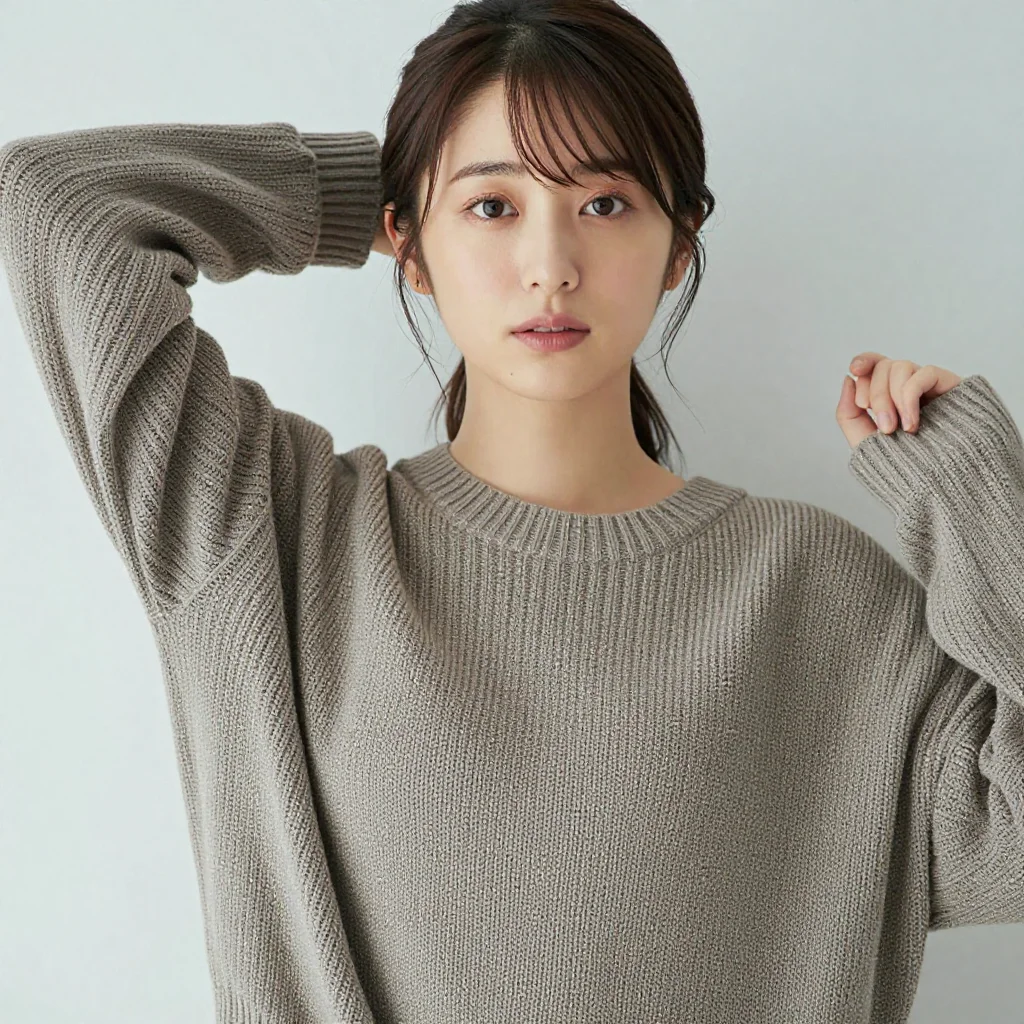 | 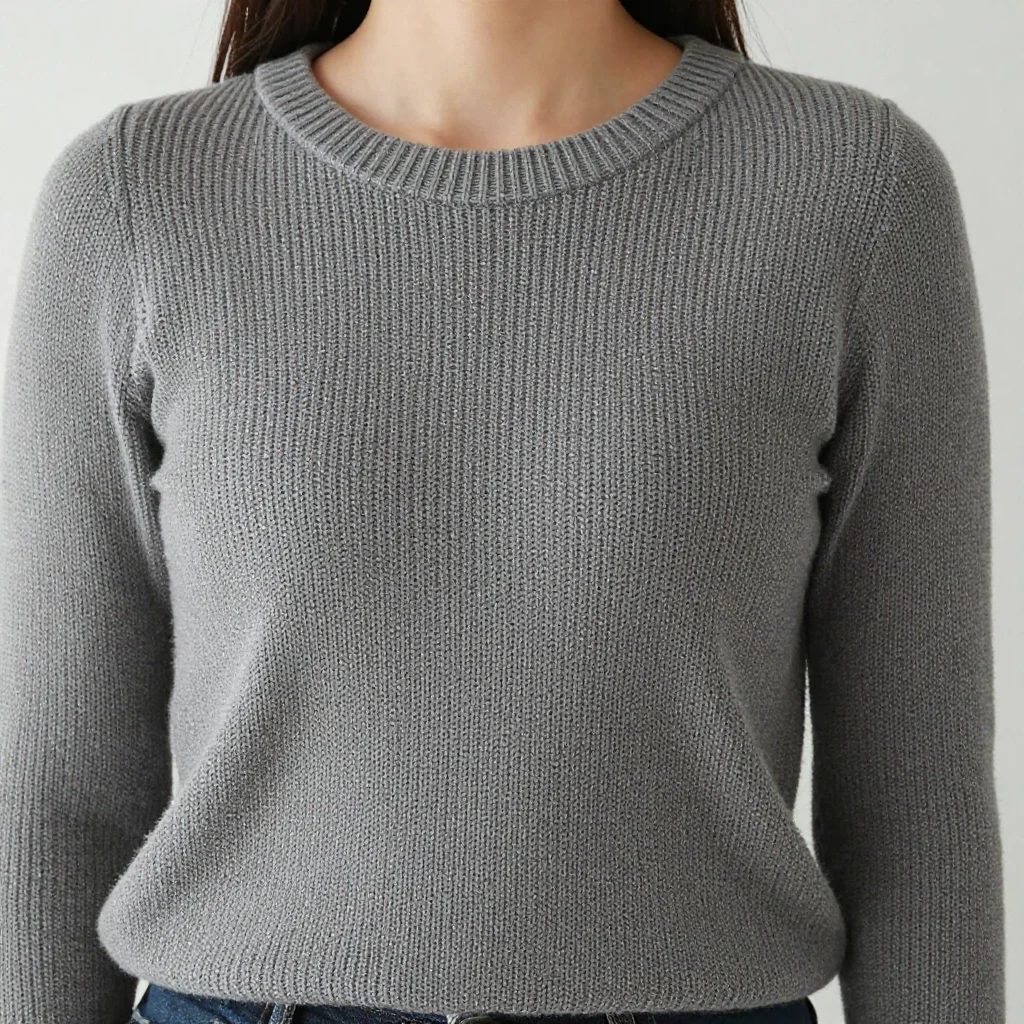 |
Observation: 3/3 images clearly reproduce knit stitch patterns (rib or cable knit). Color shifts to beige or gray — white is not maintained. Silhouette is a stable crewneck pullover shape; seeds 1–2 are looser, seed 3 is slightly more fitted. Knit texture is visible as surface texture. Few side effects on expression or pose.
A06: mesh top
| seed 1 | seed 2 | seed 3 |
|---|---|---|
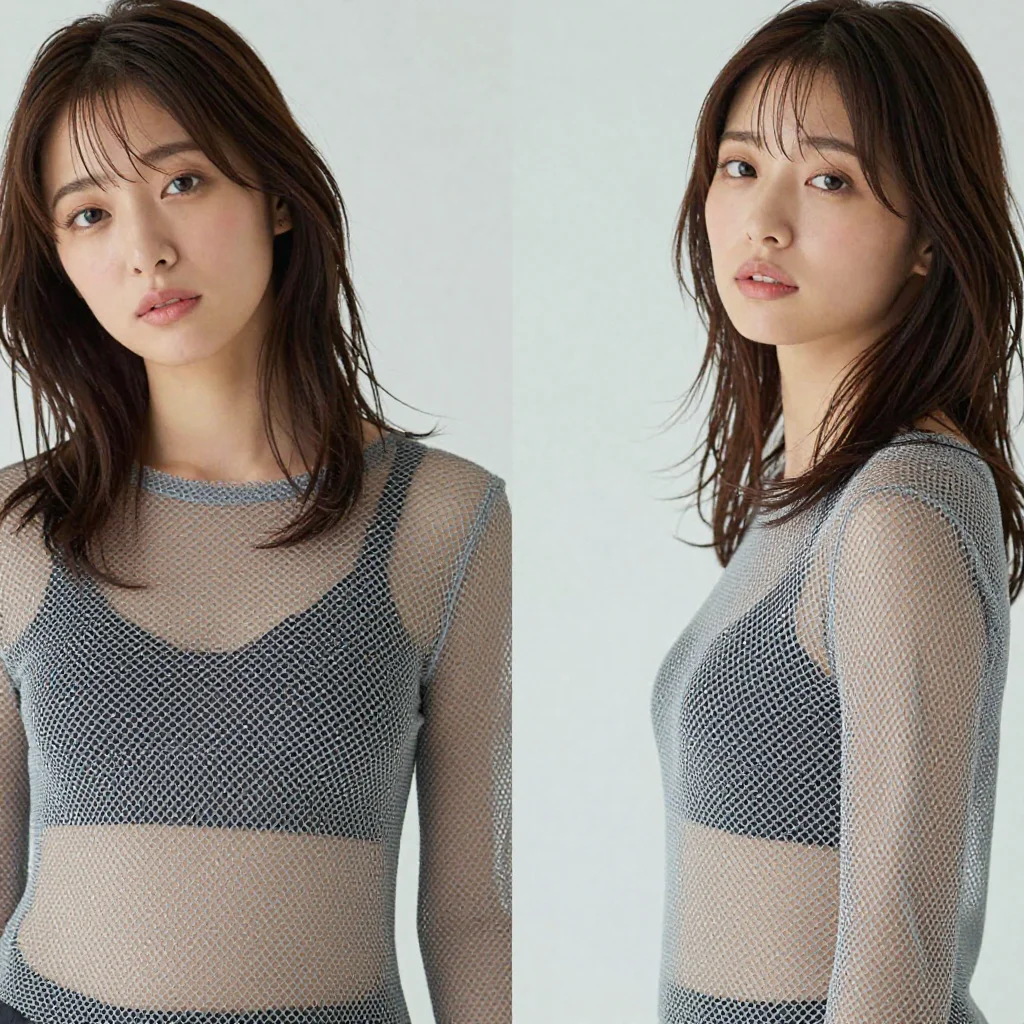 | 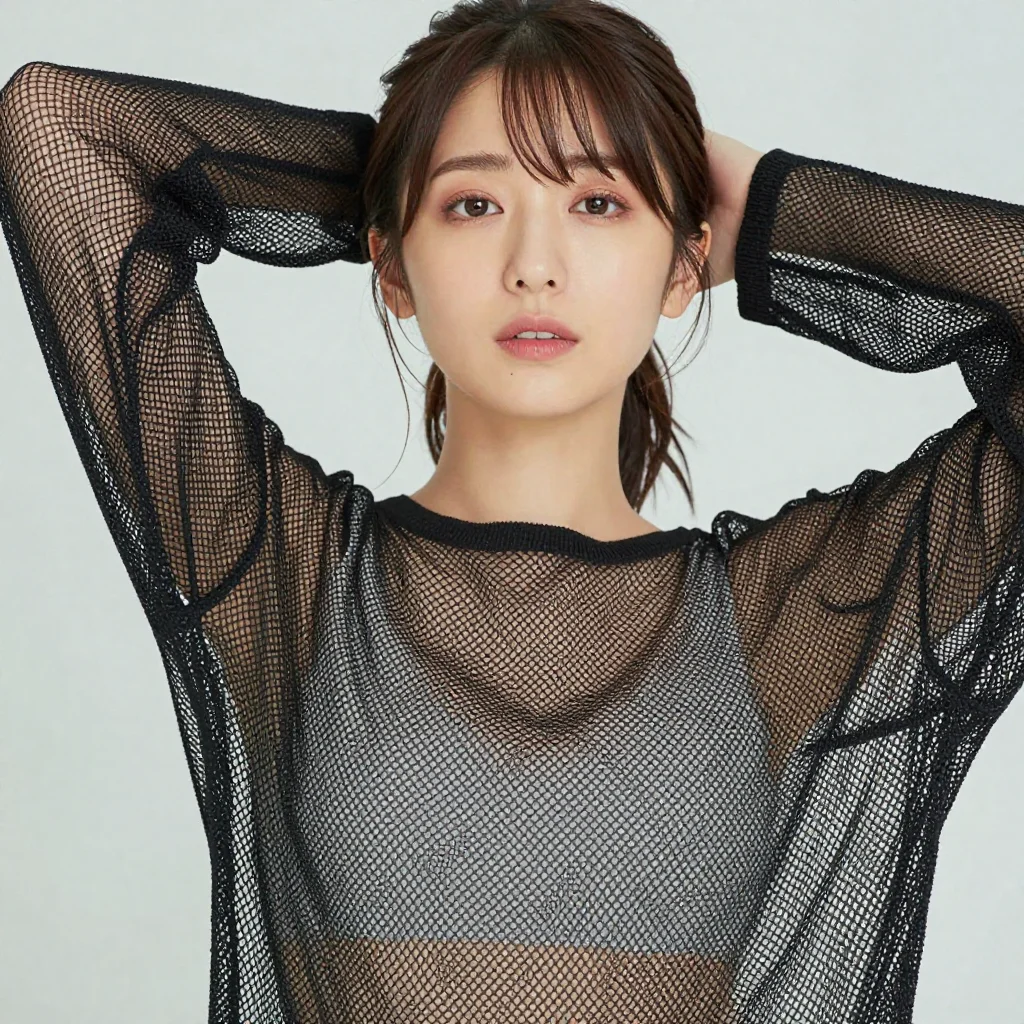 | 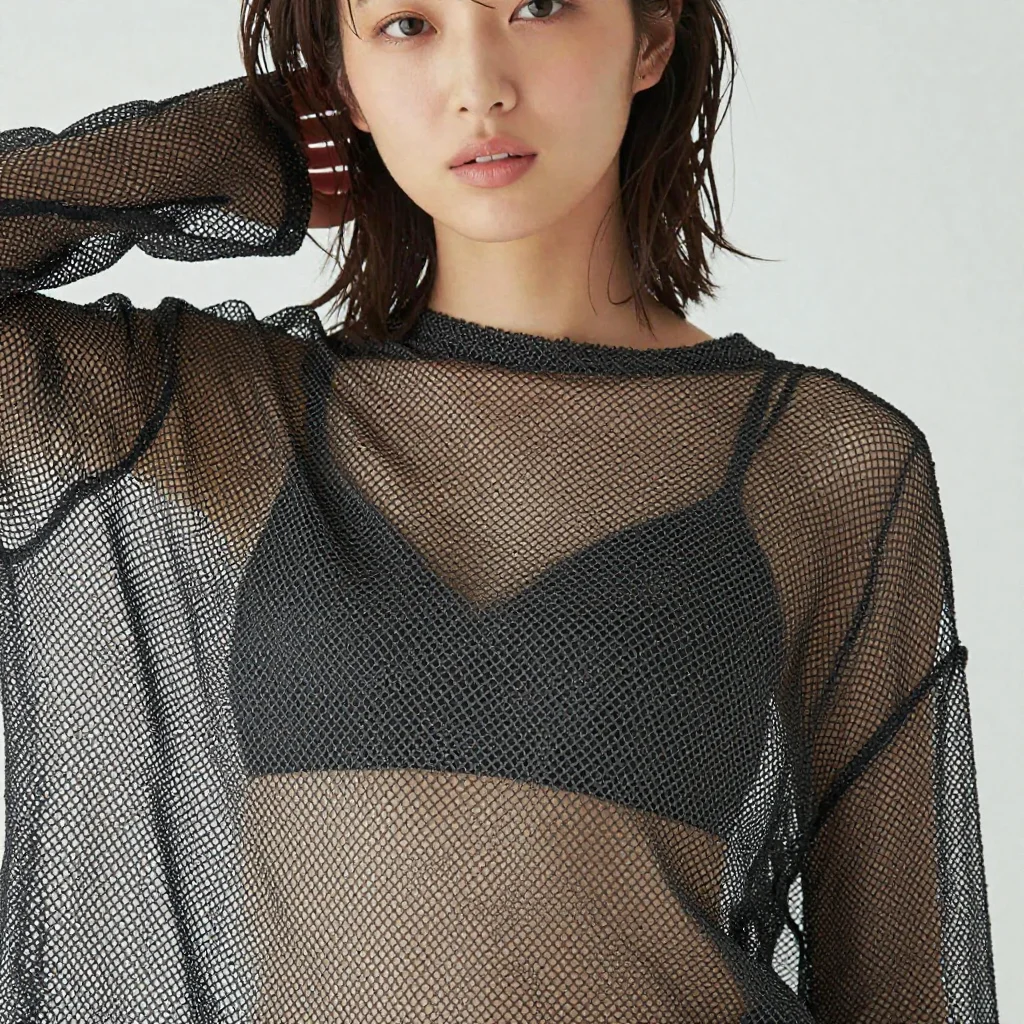 |
Observation: 3/3 images reproduce a net-like mesh texture. Seed 1 shows a fine mesh with a bra top visible underneath; seeds 2–3 show black coarse mesh with strong transparency. Color shifts strongly toward black (2/3 black, 1/3 gray). Mesh pattern is uniform and detailed. Transparency causes an inner garment (bra top, etc.) to appear automatically. Hair tends to appear wet as a side effect (2/3).
Group A Summary
| Condition | Texture Reproduction | Silhouette Change | Side Effects | Recommendation |
|---|---|---|---|---|
| A00: control | — | — | — | — |
| A01: lace | High (3/3 floral/mesh) | Slightly more fitted | Color shifts to black (1/3) | A |
| A02: leather | High (3/3 sheen/texture) | Shifts to tight fit | Color darkens, hair wets | B |
| A03: silk | High (3/3 sheen/drape) | Slightly loose blouse | Floral print added (3/3), color grays | C |
| A04: denim | High (3/3 stitch/color) | Shifts to jacket shape | Color shifts to denim blue | A |
| A05: knit | High (3/3 stitch pattern) | Slightly loose pullover | Color shifts to beige/gray | A |
| A06: mesh | High (3/3 net texture) | Slightly fitted | Color shifts to black, transparency appears | B |
B. Shape Keyword Comparison (3 Conditions)
Keeping the material as white top and testing silhouette changes by varying shape only.
B01: tight-fitting white top
| seed 1 | seed 2 | seed 3 |
|---|---|---|
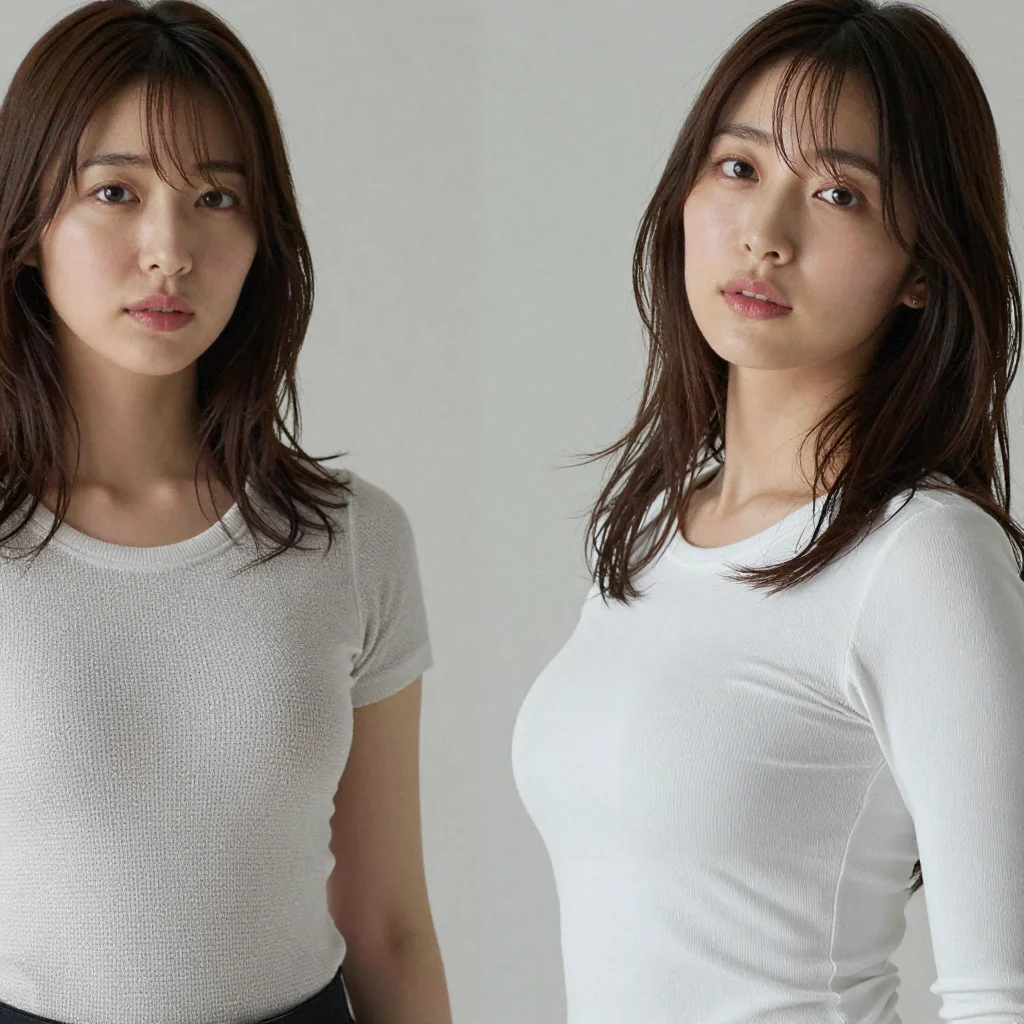 | 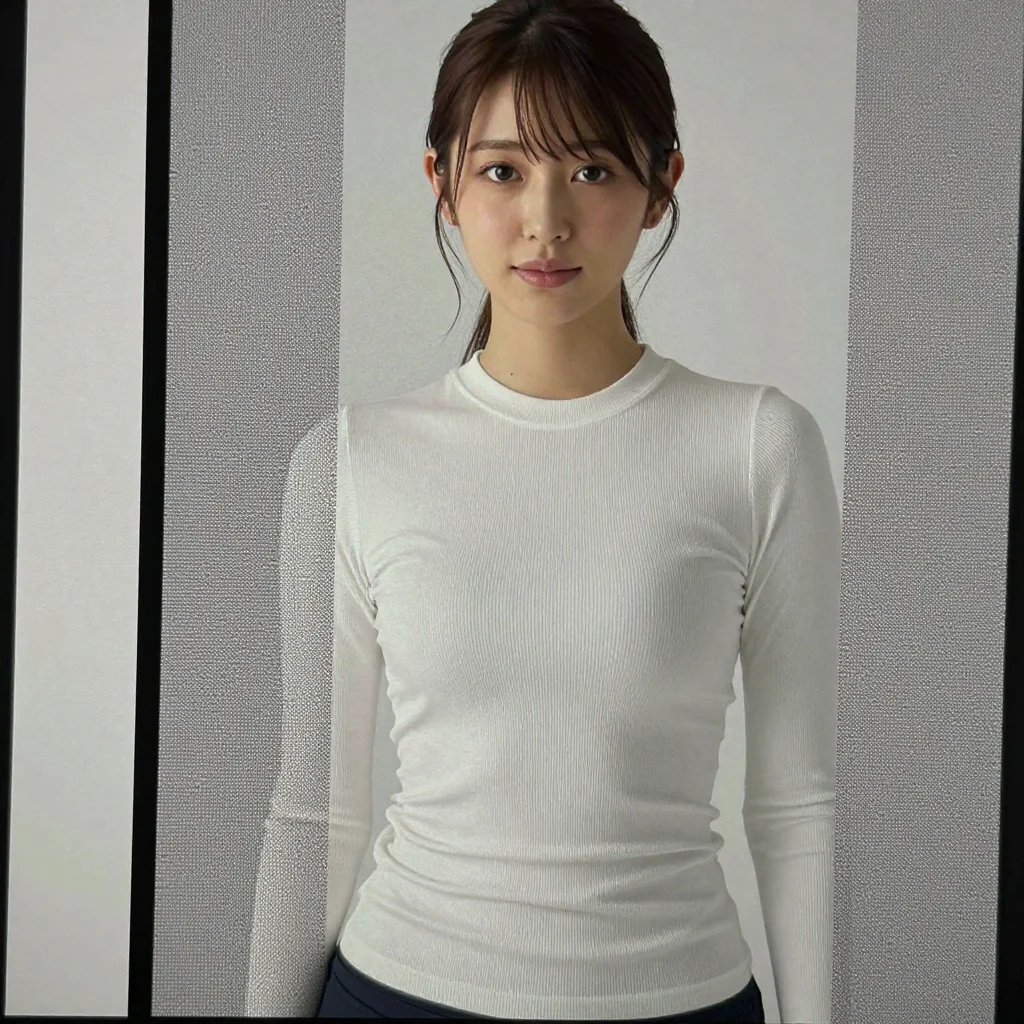 | 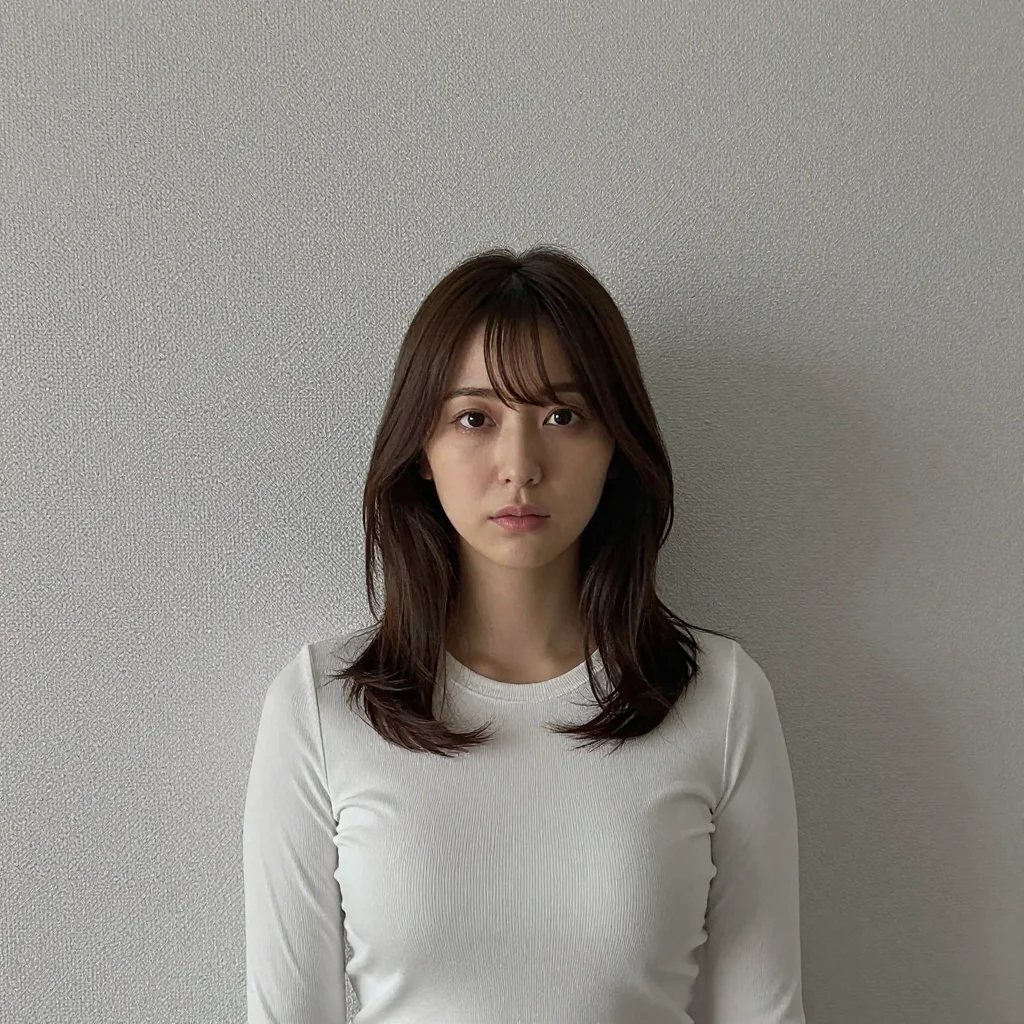 |
Observation: 3/3 images show body-hugging white tops. Seed 1 has two outfits (short and long sleeve) both closely fitted; seed 2 is a long-sleeved rib-knit with clear body definition; seed 3 is also long-sleeved and fitted. Compared to control, the silhouette is clearly tighter — the instruction works. White color is maintained in 3/3. Minor side effect of slightly darker background in 1/3.
B02: loose-fitting white top
| seed 1 | seed 2 | seed 3 |
|---|---|---|
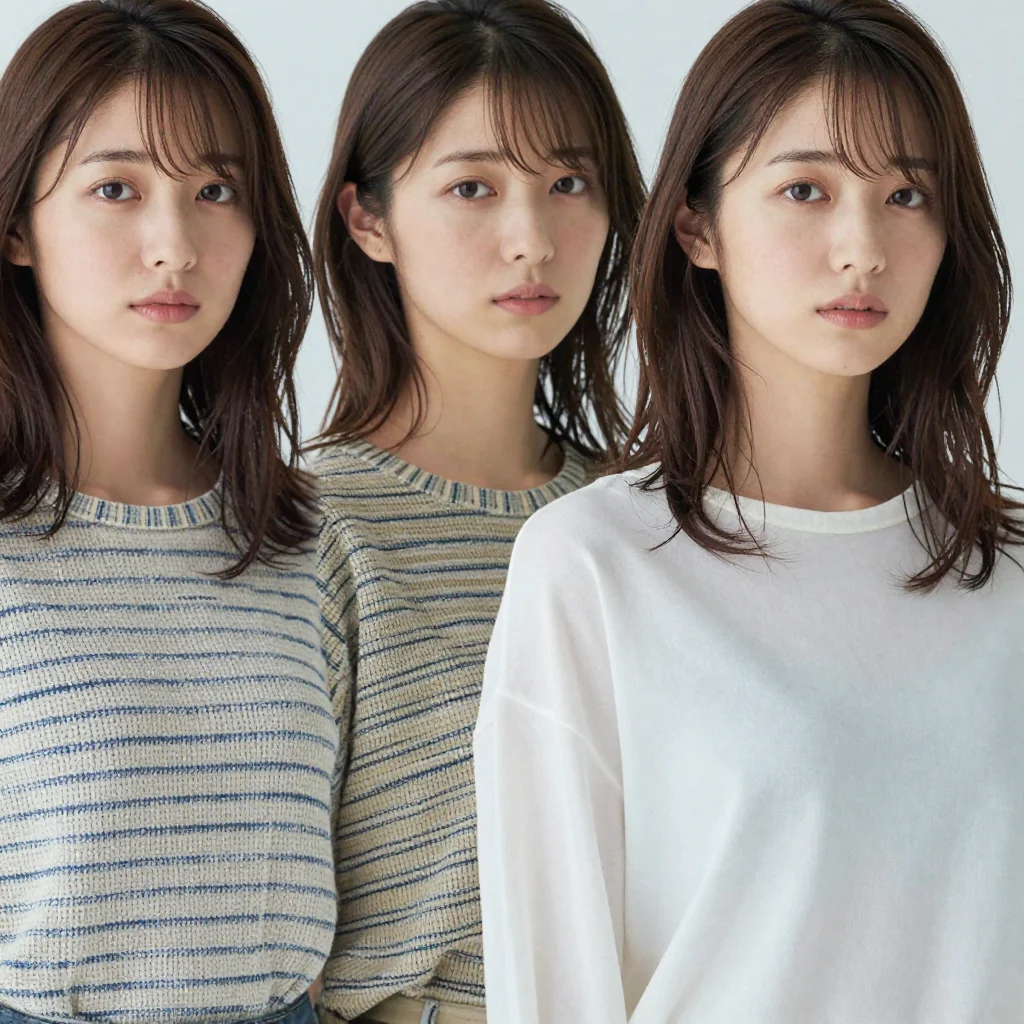 | 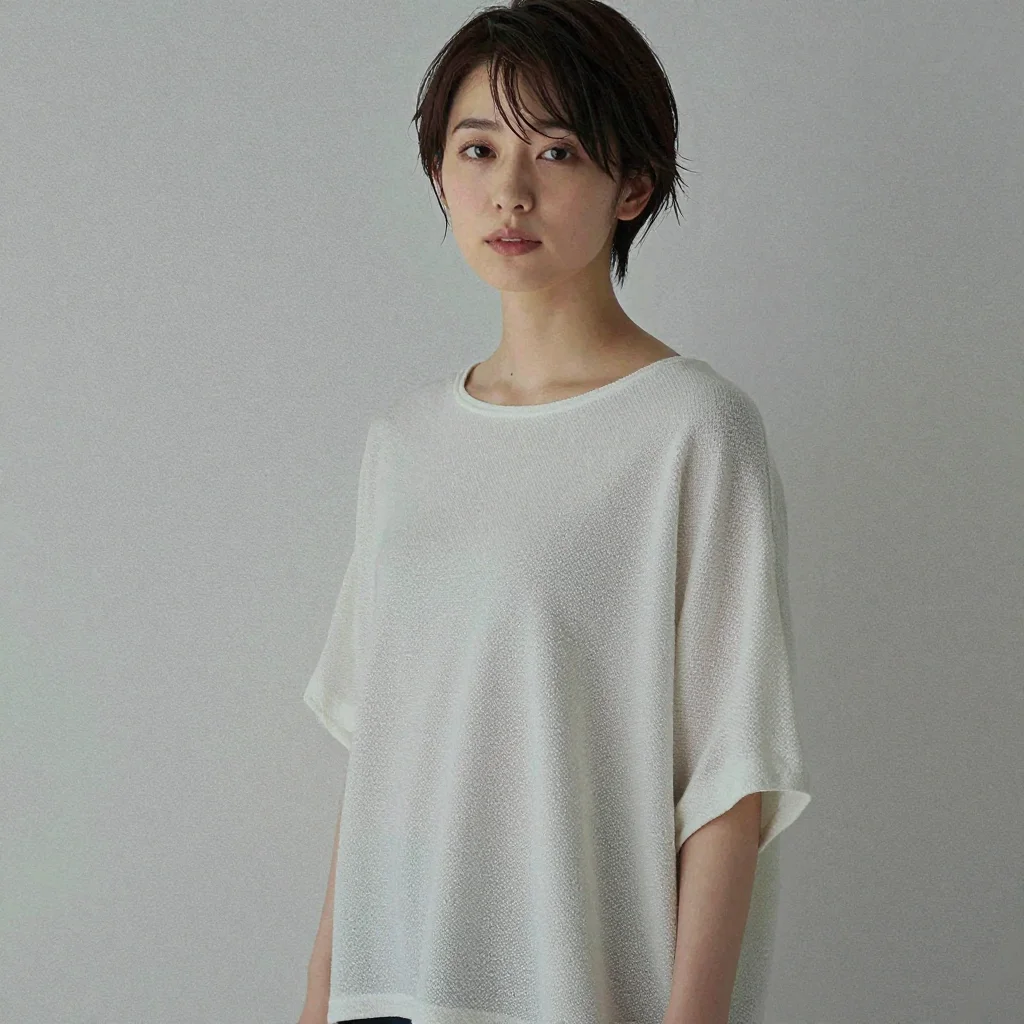 | 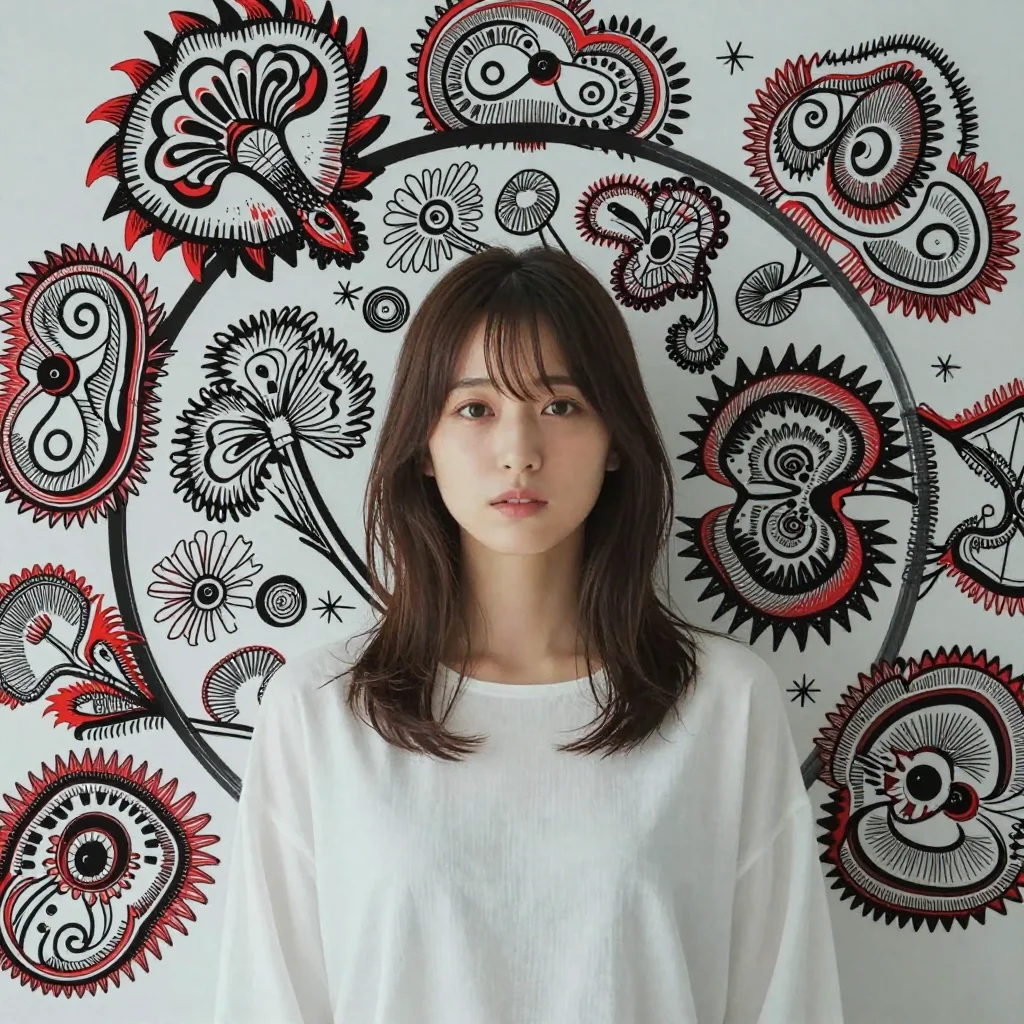 |
Observation: Seed 1 is a two-outfit composition with a striped knit and a loose white top; seed 2 is an oversized white top with a drop shoulder silhouette. Seed 3 shows a white top with background decoration. 2/3 images confirm a relaxed silhouette, but seed 1 has a stripe pattern added as a side effect. loose-fitting tends to manifest as an oversized or drop-shoulder look.
B03: frilly white top
| seed 1 | seed 2 | seed 3 |
|---|---|---|
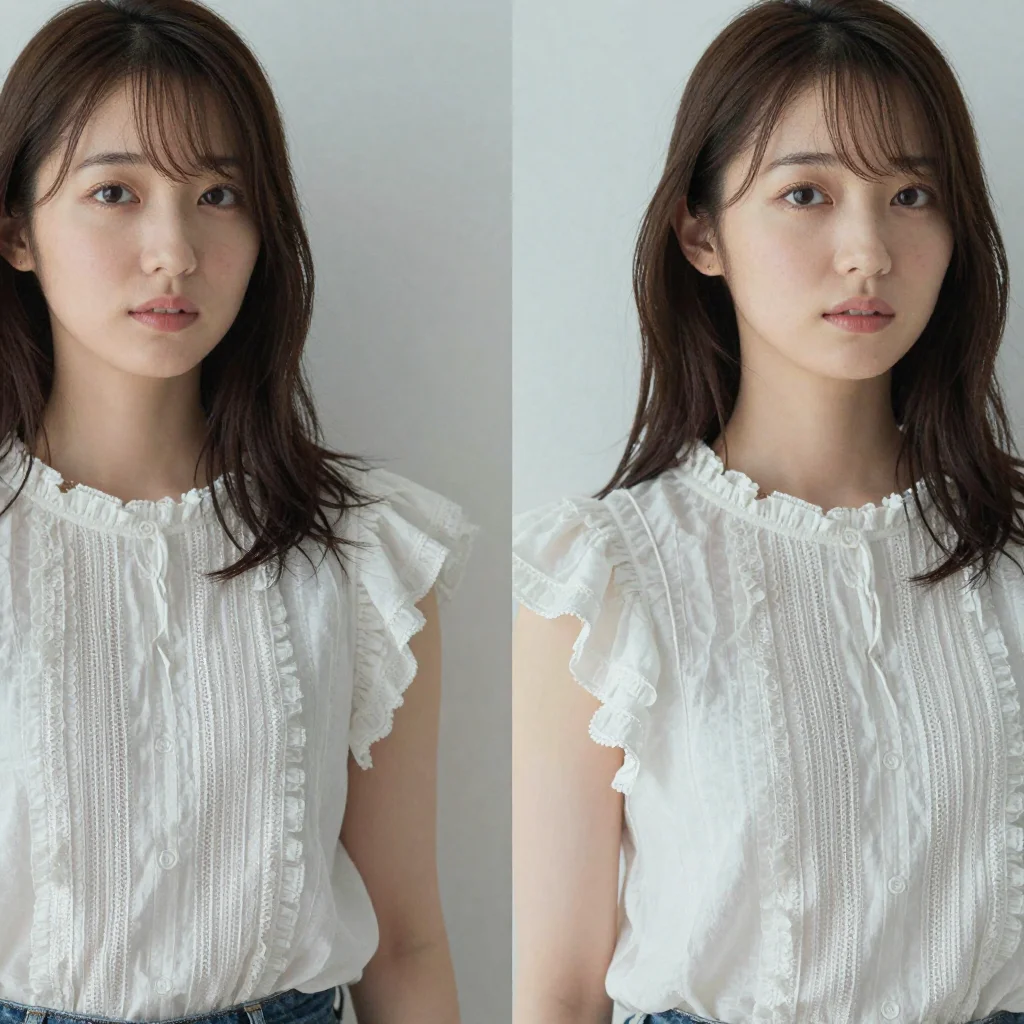 | 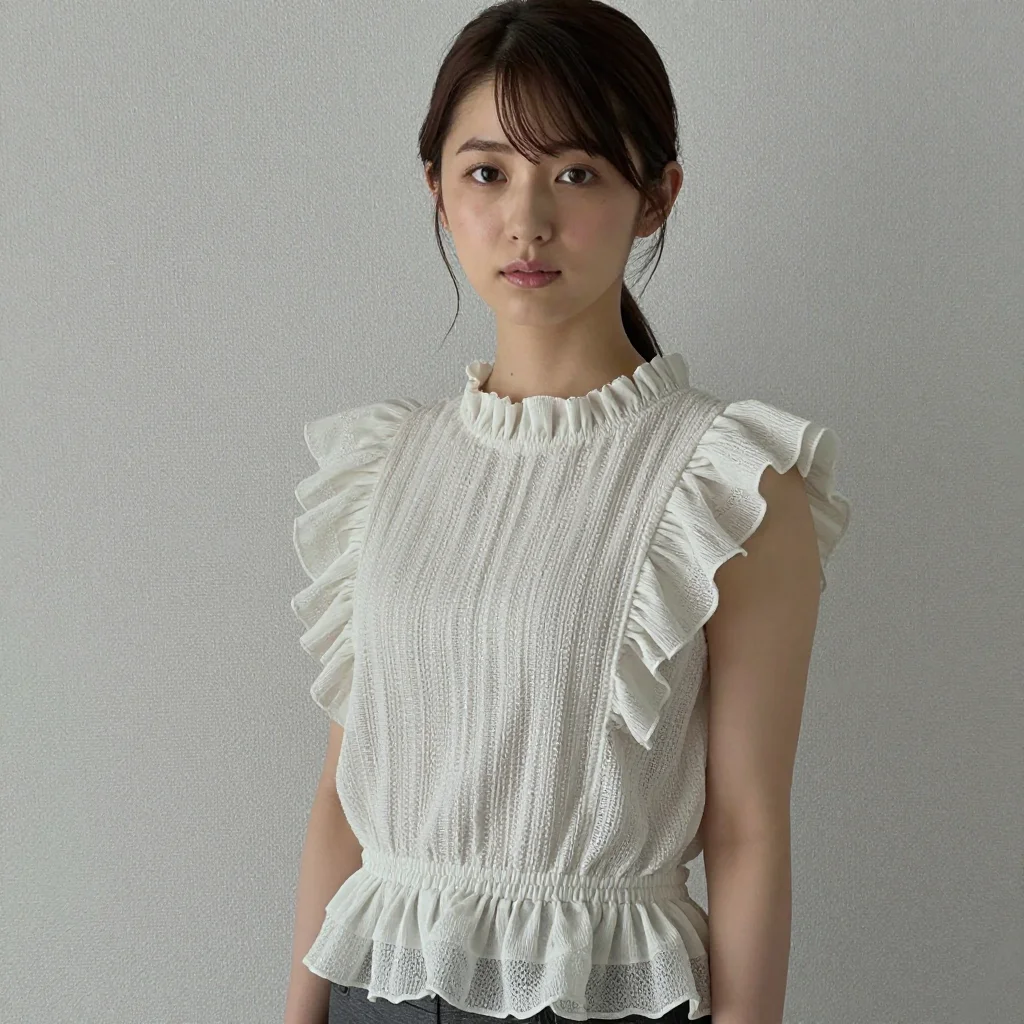 | 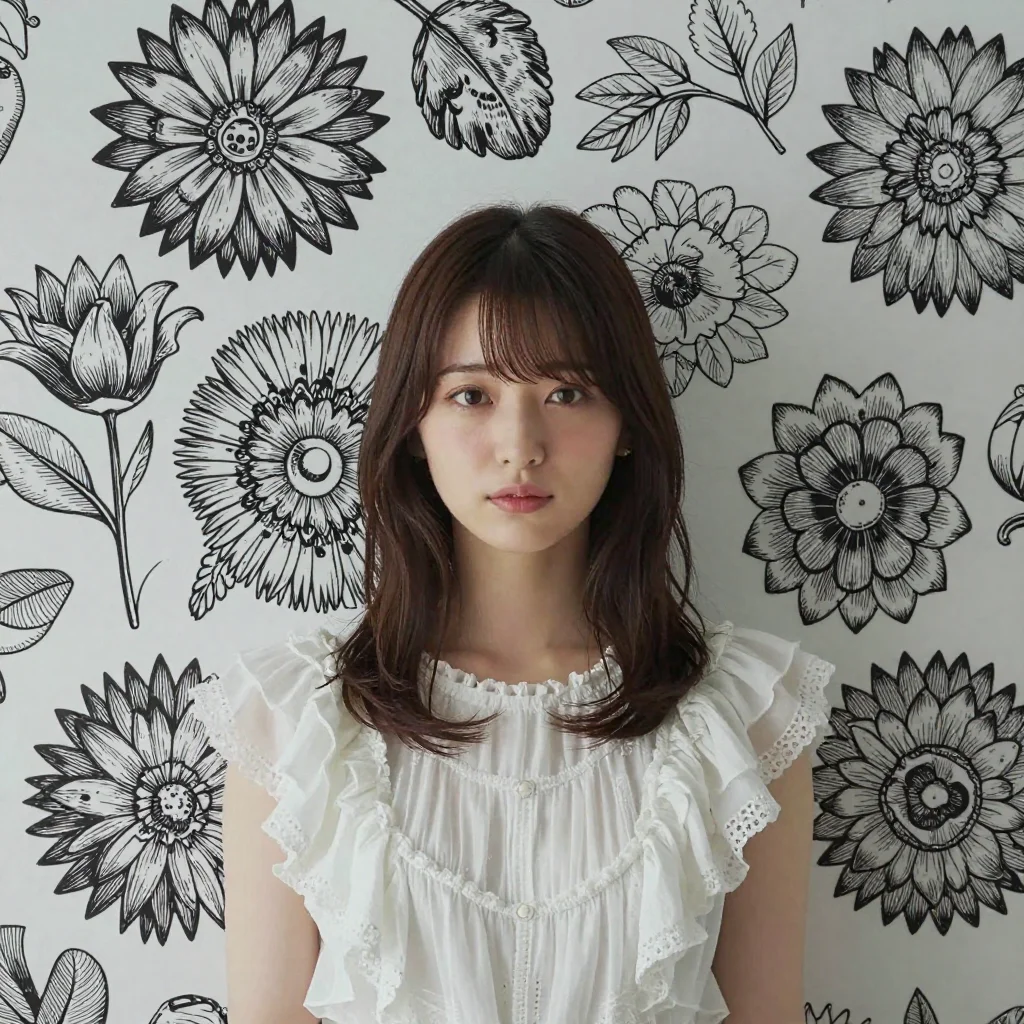 |
Observation: 3/3 images add frills to collar, sleeves, and/or hem. Seed 1 has sleeve frills and pintuck decoration; seed 2 is a high-neck blouse with sleeve frills and a peplum hem; seed 3 is a frilly white blouse with background floral decoration. The frills are clearly reproduced as gathered, wave-edged fabric. White is maintained in 3/3. Background decoration appears as a minor side effect in 1/3.
Group B Summary
| Condition | Silhouette Change | Difference from Control | Side Effects | Recommendation |
|---|---|---|---|---|
| B01: tight-fitting | Body-hugging (3/3) | Large (clearly tighter) | Minor (background change 1/3) | A |
| B02: loose-fitting | Oversized (2/3) | Medium (drop shoulder) | Pattern added (1/3), background decoration (1/3) | B |
| B03: frilly | Frills added (3/3) | Large (frills on collar/sleeves/hem) | Background decoration (1/3) | A |
Note: Lace, denim, and knit are stable with few side effects. Leather and mesh reproduce texture accurately but shift to darker colors. Silk tends to have a floral pattern added. A key takeaway is that specifying a material tends to shift the color as well, so specify the color name explicitly if you want to preserve it.
Overall Summary
Testing 6 material keywords and 3 shape keywords, all showed visible differences from control, confirming their effectiveness as prompts.
Among material keywords, lace, denim, and knit are the most stable with high texture reproduction and few side effects. Leather and mesh reproduce textures well but have significant color shifts (to dark tones). Silk reproduces sheen well but consistently adds floral patterns, making it unsuitable for plain silk.
Among shape keywords, tight-fitting and frilly are stable, achieving the intended silhouette change in 3/3. Loose-fitting has an oversizing effect but is slightly less consistent.
A universal note across all conditions: material specification tends to shift color (especially leather → dark, denim → blue, mesh → black). If you need to preserve the specified color, explicitly include the color name with the material.
Recommended Prompts
- For texture: lace, denim, knit are stable. Leather is effective for sheen but color control is difficult
- For silhouette: tight-fitting (tightens), frilly (adds frills) are stable
- To preserve color: Explicitly include the color name before the material (e.g., white silk top)
- Plain silk: Using
plain silk topmay help, but this was not tested in this experiment
![[Verified] Image Generation Prompt Best Practices](/tips/prompt-best-practices/cover_0_0000_4517457392071889496.webp)