Key Takeaways
- Taking off a sweater (
taking off sweater) produces the most striking peek composition. The neckline opens wide to reveal the bra – a “caught mid-change” look reproduced in 3/3. - Standing in front of closet in underwear (
standing in front of closet in underwear) reads as a natural everyday scene. Full bra + panties visibility, but the context is “hasn’t dressed yet” rather than “undressed,” giving it a daily-life feel. - Putting on a dress (
putting on dress) can reproduce a half-dressed state. The reverse direction of undressing – “getting dressed” expression. - Unlike the undressing test (undressing-stage-control-test), these scenes work as natural everyday “changing clothes” contexts.
Experiment Design
| Parameter | Value |
|---|---|
| Model | z-image-turbo (6B, photorealistic distilled) |
| Steps | 8 |
| CFG | 1.0 |
| Size | 1024x1024 |
| Seeds | 3 fixed (shared across all conditions) |
| Framing | upper body / full body |
| Per condition | 3 images (3 seeds) |
| Total | 3 conditions × 3 = 9 images |
Condition Design
| Condition | Scene | Clothing State |
|---|---|---|
| A00: Outfit selection | standing in front of closet, choosing clothes | wearing bra and panties |
| A01: Putting on dress | putting on dress, dress half-on | Dress being put on |
| A02: Sweater removal | taking off sweater over head, bra visible | Sweater stuck around neck |
Results by Condition
A00: Choosing Clothes in Front of Closet
| seed 1 | seed 2 | seed 3 |
|---|---|---|
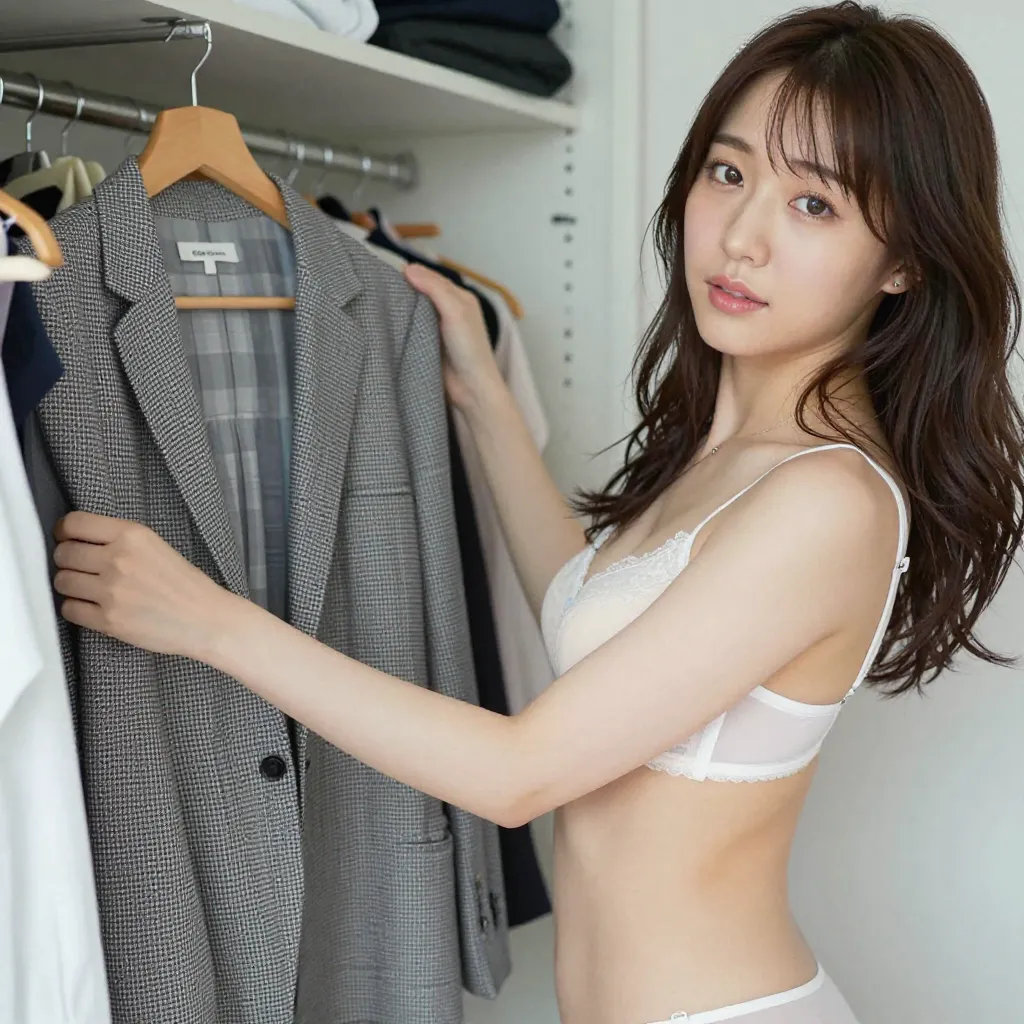 | 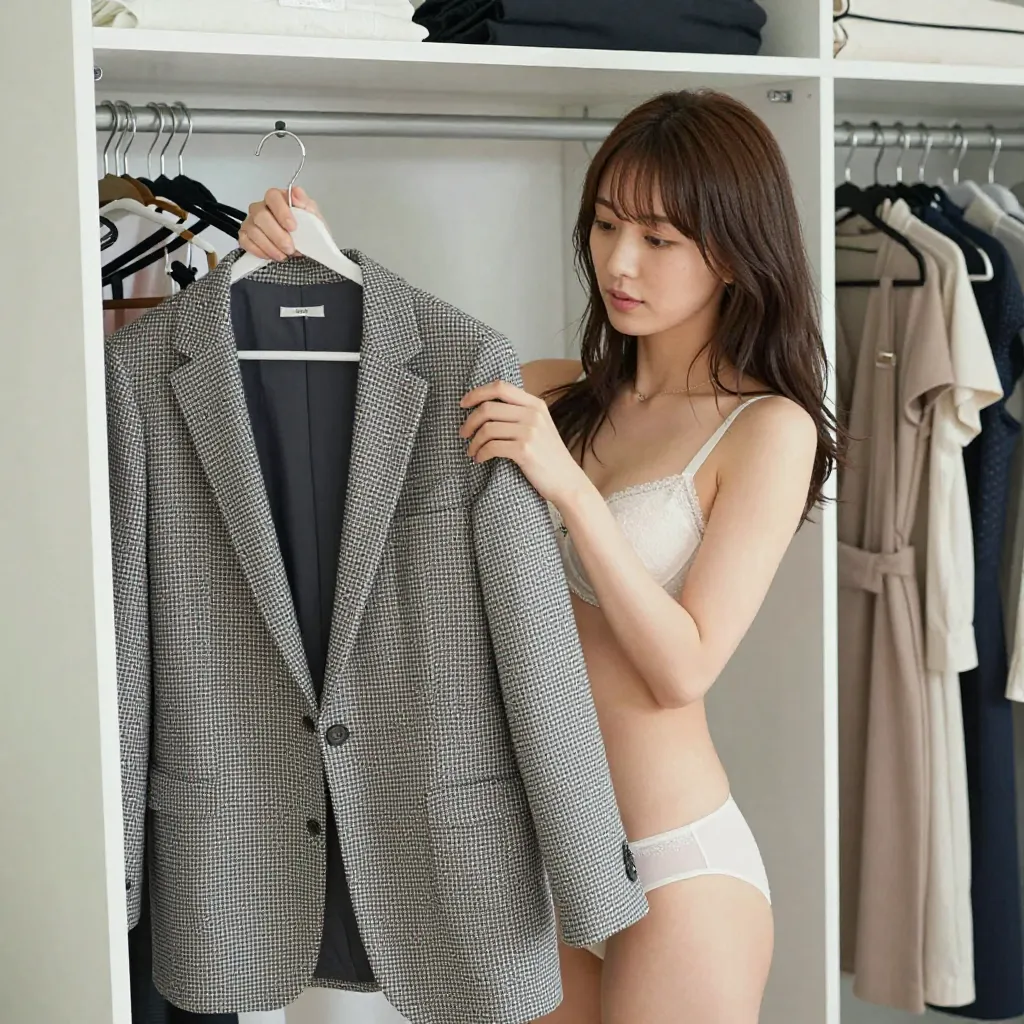 | 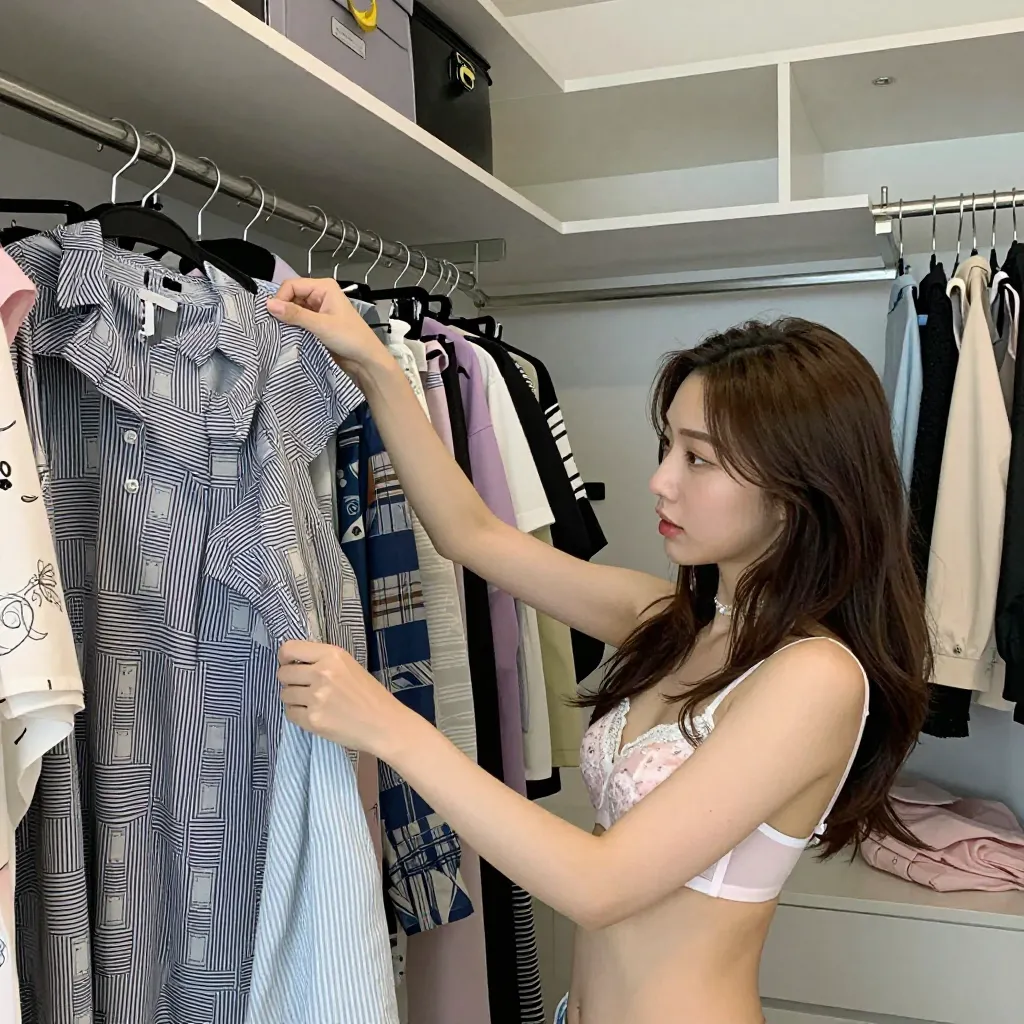 |
Observations: 3/3 reproduced the composition of standing in underwear in front of a closet. Hangers with clothes, shelves, and closet doors appear in the background, establishing a natural “morning outfit selection” scene. Full bra + panties are visible, but the context is “not yet dressed” rather than “undressed,” creating a different impression from undressing. The specified natural lighting brings window light into the bedroom, giving it a morning feel.
A01: Putting on a Dress
| seed 1 | seed 2 | seed 3 |
|---|---|---|
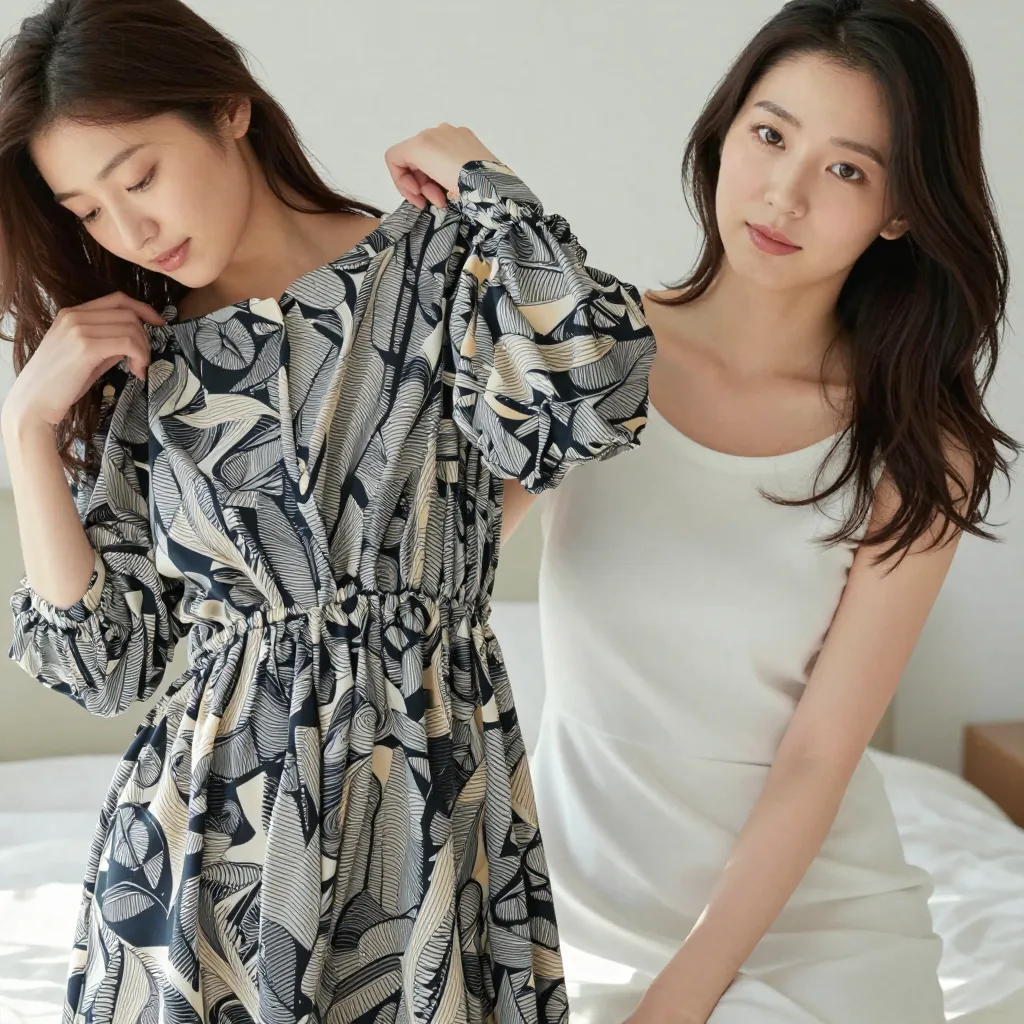 | 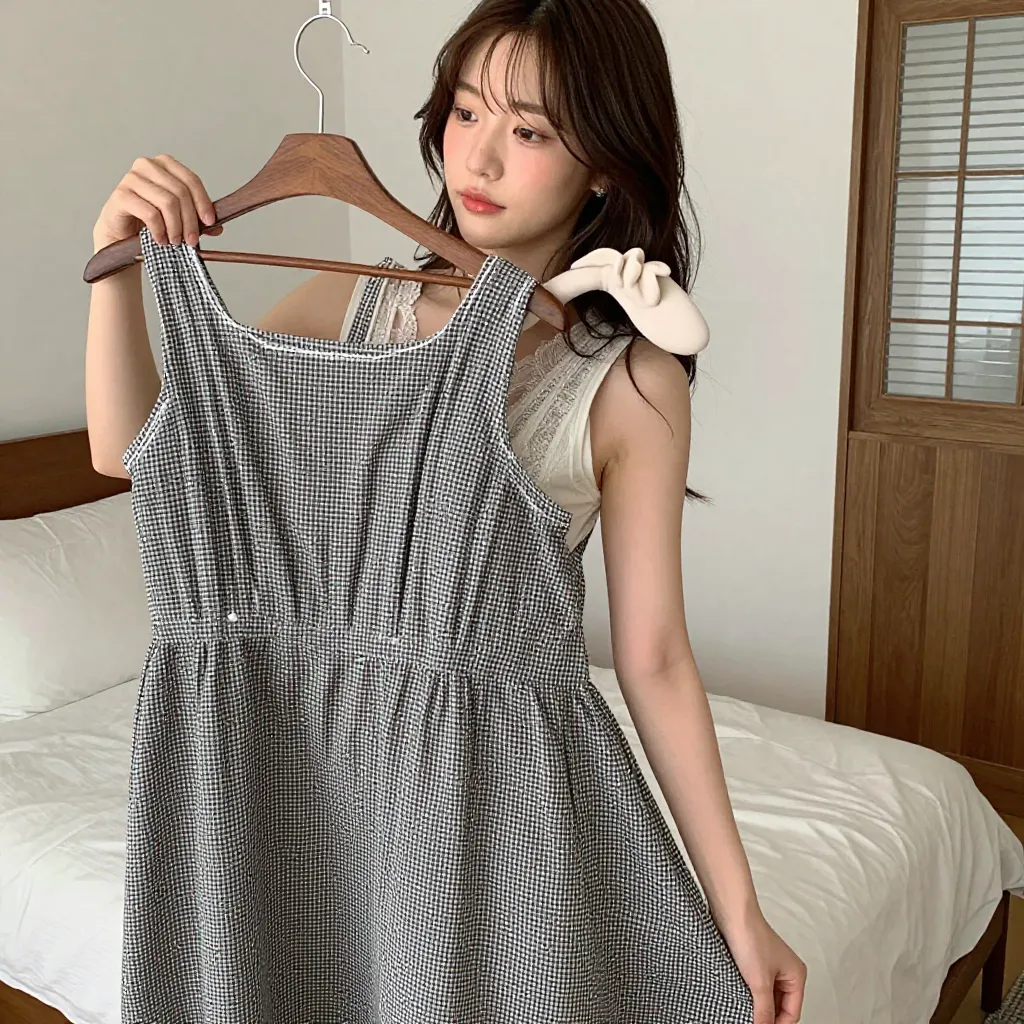 | 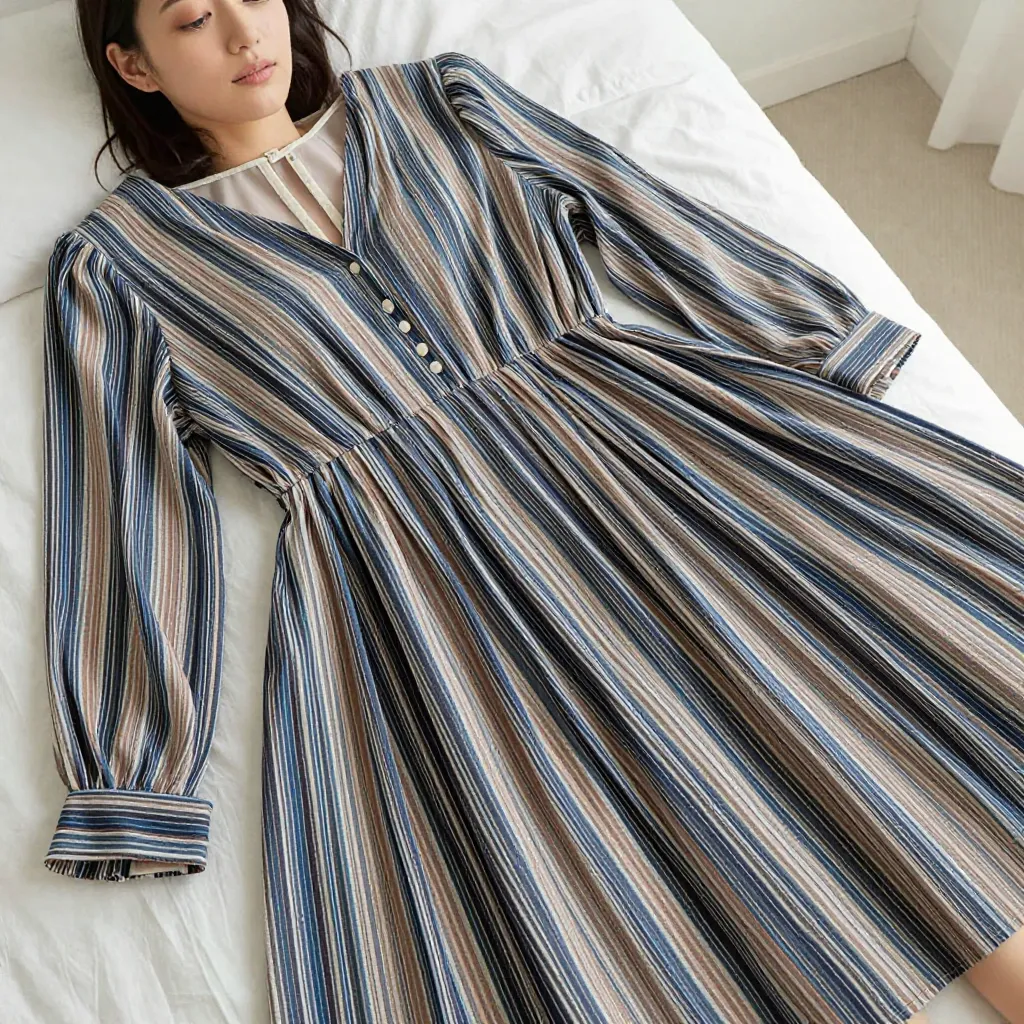 |
Observations: 2/3 reproduced a mid-dress-putting-on state. The dress is half-on with shoulders and back exposed. Visually, the difference between “putting on” and “taking off” with half-removed is minimal. The specified bedroom background and natural lighting create a natural changing situation.
A02: Taking Off a Sweater
| seed 1 | seed 2 | seed 3 |
|---|---|---|
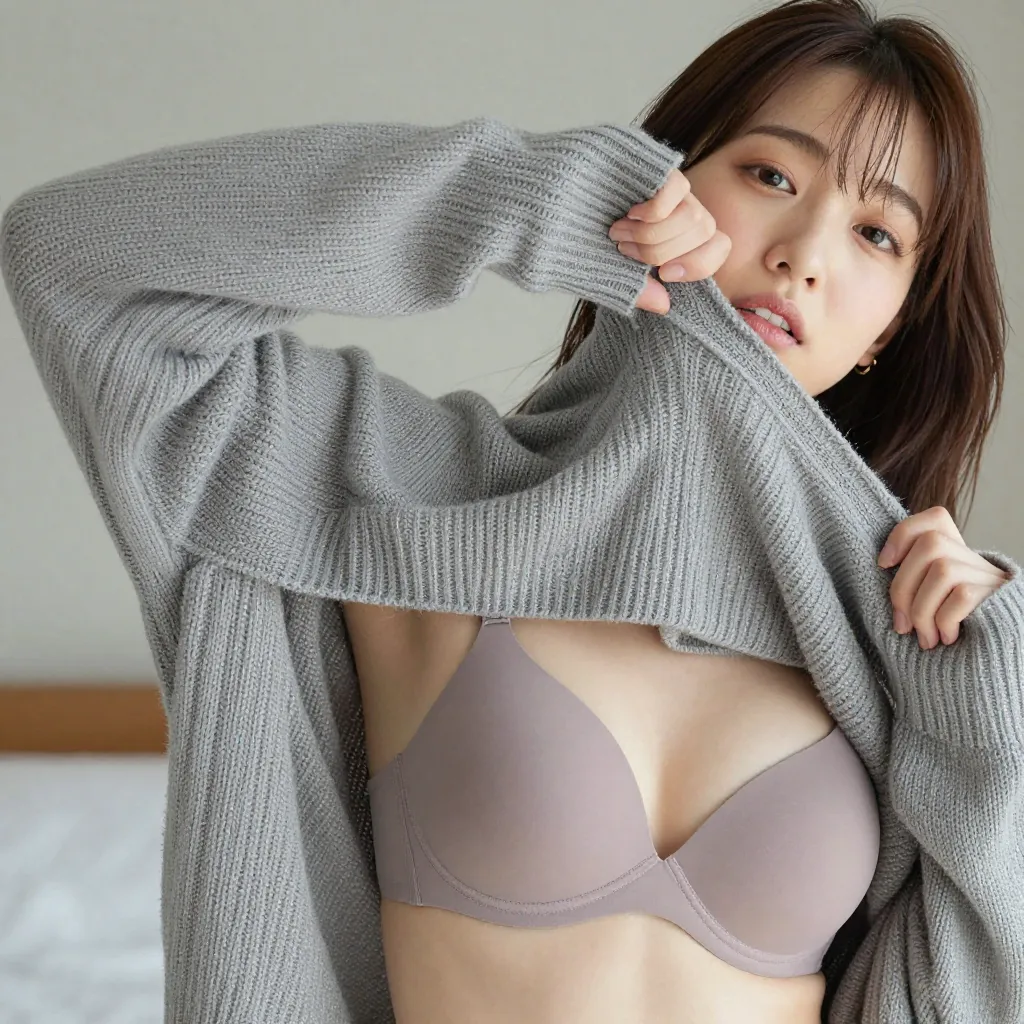 |  |  |
Observations: 3/3 reproduced the composition of pulling off (or putting on) a gray V-neck knit. The neckline opens wide to reveal a beige bra, reading more as “peek during changing” than undressing. Arms raised to pull the sweater up expose the underarm line and ribs. Similar composition to the locker room test’s T-shirt removal (A01: change), but the specified bedroom natural light gives it a softer impression.
Note: The peek during mid-sweater-removal reads as a distinctly everyday moment. The bra visible through the V-neck opening follows the same pattern.
Comparison Summary
| Condition | Peek Level | Everyday Feel | Composition Stability | Recommended Use |
|---|---|---|---|---|
| Outfit selection (underwear) | High (full exposure) | Highest | High (3/3) | Morning daily scenes |
| Putting on dress | Medium | High | Medium (2/3) | Mid-dressing staging |
| Sweater removal | Highest | High | High (3/3) | Peek, caught-off-guard feel |
Practical Tips
Differences from the Undressing Test
The undressing stage control test (undressing-stage-control-test) tested 5 stages of white blouse removal in a studio setting. This article’s changing scenes differ in:
- Everyday changing in living spaces (bedroom, in front of closet)
- Clothing variety (sweater, dress)
- Includes “putting on” as well as “taking off”
Compared to studio-background gravure-style undressing, changing in a living space reads more naturally as a slice-of-life scene.
Differences from the Locker Room Test
The locker room test (locker-room-scene-test) takes place in a gym locker room – a semi-public space. Changing scenes here are in a private bedroom. The lighting quality (fluorescent vs. natural light) and space character (public vs. private) differ, dramatically changing the impression of the same “changing” action.
Note: Changing clothes produces a different composition than undressing. The combination of “about to head out” energy and an “unguarded moment” stands out as a distinguishing feature. The bedroom’s natural light reinforces that atmosphere.