There are several approaches to composition that emphasize the breasts: cleavage, sideboob, underboob, silhouette, and more. This blog has tested each of these individually in dedicated experiment articles, but until now there has been no page that organized “which keyword works for which composition” across all of them. This article extracts only the conclusions from existing experiment articles and organizes them by composition type.
Detailed test data for each item (per-seed success rates, failure cases, side effects) can be found in the source articles. To avoid duplication, this page is intended as a quick-reference guide for choosing the right keyword in practice.
Target model: z-image-turbo (6B, a distillation model specialized in photorealism, CFG=1.0). Results may differ with other models.
Conclusions First: Quick-Reference Table by Composition Type
| Composition type | Example effective keywords | Approximate success rate | Source article |
|---|---|---|---|
| Cleavage (high-angle) | all fours, cleavage, from above, looking up at viewer | 3/3 | All-fours cleavage test |
| Sideboob | loose [outfit], sideboob, from side | 2/3 | Sideboob/underboob test |
| Underboob | cropped top, underboob | 3/3 (watch for excessive exposure) | Sideboob/underboob test |
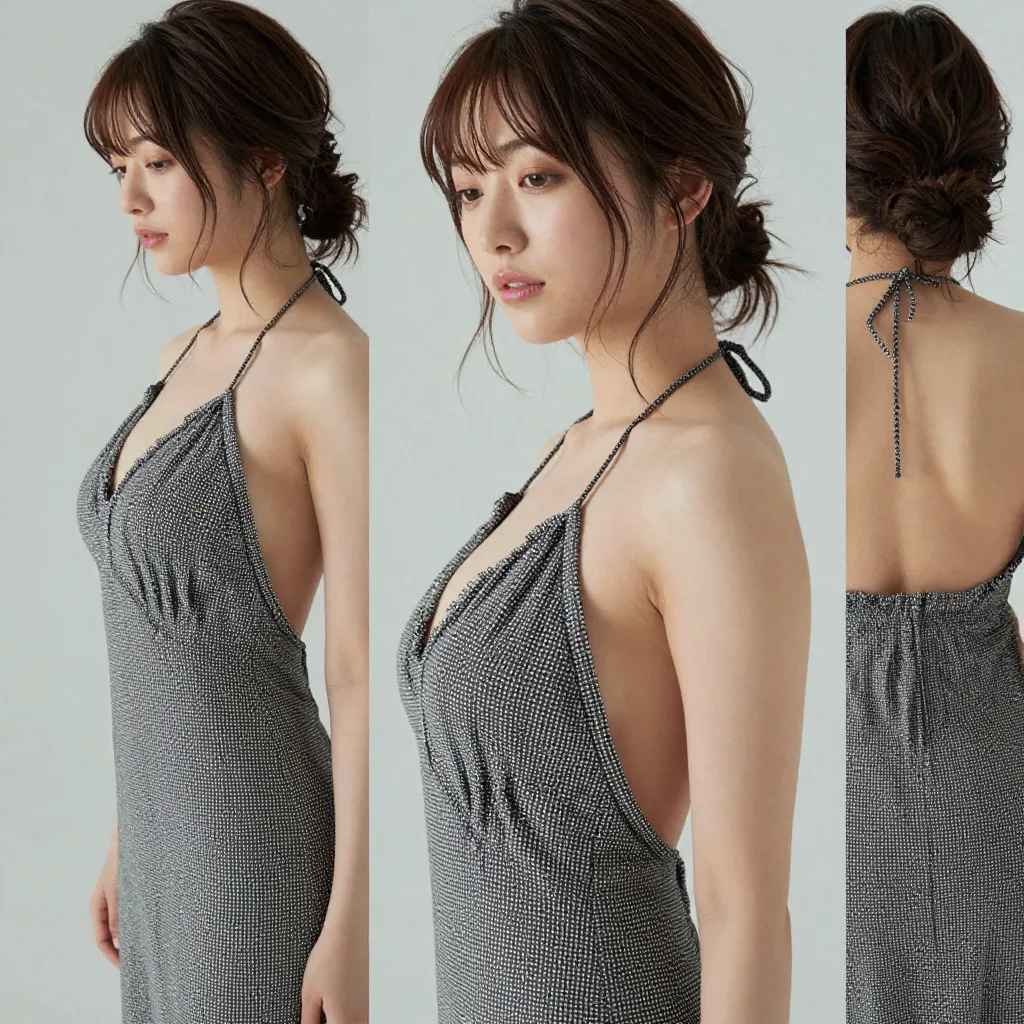
| Side cleavage (tasteful) | backless halter top, side cleavage visible | — | Sideboob/underboob test |
| High angle in general | high angle, bird's eye view | 3/3 | Camera angle comparison |
| Low-angle upward shot | from below, sky | 3/3 | Low-angle-between-legs test |
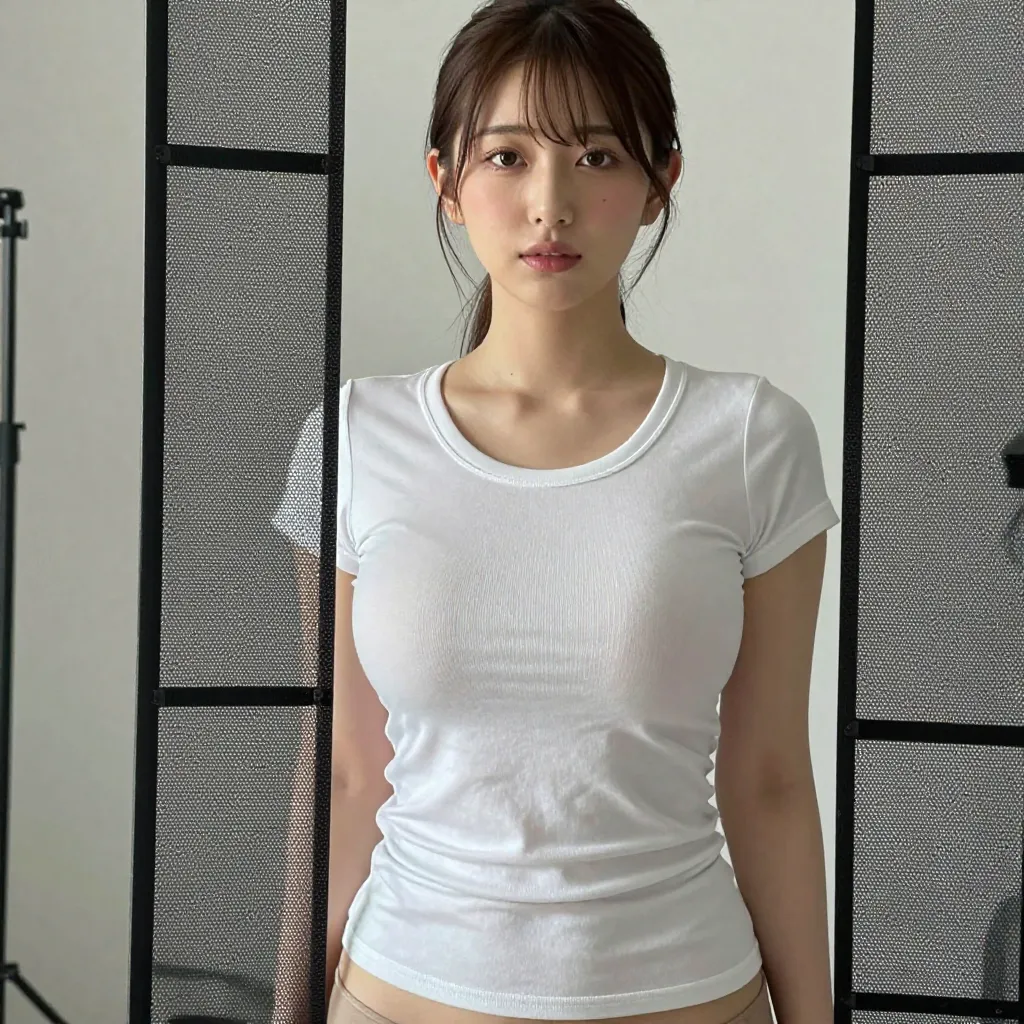
| Tight shirt x large chest | large breasts, tight white t-shirt | 3/3 | Tight shirt test |
| Backlit silhouette | silhouette backlit by sunlight, high contrast | 3/3 | Window silhouette test |
| Pressed against glass | paizuri glass, breasts squeezed tightly around glass panel | 3/3 (the only working pattern) | Glass press test |
| Resting on a tray | leaning forward over table, breasts on silver tray | 6-9/9 | Silver tray test |
| Sheer/see-through fabric | see-through, sheer, mesh top | 3/3 (all roughly equal in transparency) | See-through test |
| Motion (jump rope, etc.) | bouncing breasts, etc. | No effect | Jump rope motion test |
| Emphasizing size itself | oversized massive tits, enormous boobs | ★★★★★ | Breast size ultimate guide |
Emphasizing with Angle
Camera angle is the most controllable of all compositional elements. The camera angle comparison test found that high angle, bird's eye view produced a clearly different composition in 3 out of 3 images, structurally making the chest area more visible.
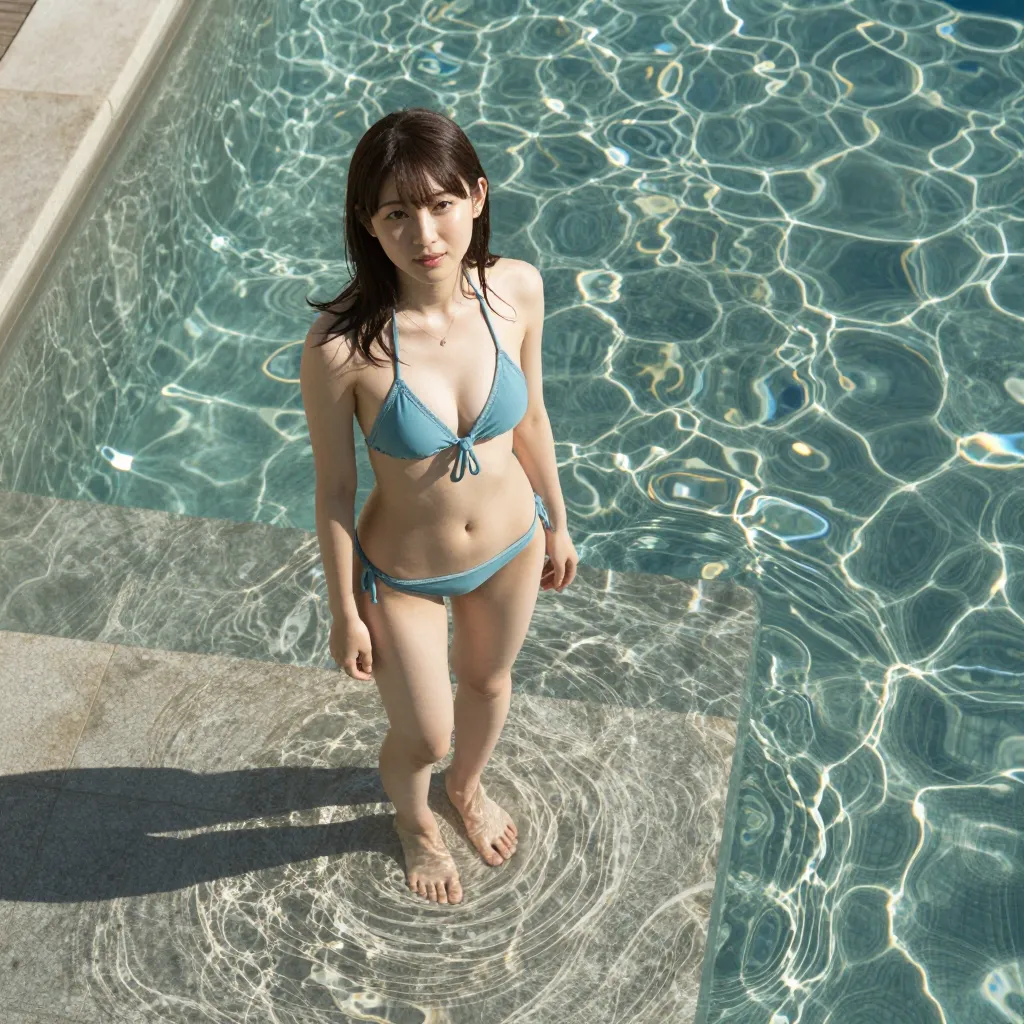
A high angle increases the area occupied by water and ground, resulting in a distinctive proportion where the head appears larger and the legs shorter. When using this angle specifically to emphasize the chest, combining it with upper body pushes the feet out of frame and makes the subject appear larger.
The all-fours cleavage test shows a similar pattern. all fours alone had a low reproduction rate for the all-fours pose itself (0 out of 3), but adding from above, looking up at viewer stabilized both the high-angle composition and cleavage in 3 out of 3 images.
For an upward low-angle look, the low-angle-between-legs test achieved a 3-out-of-3 success rate with just from below, sky — only 4 tokens. Adding sky alone appeared to reinforce the compositional cue that “if the sky is visible, the camera must be low.” That said, this area has counterintuitive pitfalls: worm's eye view produced the opposite effect (a high angle), and descriptions containing the word camera tended to render the camera itself as an object in the scene.
Details: Low-angle-between-legs test
Emphasizing with Pose
Across multiple tests, a common finding emerges for pose-based emphasis: the position of the hands (an anchor point) determines how stable the pose is.
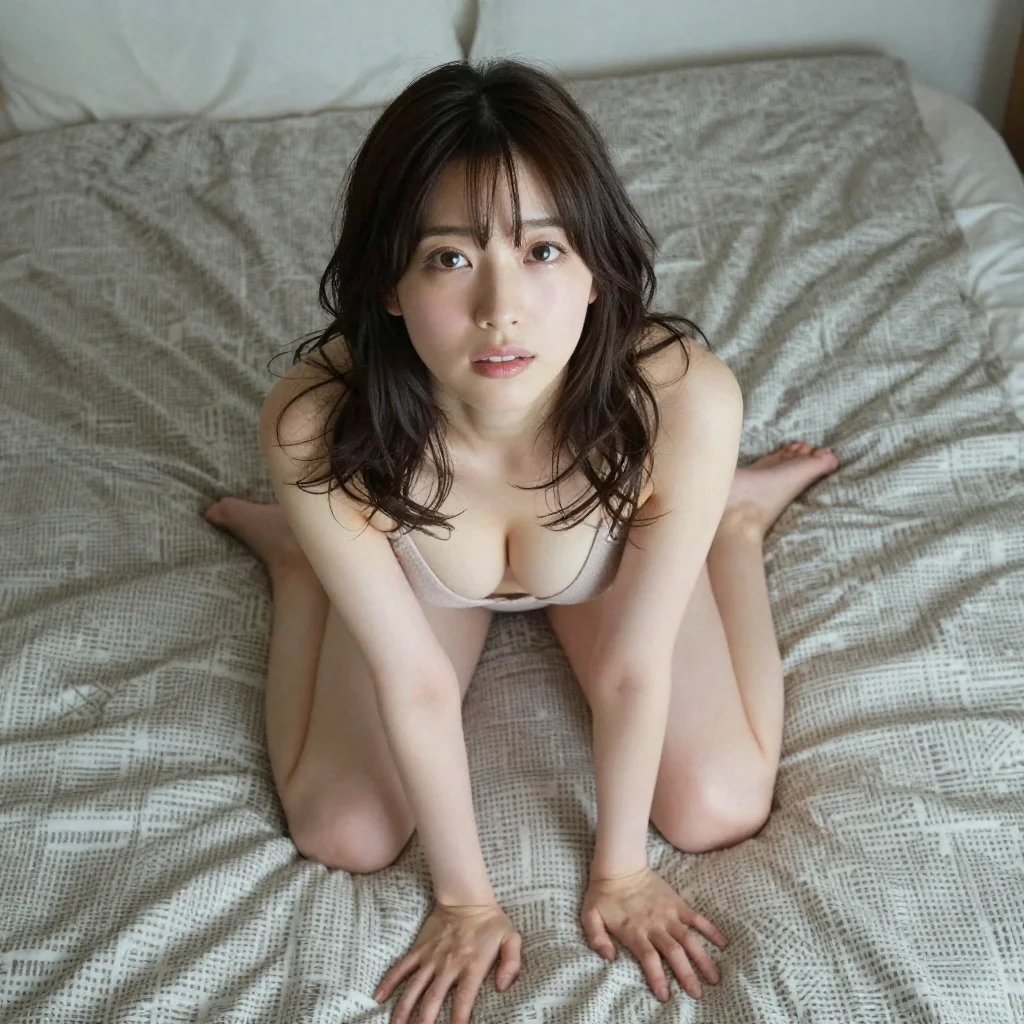
In the all-fours cleavage test, simply adding cleavage raised the cleavage reproduction rate to 3 out of 3, but the pose itself tended to become a kneeling forward-lean rather than true all-fours. The most stable results came from the high-angle condition described above (condition E).
In the standing bent-over lingerie test (a rear-view shot), bent over alone resulted only in a slight forward lean, whereas adding hands on knees produced a stable, deeper forward bend. For a wall pose, hands on wall alone tended to pull the pose back to standing straight, but adding wide stance, torso tilted forward toward wall — spreading the feet and tilting only the upper body — succeeded in 3 out of 3 images. This approach of “anchoring the hands or feet first, then tilting the torso” may be applicable more broadly to compositions aiming to show cleavage or the chest.
Emphasizing with Outfit and Fabric
Outfit and fabric specifications tend to work best when combined with pose or angle.
| Tight shirt x large chest combination | Side cleavage (halter neck) |
|---|---|
 |  |
According to the tight shirt test, tight white t-shirt alone has a minimal effect (barely distinguishable from the control by eye), but combining it with large breasts clearly produces visible fabric tension (3 out of 3). Outfit modifiers only become effective in the presence of a body-type modifier — a multiplicative relationship.
The sideboob/underboob test found three distinct levels of exposure: sideboob produces a modest effect visible through the armhole of a loose garment; underboob is extremely strong and tends to produce more exposure than intended (major exposure occurred in 3 out of 3 images); and side cleavage visible combined with a halter neck gives the most tasteful side-view expression. The right keyword depends on the intended use.
Sheer fabric is another effective route to emphasis. The see-through test found little difference in transparency among see-through, sheer, and translucent, but a large difference by color — white tends toward a semi-transparent look that retains a sense of fabric, while black tends toward near-total transparency. sheer lace top and mesh top reliably produced a natural see-through-pattern effect (3 out of 3 for both).
Details: Tight shirt test, Sideboob/underboob test, See-through test
Emphasizing with Situational Setups
There are also approaches that use props or lighting for emphasis. This category, however, shares a common pitfall: the more direct the instruction, the less likely it is to work.
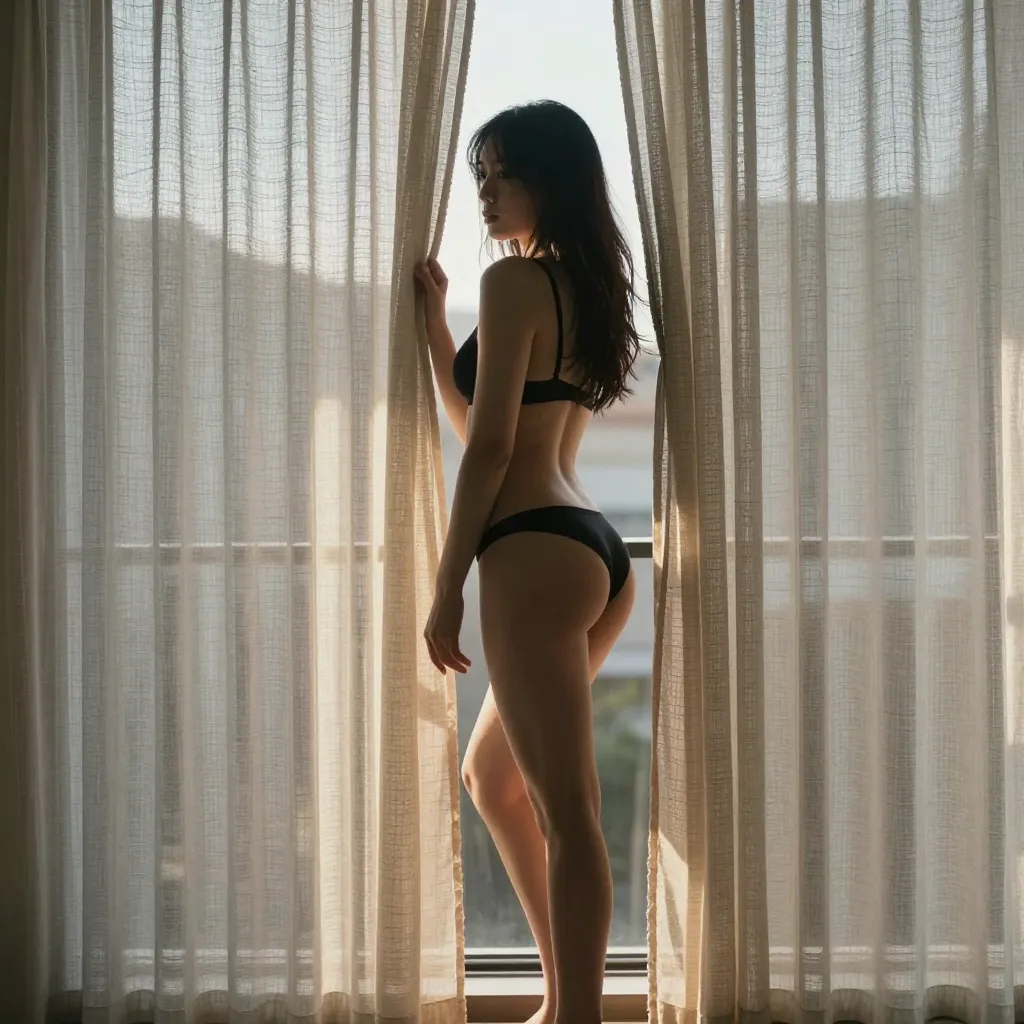
In the window silhouette test, the combination silhouette backlit by sunlight, high contrast produced a clear backlit silhouette in 3 out of 3 images. On the other hand, the conditions using peeking through curtain gap or backlit rim light did not produce a silhouette — they resulted in a different mood entirely. To aim for a silhouette, use the full recipe that scored 3/3 in the test as-is (the individual contribution of silhouette or high contrast alone was not tested).
Compositions involving physical contact are especially difficult to control. The glass press test found that direct instructions like pressing breasts against glass almost always converge on a composition where only the hands touch the glass — this held true even after trying more than ten variations. The only keyword that worked was paizuri glass (the concept of squeezing a glass panel between the breasts), which produced compression-induced stretch marks in 3 out of 3 images.
Similarly, the silver tray test found that directly instructing breasts resting on tray while standing failed in all 13 attempted images. The only stable method was leaning forward over table, breasts on silver tray — introducing a table as a physical surface and letting gravity do the work during a forward lean — which succeeded in 6 to 9 out of 9 images.
Attempts to depict breast motion showed no measurable effect. The jump rope motion test tried five keywords, including bouncing breasts and jiggling breasts, but none produced a visible difference compared to the control across all 18 images tested. Controlling “motion” in a still image appears to be beyond the current model’s capabilities.
Details: Window silhouette test, Glass press test, Silver tray test, Jump rope motion test
Emphasizing Size Itself
If you want to increase breast size itself rather than adjust composition, see the breast size ultimate guide. After testing more than 30 conditions, oversized massive tits, enormous boobs (5 words) offered the best balance of efficiency and effect. Cup-size notation (e.g. G-cup breasts) and centimeter specifications had no effect, and no effect of weighted syntax was confirmed on this model.
Note: Looking across compositions, “indirect conditioning” tends to outperform “direct instruction.” Compression against glass was achieved not through
pressing against glassbut through the indirect expressionpaizuri glass; contact with the tray was achieved not through direct instruction but by introducing a table as a physical support. In prompt design, it seems that in some cases it helps to set up the physical context in which the desired result would naturally occur, rather than simply describing the result itself.
![[Definitive Guide] The Maximum Breast Size Prompt for AI Images — Conclusions from 30+ Condition Testing](/tips/breast-size-ultimate-guide/cover.webp)
![[Verified] Image Generation Prompt Best Practices](/tips/prompt-best-practices/cover_0_0000_4517457392071889496.webp)